CIBIL MSME Rank (CMR) Explained: What Does CMR-8 Mean?
CIBIL MSME Rank (CMR) is a credit ranking TransUnion CIBIL assigns to MSME (Micro, Small, and Medium Enterprises, entities, on a scale of 1 to 10, where CMR-1 signals the lowest risk and CMR-10 the highest. CMR-8 sits in the higher-risk range.

Mohit Juneja
Reviewed by FREED India, Debt Resolution Specialists
 4.7/5
4.7/5 ₹3,200Cr+
 20,000+
 20,00,000+4.7/5₹3,200Cr+20,000+20,00,000+
KEY TAKEAWAYS

CIBIL MSME Rank (CMR) scores range from CMR-1 (lowest risk) to CMR-10 (highest risk), unlike the 300-900 scale used for individual CIBIL scores.
CMR-8 falls in the higher-risk tier, signalling that lenders should apply more caution or stricter terms when extending credit.
CMR is calculated using factors like repayment history, credit utilisation, and account vintage across the business's credit accounts.
A high CMR, like CMR-8, doesn't permanently block credit access, but it typically means higher interest rates or stricter collateral requirements.
What Is CIBIL MSME Rank (CMR)?
CMR is specifically a business-level ranking. It assesses the MSME entity's own credit behaviour, not the personal credit of the owner or director sitting behind it, which is an important distinction for anyone used to thinking in terms of a single personal CIBIL score covering everything they touch financially. A business and the person who owns it are, from a credit-reporting standpoint, two genuinely separate subjects, each carrying their own history, accounts, and risk profile, and CMR exists specifically to capture the business side of that split.
TransUnion CIBIL's enhanced CMR covers MSMEs across a wider commercial credit exposure range, including businesses with exposure below ₹10 lakh and up to ₹50 crore., based on TransUnion CIBIL's own original product documentation, worth confirming against the current version of that documentation before treating the range as fixed, since exposure bands can be revised over time as the bureau refines its models. The reason it exists at all is straightforward: lenders need a quick, standardised risk signal when evaluating a business loan application, similar in spirit to how a personal CIBIL score works for individuals, but built entirely on business-specific credit data, repayment patterns, utilisation, and account history, rather than an individual's own borrowing history feeding into the number. How this actually differs from a personal score is worth spelling out directly, since the two get confused constantly, even among people who deal with credit regularly.
How Is CMR Different From a Personal CIBIL Score?
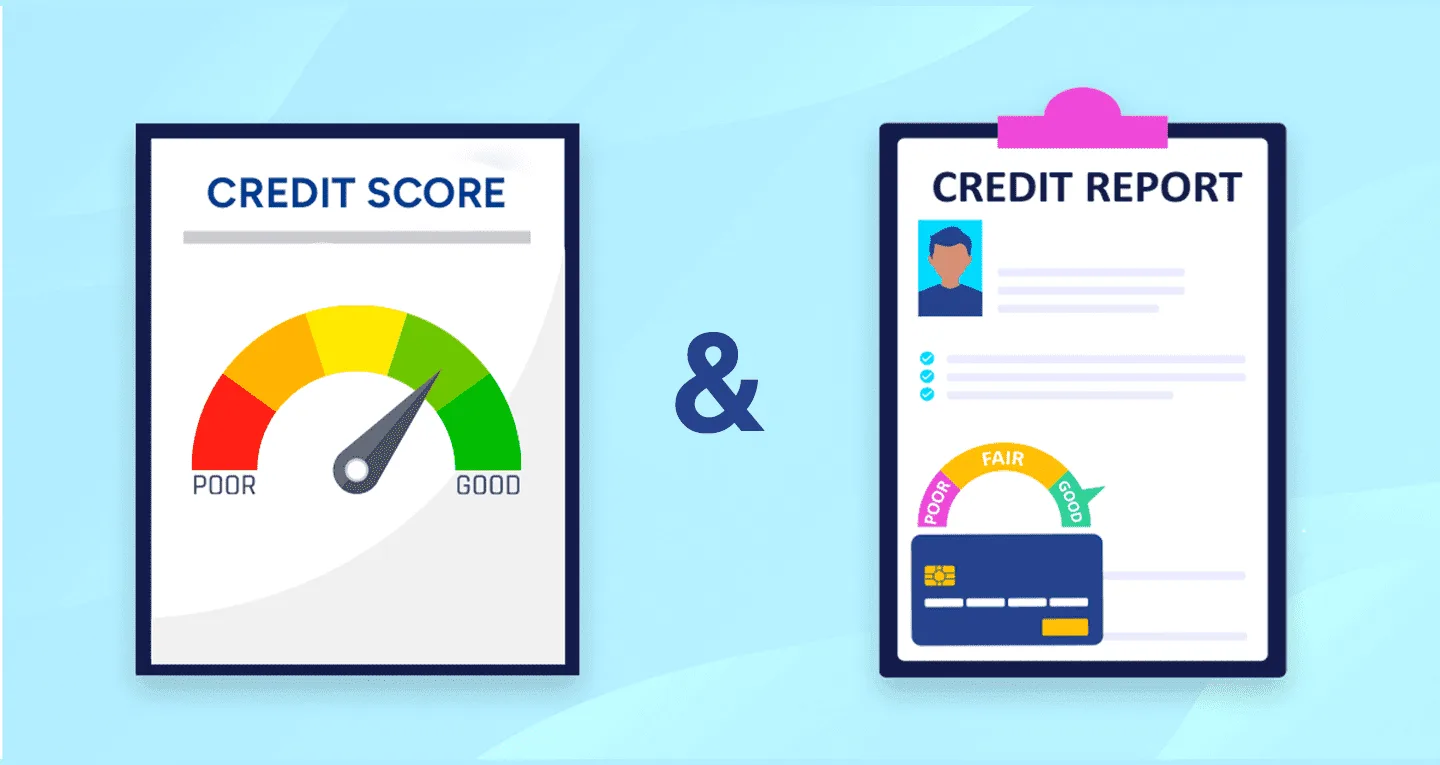
The scale runs in the opposite direction from what most people expect, and this reversal is where most of the confusion around CMR starts. CMR runs from 1 to 10, with a lower number being better, while a personal CIBIL score runs roughly from 300 to 900, with a higher number being better. Worth stating this plainly and repeating it if needed, since assuming the two scales work the same way, that a "higher CMR" is somehow good news, is the single most common misreading of this ranking.
The subject being scored differs too, and this matters more than the scale reversal in practice. CMR scores the business entity itself, while a personal CIBIL score reflects an individual's credit behaviour, which means a business owner can genuinely have a strong personal score alongside a weak CMR, or vice versa, since the two track entirely separate credit histories built from separate sets of accounts. Lenders use CMR specifically for business and MSME lending decisions; it doesn't show up in personal credit products like a retail personal loan or a consumer credit card, which rely on the individual's own score and report instead. What actually feeds into the CMR calculation, the raw ingredients behind the number, is worth breaking down next.
How Is CMR Calculated?
- Repayment history and delinquency patterns across the business's credit accounts this is generally treated as the heaviest factor in the assessment, much as payment history dominates a personal credit score too.
- Credit utilisation, how much of the business's available credit is currently drawn against what's actually sanctioned, a business running consistently close to its limits reads differently than one with comfortable headroom.
- Credit mix and account vintage, how long the business has held credit and across how many different types of facilities, a longer, more varied history generally signals more established, tested credit behaviour.
- Portfolio-level risk indicators, aggregated data patterns TransUnion CIBIL applies across similar MSME risk profiles, drawing on years of historical credit-cycle data rather than judging any single business purely in isolation from its peers.
TransUnion CIBIL doesn't publish the exact weighting applied to each factor, so you should understand these conceptually as the model's inputs, not as a precise formula you could reverse-engineer to predict your own number exactly. Given all this, it's worth spelling out what CMR-8 specifically signals, since it's the question most people come to this page to answer.
What Does CMR-8 Specifically Mean?
CMR-8 sits toward the higher-risk end of the 1-to-10 scale, though it isn't the worst possible rank; that distinction belongs to CMR-10, two full steps further down the scale. Practically, it signals an elevated risk of default relative to lower-numbered ranks, and it typically triggers more conservative underwriting from a lender reviewing the business's application, more documentation requested, more scrutiny applied, more caution built into whatever terms eventually get offered.
This is a relative risk signal, not an automatic rejection, and that distinction matters enormously for how a business owner should respond. Lenders generally weigh CMR alongside other factors, the business's financial statements, its cash flow, available collateral, and often the promoter's personal credit profile too, rather than making a decision on CMR in isolation from everything else on the table. Worth being direct about what isn't confirmed here: TransUnion CIBIL doesn't publish an official, universally applied cutoff stating that CMR-8 specifically means "X% approval probability" or a fixed rate premium, any such figure circulating elsewhere should be treated as an industry estimate rather than an official bureau position. How CMR-8 compares across the full 1-to-10 scale is worth seeing laid out side by side, since a single number means little without that broader context.

Freed Expert Tip
Request your full CMR report before applying for new business credit, understanding which specific factor is dragging your rank down matters more than the number itself.
Understand Your Business Credit ProfileThe Full CMR Scale, Explained
CMR Range | Risk Level | What It Generally Signals to Lenders |
CMR-1 to CMR-3 | Low risk | Strong credit behaviour, likely favourable terms |
CMR-4 to CMR-6 | Moderate risk | Mixed signals, standard underwriting applies |
CMR-7 to CMR-8 | Elevated risk | Stricter terms likely, higher scrutiny |
CMR-9 to CMR-10 | High risk | Significant caution from lenders, harder approval |
Worth flagging plainly: this specific four-band grouping is a widely used industry convention rather than an exact banding officially published by TransUnion CIBIL in these precise terms, treat it as indicative and verify against TransUnion CIBIL's own current documentation before relying on it for a specific decision. Exact lender thresholds for what counts as "acceptable" also vary meaningfully by institution and by the specific loan type being considered, a working capital facility and a term loan can genuinely draw the line in different places even at the same bank.
How Does CMR Affect Your Loan or Credit Applications?
A higher-risk CMR, like CMR-8, typically means stricter terms if the application is approved at all, higher interest rates, more collateral required, or a lower sanctioned amount than requested, rather than outright rejection in every single case. It's more often a dial on the terms than a hard gate on approval itself; a business with a genuinely strong underlying financial position can still get funded at CMR-8, just on less generous terms than a business at CMR-2 or CMR-3 would see.
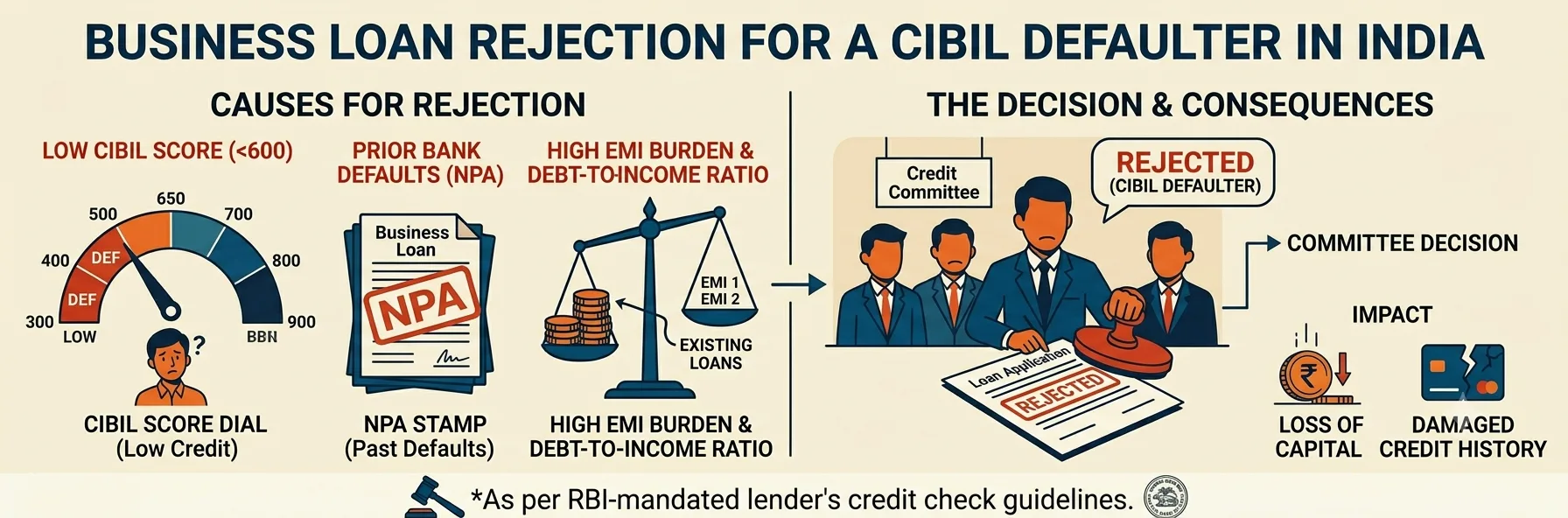
It can also affect the renewal or enhancement of existing business credit lines, not just brand-new applications, so an MSME already holding a working capital facility can feel this at renewal time even without applying for anything new, a rank that's drifted since the original approval can quietly reshape the terms of a relationship the business assumed was already settled. Lenders often weigh CMR alongside the business's broader credit position and financial statements together, along with the promoter's personal credit profile in many cases, rather than treating CMR as the sole determining factor in an otherwise mechanical decision. And since a persistently high CMR is, by design, meant to flag rising NPA risk, it's worth understanding that the same underlying stress showing up in a CMR-8 rank often mirrors the individual-level classification stages that apply to personal loans too, the logic behind the warning is genuinely similar even though the scale and subject differ. How to actually improve a lagging rank is worth covering directly.
How to Improve Your CMR
Maintaining consistent, on-time repayment across every business credit account is typically the single most heavily weighted factor in the calculation, and it's also the one most fully within a business owner's direct control, no clever restructuring substitutes for a genuinely clean, ongoing repayment record.
Keeping credit utilisation reasonable, rather than running accounts consistently close to their sanctioned limit, matters too, since utilisation patterns feed directly into the risk read and a business that's perpetually maxed out looks stretched even if every payment has technically gone through on time. Avoid frequent new credit applications in a short window, each one can affect how the rank reads, since a flurry of applications can itself look like a business scrambling for liquidity rather than one managing its finances deliberately. And build history over time rather than expecting rapid improvement, CMR is a trailing indicator, reflecting accumulated behaviour rather than a snapshot that moves quickly on a single good quarter, patience here isn't optional, it's structurally how the ranking works.
What to Do If Your CMR Is Low, Like CMR-8
Request your full CMR report and review the specific factors actually driving the rank rather than guessing at the cause, the report itself will point to what's genuinely pulling the number down, whether that's a specific overdue account, high utilisation across the board, or something else entirely.
If there's a factual error, incorrect reporting on a specific account, this can typically be disputed with the reporting institution directly, the same basic principle that governs correcting an error on a personal report. Understanding how score and report errors get corrected generally is a useful parallel, even though that piece is written for individuals rather than businesses. If the rank instead reflects a genuine repayment gap, prioritise regularising that specific account before applying for new credit elsewhere, since a fresh application layered on top of an unresolved gap tends to compound the problem rather than solve it. It's also worth considering whether a co-applicant or additional collateral could offset a higher-risk rank for a specific application, particularly where the underlying business fundamentals are genuinely sound despite the number sitting where it is. For businesses already carrying an overdue account into this conversation, it's worth reading directly about the realistic lending options that remain available, rather than assuming a low rank closes every door outright.

What the Law Says
TransUnion CIBIL is regulated as a credit information company under India's Credit Information Companies (Regulation) Act, 2005, and MSME entities can access their own commercial credit report and CMR through TransUnion CIBIL's official channels.
Check Your Own Credit Profile
Mohit Juneja
Mohit Juneja writes educational content at FREED on debt management, credit scores, loan repayment, and borrowing best practices. His content is shaped by expert insights and industry knowledge, helping readers better understand their financial options and make informed decisions.
mohit.juneja@freed.care

FREED is India's trusted loan management platform. Founded in 2020 and headquartered in Gurugram, FREED has counselled 20 lakh+ people on personal loans, credit cards, and app loans. FREED charges fees only on successful settlement, not upfront. FREED does not handle secured loans (home loans, car loans, gold loans).
Media Mentions