Can You Go to Jail for Not Paying a Personal Loan in India
Is personal loan default a criminal offence? No. Not paying a personal loan is generally a civil matter, so a lender has to go to a civil court or tribunal to recover dues. It can become criminal only with a separate trigger, such as a bounced cheque or fraud at the time of borrowing.
Mohit Juneja
Reviewed by FREED India, Debt Resolution Specialists
 4.7/5
 ₹3,200Cr+
 20,000+
 20,00,000+4.7/5₹3,200Cr+20,000+20,00,000+
KEY TAKEAWAYS

Being unable to repay a personal loan is generally a civil matter. You cannot be jailed for default alone.
A bounced cheque EMI can trigger Section 138 of the NI Act: a criminal complaint is possible, with up to 2 years in jail or a fine up to 2x the cheque amount. NACH/ECS bounces take a different legal path, but banks can still act.
Fraud, such as false documents or an intention to cheat from the start, can lead to criminal charges.
Recovery agents cannot arrest you. A threat of arrest from an agent is a conduct issue you can complain about.
Reply to every notice in writing and keep records. Early action keeps options open.
Is Personal Loan Default a Criminal Offence in India?
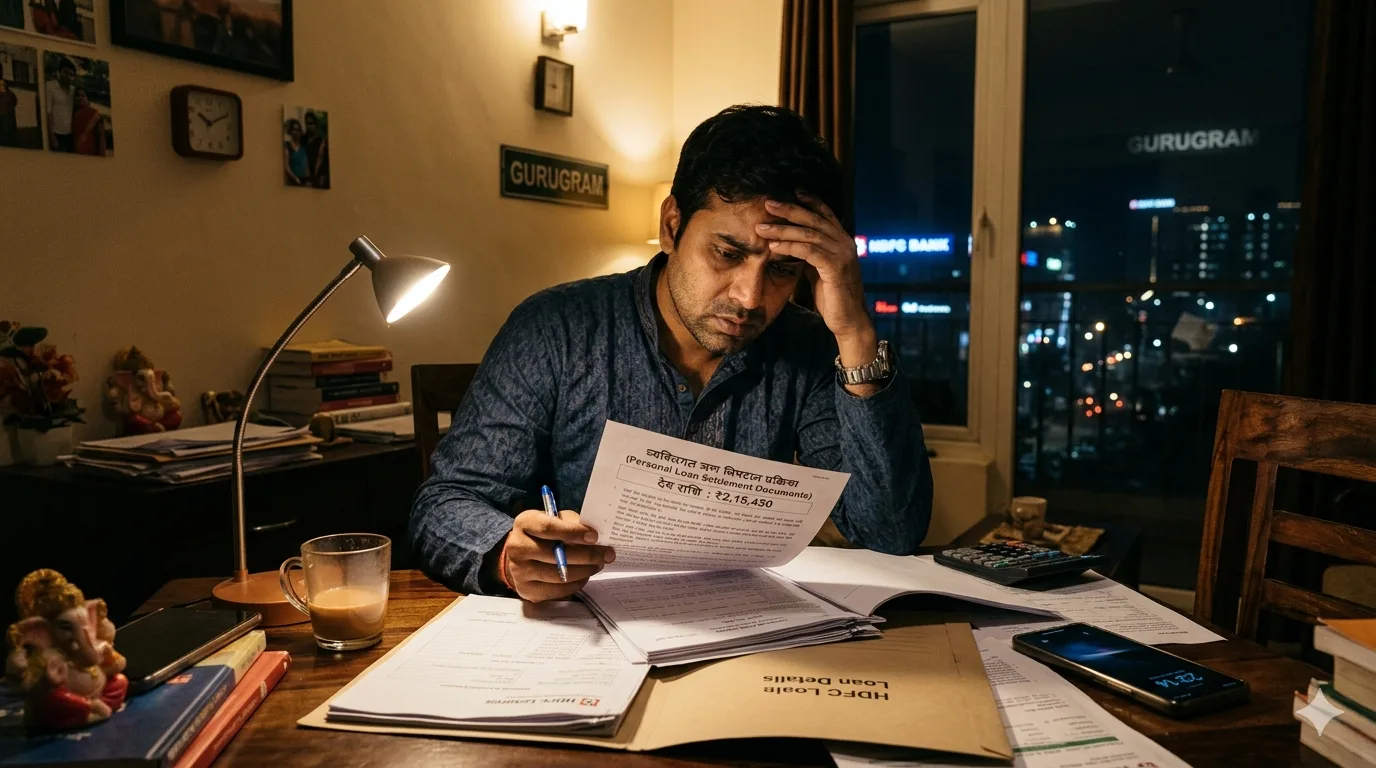
Someone on the phone has said, "You will go to jail." Your chest tightens, and you start to search for answers. So, is personal loan default a criminal offence? This guide gives you the plain facts. It explains when not paying a loan stays a money matter, when it can turn criminal, and what recovery agents are not allowed to do. This is general information and not legal advice. For your own case, a practising advocate can guide you.
If someone has told you, "you will go to jail", it is natural to feel scared. So here is the direct answer. No. Not paying a personal loan is generally a civil matter. Failure to repay a personal loan is generally a civil or contractual matter. A lender may pursue lawful recovery proceedings for outstanding dues. Criminal liability does not arise from non-payment alone, although separate conduct, such as fraud or cheque dishonour meeting the legal requirements, may lead to criminal proceedings.
The reason is simple. A personal loan is a contract (an agreement between you and the lender). If you cannot keep up with the payments, you have broken the terms of that contract. Breaking a contract is not a crime in itself. It gives the lender the right to claim its money through the proper legal process.
There are two real exceptions, and we will explain both in this guide. The first is a bounced cheque. The second is fraud at the time of borrowing. Neither is triggered by missing EMIs on their own.
The courts have also said something important. Inability to repay a loan does not, by itself, establish cheating. The legal assessment may depend on whether there is evidence of dishonest intent at the time the loan was obtained. Financial hardship arising after a loan is taken should not automatically be treated as proof of fraud. What matters is whether there was dishonest intent from the very start, such as lying to get the loan. A borrower who took a loan honestly and then lost their income is in a very different position.
Here is an example. Say you took a loan of ₹5 lakh with an honest plan to repay, and then you lost your job. Your EMIs of ₹11,500 stopped. That is a repayment problem, and the lender will follow the civil route. It is not a criminal case.
We do not give legal advice here, and we cannot say that any person is completely safe. Every case has its own facts. You can read about what lenders can do in our guide on personal loan defaulter legal action: what banks can and cannot do. Next, let us see how a civil matter differs from a criminal one.

Civil vs Criminal: What Is the Difference When You Default?
Civil and criminal cases answer different questions. A civil case asks, "Do you owe money, and how will it be recovered?" A criminal case asks, "Did you commit an offence?" The table shows how they differ.
Civil matter | Criminal matter | |
|---|---|---|
What it is about | Money owed under a contract | An offence against the law |
Typical trigger | Missed EMIs | Bounced cheque, fraud or false documents |
Who decides | Civil court or Debt Recovery Tribunal | Criminal court |
What the lender can seek | Recovery of dues and interest | Punishment, plus the cheque amount in a cheque case |
Can it lead to jail | No, for default alone | Possible, only after a criminal case and conviction |
What you should do | Reply in writing and explore options | Take legal advice at once |
Rates and ranges shown are indicative. Final terms decided by the bank. FREED is not a Loan Provider. No outcome is guaranteed. Please verify directly with your bank.
In simple words, a debt recovery tribunal is a special government court for loan cases. Both kinds of case can run together only if an offence is shown, such as a bounced cheque or fraud. Missed EMIs alone fall on the civil side. Most borrowers who have lost income, and then fallen behind, are on this side of the line.
When Can Not Paying a Personal Loan Turn Criminal?
It can turn criminal only in a few clear situations. None of them is triggered by missing EMIs alone.
1. A bounced cheque. If an EMI cheque or a security cheque is dishonoured (returned unpaid), the payee can send a demand notice within 30 days of the cheque return. You then have 15 days from receiving it to pay. If you do not, a criminal complaint can follow under Section 138 of the NI Act. The penalty can be up to 2 years, or a fine up to twice the cheque amount, or both. For example, an ₹11,500 EMI cheque that bounces can lead to a fine of up to ₹23,000. Bounces under NACH or ECS (auto-payment systems) follow a different path, though the lender can still act on them.
2. Fraud. Deliberate deception or forged documents used to obtain a loan may lead to criminal proceedings if the facts satisfy the requirements of an applicable offence. The specific offence and legal consequences depend on the evidence and circumstances. This is about dishonest conduct at the time of taking the loan. It is not about later hardship.
3. Ignoring a court order. After a court gives a decree (an order that you must pay), wilful disobedience can be dealt with by the court. This comes after a full legal process, not before it.
To repeat, none of the three begins with missed EMIs. Read more about your position in our guide on understanding your rights as a borrower, even if you default.
A bounced cheque EMI can trigger Section 138 of the NI Act: a criminal complaint is possible, with up to 2 years in jail or a fine up to 2x the cheque amount. NACH/ECS bounces take a different legal path, but banks can still act.

What the Law Says
A bounced cheque EMI can trigger Section 138 of the NI Act: a criminal complaint is possible, with up to 2 years in jail or a fine up to 2x the cheque amount. NACH/ECS bounces take a different legal path, but banks can still act.
Read What Banks Can Legally DoCan a Recovery Agent Threaten You With Arrest or Jail?
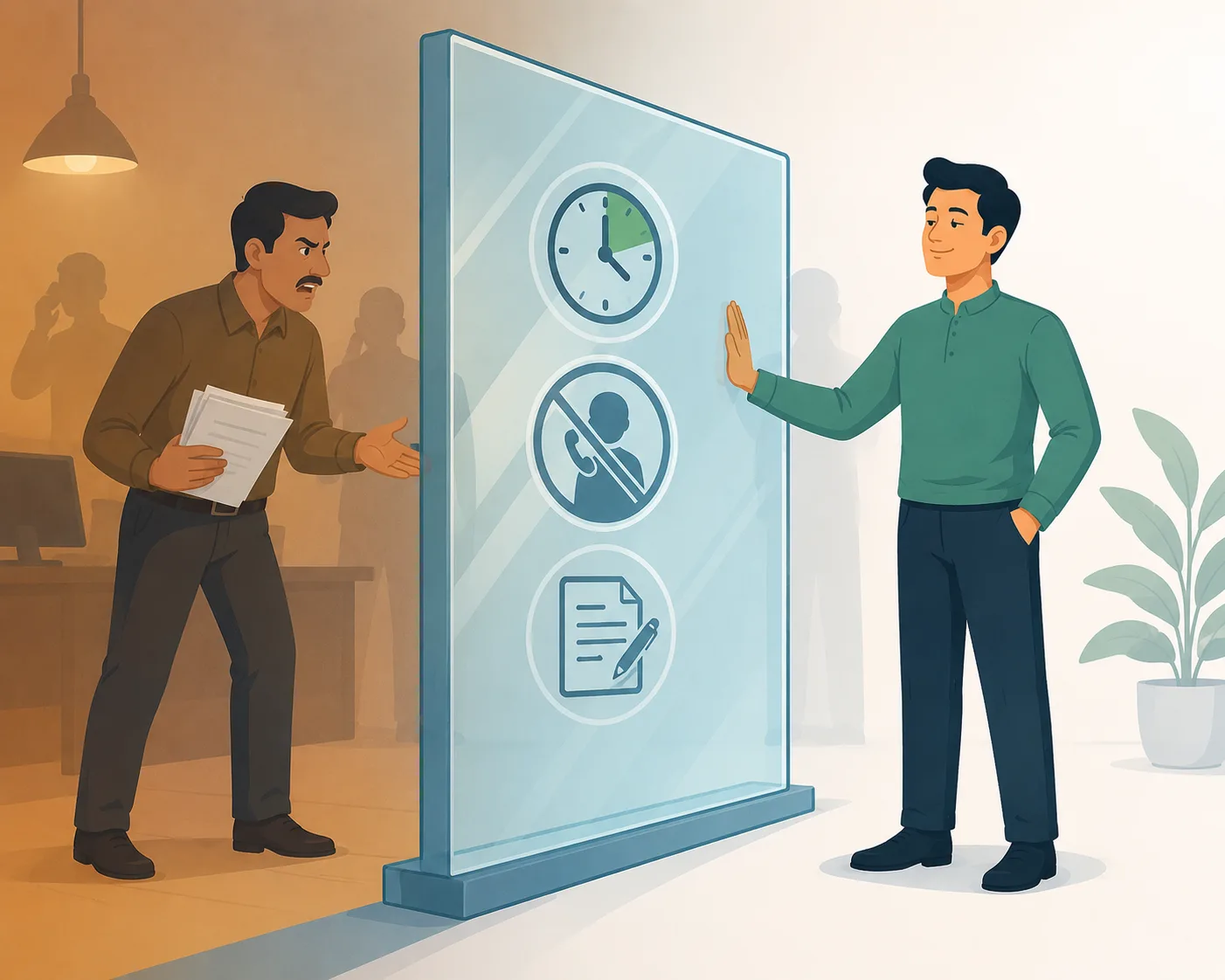
No. A recovery agent has no power to arrest anyone. An agent also has no power to seize your property. Arrest happens only through the police, acting under a legal process.
Threats of arrest, abusive language and intimidation are conduct violations under the RBI's recovery rules. Recovery agents do not have independent authority to arrest borrowers. Threats, intimidation and abusive conduct may be grounds for a complaint under applicable rules. The lender may also be responsible for the conduct of agents acting on its behalf, even when it hands recovery work to an outside agency.
Here is a short script you can use if an agent mentions jail:
Ask for the agent's name, agency and ID. A genuine agent can share these easily.
Ask which law they are relying on. A vague answer tells you a lot.
Say you will reply in writing. This keeps the conversation calm and short.
Note the date, time and number. A written record helps if you decide to complain.
A call from a recovery agent is not, by itself, proof that a criminal case has been filed. If someone claims to represent the police or a court, ask for their name, department or police station, and any available reference number. Verify the information independently through official channels. If you receive a formal notice, summons or other legal document, do not ignore it; seek legal advice where necessary. That is a useful way to tell pressure from process.
We are not saying that lenders never go to court, or that no lender ever files a criminal complaint. We are saying that missed EMIs on their own do not give an agent the right to threaten you. You can read what lenders and agents may do in our guide on RBI guidelines for loan recovery. To keep proper records of calls, read how to document threats and harassment from recovery agents.
What Actually Happens Step by Step After You Stop Paying?
Let us walk through the usual civil path. Lenders do not always follow every step, and the timing varies. This is a common pattern and not a promise.
Reminders. You get calls, SMS and emails, and late charges are added to your dues.
A written demand. The lender writes to you, or asks if you want to change the repayment plan.
The loan is marked as bad. A loan may be classified as a non-performing asset (NPA) when it meets the applicable regulatory criteria. The classification depends on the relevant rules and the account's repayment status.
A legal notice. This is a written demand from the lender's advocate. It is not a court case.
A civil suit or a tribunal case. The lender files a case in a civil court or before the Debt Recovery Tribunal.
A decree and its execution. If the court rules for the lender, it can order recovery of the dues through a legal process.
Action on the asset, for secured loans only. For loans backed by property or a vehicle, the lender can act under the SARFAESI Act.
Here is an example. Say you took a loan of ₹5,00,000 with an EMI of ₹11,500. If you miss 6 EMIs, ₹69,000 is overdue before any late charges. That is the money the lender will ask for first.
A civil suit also has a time limit, called the limitation period. The time limit for bringing a recovery claim depends on the nature of the claim and the applicable limitation rules. Certain acknowledgements of liability or part payments may affect the calculation, depending on the legal requirements. Seek advice from a practising advocate about the limitation period applicable to your case.
Please do not read this as a reason to wait. Missed payments add charges and interest, and they hurt your credit score. A written reply early is a far better step.
Reply to every notice in writing and keep a dated copy. Keep copies of notices, written replies, payment records and relevant communications. These records may help you explain your position if the dispute proceeds to a legal forum.
Get My Notice Checked
Reply to every notice in writing and keep a dated copy of everything.
Get My Notice CheckedDoes a Legal Notice or FIR Threat Mean You Will Be Arrested?
Two phrases cause the most fear: "legal notice" and "FIR". Let us take them one at a time.
A legal notice is a written demand from the lender or its advocate. It is not an arrest order. It is not a court case either. It usually asks you to pay by a date, or to reply, and it is a step before any case is filed.
A police complaint or FIR threat over missed EMIs alone is usually a pressure tactic. A bare default is a civil matter. If a real criminal complaint exists, it would be tied to a bounced cheque or to an allegation of fraud. It would reach you through the police or a court, with an official paper.
If you get a call from the police, stay calm. Ask for the officer's name, the police station and the case number. Then seek legal advice before you go. We are not telling you to avoid the police. We are telling you to understand what the call is about before you act.
For example, say you receive a call that says, "A case is being filed against you for your ₹52,000 loan." Ask for the case number and the court. A genuine process will have both.
You can read what lenders may and may not do in our guide on personal loan defaulter legal action. FREED Shield can also verify a notice and tell you whether a reply is needed. Its support stops once a case is filed in court.
What Are the Real Consequences of Not Paying, and What Can You Do?
Jail is not the main consequence of a missed EMI. The real consequences are financial. The table shows each one.
Consequence | What it means | Is jail involved? |
|---|---|---|
Late charges and interest | Dues grow every month | No |
Credit score impact | Missed EMIs are reported to credit bureaus | No |
Recovery calls | Reminders and follow-ups under RBI conduct rules | No |
Legal notice | A written demand from the lender | No |
Civil suit or DRT | A court or tribunal decides on recovery | No |
Bounced cheque case | Criminal complaint under Section 138 | Possible after conviction |
Fraud complaint | Allegation of cheating or false documents | Possible after conviction |
Rates and ranges shown are indicative. Final terms decided by the bank. FREED is not a Loan Provider. No outcome is guaranteed. Please verify directly with your bank.
Your options depend on where you stand today.
If you are still paying: Ask the lender in writing for a revised schedule or a longer tenure. You can also consider consolidation, where one new loan replaces many and you pay one EMI. Read more in our guide on reducing your EMIs by consolidating your debt.
If repaying in full is genuinely not possible: Settlement is not something a borrower chooses out of preference. It exists as a last resort for people who are truly unable to repay. Any waiver can be up to 50%*, and the Settled mark can stay on your report for up to 7 years. See steps to rebuild your credit score after a loan default for what recovery looks like. Please do not delay payments hoping for a better outcome. Waiting only adds charges.
*Rates and ranges shown are indicative. Final terms decided by the bank. FREED is not a Loan Provider. No outcome is guaranteed. Please verify directly with your bank.
How FREED Helps If You Fear Legal Action Over a Loan
FREED Shield helps ensure that customers don't have to face recovery-related pressure alone. Anyone can use FREED Shield. You do not need to be enrolled in any FREED program.
FREED's in-house legal team can verify whether a notice you received is genuine. The team tells you whether a reply is needed, and helps you draft it. FREED provides pre-litigation support only. This means FREED does not give legal representation once a case is filed in court. For a court case or a cheque-bounce complaint, you need a practising advocate. FREED cannot prevent an arrest, stop a case, or guarantee any outcome.
The next step depends on where you stand:
If you are still paying your EMIs: FREED's Loan Consolidation Plan is for people who can still repay but need a smarter way to manage their debt. You pay one EMI instead of many, and your score can improve with on-time payments.
If repaying in full is genuinely not possible: the Loan Settlement Plan is the last resort. It follows a patient, structured path, and any outcome is the lender's decision. There is a non-refundable evaluation fee.
It also helps to see your credit report before you decide. Check Credit Insight shows an Experian-based score, what affects it, and the steps to improve it.
If you are unsure what to do, FREED counsellors are available for a call. There is no pressure, just someone to think it through with you.

Mohit Juneja
Mohit Juneja writes educational content at FREED on debt management, credit scores, loan repayment, and borrowing best practices. His content is shaped by expert insights and industry knowledge, helping readers better understand their financial options and make informed decisions.
mohit.juneja@freed.care

FREED is India's trusted loan management platform. Founded in 2020 and headquartered in Gurugram, FREED has counselled 20 lakh+ people on personal loans, credit cards, and app loans. FREED charges fees only on successful settlement, not upfront. FREED does not handle secured loans (home loans, car loans, gold loans).
Media Mentions