Bajaj Finserv Loan Restructuring: Eligibility, Process and Documents Needed
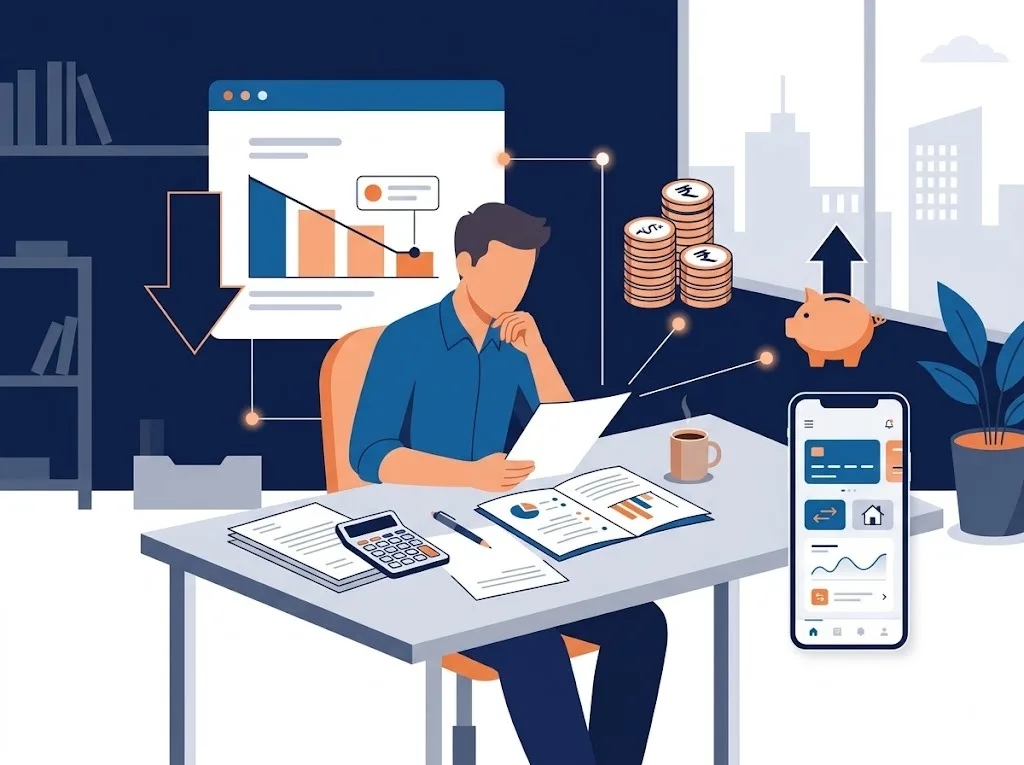
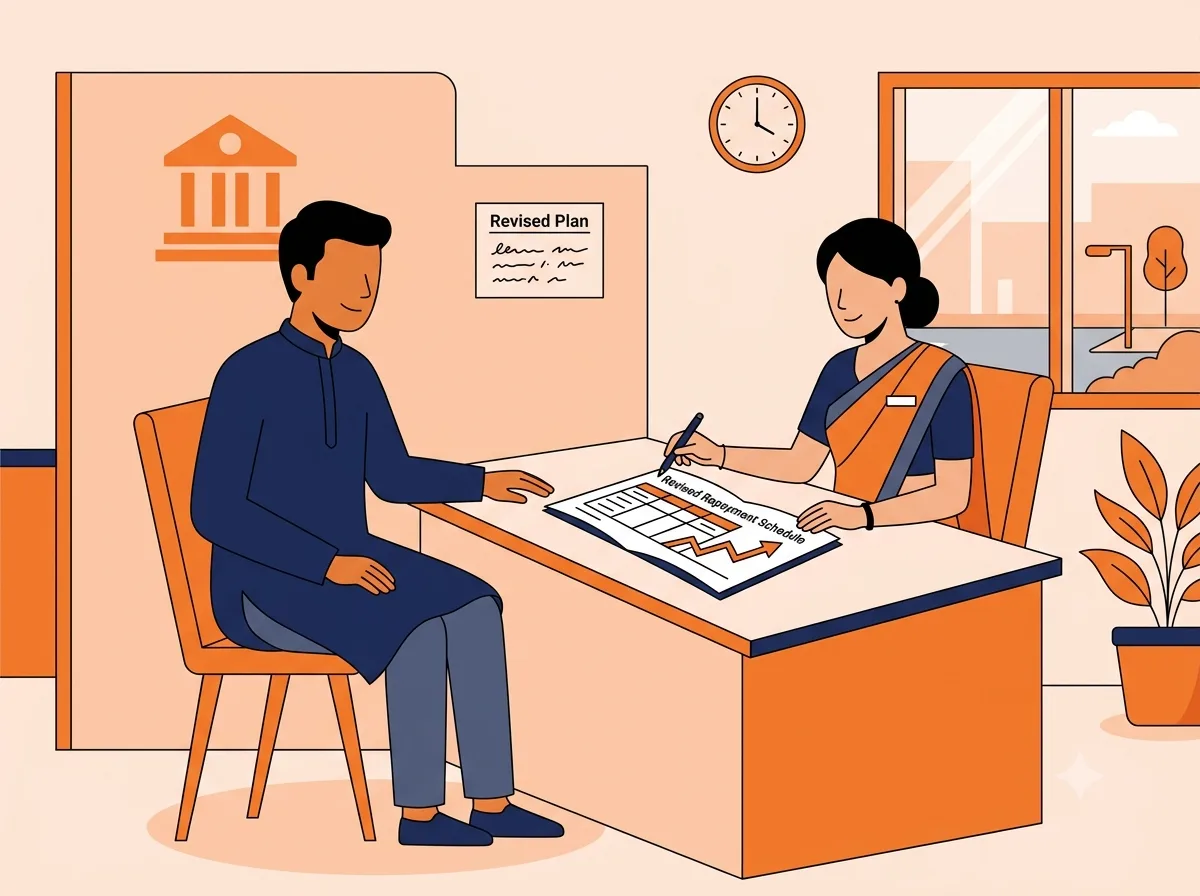
Bajaj Finserv loan restructuring means Bajaj Finance Limited changes the repayment terms of your existing loan, such as the tenure (repayment time) or the EMI, because you are under genuine financial stress. You still owe the full amount. Bajaj Finance’s COVID-era resolution plan is closed, and any request today is reviewed against its own policy.

Mohit Juneja
Reviewed by FREED India, Debt Resolution Specialists
 4.7/5
 ₹3,200Cr+
 20,000+
 20,00,000+4.7/5₹3,200Cr+20,000+20,00,000+
Key Summary

The COVID-era plan is closed. Bajaj’s own site says the company cannot offer restructuring under that RBI framework now.
Today you can send a written hardship request. Bajaj reviews it case by case, and nothing is guaranteed.
Bajaj names its customer service portal, its mobile app, and a “Raise a request” form as places to start. It names salary slips and a repayment-account bank statement as documents.
A longer repayment time lowers your EMI but raises total interest. A pause can raise the later EMI. Ask how the change will be reported on your credit report.
Is Bajaj Finserv Loan Restructuring Still Available?
Quick answer: Bajaj Finserv loan restructuring means Bajaj Finance Limited changes the repayment terms of your existing loan, such as the tenure (repayment time) or the EMI, because you are under genuine financial stress. You still owe the full amount. Bajaj Finance’s COVID-era resolution plan is closed, and any request today is reviewed against its own policy.
Not in the form many people remember. Bajaj Finance’s COVID-era restructuring plan has closed, and the company’s own page says it cannot offer restructuring under that RBI framework now. What you can still do is write to Bajaj Finance and ask for changed terms because of hardship. The company may accept or refuse under its own policy.
Most people land on this question the same way. A salary has been cut, or a business has slowed, or a medical bill has eaten two months of savings. The Bajaj EMI is still going out on the same date, and the balance after it is getting thinner. Somewhere in that month a search starts: “Bajaj Finserv restructuring”. And the results are a mix of old COVID-era news and pages that do not say what open today is. This guide separates the two.
One naming point first. The company that holds your loan is Bajaj Finance Limited. “Bajaj Finserv” is the group name, and it is also the name of the website and app many customers use. Bajaj Housing Finance is a separate company, so check the name on your sanction letter before you write to anyone.
In this guide:
What the closed plan was, and why it ended
Who can ask for changed terms today
Which Bajaj loans this can apply to
How to apply, step by step, and which documents to send
How your EMI and credit report can change, with worked numbers
What to check before you sign
What to do if Bajaj says no
None of this is a Bajaj offer. It is a guide to asking well. Asking before you miss EMIs generally leaves you more room than asking after, though that is a general observation and not a Bajaj rule. For the basics, read what a restructured loan means and loan rescheduling vs restructuring.

Not sure whether to ask Bajaj Finance for restructuring or look at another route?
Talk to a FREED counsellor and compare your options.
Talk to a CounsellorWhat Was Bajaj Finance’s COVID Restructuring Plan, and Why Did It Close?
It was Bajaj Finance’s version of RBI’s Resolution Framework 2.0, a one-time window for borrowers hurt by the second COVID wave. The window had a hard end date, and it passed in late September 2021. That is why the plan no longer exists.
Timeline of the closed plan
When | What happened |
31 March 2021 | Your account had to be classified “Standard” on this date to qualify |
May 2021 | RBI announces Resolution Framework 2.0 for individuals and small businesses |
Within 30 days | Bajaj says it would review a request and reply within this time |
Late September 2021 | Last date to apply. The plan closed |
The rules were strict, and Bajaj’s FAQ for the plan spells them out. Partial restructuring was not allowed, so you could not restructure just one loan and leave the rest. A moratorium (a pause in payments) of up to 24 months was possible at Bajaj’s sole discretion, and interest during it was not waived. Once the documents were executed, you could not opt out.
Why does this old history matter today? Because it explains two things you will still see online. First, plenty of pages still describe the plan as if it were open, with deadlines long past. Second, the terms of that plan set an expectation (a paused EMI, a lower EMI) that a fresh hardship request may or may not match.
So what happened to people who missed the window? Bajaj’s current page says the date has passed. Anything you ask for now is a fresh request, judged on hardship and Bajaj’s policy, not on that framework.
Nobody can reopen the closed plan for a fee. If someone offers to “get your Bajaj restructuring approved” for money, walk away. Only Bajaj Finance can change your loan.
Not sure which route fits your loans?
A FREED counsellor can compare restructuring, consolidation and settlement with you.
Talk to a FREED CounsellorWho Can Ask Bajaj Finance to Change Their Loan Terms Today?
Anyone with a Bajaj loan can ask. Whether the answer is yes depends on what you can prove and how your account looks. Bajaj has not published a fixed eligibility list for individuals, so nobody can quote you one.
Here is how the closed plan compares with a request made today.
Closed plan (2021) | Today | |
Account status | “Standard” on 31 March 2021 | Reviewed case by case |
Window | Ended in late September 2021 | No cut-off date to cite |
Scope | All or none of your loans | Ask Bajaj how it treats each loan |
Basis | RBI framework | Bajaj’s own policy and RBI’s rules |
What usually helps, and what usually hurts, is a matter of common sense and general practice. Bajaj does not publish this as a rule.
Usually helps | Usually hurts |
Proof of hardship (job-loss letter, medical bills) | A vague request with no reason |
An on-time earlier record | Several EMIs already missed |
Asking early, in writing | Asking only after recovery calls start |
Stating the EMI you can pay | Asking for “any relief” |
Think about how the request looks from the other side of the desk. A request that says “income fell from ₹60,000 to ₹35,000 on 1 August, proof attached, I can pay ₹9,500 from November” is easy to assess. A request that says “please give relief” gives the reviewer nothing to work with.
Bajaj’s guidance for people who lose a job says restructuring depends on the company’s assessment and approval. It also says to contact Bajaj through an official channel and explain the change in income. That is the closest thing to a published process, and it matches what the steps below recommend.
What if you are already overdue? Bajaj’s own guidance says a default affects CIBIL, that clearing an overdue amount does not automatically remove an earlier delay, and that continued non-payment can increase the overdue amount. So an overdue account does not rule out a request, but each missed EMI makes it harder. We cannot say how Bajaj treats an overdue request. Ask.
How do you know if you are close to trouble in the first place? Check how much of your pay your EMIs already take with the EMI Score, and read about the debt-to-income ratio. If your EMIs take more than half of your take-home pay, a request for changed terms is worth making early.
Which Bajaj Loans Can You Ask to Restructure?
You can write about any loan you hold with Bajaj Finance, but how each is treated is Bajaj’s decision. These are the common types and what to check on each.
Personal loan
The most common request. Ask for a lower EMI through a longer repayment time, or a short pause. Because a personal loan has no asset behind it, the proof of hardship carries more weight here.
Business or professional loan
Same approach. Bring business bank statements and proof that income has fallen, such as a drop in monthly credits. Say whether the business is still running.
Consumer durable and EMI Network card purchases
These are small loans tied to a purchase, such as a phone, a fridge, or a laptop. Ask whether the EMI Network card is affected if you change terms, because a blocked card is a common side effect. Also ask whether each purchase is treated as its own loan or all of them together.
Two-wheeler and car loans
These are secured against the vehicle. Ask Bajaj about its approach to security and repossession before you rely on any change.
Home loan and loan against property
Check the entity named on your sanction letter. It may be Bajaj Housing Finance, a different company with its own process. Do not assume the steps for a personal loan apply.
A quick way to sort your loans: pull the sanction letter for each one. Note the company name, the loan type, and the account number. Then write to Bajaj about each loan separately, or ask whether one request can cover several.
FREED works only with unsecured loans such as personal loans and cards. It does not handle home, car, or gold loans. For your Bajaj personal loan specifically, see Bajaj Finserv loan settlement.
Not sure which of your Bajaj loans can be restructured?
A FREED counsellor can go through your loans with you.
Check My OptionsHow Do You Ask Bajaj Finance to Restructure Your Loan?
You write a clear request, attach proof, send it through one of Bajaj’s channels, and keep a record. Bajaj names its customer service portal, its mobile app, and a “Raise a request” form. Reconfirm these on Bajaj’s site before you use them, because channels change.
Keep paying your EMI on the existing schedule until the change is confirmed, if you can. A request does not pause your EMIs, charges, credit reporting, or recovery. Treat the old terms as live until Bajaj says otherwise in writing.
What should you say if Bajaj calls you back? Keep it short and factual. Say what changed, what you can pay, and from when. Ask for the same details by email or in the app, so you have them on record. If a caller asks you to pay a fee to a personal account, or to share an OTP, end the call and contact Bajaj through its own app.
How long should you wait before following up? We do not give a decision timeline for a request today, because Bajaj sets its own. A sensible habit is to follow up in writing after about a week of silence, quoting your reference number. If you still hear nothing, use Bajaj’s grievance route.
What about recovery calls in the meantime? They may continue while Bajaj reviews your request. If they turn abusive or threatening, you can document and report them. FREED Shield helps you keep a record of each call. It does not stop calls. Read the RBI guidelines for recovery agents to know what is allowed.
Steps, in order
- 1
Find the right company
Check the sanction letter for the entity name and loan account number. Mixing up Bajaj Finance and Bajaj Housing Finance sends your request to the wrong desk.
- 2
Get your loan statement
Note the outstanding amount, the EMI, the rate, and any overdue charges. You need these numbers to ask for something specific.
- 3
Decide what you are asking for
A lower EMI, a longer repayment time, or a short pause. Be specific, and pick one main ask.
- 4
Collect proof of hardship
A job-loss letter, a salary cut notice, medical bills or business statements showing the drop.
- 5
Raise the request
Use the customer service portal, the mobile app or the “Raise a request” form.
- 6
Put it in writing
The sample letter in the next section shows how.
- 7
Save the acknowledgement
Note the date and reference number. Screenshot the confirmation page.
- 8
Follow up in writing and watch your messages
Check SMS, email and the app for the reply, and accept nothing until the new terms are in writing.
Keeping a record of recovery calls?
FREED Shield helps you log each call. It does not stop calls.
Learn About FREED ShieldWhat Documents Does Bajaj Finance Ask for When You Request Restructuring?
Bajaj’s own wording is: “You’ll need your salary slips and/ or a bank statement of your loan repayment account.” That is the one document line Bajaj publishes. For a hardship request, banks and finance companies commonly ask for more, so be ready, and ask Bajaj which it wants.
A general checklist
Income proof. Recent salary slips, or ITR and business statements if self-employed. Include the slip from before the drop and the one after, so the change is visible.
Bank statements. 3 to 6 months for the account your EMI is paid from. Salary credits and EMI debits should be easy to find.
ID and address proof. PAN, Aadhaar, or similar.
Loan details. Your loan account number and latest loan statement.
Hardship proof. A job-loss letter, salary-cut notice, or medical bills. For a business, a statement showing lower sales.
Is a scanned copy enough?
Usually, yes, when you upload through Bajaj’s own channel. If Bajaj asks for originals, it will say so. Never send originals by courier to a person you cannot verify.
A copy-ready sample letter
To, The Customer Service Team, Bajaj Finance Limited
Subject: Request to revise repayment terms, Loan Account No. [number]
I am [name], holding the above loan. My income has dropped because [reason, with date]. I have attached proof.
I request you to revise my repayment so that my EMI is about ₹[amount], from [date], with the repayment time extended as needed. Please tell me the new EMI, rate, total payable, and any fee, in writing, before I accept.
I have paid [number] EMIs on time so far and want to keep the loan in good standing.
[Name] | [Phone] | [Date]
Keep the tone calm and specific
Say what happened, what you can pay, and from when. Do not threaten or blame. Attach copies, never originals.
Keep a paper trail
Save the acknowledgement, the reference number, and every reply in one folder, on paper or on your phone. If you call, note the date, the time, and the name of the person. Six months from now, that folder is what settles any argument about what was agreed.
One safety rule
Upload documents only through Bajaj’s official app, site or portal. Never share OTPs, card details, or passwords with anyone who calls or messages you. For a longer letter guide, read how to write to your bank.
See your accounts in one place
Credit Insights shows your loans and credit report together.
Check My Credit InsightsHow Does Your EMI Change After Restructuring?
Usually it falls, and the total you pay rises. These are not Bajaj’s figures. They are an illustration on a ₹4,00,000 loan at 15%, using the standard reducing-balance formula. Illustration only. Ask Bajaj for your actual numbers.
Case 1: a longer repayment time
Repayment time | EMI | Total interest |
36 months | ₹13,866 | ₹99,181 |
48 months | ₹11,132 | ₹1,34,350 |
60 months | ₹9,516 | ₹1,70,958 |
Going from 36 to 60 months cuts the EMI by about ₹4,350 and adds about ₹71,800 in interest. That is the trade: breathing room now, a bigger bill later.
Case 2: restructuring midway
After 10 EMIs on the 36-month loan, about ₹3,06,182 is outstanding. Stretching that over 36 fresh months brings the EMI to about ₹10,614. The interest still to pay rises from about ₹54,338 to about ₹75,918. So the EMI drops by about ₹3,250 a month, and you pay about ₹21,580 more in interest over ten more months.
Case 3: a 3-month pause
If interest builds during the pause, the balance grows to about ₹4,15,188. Spreading it over 36 months lifts the EMI from ₹13,866 to about ₹14,393, and total interest goes from about ₹99,181 to about ₹1,18,135. That is about ₹18,954 more. Bajaj’s own FAQ for the closed plan said interest during a moratorium was not waived, so the same question applies to any pause you are offered today.
Case 4: a 6-month pause
The same logic, stretched. The balance grows to about ₹4,30,953. Over 36 months, the EMI becomes about ₹14,939, and total interest reaches about ₹1,37,809, which is about ₹38,628 more than the original. A pause feels like relief in month one. It is the most expensive way to buy time if interest keeps building.
Case 5: a lower rate
Some people ask for a rate cut instead of a longer repayment time. On the same ₹4,00,000 over 36 months, a cut from 15% to 13% takes the EMI from ₹13,866 to about ₹13,478 and interest from about ₹99,181 to about ₹85,193. The EMI barely moves, so a rate cut alone rarely solves a cash-flow problem. Whether Bajaj would agree to one is entirely its call.
Does the new EMI fit your pay?
Take a hypothetical ₹50,000 take-home. A ₹13,866 EMI is about 28% of it. A ₹9,516 EMI is about 19%. Here is the same comparison at other pay levels, for this single loan only.
Monthly take-home | 36 months (₹13,866) | 48 months (₹11,132) | 60 months (₹9,516) |
₹30,000 | about 46% | about 37% | about 32% |
₹45,000 | about 31% | about 25% | about 21% |
₹60,000 | about 23% | about 19% | about 16% |
These shares cover one loan only. If you hold other EMIs, add them. As a rule of thumb, keep all EMIs together under 50% of take-home pay. Check yours with the EMI Score.
How should you read an offer?
Ask Bajaj for these in writing:
The new EMI
The repayment time
The rate
The total payable
Any fee
Then compare the total payable with the cases above. If the total looks far higher than you expected, ask why. For the other side of a pause, read about the EMI moratorium extension.
Are You in a Loan Trap? Quick Check
Move the slider to your total EMIs as a % of monthly salary. See your debt stress level instantly.
EMIs as % of Monthly Salary
What Does Restructuring Mean for Your Credit Report?
The exact reporting depends on the company and RBI’s rules, so this section sticks to what holds in every case.
What Bajaj says
For the closed plan, Bajaj’s FAQ says bureau records are updated with details of the plan availed, and that Bajaj has no say in how other banks and companies use that information. Expect any change to your terms to be visible to others in the same way. A new bank or finance company looking at your report later may read it differently from how you intended.
What gets reported, and how often
Banks and finance companies send updates to credit bureaus on set dates each month. Since 1 July 2026, those are the 9th, 16th, 23rd, and the last day. A missed EMI is reported whether or not you are in talks. So while you wait for written confirmation, the old terms still apply.
What Bajaj’s own guidance adds
A default affects CIBIL. Clearing an overdue amount does not automatically remove an earlier delay from your history. In plain terms: paying late and then catching up does not erase the late mark. It stays in the history even after the account is current.
What to ask Bajaj before you accept
Ask in writing:
How will the account be reported after the change?
Will its classification change?
What do I need to do to keep it on track?
Will my other Bajaj loans be affected?
Keep the reply. It is your reference if the report later disagrees.
What to check on your own report
Look at the account status, the payment history, and the days-past-due entries before you write. That gives you a starting point. Look again after two reporting cycles. If something does not match the letter, raise a dispute with the letter and your payment proofs attached.
Here is a rule few people know. If an entry is wrong, the bank must resolve your complaint within 30 days. After that, RBI’s rules provide ₹100 a day in compensation. Note the date you complained, because the clock starts there.
How does this compare with settlement?
A loan settled for less than the outstanding amount may be reported to credit bureaus with a ‘Settled’ status. This can negatively affect your creditworthiness and future borrowing eligibility. However, there is no fixed credit-score reduction applicable to every borrower. The impact depends on your overall credit history, repayment behaviour, and the credit bureau's scoring model. Any specific reporting duration should be verified against the applicable credit-information rules.
Restructuring is a different outcome, and we do not rank the two. Restructuring keeps the loan running on new terms. Settlement closes it for less than you owe, and it is for people who genuinely cannot repay in full.
See your accounts in one place with Credit Insights. Nobody can promise a recovery time. Read the impact of debt settlement on your credit score and how to read a restructured loan on your report.

Expert Tip
Before accepting new terms, ask Bajaj Finance in writing how the change will appear on your credit report, then check the report yourself after two reporting cycles.
Talk to a FREED counsellorWhat Should You Check Before You Sign?
Read the offer slowly, even if you are relieved to have one. A signature turns it into your new obligation. Here is the checklist, with a line on why each item matters.
The numbers. New EMI, repayment time, rate, and total payable, in writing. If the paper differs from the phone call, go with the paper and ask about the difference.
Charges. Any processing or documentation fee, when it is charged, and whether it is added to the loan. A fee added to the loan also earns interest.
A pause. Whether interest keeps building and whether the later EMI rises. Cases 3 and 4 above show how much.
Reporting. How the account will be reported, in writing.
Start date and auto-debit. The date the new EMI begins and whether your NACH (the standing instruction that pulls your EMI) is being reset. A mismatch can cause a failed debit and a bounce charge.
A missed EMI. What happens if you miss one under the new terms? Ask whether the old terms come back.
Scope. Whether the change covers one loan or all your Bajaj loans.
Your EMI Network card. Whether it stays active.
Who you are dealing with. Only Bajaj Finance can change your loan. Never hand documents, OTPs, or card details to a third party.
Watch for loan-trap signs too. These are the habits that turn a stretched month into a stretched year.
Borrowing on one card to pay another
Using a new loan to cover EMIs
EMIs above what you can pay each month, even after the change
If any of those fit, new terms alone may not be enough. That is the point to compare the other routes, which the next section covers. The wider rules are in loan restructuring under RBI rules.
Want a second look at your numbers?
Share your loans with a counsellor and check what the new terms do to your budget.
Review My NumbersWhat If Bajaj Finance Says No, or the New EMI Is Still Too High?
Settlement is not something a borrower chooses out of preference. So take the options in order, and do not skip a step because a later one sounds quicker.
A home loan or vehicle loan is secured, and FREED does not handle it. Talk to Bajaj first.
Your situation | What may fit | Why |
Paying every EMI but need a lower one | Ask Bajaj to restructure | The loan continues on new terms |
Several loans, all current | Consolidation | One EMI replaces several |
No income, months overdue on unsecured loans | Settlement may be considered | Full repayment is not possible |
A Bajaj secured loan in trouble | Talk to Bajaj first | Outside FREED’s scope |
Rates and ranges shown are indicative. Final terms decided by the bank. FREED is not a Loan Provider. No outcome is guaranteed. Please verify directly with your bank.
Compare the routes in debt restructuring vs debt settlement.
What to do, in order
- 1
Ask for the refusal in writing, with the reason
A “no” with a reason tells you what to fix. Maybe the proof was thin, or the request was too vague. If you think the request was not reviewed properly, use Bajaj’s grievance route, then the RBI complaint process. RBI looks at your complaint. It does not order a company to restructure or settle.
- 2
Consolidation
If you hold several unsecured loans and are still paying on time, a new loan from a lending partner can pay them off and leave one EMI and one date. FREED’s Loan Consolidation Plan helps eligible borrowers explore combining multiple unsecured loans into a single repayment through its lending partners. Eligibility depends on the borrower's credit profile, repayment history, existing
- 3
Settlement
Only for unsecured loans such as Bajaj personal loans and cards, and only when full repayment is genuinely not possible. The bank decides the final terms, and no outcome is guaranteed. A rejected restructuring request does not lead to settlement on its own. FREED’s Loan Settlement Plan covers this. Read our guide to Bajaj Finserv loan settlement.
Still have a question about your loan?
A FREED counsellor can answer it in one short call.
Ask a CounsellorHow Does FREED Help When Restructuring Is Not Enough?
Restructuring is something you ask Bajaj Finance for yourself. FREED does not negotiate it.
What FREED does is help you see the options. A counsellor looks at your loans and helps you work out which route fits: asking Bajaj, the Loan Consolidation Plan, or the Loan Settlement Plan. Many people arrive unsure which of the three applies to them, and a short call often settles that.
The FREED Loan Settlement Plan (also called the Debt Resolution Program or “Settle My Loans”) helps borrowers move from financial distress to a structured path toward resolving their debt. Here is how it works. FREED reviews your full financial picture and builds a personalised plan. You save a fixed monthly amount into a Special Purpose Account (SPA), held by an independent trusteeship company. When the corpus is sufficient, FREED negotiates with your bank and prepares documents and letters. The bank decides the final terms. You approve each settlement before any payout. It takes time, because the savings come first.
FREED covers unsecured loans only. It does not handle home, car, or gold loans. A settled account shows as “Settled” for up to 7 years.
On fees: an evaluation fee applies, and it is non-refundable. A separate success-based fee applies only when a settlement is completed. Banks may reduce dues by up to 50%*.
Rates and ranges shown are indicative. Final terms decided by the bank. FREED is not a Loan Provider. No outcome is guaranteed. Please verify directly with your bank.
Read more about the Debt Resolution Program.
33,000+ accounts settled | 20,00,000+ customers counselled | ₹3,500 Cr+ debt managed
Let FREED look at the settlement side for you
FREED works with unsecured loans such as personal loans and cards.
Settle My LoansSourcing and Verification
Claim | Source |
Closed plan; Bajaj cannot offer restructuring under the RBI framework now | Bajaj Finserv, loan restructuring page |
Plan terms (Standard on 31 March 2021, no partial restructuring, moratorium up to 24 months, interest not waived, bureau update) | Bajaj Finserv, resolution plan FAQ |
Job-loss guidance; default affects CIBIL | Bajaj Finserv, overdue loan due to job loss |
₹100 per day compensation, 30-day correction window | RBI notification, Id=12554 |
Reporting dates from 1 July 2026 | RBI Credit Information Reporting amendment dated 4 Dec 2025 |
EMI and interest figures | Own calculation, standard reducing-balance formula. Illustration only |
Not sure which route fits your loans?
A FREED counsellor can compare restructuring, consolidation and settlement with you.
Talk to a FREED Counsellor
Mohit Juneja
Mohit Juneja is FREED’s Content & Communication Lead with 12+ years of experience across content, media, advertising and digital communications. He holds a postgraduate diploma in Communications from Xavier Institute of Communications, Mumbai, and has worked with organisations including NDTV, The Indian Express, McCann Worldgroup and NABARD.
At FREED, he leads content and communication across loan management, debt resolution, debt consolidation and financial well-being. His work combines research, storytelling and consumer-focused communication to make complex financial topics easier to understand and act on. He has also scripted and produced 11 documentaries on rural development and agriculture for NABARD, with film's selected for the Mumbai International Film Festival.
mohit.juneja@freed.care

FREED is India's trusted loan management platform. Founded in 2020 and headquartered in Gurugram, FREED has counselled 20 lakh+ people on personal loans, credit cards, and app loans. FREED charges fees only on successful settlement, not upfront. FREED does not handle secured loans (home loans, car loans, gold loans).
Media Mentions