Axis Bank Credit Card Late Payment Charges Explained
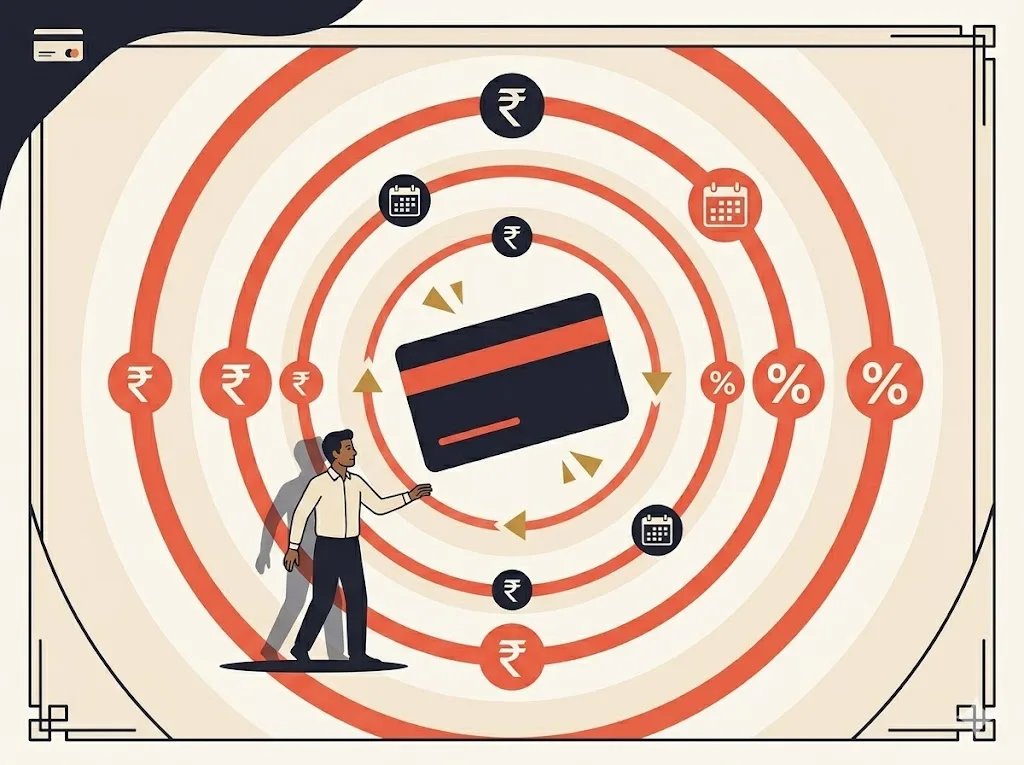
Axis Bank credit card late payment charges apply when the Minimum Amount Due isn't paid by the due date. Fees range up to ₹1,200 plus 18% GST, interest starts on the full outstanding, and a separate ₹100 charge kicks in if two billing cycles are missed in a row.

Mohit Juneja
Reviewed by FREED India, Debt Resolution Specialists
 4.7/5
4.7/5 ₹3,200Cr+
 20,000+
 20,00,000+4.7/5₹3,200Cr+20,000+20,00,000+
KEY TAKEAWAYS

Axis Bank credit card late payment charges go up to ₹1,200, based on outstanding slab, plus 18% GST.
Interest on unpaid balance runs at 3.75% per month, around 45% per year, from the 2024 revision.
Miss the Minimum Amount Due two cycles running, an extra ₹100 consecutive default charge applies, keeps applying until cleared.
RBI mandates a 3-day grace window after due date before penalty enforcement, not an extended due date.
Payment delays of 30+ days may be reported to credit bureaus as Days Past Due (DPD), and future lenders may consider this repayment history during credit assessment.
What Are Axis Bank Credit Card Late Payment Charges
A late payment charge is what Axis Bank applies when your Minimum Amount Due, not your full bill, isn't credited by the due date. That distinction matters more than people usually think. MAD is typically 2 to 5% of your total outstanding, sometimes stated up to 10% depending on the card, so it's a fraction of what you actually owe, not the whole amount.
The fee itself is slab-based, tied to the Total Payment Due on your statement. A higher outstanding balance means a higher fee. On top of whatever fee applies, 18% GST gets added, so the number on your statement is always a bit more than the base slab figure.
A few premium cards, Burgundy Private, Olympus, and Primus, waive the late fee entirely under current terms. That doesn't mean a free pass though, interest still applies on any unpaid balance regardless of card tier.
One common mix-up worth clearing up here: not paying your Minimum Amount Due is what triggers the late fee. Not paying your full bill while covering the MAD avoids the late fee, but interest still builds on whatever's left unpaid. Two separate costs, easy to conflate.
Axis Bank Late Payment Fee Slabs
What | Typical Figure |
Late fee range | ₹0 to ₹1,200, slab-based on outstanding |
Interest rate | 3.75% per month (~45% p.a.), most retail cards |
Consecutive default charge | ₹100, applies after two missed cycles running |
For the exact slab that applies to your specific card and balance, check your latest statement or axisbank.com directly rather than relying on a fixed table, since these figures do get revised.
The Grace Period, What It Actually Covers
RBI mandates a minimum 3-day grace window after your due date before a bank can enforce a late payment penalty. This is worth understanding precisely, because it gets misread constantly.
The grace period exists to cover payment processing time, not to give you a few extra days to pay whenever suits you. Your payment needs to actually clear within this window to count, not just be initiated. A payment you start on day 3 but that only settles on day 4 can still attract a late charge, since what matters is when the money actually lands, not when you clicked pay.
This is a completely different thing from the interest-free period on card purchases, which typically runs 20 to 50 days if you pay your full bill. These two windows get mixed up often, but they serve entirely different purposes, one protects you from a penalty on a near-miss payment, the other lets you avoid interest altogether if you clear your full balance in time.

Freed Expert Tip
Confirm your Axis Bank payment shows "credited," not just "initiated," before the due date. Processing delays still count as late.
Get Help Managing Your Payments with FREEDWhat Happens If You Miss the Payment Repeatedly
The costs stack in a fairly predictable order if a missed payment isn't caught quickly.
First miss: the late fee applies, plus GST, and interest starts building on your full outstanding, calculated from the original transaction date, not from the due date you missed. That backdating is part of why a small delay can cost more than it initially looks like.
Second consecutive miss: an additional ₹100 consecutive default charge kicks in. This shows up starting from the third billing cycle, and it keeps reappearing every cycle after that until the Minimum Amount Due is finally cleared.
Beyond 90 days overdue: the account risks slipping into NPA classification. Recovery calls typically begin around this point, and Axis Bank may reduce your credit limit or block the card entirely.
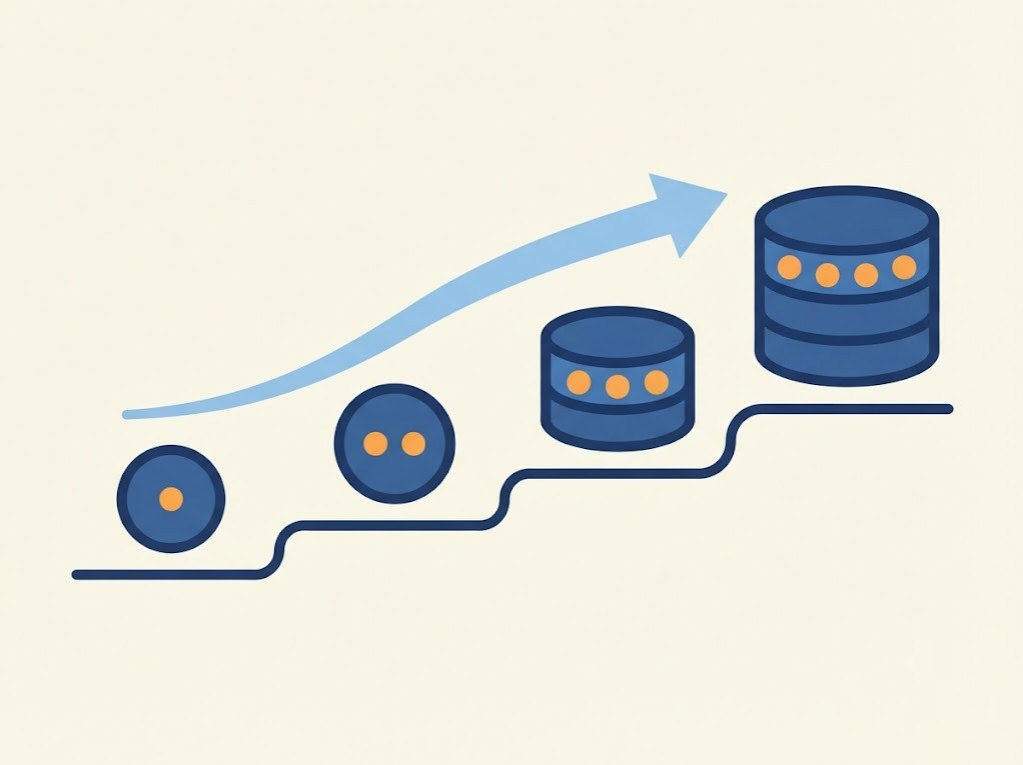
Picture it in plain terms: a missed MAD one month is a fee and some interest, manageable on its own. Miss it again the next cycle, and you're now paying that same fee, more interest on a growing balance, plus the new ₹100 charge, every month, until it's resolved. What starts small compounds fast if it isn't addressed early. The next real worry once you're here is what this does to your CIBIL report, covered next.

What the Law Says
RBI mandates a minimum 3-day grace period after the due date before any bank can enforce a late payment penalty.
Understand Your Rights with FREEDCIBIL Impact of Late Payment
A payment delay affects your credit report once it crosses the reporting threshold set by RBI rules. Currently three days past the due date, not 30. Once reported, it shows as a DPD (Days Past Due) entry.
Payment history is the single biggest factor in your CIBIL score, which is exactly why this particular entry carries so much weight compared to some other report details.
Here's the nuance worth holding onto though: a delay cleared within a few days, well before that 30-day reporting mark, usually doesn't show up on your CIBIL report at all. The late fee and interest still apply regardless of how quickly you catch it, those aren't tied to the 30-day threshold, but the score impact specifically is. So a 2-day slip isn't something to panic over, while a payment sitting unpaid for weeks is a different situation entirely.
If you're not sure which account or which specific entry is actually pulling your score down, FREED can help you read your credit report and pinpoint exactly what's happening rather than guessing.
Are You in a Loan Trap? Quick Check
Move the slider to your total EMIs as a % of monthly salary. See your debt stress level instantly.
EMIs as % of Monthly Salary
How to Avoid Axis Bank Late Payment Charges
A handful of habits prevent most of this from ever becoming a problem.
- Set up auto-debit for the full statement amount, not just the MAD. Paying only the minimum keeps the late fee away but leaves interest running on the rest.
- Set reminders 3-5 days before your due date, not on the day itself, giving yourself room in case of a processing delay.
- Verify your payment status shows "credited," not just "initiated", before assuming you're covered.
- Ask for a one-time goodwill waiver if it's a genuine first-time slip. Axis Bank sometimes grants this for customers with an otherwise clean history, though it's not guaranteed and worth calling to ask about directly rather than assuming.
When Late Fees Point to a Bigger Problem
An occasional late fee from a forgotten due date is one thing. A pattern is another entirely.
Missing your MAD two or more cycles running, or carrying a high outstanding balance across two or more cards at once, isn't really a reminders problem anymore. It's a sign the underlying card debt itself needs restructuring, not just better alerts on your phone.
If that's closer to your situation, still managing payments but genuinely stretched thin across multiple cards, FREED's Debt Consolidation Program is built for exactly this. It combines what you owe across cards into one new loan with a single, lower EMI, replacing the juggling act with one predictable payment instead of several competing due dates.


Juggling Late Fees on More Than One Card?
Combine every card into one lower EMI.
Start My Consolidation AssessmentHow FREED Helps
FREED's Debt Consolidation Program may combine eligible unsecured debts into a single repayment, depending on the approved loan amount, tenure, and lender terms.
FREED starts by assessing your total card and loan outstanding, then matches you to a suitable lending partner. The new loan pays off your eligible unsecured dues instantly, including your Axis Bank credit card outstanding, replacing several minimum-due payments and the recurring risk of a late fee with one lower EMI instead. Your CIBIL score improves over time under this structure, rather than dropping the way it would under continued missed payments. FREED works on a success-based fee, charged only once the consolidation is actually completed, not before.
If you've already missed payments for months and the outstanding has grown genuinely unmanageable, that's a different situation calling for a different tool. FREED helps borrowers settle their unpaid/overdue loans at up to 50% less*.
Steps: Avoiding Axis Bank Late Payment Charges
- 1
Check the Exact MAD
Open your Axis Bank statement or app. Confirm the Minimum Amount Due, not the total bill.
- 2
Pay Before the Due Date, Not On It
Initiate payment at least a day early. Processing time counts against you.
- 3
Confirm Credited Status
Check the app shows "payment credited." Initiated is not the same as received.
- 4
If You Miss It, Act Fast
Pay the overdue MAD immediately. Every extra cycle adds the ₹100 consecutive default charge.
- 5
Request a Waiver If First-Time
Call Axis Bank customer care, ask for a goodwill waiver. Works sometimes, not guaranteed.
Minimum Due vs Late Fee vs Consecutive Default Charge
Charge Type | When It Applies | Typical Amount | GST Applicable |
Late Payment Fee | MAD not credited by due date | Up to ₹1,200, slab-based | Yes, 18% |
Interest on Outstanding | Full bill not paid, runs on entire balance from transaction date | 3.75% per month (~45% p.a.) | Yes, on interest charged |
Consecutive Default Charge | MAD missed 2 cycles running | ₹100, recurring until cleared | Yes, 18% |
Note: Exact figures subject to change, verify current schedule on axisbank.com or your latest statement.
Sources
Claim in blog | Source | |
|---|---|---|
1 | RBI mandates a 3-day grace window before a bank can enforce late fees OR report the account "past due" to bureaus | Master Direction – Credit Card and Debit Card – Issuance and Conduct Directions, 2022 (Apr 21, 2022) |
2 | Beyond 90 days overdue, account risks NPA classification | Master Circular – Prudential Norms on Income Recognition, Asset Classification and Provisioning, Jul 1, 2015 |

Mohit Juneja
Mohit Juneja writes educational content at FREED on debt management, credit scores, loan repayment, and borrowing best practices. His content is shaped by expert insights and industry knowledge, helping readers better understand their financial options and make informed decisions.
mohit.juneja@freed.care

FREED is India's trusted loan management platform. Founded in 2020 and headquartered in Gurugram, FREED has counselled 20 lakh+ people on personal loans, credit cards, and app loans. FREED charges fees only on successful settlement, not upfront. FREED does not handle secured loans (home loans, car loans, gold loans).
Media Mentions