What Does a 671 Credit Score Mean?
671 credit score: credit scores in India run from 300 to 900, and lenders set their own cut-offs. Bajaj Finserv's page puts 671 in what it calls the "Good" band (650 to 749), yet its own FAQs call it "average but not good." Other lenders draw the line higher. A 671 doesn't stop you from applying, and it doesn't guarantee approval.
Mohit Juneja
Reviewed by FREED India, Debt Resolution Specialists
 4.7/5
 ₹3,200Cr+
 20,000+
 20,00,000+4.7/5₹3,200Cr+20,000+20,00,000+
Key Summary

A 671 credit score sits in the middle of the 300 to 900 range, and sources disagree on whether that counts as good. One lender's page says both "Good" and "not good" about it.
IIFL cites TransUnion CIBIL as saying a score above 700 is generally considered good, and adds that this isn't an approval rule. By that line, 671 is 29 points short.
Published lender thresholds vary: one card page states a minimum of 720 (49 points above), and an ICICI Bank blog states 750 for a card (79 points above).
Bajaj Finserv's page says a 671 score can support a personal loan application but approval isn't guaranteed, and options for cards may be limited to basic ones.
A credit score can differ between bureaus, so check which one a lender uses.
The steps that move a score are the plain ones: pay on time, keep utilisation under about 30%, avoid many applications and fix errors.
What Does a 671 Credit Score Mean?
671 credit score: credit scores in India run from 300 to 900, and lenders set their own cut-offs. Bajaj Finserv's page puts 671 in what it calls the "Good" band (650 to 749), yet its own FAQs call it "average but not good." Other lenders draw the line higher. A 671 doesn't stop you from applying, and it doesn't guarantee approval.
It means you're in the middle of the range. Credit scores in India run from 300 to 900, a range RBI's directions also describe. A 671 is above the midpoint and short of the 750 that many lenders prefer.
Beyond that, the labels aren't official. CIBIL doesn't publish bands that decide approval, so every lender and website draws its own. The honest summary of a 671 credit score is "it depends on who's asking."
The score is a summary of your credit behaviour. CIBIL's score explainer lists four factors behind it: payment history, credit mix, enquiries and utilisation. It doesn't publish how much each counts.
Is a 671 Credit Score Good?
The sources disagree, and that's the useful finding. Bajaj Finserv's page on a 671 score puts it in a "Good" band of 650 to 749 and says it falls in the good range. Its own FAQs then say a 671 score is "average but not good" and "falls short of the good range." The same page describes it as closer to the lower end of the good range.
IIFL's explainer says a score above 700 is generally considered good, citing TransUnion CIBIL, and notes it isn't an approval rule. On that line, a 671 credit score is just below good.
So is it good? It's fair to call it decent and improvable. It's not a score that locks you out, and it's not one that opens every door. The next sections show where it stands against published lender lines.

Not Sure Where You Stand?
Open the FREED app, add your details and see which plan fits you.
See My Options on FREEDCan You Get a Loan With a 671 Credit Score?
You can apply, and some lenders will consider you. Bajaj Finserv's page says a 671 score can support your personal loan application, but approval isn't guaranteed. It adds that the lender has sole discretion and also reviews income, employment and existing obligations.
The page lists a personal loan rate of 10% to 30.5% a year and a processing fee of up to 4.13% of the loan amount. Neither is tied to a 671 score. They're the lender's general range, so ask for your own quote in writing.
Our guide on the minimum CIBIL score for a personal loan compares what lenders publish. An Axis Bank personal loan page we read states no minimum score at all.
Can You Get a Credit Card With a 671 Credit Score?
Possibly a basic one. The same Bajaj Finserv page says you can get a credit card with a 671 score, though options may be limited to basic cards.
Published card thresholds are higher. A Bajaj Finserv Insta EMI Card page (dated May 27, 2026) states a minimum of 720. An ICICI Bank blog states 750 as the minimum for its cards, though its FAQ says 700 or above improves chances. We cover that in our guide on the ICICI credit card late fees and CIBIL impact.
So with a 671 credit score, premium cards are a stretch and entry-level or secured cards are a realistic start.
What Else Do Lenders Look at Besides a 671 Credit Score?
The score is one input. Bajaj Finserv's page says lenders also review income, employment and existing obligations. Other pages we've read add current overdue amounts and your recent repayment pattern.
Income and employment. Can you carry the EMI?
Existing EMIs. A heavy load can sink an application at any score.
Overdue amounts. An open overdue count more than an old, cleared one.
Recent behaviour. A clean last few months helps.
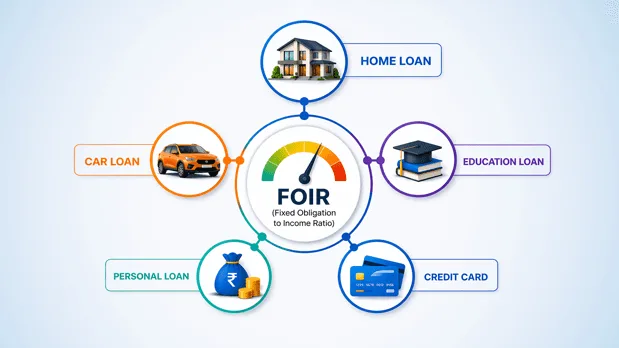
Our guide on what FOIR means shows how lenders weigh debt against income.
See Your Credit Report First
Check your credit report with FREED Credit Insights.
Check My Credit Insights
How Far Is a 671 Credit Score From Common Lender Lines?
Line | Source | Points above 671 |
|---|---|---|
700 | IIFL, citing TransUnion CIBIL (generally good) | 29 |
720 | Bajaj Finserv Insta EMI Card page (minimum) | 49 |
750 | ICICI Bank blog (card minimum) | 79 |
Those gaps are simple subtraction. They show why a 671 credit score can be fine for one product and short for another. Treat each line as that lender's view, not a rule.
What Moves a 671 Credit Score Up?
The same few things that move any score. Bajaj Finserv's page lists paying EMIs and card bills on time, keeping utilisation below 30%, clearing overdue balances, avoiding several applications at once and keeping older accounts open.
CIBIL's mistakes guide backs the 30% line and says the impact of overdue payments fades as newer positive actions are added. Our guide on how to improve a score fast goes through each step.
How Long Does It Take to Go From 671 to 700?
No source gives a figure, and we won't invent one. A Kotak Mahindra Bank blog says there's no fixed monthly increase, and that some improvement may show within three months of good habits. The gap is 29 points, but how fast you close it depends on what's holding the score back.
If an error is the cause, a correction can help quickly. If it's a late mark, CIBIL says it stays visible for 36 months, so you're relying on newer good behaviour to outweigh it.

What the Law Says
Each credit bureau must give you one free full credit report with your score every calendar year. If a wrong entry isn't fixed within 30 days of your complaint, you may get ₹100 for each day of delay.
Check My Credit InsightsShould You Apply Now or Wait With a 671 Credit Score?
It depends on the product. If you need a loan and the lender's published line is at or below your score, applying can make sense. If you're aiming at a card with a 720 or 750 line, waiting and improving first avoids a likely rejection.
There's no guaranteed cut-off to rely on. Our guide on what too many rejections mean explains why repeat applications can backfire. CIBIL's mistakes guide says multiple applications look riskier.
A reasonable rule: apply once, to a product that fits, after checking your report.
Does a Hard Enquiry Matter at a 671 Credit Score?
Somewhat. CIBIL's report walk-through says enquiries are listed for 36 months, and CIBIL's enquiry explainer says single enquiries have minimal impact. A Tata Capital blog says a hard enquiry costs around 5 points and stays up to two years, which conflicts with CIBIL's 36 months.
We lean on CIBIL's page and treat Tata Capital's figures as one lender's claim. At 671, a few points could matter if you're close to a line, so avoid applying to several lenders in a row.
What Should You Check on Your Report First?
Start with errors. A wrong late mark, an account you don't recognise or a closed loan shown as open can all pull a score down. You're entitled to one Free Full Credit Report a year from each credit information company.
Our guide on reading your CIBIL report shows where each item sits, and our guide on fixing wrong entries covers disputes.

FREED Expert Tip
Before any application, look up the lender's own stated score line and your report. Apply only where the two roughly match.
Check My EMI ScoreA Checklist for a 671 Credit Score
Read your report for errors and days-past-due markers.
Check the lender's own stated score line before you apply.
Pay every bill on or before the due date.
Keep cards below about 30% of their limits.
Clear any open overdue.
Apply once, to a product that fits.
Recheck your report a month after each change.
This list is our planning aid. No step carries a guaranteed score gain.
What Mistakes Hurt a 671 Credit Score?
Paying late or only the minimum.
Running balances above 30% of limits.
Applying to several lenders at once.
Applying for a card above your score without checking the line.
Closing an old card with a balance.
Ignoring report errors.
Trusting one site's label over the lender's own criteria.
Not Sure Where to Start?
Add your details in the FREED app and see your options in minutes.
See My Options on FREEDHow Does FREED Help With a 671 Credit Score?
FREED isn't a loan provider. It's a platform that helps you understand your credit and manage your loans. Over 30,000 borrowers have used Credit Insights, and over 20 lakh people trust FREED.
Credit Insights reads your Experian report and shows your accounts, enquiries and payment history in one place. Use it to see what's holding your 671 credit score back. FREED can't guarantee any score or outcome.
What If Your EMIs Are Holding Your Score Down?
If most of your salary goes towards paying multiple EMIs, FREED's Loan Consolidation Plan helps you combine multiple loans into a single monthly EMI. This can reduce your monthly EMI burden by up to 50%.* It's only for people who are still paying. Read more about the Loan Consolidation Plan.
Rates and ranges shown are indicative. Final terms are decided by the bank/lender. FREED is not a Loan Provider. No outcome is guaranteed. Please verify directly with your bank.
Settlement is not something a borrower chooses out of preference. If you genuinely cannot repay your loans, FREED negotiates with your lenders to settle them for less than 50%* of your outstanding dues. Read more about the settlement programme.
Outcomes vary by lender and borrower profile. Settlement terms are decided by the lender. No percentage is guaranteed.
Settlement leaves a settled status on your report, which CIBIL says will affect your access to credit in the future. Weigh that before you choose it.
See Your Credit Report First
Check your credit report with FREED Credit Insights.
Check My Credit Insights
Mohit Juneja
Mohit Juneja is FREED’s Content & Communication Lead with 12+ years of experience across content, media, advertising and digital communications. He holds a postgraduate diploma in Communications from Xavier Institute of Communications, Mumbai, and has worked with organisations including NDTV, The Indian Express, McCann Worldgroup and NABARD.
At FREED, he leads content and communication across loan management, debt resolution, debt consolidation and financial well-being. His work combines research, storytelling and consumer-focused communication to make complex financial topics easier to understand and act on. He has also scripted and produced 11 documentaries on rural development and agriculture for NABARD, with film's selected for the Mumbai International Film Festival.
mohit.juneja@freed.care

FREED is India's trusted loan management platform. We help India settle their loans, consolidate their EMIs, improve their credit score, and manage their loans better. Over 20 lakh people trust FREED. We have managed more than ₹3,500 crore in loans and saved our users over ₹450 crore.
Media Mentions