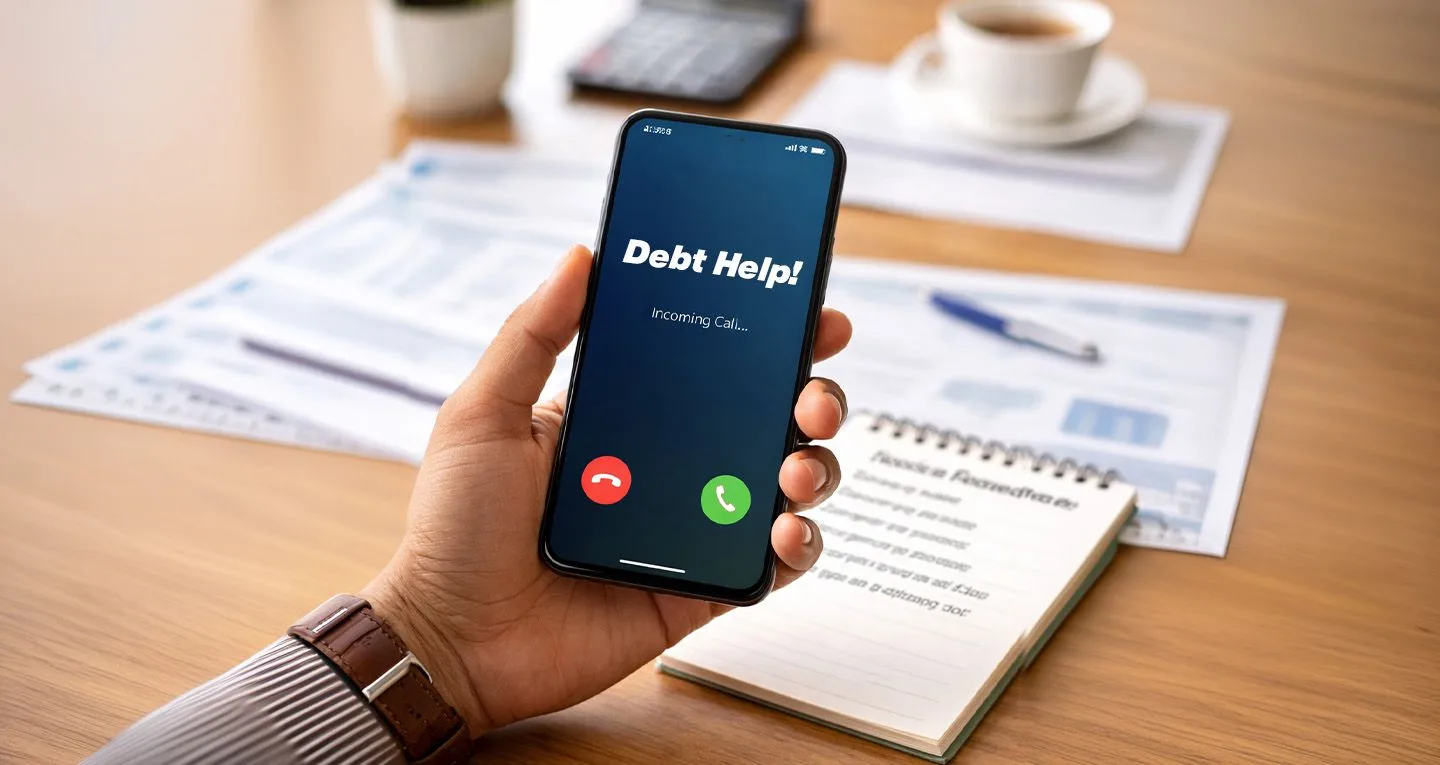
Paying Minimum Due on Your Credit Card? Read This First.
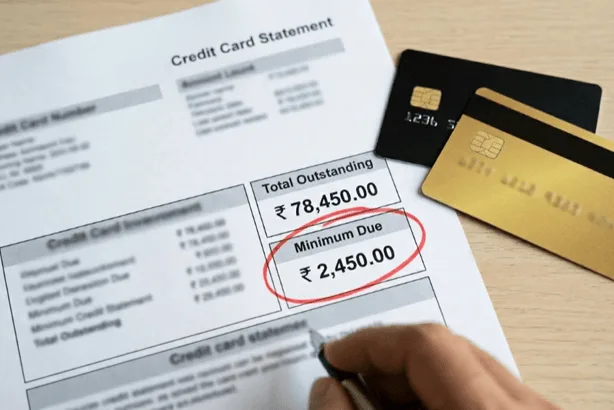
If you pay only the minimum due on a credit card, you avoid a late fee and the account stays current. But interest is charged on everything you didn't pay, including new purchases, from the transaction date. On a typical balance it takes over 12 years to clear.
Mohit Juneja
Reviewed by FREED India, Debt Resolution Specialists
 4.7/5
 ₹3,200Cr+
 20,000+
 20,00,000+4.7/5₹3,200Cr+20,000+20,00,000+
Key Takeaways

Minimum due is a small amount your bank asks you to pay to avoid a late fee. It is usually 5% of your total bill.
Paying only the minimum does NOT mean your debt is cleared. You still owe the rest with heavy interest added.
Credit card interest in India is 36% to 42% per year. This is one of the highest interest rates on any loan.
The longer you pay only the minimum, the more you end up paying sometimes 2x or 3x the original amount.
If you are stuck in this cycle, FREED can help you create a plan to get out of it.
What Happens If You Pay Only the Minimum Due on a Credit Card?
If you pay only the minimum due, four things follow.
1. No late fee, no overdue mark. The account stays current. This is what the minimum is for, and it is a real protection for your payment record.
2. The interest-free period ends. Once any part of the bill is unpaid, interest is charged on the unpaid amount, and on new purchases from the date of each transaction. A purchase on day 1 of the cycle is already collecting interest by the due date.
3. The balance shrinks slowly. The minimum is a percentage of a shrinking balance, so each payment is a little smaller than the last. The balance falls, but progress stalls.
4. Utilisation stays high. A high balance on a limited credit line can make lenders see you as stretched.
In Hindi: credit card ka minimum due bharne se late fee nahi lagti, lekin baaki rakam par byaaj lagta rehta hai.
What is the minimum due? In short, it is the smallest amount you must pay by the due date. The meaning and the calculation are covered on our page about what is minimum due in a credit card, so we won't repeat them here. This page is about what happens when you pay only the minimum due.

See every card balance in one place.
Your credit report shows each card's limit and what you owe.
Check My Credit InsightsIs It OK to Pay Only the Minimum Due Once or Twice?
Yes, as a one-month bridge. That is exactly what it exists for. Paying only the minimum due once can get you through a tight month without a late fee or a mark on your report.
Three tests tell you whether it is still a bridge:
It's a one-off. You didn't also do it last month.
You clear the full bill next month. Not "when things ease up", but next month.
No new spending in between. New purchases are already collecting interest, and they add to what you owe.
If all three conditions hold, paying only the minimum for one month may be a manageable short-term measure. However, the additional interest depends on your outstanding balance, interest rate and payment history.
If any one fails, you are no longer bridging. You are borrowing at card rates.
If you've paid only the minimum for three consecutive months, review your budget and set a realistic fixed monthly repayment amount above the minimum, if affordable. Pick a fixed monthly amount above the minimum and stick to it.

FREED Expert Tip
If you've paid only the minimum for three consecutive months, review your budget and set a realistic fixed monthly repayment amount above the minimum, if affordable. Pick a fixed monthly amount above the minimum and stick to it.
Check My EMI ScoreHow Long Does It Take to Clear a Balance Paying Only the Minimum?
Take Rs. 50,000 at 3% a month, with a minimum of 5% of the balance plus interest and a Rs. 200 floor. At the minimum, it takes about 148 months, a little over 12 years. You pay about Rs. 1,16,375 in total, which is about Rs. 66,000 of interest. Add 18% GST on the interest and the payoff stretches to about 189 months.
Here is how the story goes month to month. Your bill gets slightly smaller each month. But so does your payment. A smaller payment means more of it goes to interest, and the balance moves down only a little. After a year of minimum payments, you have barely made a dent.
The key point: the balance doesn't grow if you stop spending on the card. Under the applicable RBI rules, the minimum payment must be structured to avoid negative amortisation. Even so, paying only the minimum can leave you repaying the balance for years. It just falls so slowly that it feels like standing still.
Want your own numbers? Use our credit card minimum payment calculator to work out your own numbers.
RBI requires every credit card statement to warn that making only the minimum payment every month would result in the repayment stretching over months or years, with compounded interest.

What the Law Says
RBI requires every credit card statement to warn that making only the minimum payment every month would result in the repayment stretching over months or years, with compounded interest.
Book My CallDo You Still Pay Interest If You Pay More Than the Minimum?
Yes, on whatever is left unpaid. And the interest-free period stays suspended until the bill is paid in full. If you pay more than the minimum but less than the full bill, interest keeps running.
But here is the useful part. Interest is charged only on the outstanding amount, adjusted for payments. So every rupee above the minimum cuts next month's interest. That is why a fixed payment does so much better than the shrinking minimum.
Monthly payment (Rs. 50,000 at 3% a month, no new spending) | Time to clear |
|---|---|
Minimum only (5%, Rs. 200 floor) | about 148 months |
Fixed Rs. 2,500 | 31 months |
Fixed Rs. 4,000 | 16 months |
Fixed Rs. 6,000 | 10 months |
The jump from the minimum to a fixed Rs. 2,500 is the biggest. After that, each extra bit of payment shortens the time, but by less.
If you're asking what happens if you pay more than the minimum amount due: you save time and interest, and you still pay interest on the rest until it's cleared.
Does Paying Only the Minimum Due Hurt Your CIBIL Score?
Paying the minimum on time doesn't add a late payment entry. Your payment history stays clean.
The effect comes from the balance, not the payment. If the balance stays high, your credit utilisation stays high, and lenders may see you as stretched when you apply for new credit. That can make a new loan harder or dearer.
Missing even the minimum is different. Under the applicable RBI directions, an account's overdue status and related reporting are subject to the prescribed past-due period. Check the current rules and the card issuer's terms for when late fees or credit-bureau reporting may begin. That does appear as a late payment.
The short version: on-time minimums protect your record, a lingering balance can weigh on your score, and a missed payment hurts. For the full answer, read does minimum due affect CIBIL.
Getting abusive calls or surprise visits from agents? FREED Shield helps with abusive recovery calls or unannounced agent visits. It's open to everyone.
Getting abusive calls or surprise visits from agents?
FREED Shield helps with abusive recovery calls or unannounced agent visits. It's open to everyone.
Get FREED ShieldWhat Should You Do Instead of Paying Only the Minimum?
Whether you pay only the minimum due for one month or six, the way out is the same.
Pay as much as you can. A fixed amount above the minimum, every month.
Stop new spending on a card that carries a balance.
Convert to EMI or move the balance. Ask your bank about converting the balance to EMIs, or check a balance transfer.
Track your report. Check that balances and limits show correctly.
Know your ceiling. If your EMIs and card dues take more than half of your take-home pay, it is time for a structural fix, not a bigger effort. A guide to negotiating credit card debt shows what is possible with your bank.
How Does FREED Help If You're Stuck Paying Only the Minimum?
If you're managing payments across several cards, you may be eligible to combine qualifying card dues into one fixed EMI through our Loan Consolidation Plan, subject to the programme's eligibility criteria. FREED charges the customer nothing for it.
If you truly cannot pay, settlement is the other route. Settlement is not something a borrower chooses out of preference. FREED negotiates with lenders and can reduce what you owe by up to 50%*. The "Settled" status can stay on your report for up to 7 years. There is a non-refundable evaluation fee. See the debt resolution programme.
*Terms apply. Outcomes vary by lender and case.
Can't keep up with your card payments?
See if FREED's debt resolution fits your situation.
Check If Settlement Fits
Mohit Juneja
Mohit Juneja writes educational content at FREED on debt management, credit scores, loan repayment, and borrowing best practices. His content is shaped by expert insights and industry knowledge, helping readers better understand their financial options and make informed decisions.
mohit.juneja@freed.care

FREED is India's trusted loan management platform. Founded in 2020 and headquartered in Gurugram, FREED has counselled 20 lakh+ people on personal loans, credit cards, and app loans. FREED charges fees only on successful settlement, not upfront. FREED does not handle secured loans (home loans, car loans, gold loans).
Media Mentions