P2P Loans for Bad Credit in India: What to Know Before You Borrow
P2P loans for bad credit in India are unsecured loans from individual lenders, arranged by an RBI-registered NBFC-P2P platform. The platform checks your credit profile, but each lender decides whether to fund you. A low score makes approval harder and the rate higher. RBI does not promise that any borrower gets funded.
Mohit Juneja
Reviewed by FREED India, Debt Resolution Specialists
 4.7/5
 ₹3,200Cr+
 20,000+
 20,00,000+4.7/5₹3,200Cr+20,000+20,00,000+
Key Summary

P2P loans for bad credit in India go through an RBI-registered platform, not a bank.
The platform scores you, and individual lenders choose whether to fund you.
A borrower can owe at most ₹10,00,000 across all platforms.
Loans run up to 36 months. Only unsecured loans are allowed.
Platforms report to credit bureaus, so missed EMIs can lower your score further.
What Are P2P Loans for Bad Credit in India, and Do They Exist?
There is no special “bad credit P2P loan” in RBI’s rules. There are only P2P platforms. Some of them are open to borrowers with weaker credit profiles.
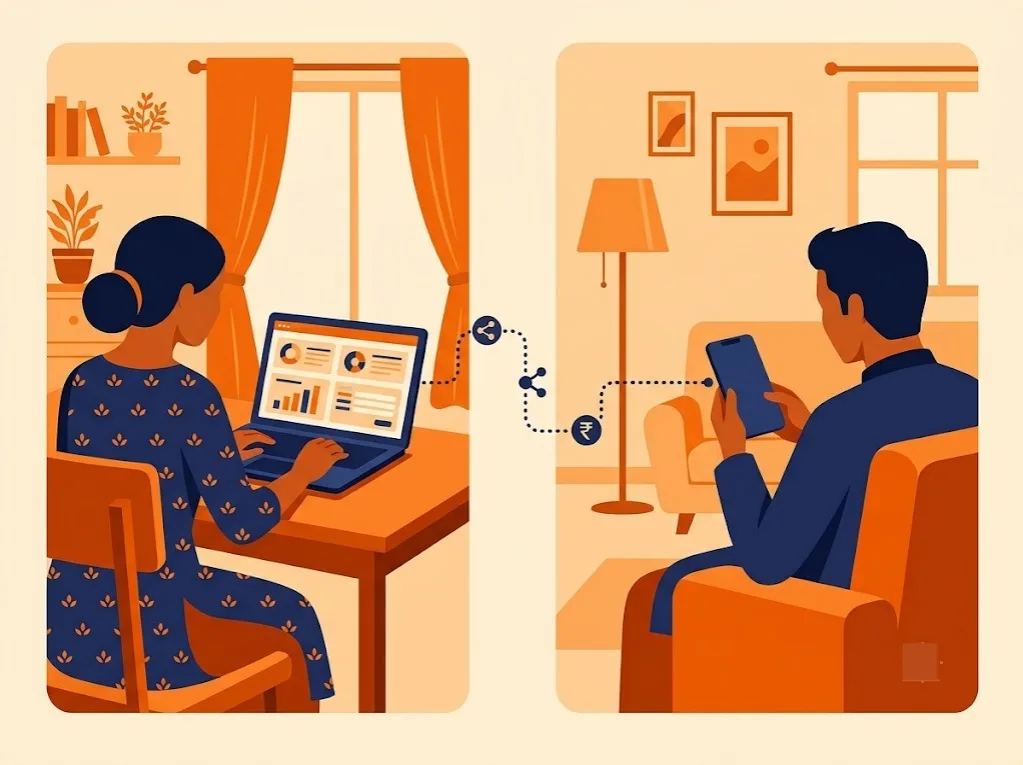
P2P stands for peer-to-peer. Ordinary people with spare money act as lenders. An RBI-registered company, called an NBFC-P2P, sits in the middle and connects them with borrowers. The platform must not lend its own money, and it cannot give any guarantee on the loan.
RBI also sets clear limits. Loans can run for up to 36 months. Only unsecured loans are allowed, so you do not pledge gold, property or a vehicle.
“Bad credit” means different things to different people, though. It usually falls into one of three groups:
- A low score from missed EMIs. You had loans before, and a few payments slipped. Your score dropped because of it.
- A thin file. You have few or no past loans, so the credit bureaus have little to go on. This is common for first jobbers and people paid in cash.
- Active defaults. You have loans that are unpaid right now. Lenders see those accounts on your report.
Borrowers with missed payments, limited credit history or active defaults may face greater difficulty securing P2P funding. The outcome depends on the platform’s assessment and individual lenders’ decisions. If funding is offered, compare the interest rate, fees and total repayment amount before accepting.
You may also see phrases like “no CIBIL check” or “guaranteed approval” in ads. Treat them as sales lines, not promises. A registered platform has to check your credit, and no one can promise that lenders will fund you.
If you want a fuller list of what to look at on any platform, see our guide to what to check on a P2P loan app.

Paying Several EMIs Already?
See your real loan load before adding another loan.
Check My Loan Load → https://app.freed.careWhy Do Borrowers With Low Credit Scores Look at P2P Platforms?
Usually because the usual doors have closed. Banks and large NBFCs often decline weaker profiles quickly, sometimes in minutes. After one or two of those, people start searching for “other lenders”, and P2P platforms show up.
There are three honest reasons this happens:
- A rejection elsewhere. A bank turned down your application, and you still need the money. P2P feels like the next place to try.
- A small, urgent need. A hospital bill, school fees or a family function. The amount is not large, but it cannot wait.
- Ads that make it look easy. “Instant approval” and “low score okay” messages catch your eye at a stressful moment.
None of this makes someone careless. It makes them human. But two people can search the same words for very different reasons.
Take Priya. She is still paying 3 or 4 EMIs on time, but the month runs out before the salary comes in. She wants one more small loan to cover the gap.
Now take Ramesh. He has already missed EMIs on two loans. He wants new cash to clear the old dues and stop the calls.
The same P2P loan does not fit both of them. For Priya, another EMI adds weight to a load that is already heavy. For Ramesh, a new loan used to pay old arrears often just moves the problem forward by a few months.
So the useful question is not “where can I apply?” It is a harder one. Will anyone actually fund you, and should they? The next sections answer both.
What Are the Signs a P2P Loan Is the Wrong Move Right Now?
Sometimes a small loan is the right call. Other times it makes things worse. These six signs suggest it is better to pause:
- Your EMIs already take about half your income. Add up every EMI and compare it with your take-home pay. If it is near or above 50%, another EMI will squeeze essentials like rent and food. This is a commonly used budgeting guide, not an RBI rule.
- The new loan is to pay an old EMI. Borrowing to repay borrowing is how debt grows quietly. The total you owe goes up, even if this month feels lighter.
- You have missed two or more EMIs in the last 6 months. Lenders will see this on your report. Even if you get funded, the rate will likely be high.
- You already hold loans on several apps. Each app adds another due date and another set of charges. It also becomes hard to keep track.
- The money is for a want, not a need. A new phone or a holiday can wait. A loan at a high rate makes it cost much more.
- You cannot say the exact EMI you can afford. If you do not know the number, the platform will set it for you. That number may not fit your month.
If 3 or more of these apply to you, skip ahead to the section on your options before a P2P loan. There may be a gentler way to handle what you already owe.
This does not mean you should never borrow again. It means the timing matters. Fixing the existing load first usually puts you in a better spot to borrow later, at a better rate.

FREED Expert Tip
Add every EMI you pay today before applying. If the total passes half your pay, talk to a specialist first.
Reduce My EMIHow Does a P2P Platform Decide Whether to Fund a Low-Score Borrower?
This is the part most ads skip.
Under RBI’s rules, the platform has to assess your credit and build a risk profile for you. It must take your clear consent before it reads your credit information. Then it gives you its own score and shares that score with lenders on the platform. Each platform must also publish an overview of how it scores borrowers.
So with a weak profile, here is what happens. Lenders see your platform score and your profile. Each lender then decides, one by one, whether to put money into your loan. Some may fund a part of it. Some may pass entirely. Your request can stay partly funded, or not funded at all.
Approval is not guaranteed. A registered platform assesses a borrower’s credit profile, and individual lenders decide whether to fund the request, subject to the applicable rules and platform processes. And the platform cannot promise you funding. Anyone who says “approval guaranteed” is promising something the rules do not allow them to promise.
If you still decide to apply, here is how to do it safely:
- Check the platform’s RBI registration. Match its legal name with RBI’s list of registered NBFCs.
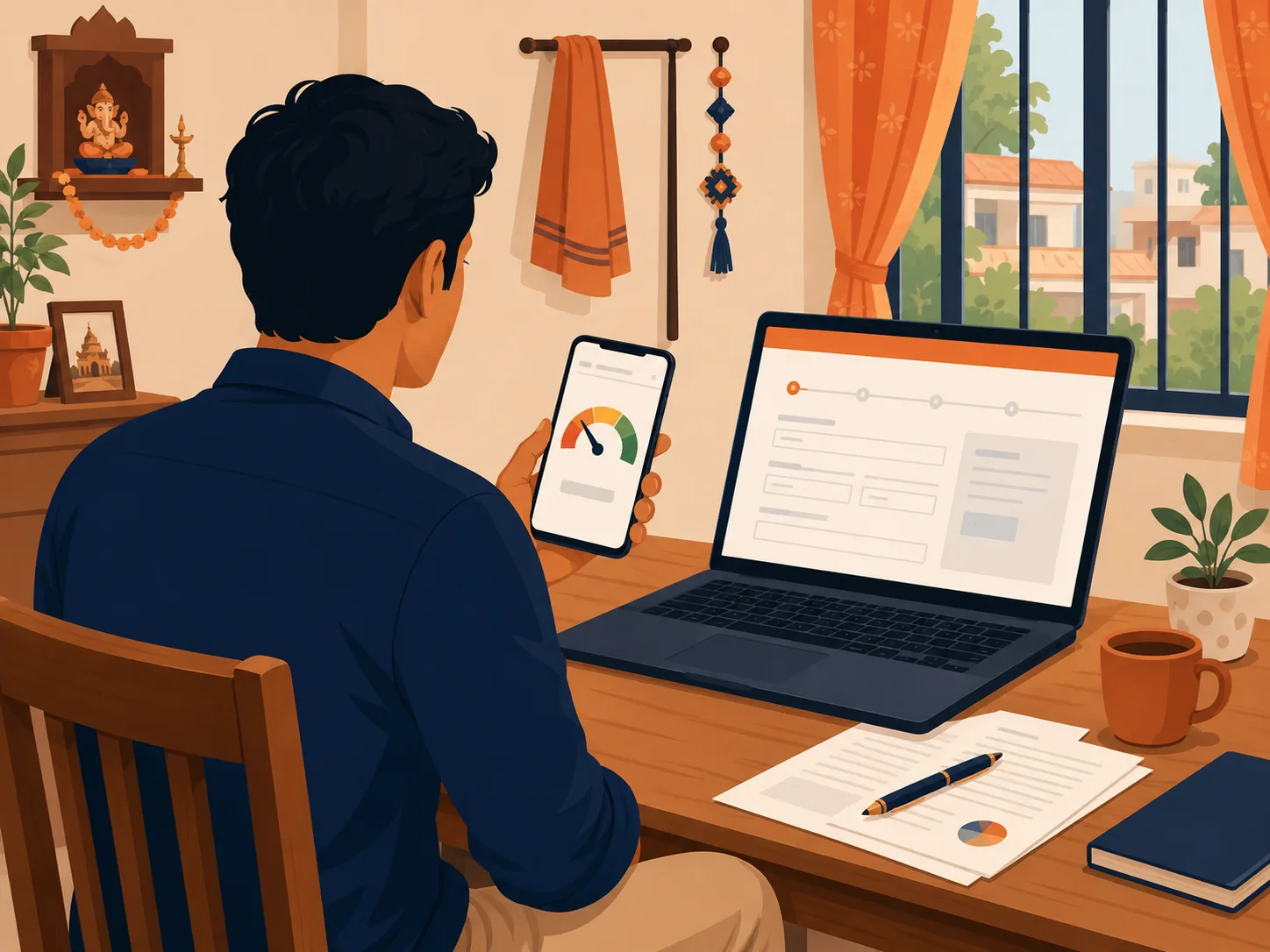
- Check your own credit report first. Fix any errors before you apply. Check My Credit shows what is affecting your score.
- Read the Key Fact Statement. This one page shows the rate, fees and total cost.
- Compare the APR with one other offer. APR is the full yearly cost, with fees included.
- Apply once, not on many apps. Each application can add a hard enquiry (a lender’s check of your report).
- Confirm money moves through the bank escrow route. Never pay into a person’s account or a wallet.
On the last point, P2P money must move through escrow accounts run by a bank-promoted trustee. Cash is not part of the process. And every loan you take is reported to the credit bureaus, so how you repay shows up on your report.

What the Law Says
An NBFC-P2P platform must assess your credit, take your consent first, and cannot assure any lender repayment of principal or interest.
Check My Credit InsightsWhat Does a Bad-Credit P2P Loan Cost and What Can Go Wrong?
Let’s start with the rupees. RBI does not set an interest cap for P2P loans, so the rate is set by the platform and the lenders. A low score usually means a higher rate.
Here is an illustrative example, not a platform quote. It assumes a ₹50,000 loan over 12 months, with interest on the reducing balance.
| Item | At 24% a year | At 30% a year | At 36% a year |
|---|---|---|---|
| Monthly EMI | ₹4,728 | ₹4,874 | ₹5,023 |
| Total repaid | ₹56,736 | ₹58,492 | ₹60,277 |
| Interest paid | ₹6,736 | ₹8,492 | ₹10,277 |
Rates and ranges shown are indicative. Final terms decided by the lender. FREED is not a Loan Provider. No outcome is guaranteed. Please verify directly with your lender.
Look at the last row. Moving from 24% to 36% adds about ₹3,500 in interest on a small loan. And that is before fees. Platform fees are extra, and they appear in the Key Fact Statement. Always add them in before you compare.
Then there is what can go wrong, usually in this order:
- Your loan is partly funded, or not funded. You may get less than you asked for, or nothing.
- You take a hard enquiry for nothing. The check shows on your report even if no money comes.
- A missed EMI reaches the credit bureau. Your score drops further, on top of the old damage.
- Your next loan costs more. A fresh missed payment makes every future lender more careful.
- Fake apps charge a fee first. Some apps pretending to be P2P platforms take an “approval fee” and disappear.
One useful check is the platform’s own track record. Registered platforms must publicly show the share of their loans that have gone bad. RBI counts a loan as bad (called NPA) when no payment has come for over 90 days. A platform with a high NPA share is a sign that lenders there are taking big risks, which often shows up in rates.
Not sure the numbers work for you?
Talk through your loans and what you can really afford each month.
Book My Call → https://freed.care/contact-usWhat Are Your Options Before You Take a P2P Loan?
Start by exploring options with your current lender, such as a revised repayment schedule, where available. Ask about any fees, interest changes and credit-reporting implications before agreeing to new terms.
First, call or write to your current lender. Ask whether they can revise your EMI or give you more months to repay. This is a change to the loan plan, and the RBI rules around it are explained in our guide to loan restructuring RBI rules. Also check your credit report for mistakes. An error, like a paid loan still showing as unpaid, can pull your score down for no reason.
Here is how the main options compare:
| Option | Suits | Effect on credit | Main risk |
|---|---|---|---|
| Revised EMI or tenure from your lender | Still paying, tight budget | Usually none if agreed in writing | Lender may refuse |
| New P2P loan | Needs small cash, stable income | Hard enquiry, then reported | High rate, may not be funded |
| Loan Consolidation Plan | Still paying, many EMIs | Does not drop, begins to improve | Lending partner must approve |
| Loan Settlement Plan | Cannot repay in full | “Settled” tag, up to 7 years | Takes time, bank decides terms |
For someone like Priya, who still pays on time but juggles several EMIs, consolidation is usually the better first step. One new loan from a lending partner pays off the existing unsecured loans together. She is left with one lower EMI, on one date. Her score does not drop, and it starts to improve as she pays on time. Our guide on consolidation loans for bad credit in India explains how this works with a weaker profile.
Ramesh’s situation is different. Settlement is not something a borrower chooses out of preference. It is for borrowers who truly cannot repay in full, after the softer options have not worked. The bank accepts a smaller amount, and the loan shows as “Settled” on the report. If a lender accepts less than the full amount owed as a settlement, the account may be reported as “Settled” rather than “Closed”. The status and its implications depend on how the account is reported and the applicable credit-reporting practices. Confirm the terms with the lender before accepting a settlement. A new P2P loan does not fix old arrears. Settlement, done properly, at least brings them to an end.
Rates and ranges shown are indicative. Final terms decided by the lender. FREED is not a Loan Provider. No outcome is guaranteed. Please verify directly with your lender.
Are You in a Loan Trap? Quick Check
Move the slider to your total EMIs as a % of monthly salary. See your debt stress level instantly.
EMIs as % of Monthly Salary
How Do You Tell a Real P2P Platform From a Fake One?
A real platform passes three basic checks:
- Its legal name is on RBI’s list of registered NBFCs. Search for the company name, not the app name.
- The app shows that same registered name. Registered platforms must show their registered name everywhere they deal with you.
- It shows RBI’s caveat clearly. The caveat says RBI does not assure repayment of the loan. Its presence is a good sign the platform follows the rules.
Then watch for these red flags:
- An upfront fee before any money. Real platforms do not ask for an “approval fee” before your loan is funded.
- A promise of guaranteed approval. Lenders decide, so no one can guarantee funding.
- Requests for your contacts or photos. A loan does not need access to your phone gallery or contact list.
- Payment to a wallet or personal account. P2P money moves through bank escrow accounts, not personal ones.
- Threats after a missed EMI. Registered platforms must recover dues without harassment.
One honest caution, though. A registered platform can still be expensive. Registration is a starting check, not a safety guarantee. You still need to read the Key Fact Statement and compare the APR.
If you spot a fake app, you can report it on RBI’s Sachet portal. If you are already caught by one, our fake loan app complaint guide walks through the steps. And for more on checking low-score loan apps through the RBI app directory, see our guide to the low CIBIL score loan app.
Stuck With Too Many Loans?
Talk to FREED about your options.
Book My Call → https://freed.care/contact-usHow Can FREED Help If P2P Loans Are Part of Your Debt?
First, to be clear: FREED does not arrange P2P loans, and it is not a Loan Provider. What FREED can do is help you manage the loans you already have.
For borrowers like Priya, who are still paying but carry too many EMIs, there is FREED’s Loan Consolidation Plan. It works in three steps:
- Share your loans on the FREED app. List every EMI, including any P2P loans.
- Get a plan. FREED looks at your full picture and matches you with a suitable lending partner.
- Follow one EMI. The lending partner’s new loan pays off your eligible unsecured loans. You are left with one lower EMI, on one date.
Eligible loans can include P2P loans, subject to the lending partner’s terms. Your CIBIL score does not drop, and it begins to improve as you pay on time. FREED does not charge a consolidation service fee under the stated programme terms. A lending partner may charge a processing fee or other applicable charges. Review the current terms and complete the process requirements disclosed to you before proceeding.
For borrowers like Ramesh, who cannot repay in full, there is FREED’s Loan Settlement Plan. You save a fixed amount each month in a Special Purpose Account. An independent trustee holds it, not FREED. Once the fund is enough, FREED negotiates with your lender. The lender decides the terms, and you accept or decline. It takes time, and the first settlement typically happens within about 4 months of enrolment. Waivers can go up to 50%*. Whether a P2P platform or its lenders will accept a settlement depends on their own terms, so it cannot be promised.
If recovery calls cross into threats or abuse, FREED Shield helps you understand your rights and prepare and submit a complaint. It does not stop calls by itself.
So far, FREED has settled 20,000+ accounts, counselled 20,00,000+ customers and managed ₹3,200 Cr+ of debt.
*Rates and ranges shown are indicative. Final terms decided by the lender. FREED is not a Loan Provider. No outcome is guaranteed. Please verify directly with your lender. *Terms apply.
How Can You Borrow From a P2P Platform More Safely?
If you do go ahead, these seven habits keep the risk low:
- Verify the registered name first. It takes five minutes and filters out most fake apps.
- Borrow only what one month’s savings could cover. If something goes wrong, you can still pay without panic.
- Read the Key Fact Statement fully. Rate, fees and total cost sit on one page, so nothing should surprise you later.
- Compare the APR with one other offer. The headline rate can hide fees. APR does not.
- Never pay a fee before approval. Fees on a real loan are usually taken from the loan amount, not paid by you upfront.
- Never share your contacts or gallery access. No genuine loan needs them, and they can be misused later.
- Save every agreement and receipt. If there is a dispute, your records speak for you.
If something goes wrong, there is a clear complaint path. Write to the platform first. Every platform must display its Grievance Redressal Officer’s contact details. First, submit a written complaint to the platform’s designated grievance redressal contact and keep a copy. If the issue remains unresolved, check the applicable RBI complaint mechanism and its eligibility conditions, waiting period and filing requirements before escalating.
Whatever you decide, one thing holds. Acting early on a loan problem costs far less than acting late.
Need Help With Your Loans?
Talk to a FREED specialist about your options.
Book My Call → https://freed.care/contact-us
Mohit Juneja
Mohit Juneja writes educational content at FREED on debt management, credit scores, loan repayment, and borrowing best practices. His content is shaped by expert insights and industry knowledge, helping readers better understand their financial options and make informed decisions.
mohit.juneja@freed.care

FREED is India's trusted loan management platform. Founded in 2020 and headquartered in Gurugram, FREED has counselled 20 lakh+ people on personal loans, credit cards, and app loans. FREED charges fees only on successful settlement, not upfront. FREED does not handle secured loans (home loans, car loans, gold loans).
Media Mentions