Instant Loan Without CIBIL Score: What Works and What to Avoid
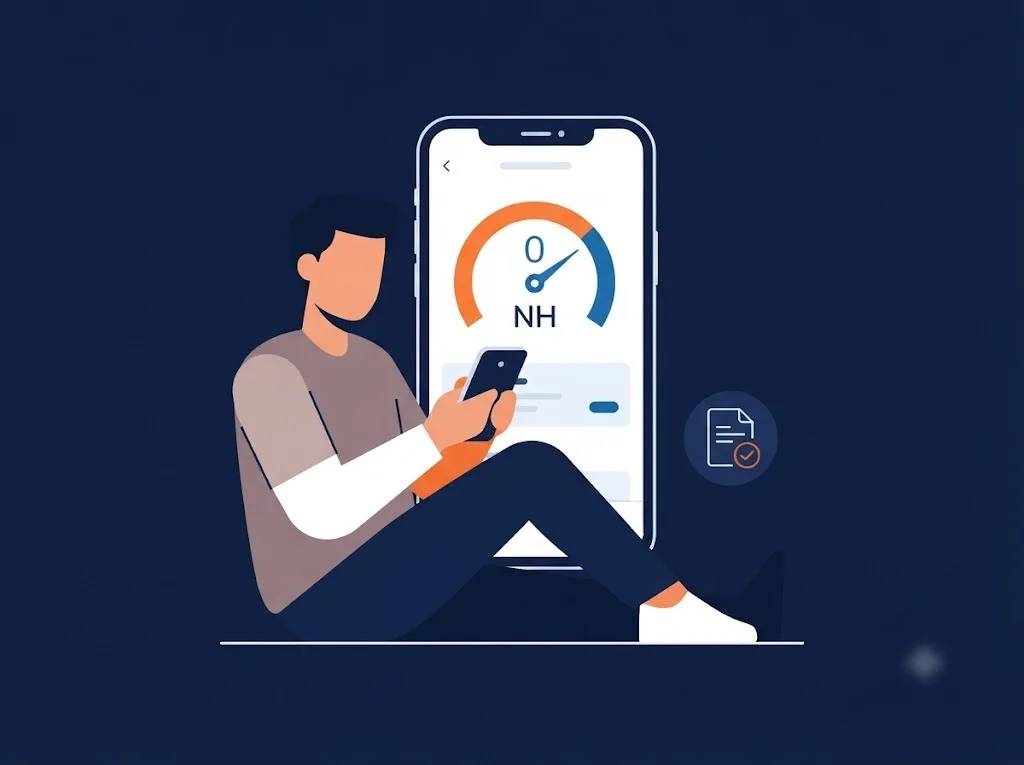
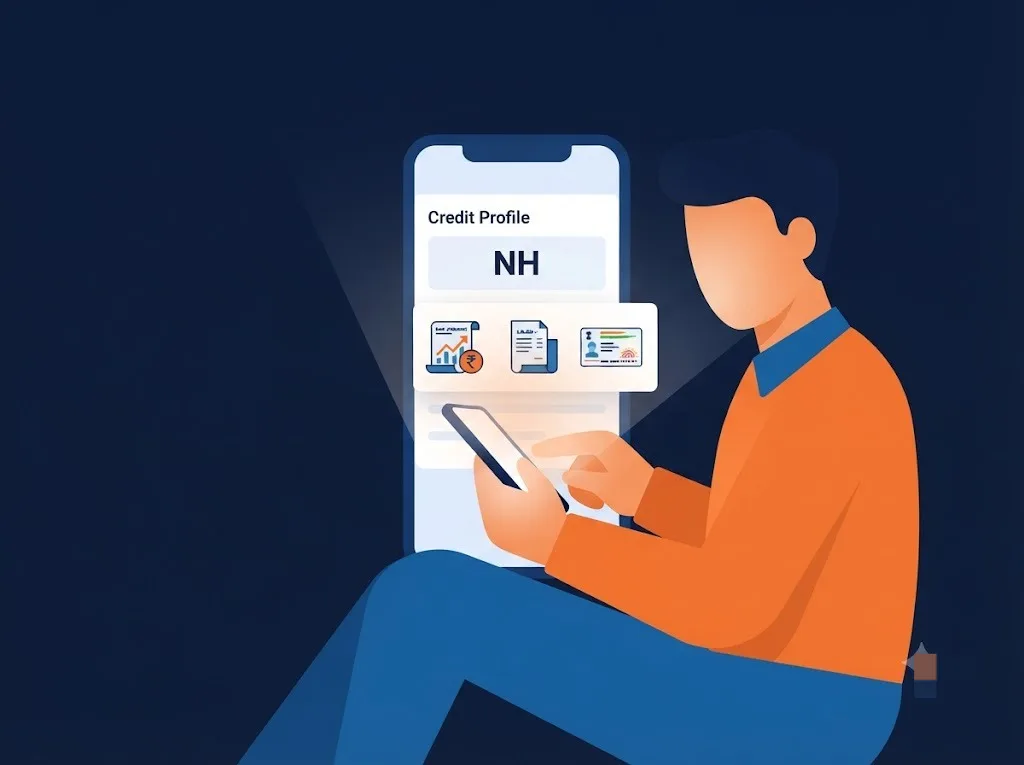
Instant loan without CIBIL score is a personal loan for first-time borrowers whose report shows NH or NA, which means no history, not bad credit. Lenders check income and bank statements instead of a score. "Instant personal loan" and "urgent loan" are the same product. Digital KYC (online identity check) makes it fast, subject to verification and eligibility.
Mohit Juneja
Reviewed by FREED India, Debt Resolution Specialists
 4.7/5
4.7/5 ₹3,200Cr+
 20,000+
 20,00,000+4.7/5₹3,200Cr+20,000+20,00,000+
KEY TAKEAWAYS

You can get an instant loan without CIBIL score. Lenders check income and bank statements instead.
A large share of India's population remains credit-invisible.
NH or NA on your report means no credit history. It does not mean bad credit.
Urgent speed depends on clean KYC and bank statements, not on lenders skipping checks.
Interest on these loans is commonly 18% to 36% a year, plus a processing fee.
The Finance Ministry has said lenders should not reject first-time borrowers only for having no credit history.
Check that the app's partner bank or NBFC is in RBI's Digital Lending Apps directory.
A first missed EMI shows as a late-payment mark straight away, with no history to cushion it.
What Is an Instant Loan Without CIBIL Score?
An instant loan without CIBIL score is a personal loan you can get even if you have never borrowed before. The lender decides based on your income and bank account, not on a credit score.
Your CIBIL score runs from 300 to 900. But you only get a score after you have used some credit, like a loan or a credit card. If you have never borrowed, your report shows NH or NA instead of a number.
NH means "No History". You have no loan or credit card on record.
NA means there is not enough recent activity to score you.
Neither one is a bad mark. It simply means the bureau has nothing to judge you on yet. In India, a large share of adults is credit-invisible, so you are far from alone.
You may also see the terms "instant personal loan" or "urgent loan". These are the same product. The only difference is that the person needs the money fast.
A blank file is not the same as a low score. A low score means you borrowed before and missed payments. Lenders see that as a risk. A blank file just means you are new. Many lenders are willing to give a first loan to a new borrower with steady income. If your problem is a low CIBIL score, the rules and options are different.

Not sure what credit picture lenders actually see for you?
FREED's Credit Insights gives you your full Experian report with a step-by-step plan to build from zero.
Check your Credit InsightsCan You Get an Urgent Loan Without CIBIL Score?
Yes, you can get an urgent loan without CIBIL score. But the speed does not come from lenders skipping checks. It comes from digital KYC and clean bank data that a lender can verify in minutes.
When you apply for an urgent loan without CIBIL, the lender reads your Aadhaar, PAN and bank statements online. If everything matches, approval can be quick. If something does not match, the loan slows down.
Here is how long each route commonly takes:
Route | Realistic timing | What can delay it |
Salary bank (pre-approved offer) | Same day, often minutes | No offer if you are not an existing customer |
Digital lending app | Hours to same day | KYC mismatch, unclear bank statements |
NBFC | 24 to 48 hours | Document checks, address verification |
Loan against FD | 1 to 2 days | You need an existing fixed deposit |
P2P lending platform | 24 to 72 hours | Waiting for lenders to fund your request |
Timings are commonly reported and vary by lender.
Common reasons an urgent loan gets delayed:
Your name on PAN and Aadhaar does not match exactly.
You have less than 3 months of bank statements.
Your salary is paid in cash, so it does not show in your bank account.
Your Aadhaar is not linked to your mobile number, so you cannot get the OTP.
There is one more risk with any urgent loan without CIBIL. When you are under pressure, you tend to accept the first offer you see. That first offer is not always the cheapest or the safest.
The good news is that being ready saves time. The steps below show you how to prepare before you apply.
How to Get an Instant Loan Without CIBIL Score Step by Step
A commonly suggested rule is to keep a new EMI at about 30% of your take-home pay. Keep all your EMIs together under 50%. Lenders call this FOIR, which simply means how much of your salary goes to EMIs.
- 1
Check your credit report status.
Download your report and see if it shows NH, NA or a score. This tells you which lenders and options fit you.
- 2
Work out what you need and what you can repay.
Borrow only the amount you truly need, not the maximum offered. A smaller first loan is easier to repay and easier to get. Read more on a small loan without CIBIL.
- 3
Check your salary bank for a pre-approved offer.
Open your bank's app and look for a pre-approved loan. Your bank already knows your salary, so its offer is often faster and cheaper.
- 4
Consider a co-applicant with a stronger profile.
A family member with a good score and steady income can apply with you. This can improve your chances and may lower your rate.
- 5
Verify the lender.
Find out which bank or NBFC is giving the loan. Check that it appears in RBI's Digital Lending Apps directory.
- 6
Read the Key Fact Statement.
This one-page sheet shows the real yearly cost, fees and EMI. Never accept a loan before reading it.
- 7
Apply to one lender at a time.
Many applications at once can look like desperation to lenders. Wait for one answer before trying the next.
- 8
Set up auto-pay.
Link your EMI to auto-debit from your salary account. This protects you from missing a payment by mistake.
What Do Lenders Check Instead of a CIBIL Score?
With no score to look at, lenders study your money habits. These are the signals that are commonly checked:
Monthly income. Lenders want regular money coming in. A fixed salary in your bank account is the strongest proof.
Job or business stability. How long you have worked at your current job matters. For business owners, how long the business has run matters.
Bank statement patterns. Lenders look at your balance, spending and any bounced payments. A clean statement shows you manage money well.
Existing EMIs. Even small EMIs like a phone on EMI count. Lenders check how much of your income is already committed.
Relationship with the bank. A long-running account with a bank works in your favour. This is why salary banks often give pre-approved offers.
Residence stability. Living at the same address for a while shows stability. Some lenders also check if you rent or own your home.
KYC match. Your name, date of birth and address must match across PAN, Aadhaar and bank records. Any mismatch can stop the loan.
Common eligibility snapshot:
Age generally 21 and above
Indian resident with Aadhaar and PAN
Minimum monthly income commonly ₹15,000 to ₹25,000
If you are self-employed and looking for an instant loan without CIBIL and salary slip, lenders usually check ITR, GST returns and regular business credits in your bank account instead.
These rules are commonly reported and differ between lenders. Always confirm with the lender before you apply.

FREED Expert Tip
Before applying anywhere, pull your Experian credit report through FREED's Credit Insights. It confirms your actual NH or NA status and flags anything unusual, including any account that may have been opened in your name without your knowledge.
Check your credit pictureDocuments Needed for an Instant Loan Without CIBIL Score
Here is what lenders usually ask for. The exact list varies by lender.
Aadhaar and PAN. These confirm who you are. Lenders also use them to check your record with credit bureaus.
3 to 6 months of bank statements. These show your income and spending. Without a score, this is the lender's main way to judge you.
Salary slips for the last 3 months. These confirm your job and monthly pay. They also help the lender check that your salary matches your bank credits.
Selfie or video KYC. This confirms that the person applying is the real owner of the documents. It protects you from someone misusing your identity.
For self-employed people: GST returns or business credits. These replace salary slips as proof of income. Lenders want to see money coming in regularly.
Keep clean PDF copies of these documents ready on your phone before you apply. Blurry photos or password-locked files are a common reason for delays. If your score is zero rather than NH, read our guide on a zero CIBIL score personal loan.
Can You Get an Urgent Loan Without CIBIL and Income Proof?
The honest answer is that regulated lenders almost always need some proof of income. Without it, they cannot check if you can repay.
But a salary slip is not the only proof. If you are searching for an instant loan without CIBIL score and income proof, these can often work instead:
Regular credits in your bank account
UPI payment receipts from customers
ITR (Income Tax Return)
GST returns
Form 16 from your employer
Pension or rent credits in your bank account
Other options if you have no income record:
Co-applicant. A family member with steady income can apply with you. The lender then counts their income too.
Loan against FD. If you have a fixed deposit, you can borrow against it. The FD is the security, so income proof matters less.
Be careful with any offer that promises a loan with "no income proof at all". This is a common red flag for unsafe apps. Legal lenders have to verify you. The next section shows how to check if an app is safe.
What Are Your Real Options for an Instant Personal Loan Without a CIBIL Score?
You have more choices than you might think. Each option has a different speed and cost. Here is a quick comparison.
Option | Typical interest rate (per year) | Best for |
Salary bank pre-approved loan | 12% to 18% | Salaried people with an account at that bank |
NBFC personal loan | 18% to 30% | New borrowers with steady income |
Digital lending app | 18% to 36% | Small, urgent amounts |
Loan against FD | 7% to 12% | People who already have a fixed deposit |
P2P lending platform | 18% to 28% | Borrowers rejected elsewhere |
Loan against gold (secured) | Usually lower than unsecured; varies by lender | People with gold jewellery to pledge |
[Standard disclaimer] Rates are indicative and typically vary by lender, loan amount and your profile. Check the Key Fact Statement before accepting any offer.
What this table tells you: The cheapest options need either a prior relationship or something to pledge. A salary bank knows you already. An FD or gold loan is backed by your own assets. The fastest options, like apps, usually carry the highest rates.
An NBFC instant loan without CIBIL sits in the middle. It is often a good choice if you have steady income but no relationship with a bank.
Please note that FREED does not handle secured loans like gold or FD loans.
How Do You Use an Instant Loan to Build a CIBIL Score From Zero?
If you go into this thoughtfully, a first loan can actually be the thing that starts your credit history, not just solves an immediate need. Three conditions decide whether that happens.
The lender has to actually report to a bureau. Not every fintech lender reports repayment data to CIBIL, Experian, Equifax, or CRIF High Mark. If a lender doesn't report at all, paying it back perfectly builds you nothing. Confirm this before you apply, not after.
Every EMI has to land before the due date, every single month. A first missed payment when you have no prior history creates a Days Past Due (DPD) entry immediately, and it hits harder than it would for someone with an established record, because there's no positive history yet to soften the blow.
Borrow only what you can comfortably repay. Borrow only an amount that comfortably fits within your monthly repayment capacity.
Consistent repayment with a lender that reports to recognised credit bureaus helps establish a credit history over time. Keep it up for a full 12 months without a miss, and a score in the 650 to 700 range is a realistic outcome from a standing start of zero.

What Is the Real Cost of "Instant" When You Have No CIBIL Score?
The cost of a loan is more than just the interest rate. It has three parts.
1. Interest. This is the main cost, commonly 18% to 36% a year for first-time borrowers.
2. Processing fee. Lenders commonly charge 2% to 3%, cut from your loan before you receive it. For example, on a ₹50,000 loan with a 3% fee, you receive ₹48,500. But you still repay interest on the full ₹50,000.
3. Late charges. If you miss an EMI, the lender may add penal charges on top.
Short, small loans can be very costly. If you pay ₹500 to borrow ₹5,000 for one month, that works out to about 120% a year.
What ₹30,000 over 12 months costs at different rates (illustrative):
Interest rate | Monthly EMI | Total interest paid |
12% | about ₹2,665 | about ₹1,986 |
24% | about ₹2,837 | about ₹4,041 |
36% | about ₹3,014 | about ₹6,166 |
Figures are illustrative and do not include processing fees or GST. Actual costs vary by lender.
Look at the gap. The same ₹30,000 costs about ₹4,180 more in interest at 36% than at 12%. That is roughly ₹350 extra every month. This is why checking your salary bank first is worth a few minutes.
Before you take any EMI, check how much of your salary goes to EMIs with FREED's EMI Score.
Are You in a Loan Trap? Quick Check
Move the slider to your total EMIs as a % of monthly salary. See your debt stress level instantly.
EMIs as % of Monthly Salary
When Should You Wait Instead of Taking an Urgent Loan?
Sometimes the best loan is the one you do not take. Think twice in these three situations.
1. The new EMI would push your total EMIs above 50% of your salary. At that point, one bad month can make you miss a payment. Missing payments on your first loan hurts more than having no score.
2. The need can wait until your next salary. If the expense can be pushed by two weeks, waiting saves you interest and fees. Ask the shop, hospital or school about paying in parts.
3. The only offer is from an app that fails the safety checks. In that case, no loan is better than an unsafe one.
If you already have loans and a weak record, read about getting a personal loan with a bad CIBIL score instead.
Already have debt and need help figuring out the right move?
Talk to FREED's team. One call, no pressure, honest answers.
Talk to an ExpertHow FREED Can Help With This
To be clear, FREED does not give or disburse instant loans. What FREED does is help you see your full picture and manage your EMIs.
1. Credit Insights. See your full credit report in one place, including whether it shows NH, NA or a score. You can spot errors early and track how your first loan is building your history. You can get the Credit Insights subscription at flat 50% off.
2. EMI Score. This is a score from 0 to 100 based on your income, savings, monthly EMIs and existing loans. It tells you how safely your salary can carry your EMIs.
Healthy: 80 to 100
Moderate: 50 to 79
High Risk: 0 to 49
EMI Score is not the same as a credit score. Your credit score shows your repayment history. Your EMI Score shows how much room your income has for EMIs.
3. Debt Consolidation Program (Reduce My EMI). If your EMIs have become hard to manage, this program can help. FREED assesses your profile and matches you with a lending partner. The new loan pays off your existing loans. You then pay just one EMI, on one date. FREED charges its fee only when the consolidation is done.
To be clear, FREED does not give or disburse instant loans. What FREED does is help you see your full picture and manage your EMIs.
1. Credit Insights. See your full credit report in one place, including whether it shows NH, NA or a score. You can spot errors early and track how your first loan is building your history. You can get the Credit Insights subscription at flat 50% off.
2. EMI Score. This is a score from 0 to 100 based on your income, savings, monthly EMIs and existing loans. It tells you how safely your salary can carry your EMIs.
Healthy: 80 to 100
Moderate: 50 to 79
High Risk: 0 to 49
EMI Score is not the same as a credit score. Your credit score shows your repayment history. Your EMI Score shows how much room your income has for EMIs.
3. Debt Consolidation Program (Reduce My EMI). If your EMIs have become hard to manage, this program can help. FREED assesses your profile and matches you with a lending partner. The new loan pays off your existing loans. You then pay just one EMI, on one date. FREED charges its fee only when the consolidation is done.
How Do You Check If an Instant Loan App Without CIBIL Is Safe?
Before you share any document, run these four checks:
The app names the bank or NBFC behind the loan. A real app tells you clearly who is lending the money. If it hides this, stay away.
That partner appears in the RBI Digital Lending Apps directory. RBI has run this public directory since 1 July 2025. Search for the app or lender name there.
A Key Fact Statement is shown before you accept. This is a one-page sheet with the real yearly cost of the loan. Legal lenders must show it to you first.
The app never asks for your contacts, photos or messages. A loan app has no reason to see your phone gallery or contact list. Unsafe apps use this data to harass borrowers.
The risk is real. An RBI working group report identified over 600 illegal lending apps.
If something feels wrong: report it at cybercrime.gov.in or call the helpline 1930. You can also report unregistered lenders on the RBI Sachet portal.
An app that fails any one of these checks is not worth the money, however urgent your need.

Mohit Juneja
Mohit Juneja writes educational content at FREED on debt management, credit scores, loan repayment, and borrowing best practices. His content is shaped by expert insights and industry knowledge, helping readers better understand their financial options and make informed decisions.
mohit.juneja@freed.care

FREED is India's trusted loan management platform. Founded in 2020 and headquartered in Gurugram, FREED has counselled 20 lakh+ people on personal loans, credit cards, and app loans. FREED charges fees only on successful settlement, not upfront. FREED does not handle secured loans (home loans, car loans, gold loans).
Media Mentions