Indian Middle Class Credit Card Debt: Causes and a Way Out
Indian middle class credit card debt is the card balance a salaried or small-business household carries month after month, often through minimum payments. Interest then builds on the unpaid amount. It grows quietly through family spends, EMIs and festivals. Clearing it needs a plan, not a one-off payment.

Mohit Juneja
Reviewed by FREED India, Debt Resolution Specialists
 4.7/5
 ₹3,200Cr+
 20,000+
 20,00,000+4.7/5₹3,200Cr+20,000+20,00,000+
Key Summary

Indian middle class credit card debt grows when balances roll over month after month.
RBI data shows personal loans growing 16.2% year on year (July 2026).
Unpaid balances lose the interest-free period, so interest builds fast.
Try a payment plan or EMI conversion first. Consolidation suits those still paying.
Settlement is a last option for those who cannot repay in full.
What Does Credit Card Debt Look Like in Indian Middle-Class Homes?
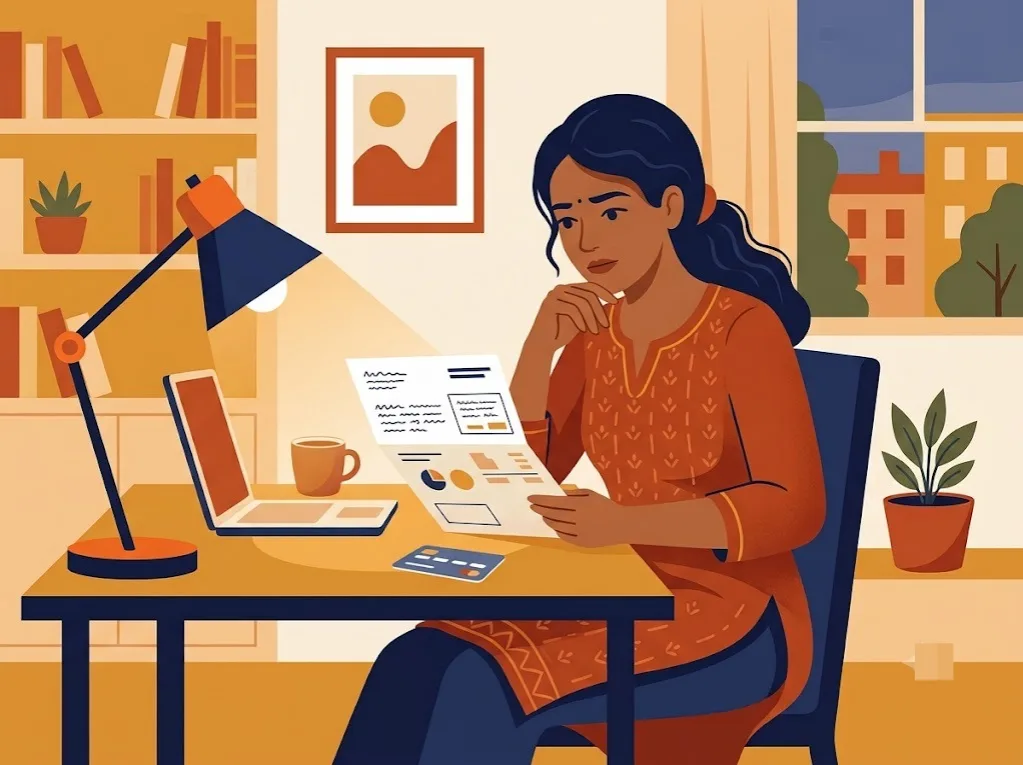
In many households, monthly income must cover rent, school fees, groceries and other essential expenses alongside credit-card bills. When the full statement balance cannot be paid by the due date, the unpaid amount may carry forward and accrue interest. Over time, routine expenses and occasional large purchases can place sustained pressure on a household budget. The rest rolls over to next month.
That is the pattern behind much Indian middle class credit card debt. One card for groceries and fuel. A few purchases turned into EMIs. And one big spend, a festival, a wedding or a hospital bill, that the monthly budget could not absorb. No single swipe feels reckless. Together they add up.
Now the honest part. India has no official definition of “middle class”, and no public data on card debt by income group. So this blog does not claim a share of households, and it does not say any group is “drowning.” Any article that quotes such a figure without a source is guessing.
What RBI does publish is aggregate data. In its release on bank credit for July 2026, the personal loans segment grew 16.2% year on year in the fortnight ended July 31, 2026, against 11.9% a year earlier. The same release says credit card outstanding growth slowed. It gives no card figure, and we do not claim cards drive the personal loan number.
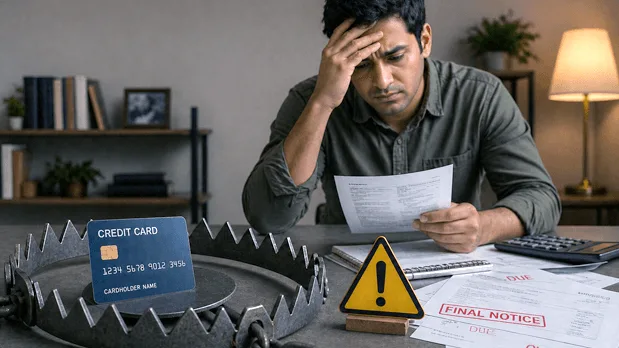
So the picture is this. Borrowing by individuals is growing, and card balances are part of the story, but nobody can tell you how much of it sits in middle-income homes. What we can do is explain how card debt builds inside a household, and what to do about it. For the wider pattern, read our guide on escaping the debt trap.

Why Does Credit Card Debt Build Up in Middle-Class Homes?
It is rarely one bad decision. It is usually a run of ordinary ones, in a household with little slack. Six triggers show up again and again:
- One earning member carries the household. If that income dips, the card fills the gap.
- A sudden medical or school fee. These come with a date and no flexibility.
- Wedding and festival seasons. Gifts, travel and clothes land in the same few weeks.
- Lifestyle spends that rise with income. A raise often becomes a bigger card limit, not a bigger buffer.
- The minimum-due habit. Paying the smallest amount keeps the account current but leaves the balance alive.
- EMI offers. Each one adds a fixed outgo every month for many months.
Think of two people in the same colony, both carrying Indian middle class credit card debt of a similar size. Priya pays on time, but only the minimum, and her balance never falls. She is not behind. She is stuck. Ramesh missed payments after a job change, and now he cannot pay in full. He is behind, and the calls have started.
The card debt is similar. The next step is not. Priya has options that keep her record clean. Ramesh needs a different conversation. Both are covered in the options section below.
Indian middle class credit card debt rarely comes from one reckless month. None of this is a judgement on how you spend. Costs rise, incomes do not always, and cards are easy to say yes to. To see how the minimum-due habit works in detail, read what happens if you only pay the minimum.
What Are the Warning Signs Your Household Is Slipping?
Look at these six signs, and be honest with yourself about which fit:
- You pay only the minimum for 2 or more months. The balance is no longer going down.
- You use one card to pay another. The debt is being moved around, not cleared.
- Your monthly card outgo rises while income stays flat. The gap is widening.
- You take a cash advance or EMI conversion on top of existing dues. You are adding a layer to an unpaid balance.
- You hide the balance from the family. The stress is now carried alone.
- The issuer sends calls or reminders. The account has moved from “on time” to “being followed up.”
Seeing 2 or 3 of these is a reason to look closely. It is not a reason to panic. Most people catch them with time to act.
One more check is worth doing. Many people use a rule of thumb that EMIs above about half of take-home pay are a danger zone. It is commonly used, it is not an RBI rule, and your own household may need a lower or higher line. Use it as a prompt to sit down with your numbers, not as a verdict.
If your card use also touches your credit report, our guide on how the minimum due affects your CIBIL score explains the link. Next, let us see why a balance grows even when you pay something each month.

FREED Expert Tip
Pull up your last 3 card statements. Note the total due, the minimum due and what you paid.
Check My CreditHow Does Credit Card Interest Quietly Snowball?
Three plain points explain it:
- Pay the full total due by the due date, and you pay no interest on purchases. That is the interest-free period.
- Miss it, and the interest-free period is lost. Interest then runs from the transaction date, on the unpaid outstanding amount.
- Pay only the minimum, and the balance stays alive. New spends can then start costing interest too.
This is what RBI’s FAQ on credit cards says about the interest-free period. The longer explanation is in our guide on revolving credit.
A worked example makes it real. This one is illustrative. The rate of 3% a month is an assumption, not a card quote. Look up the real rate on your own statement.
Balance ₹1,00,000, no new spends, assumed 3% a month:
| Fixed monthly payment | Time to clear | Total paid | Interest paid |
|---|---|---|---|
| ₹5,000 | about 31 months | about ₹1,54,995 | about ₹54,995 |
| ₹10,000 | about 13 months | about ₹1,20,675 | about ₹20,675 |
This is how Indian middle class credit card debt grows even when every month’s payment is made. Look at what changed. Doubling the payment cut the interest by about ₹34,000 in this example, and cut the time by more than half. That is the snowball in reverse. A larger fixed payment, even a modest one, does more than it seems.
One detail from RBI’s FAQ is worth knowing. When interest runs from the transaction date, it applies only to the unpaid balance after your payments and refunds, not to the whole bill. So a partial payment does reduce what interest is charged on. It just does not stop interest from running.
This is also why a rising balance can feel confusing. You pay ₹5,000 and the statement still shows a higher total next month. That is not a mistake. It is interest and new spends arriving faster than your payment leaves.
We do not quote a typical card interest rate, or a minimum-due percentage, because we have no verified source for either.
Rates and ranges shown are indicative. Final terms decided by the bank. FREED is not a Loan Provider. No outcome is guaranteed. Please verify directly with your bank.
Are You in a Loan Trap? Quick Check
Move the slider to your total EMIs as a % of monthly salary. See your debt stress level instantly.
EMIs as % of Monthly Salary
Who Is Responsible When Family Members Share Cards?
Shared cards are common in Indian homes, and nobody explains the rules. Four points help:
- A primary cardholder holds the account. Add-on cardholders are family members who get extra cards on the same account.
- RBI says add-on cardholders are not liable for the dues. The liability rests with the primary cardholder.
- Spends on an add-on card still sit on the primary holder’s bill. A spouse’s or parent’s swipe shows up in your statement.
- A monthly family money talk helps. Ten minutes to look at the balance together keeps surprises away.
On insurance, RBI says cover on a card is optional. If your card has it, check the statement for details and the nominee on record.
This section is not legal advice. Questions about what happens to dues after a death or a separation need a lawyer who can read your papers. And an add-on card is not “free credit.” Every rupee spent on it is still owed by the primary holder.
Joint households have one more layer. A parent may carry the card in their name for the family’s spends, while the earning child pays the bill. If the child stops paying, the account still belongs to the parent, and the parent’s report is what suffers. Agree early who pays what, and keep the payment trail in your own bank account.
A small habit that works: once a month, open the statement with everyone who holds a card on it. Ask each person to name their big spends. It takes 10 minutes, and it turns a private worry into a shared plan.

What the Law Says
RBI says add-on cardholders are not liable for card dues. The primary cardholder is the account holder.
Book My CallHow Do You Get Out of Credit Card Debt Step by Step?
Work through these six steps in order:
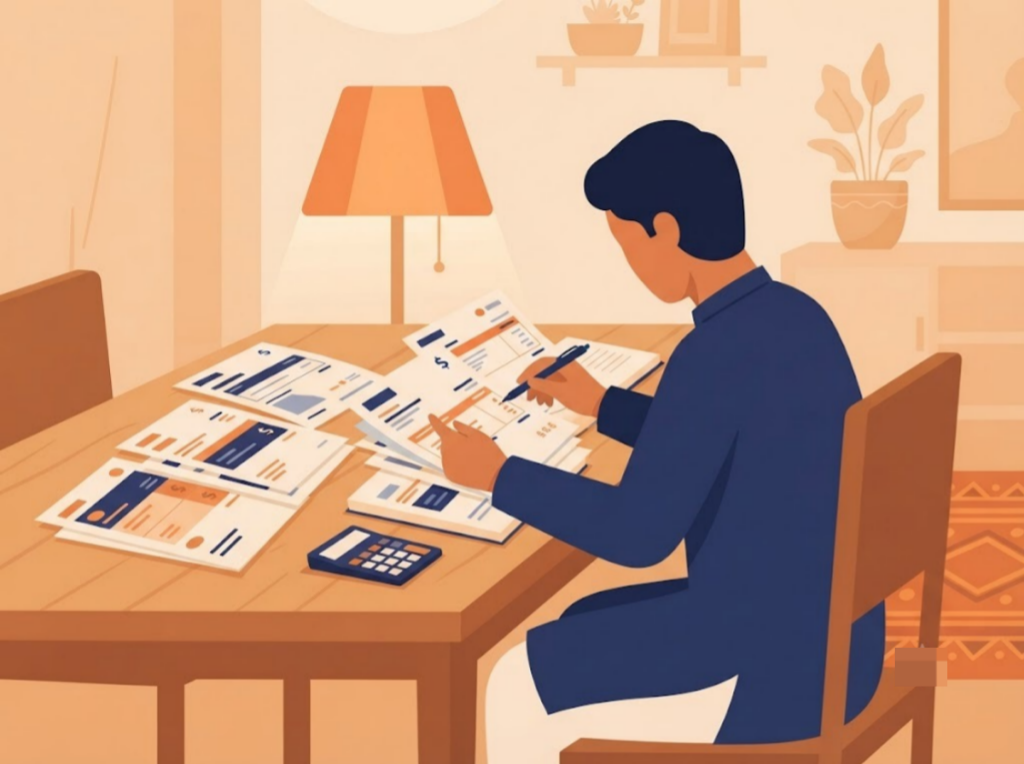
- List every card and its balance. Include add-on spends.
- Stop new card spends. Use cash or UPI for now.
- Pay the minimum on all cards, then extra on one. Choose the card with the highest rate first, or the smallest balance first.
- Ask the issuer about EMI conversion. Compare the total cost before you accept.
- Check your credit report. See which accounts are reported and how.
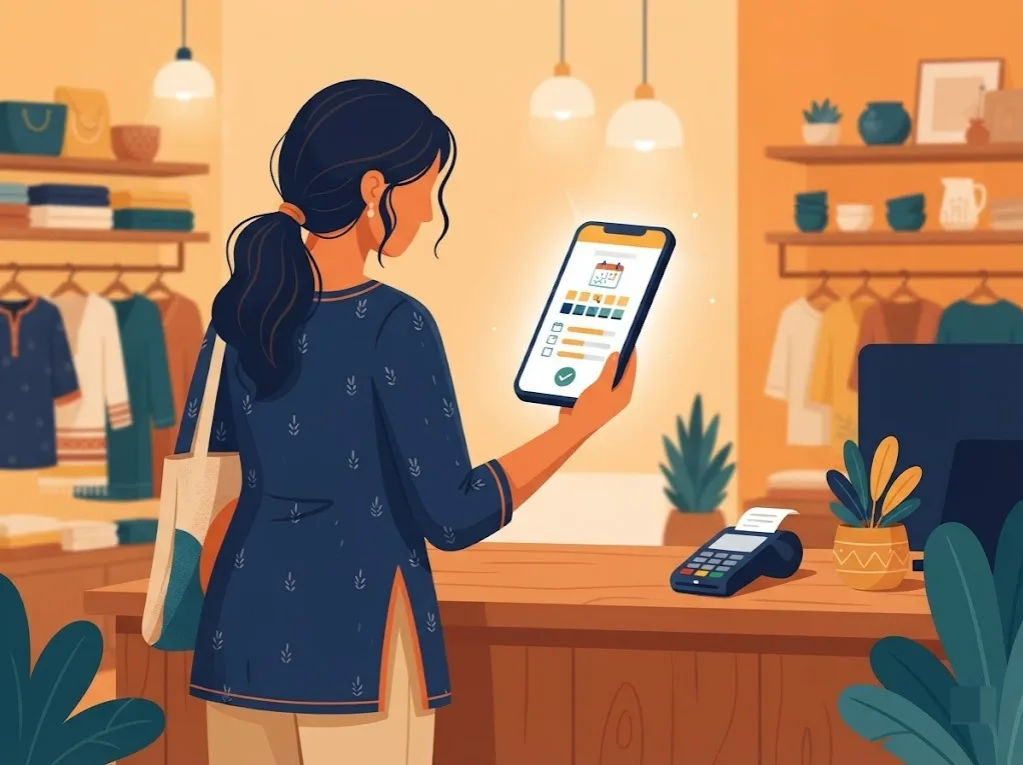
- Set a fixed payment date right after salary credit. Pay before other spends.
Two ways to choose in step 3. The highest-rate-first method clears the costliest card first and saves the most interest. The smallest-balance-first method clears small cards quickly, which feels motivating. Pick the one you will actually stick to.
On step 4, our guide on credit card EMI conversion explains how it works and what to compare. On step 5, you can see your report with Check My Credit.
A simple example of step 3. Say you hold 3 cards with balances of different sizes. You pay the minimum on all of them, and every extra rupee goes to one card. When that card is cleared, its old payment rolls onto the next one. The total you pay each month stays the same, but each card clears faster than the last.
We do not promise a payoff date, because it depends on your balance, your rate and what you can pay each month. Before using a new loan to repay credit-card debt, compare the interest rate, processing fees, repayment tenure, monthly instalment and total amount payable. A lower EMI may come with a longer repayment period and a higher total cost.
If this plan does not fit your income, the next section covers what else is possible.
What Are Your Options When Your Own Plan Is Not Enough?
Start with the softest options. Ask the issuer about EMI conversion on the outstanding dues. Consider a balance transfer if your credit profile is good. And talk to the issuer, because a call before you miss payments is easier than a call after.
If you are like Priya, paying on time but stretched across cards and EMIs, consolidation may fit. The Loan Consolidation Plan can combine eligible unsecured loans and card dues into one lower EMI through a lending partner. Debt consolidation may simplify repayments by combining eligible dues into one loan through a lending partner. However, it does not guarantee that your CIBIL score will remain unchanged or improve. The impact depends on your credit profile, the new loan's terms, repayment behaviour and how the accounts are reported. The detail is in the next section, and our credit card consolidation guide goes through the steps.
If you are like Ramesh, and truly cannot repay in full, settlement is the last option. Settlement is not something a borrower chooses out of preference. It pays less than you owe, and it leaves a “Settled” tag on your report for up to 7 years.
Credit-reporting timelines depend on the applicable RBI requirements and the lender's reporting process. After a settlement, request written confirmation of the agreed terms and check your credit report to ensure the account status is reported correctly. It also requires the card to be closed within 7 working days of a closure request once dues are cleared. Here is how the options compare:
| Option | Suits | Credit effect | Main risk |
|---|---|---|---|
| Own payment plan | Income covers dues | Improves as balances fall | Needs discipline |
| EMI conversion | Single large spend | Reported like a loan | May cost more in total |
| Balance transfer | Good credit profile | Hard enquiry | Fees; rate resets |
| Loan Consolidation Plan | Still paying, many dues | Does not drop, begins to improve | Lending partner approval |
| Loan Settlement Plan | Cannot repay in full | “Settled” tag, up to 7 years | Takes time; bank decides |
Read down the table and you see the order. The top rows ask the least of your credit record. The bottom row asks the most, and belongs only where nothing above it fits.
How Can FREED Help With Credit Card Debt?
FREED is not a Loan Provider. For people still paying, the Loan Consolidation Plan works in 3 short steps:
- Share your cards and loans on the FREED app.
- Get a plan.
- Follow one EMI.
A lending partner’s new loan pays off your eligible unsecured loans and card dues. You are left with one lower EMI, and your CIBIL score starts to improve. The process is 100% online and the fee is success-based. The lending partner’s terms decide the outcome, so nothing is guaranteed. You can read more about the Debt Consolidation Program.
Think of the plan as a swap, not a rescue. Several dues with several dates become one EMI with one date. For Priya, that often means the first calm month in a long while. If the lending partner does not approve, nothing changes in what you owe today, and you can still try the steps above.
For readers who cannot repay, the Loan Settlement Plan is separate. It can bring waivers of up to 50%*, and the “Settled” tag and score impact apply. See Settle My Loans for details.
If you experience abusive, threatening or harassing recovery-related behaviour, FREED Shield provides borrower-support assistance. It can help you understand your rights and prepare or submit a complaint through the appropriate channels where necessary. The outcome depends on the circumstances and the relevant authority. FREED Shield helps you understand your rights as a borrower and can assist you in preparing and submitting a complaint through the appropriate channels where necessary.
FREED works on unsecured loans only, not secured ones. FREED has settled 20,000+ accounts, counselled 20,00,000+ customers and managed ₹3,200 Cr+ in debt.
Rates and ranges shown are indicative. Final terms decided by the bank. FREED is not a Loan Provider. No outcome is guaranteed. Please verify directly with your bank.
*Terms apply.
How Can a Family Stay Out of Card Debt Later?
Small habits, started early, work better than a big fix later. These 7 help:
- Pay the full total due by the due date. This keeps you inside the interest-free period.
- Keep an emergency fund of a few months’ spends. This is common advice, not a rule, and the right size depends on your household.
- Hold one monthly family money check. Ten minutes is enough.
- Use a card only for planned spends. Swipe for what you already budgeted.
- Avoid EMI offers you do not need. Each one is a fixed outgo for months.
- Review add-on cards each year. Close the ones nobody uses.
- Check your credit report every few months. Catch errors and surprises early.
Here is how it looks in a home. On the day salary comes in, the full card bill is paid first, before any other spend. A small amount goes into a separate account that nobody touches. On the first Sunday of the month, everyone who holds a card names their big spends. And once a quarter, someone opens the credit report and reads it end to end.
Indian middle class credit card debt is easier to prevent than to clear, and none of these steps is dramatic. That is the point. A household that pays in full, keeps a buffer and talks about money once a month rarely finds itself in a rollover.
Small habits, started early, cost less than a big fix later.
Take The First Step With Clarity Share your dues with FREED and see your options. Start My Debt Assessment

Mohit Juneja
Mohit Juneja writes educational content at FREED on debt management, credit scores, loan repayment, and borrowing best practices. His content is shaped by expert insights and industry knowledge, helping readers better understand their financial options and make informed decisions.
mohit.juneja@freed.care

FREED is India's trusted loan management platform. Founded in 2020 and headquartered in Gurugram, FREED has counselled 20 lakh+ people on personal loans, credit cards, and app loans. FREED charges fees only on successful settlement, not upfront. FREED does not handle secured loans (home loans, car loans, gold loans).
Media Mentions