How to Check Your ICICI Bank Credit Score: Free Ways and Steps
To check your credit score as an ICICI Bank customer, register on CIBIL’s website with your identity details and verify with an OTP. CIBIL says it gives one score and report free once a year. Checking your own score does not lower it.

Mohit Juneja
Reviewed by FREED India, Debt Resolution Specialists
 4.7/5
 ₹3,200Cr+
 20,000+
 20,00,000+4.7/5₹3,200Cr+20,000+20,00,000+
Key Summary

You can check your ICICI Bank credit score on CIBIL’s official website, after OTP verification.
CIBIL gives one free score and report a year.
A self-check does not lower your score.
Check your ICICI loan and card lines for errors.
What Does Checking Your ICICI Bank Credit Score Mean?
If you want to check your credit score as an ICICI Bank customer, you can request your free annual CIBIL score and report through CIBIL’s official website. ICICI’s credit score page refers to CIBIL and indicates that users may be directed to a third-party website. Check ICICI Net Banking and iMobile Pay separately before describing either as an available route. CIBIL provides one free score and report each calendar year, and checking your own score generally does not affect it.
It means you look at your own score and report, as someone who banks with ICICI, holds an ICICI card or has an ICICI loan. It doesn’t mean ICICI is checking you. When you check your own score, nobody is making a decision about you. You’re reading the record a lender would read when you apply for something new.
The score is not issued by ICICI Bank. It is generated by a credit bureau using the credit information reported to it by lenders. The report may include your ICICI loans and cards, as well as credit accounts from other lenders, depending on what has been reported and matched to your profile. So the same report holds your ICICI card, any ICICI loan, and anything you’ve borrowed elsewhere. That’s why the steps to check your ICICI Bank credit score are mostly the steps for any bank. They run through the bureau.
People search this for three reasons. Some want a quick number before they apply for a card or loan. Some want to be sure their ICICI accounts show correctly. And some want to understand why an application was turned down. All three are covered here.
If you’re comparing banks, our pillar guide on a free CIBIL score check for bank customers explains the same idea for SBI. Next, here’s what shows on a report for each type of ICICI customer.

Not Sure Which Option Fits You?
Open the FREED app, add your details and see which plan fits your situation.
See My Options on FREEDWhat Shows on Your Report for Each Type of ICICI Customer?
It depends on what you have with ICICI. A credit report tracks credit, which means loans and cards. It doesn’t track your everyday banking.
Savings or current account only. A deposit account usually doesn’t appear on a credit report, because it isn’t credit. You won’t see an ICICI line, and that’s normal.
Credit card holder. Each card shows as a line, with your limit, balance and payment record.
Loan customer. A personal, home, car or other loan shows as a line, with the amount, balance and EMI record.
More than one. You’ll see a line for each card and loan, and you should check each one.
Many people look for an ICICI line, don’t find one, and worry. If you only have a savings account, that’s expected. If you have a card or loan and still see no ICICI line, that’s worth a closer look, and we cover it in the FAQ below.
Your report also shows lenders other than ICICI. That’s the point of a bureau record. It’s one view of everything you’ve borrowed.
Does ICICI Bank Show Your Credit Score in Net Banking or iMobile Pay?
We couldn’t confirm that it does. ICICI’s credit score page is titled “CIBIL Credit Score Report Online”, and its button, “Know your Credit Score!”, pointed to ICICI’s homepage in what we could read. The page says “you may enter your details to know the credit score” but doesn’t list the details. It doesn’t say the check is free, doesn’t mention iMobile Pay, and doesn’t say whether it’s a soft enquiry. It also notes you’ll be sent to a third-party site.
ICICI’s own blog on the CIBIL score is plainer. It says “To get a free CIBIL Score and Report” and sends you to CIBIL’s free report page. It lists no steps and no ICICI tool. A video page called “iScore by ICICI Bank” also appears in search results, but we couldn’t open it, so we can’t say what iScore is or who can use it.
Here’s what to do while you check.
Open net banking and iMobile Pay yourself. Look for any credit score or “CIBIL” option.
Write down the exact path if you find one, and the date.
Note the site you land on. If ICICI sends you to another company’s site, read who runs it.
Read the consent text before you tick anything.
If you find nothing, use the CIBIL website below.
If ICICI’s route uses a different bureau, the number can differ from a CIBIL score. Each bureau uses its own model, so a small gap is normal.
How Do You Check Your ICICI Credit Score on the CIBIL Website?
Go to CIBIL’s own website. CIBIL’s FAQ says it provides “one CIBIL Score and Report without any charge once a year”. Here are the steps.
If you’re new to CIBIL
Open the official CIBIL website. Type the address yourself.
Use the sign-up link. CIBIL’s FAQ points non-members to it.
Give your details. Expect your name, PAN and mobile number, and an OTP to confirm.
Choose the free report, not a paid plan.
View your score and report.
If you already have a myCIBIL account
Log in to myCIBIL.
Open “My Account”.
Click “Get your Free Report”.
If CIBIL can’t verify you online, its FAQ says to call CIBIL customer support to finish. That can happen if your details don’t match, for example an old mobile number or a different spelling of your name. For more detail, read our guide to the official CIBIL score check website.
What Should You Have Ready Before You Check?
Keep your PAN, current mobile number and access to your phone ready. CIBIL may use an OTP or other verification steps to confirm your identity. Follow the instructions displayed during registration.
Use the same name and date of birth as on your PAN card. Have these to hand, because you’ll compare them with the report.
Your ICICI card statement, with limit, balance and due date.
Your loan statement or EMI schedule, with amount, EMI and tenure.
Your last payment receipts, in case a payment shows as late.
Any no-dues or closure letter from ICICI for an account you’ve closed.
Save or screenshot the report on the day you check, and write down the date. Keep the file somewhere private, because it holds personal details.
Want Your Full Report, Not Just a Number?
See your Experian report with FREED Credit Insights.
Check My Credit Insights
What Other Free Ways Can ICICI Customers Use?
You can use any route that goes through a bureau, and none needs an ICICI account.
Route | Cost | Bureau | Score or full report | Needs an ICICI account? |
|---|---|---|---|---|
ICICI credit score page, net banking or iMobile Pay | Not stated on ICICI’s page [writer to confirm] | Page names CIBIL; route not confirmed | Not confirmed | Not stated |
CIBIL website | One free score and report a year, per CIBIL’s FAQ | TransUnion CIBIL | Score and full report | No |
Other free platforms | Many show a score at no charge | Varies by platform | Usually score only | No |
FREED Credit Insights | Check the page for current terms | Experian | Report and score, with an action plan | No |
Notice how little depends on your bank. Your ICICI card and loan will show on the report whichever route you pick, because the report comes from the bureau.
A few things help you choose.
If you want the CIBIL number lenders may see, use the CIBIL website.
If you want a quick look, a free platform may do, though it often shows only a score.
If you want the report explained, Credit Insights gives a second bureau’s view and points out what’s holding the score back.
If you want to compare, check two routes and write down the bureau and date on each.
Different services may show different scores because they use different bureaus, reporting dates and available credit information. Compare the bureau name and report date before interpreting a difference. For one more route that needs only your PAN, see our guide on checking your credit score with a PAN card.
What Happens When a Bank Page Sends You to Another Site?
Some bank score pages hand you to a partner’s site to run the check. ICICI’s credit score page says you’ll be sent to a third-party site. That isn’t wrong, but it’s a moment to slow down.
Read who runs the site, and what it says it will do with your PAN and mobile number.
Read the consent boxes. Some score checks let the company send you loan offers.
Check the address in the browser bar, not just the page design.
Never share an OTP with a caller, even one who says they’re from a bank.
Never enter a card PIN, CVV or net banking password. A genuine score check doesn’t ask for them.
Be wary of anyone who charges to “fix” or “boost” a score. Nobody can remove correct entries.
If something feels off, stop and close the page. A score check takes a few minutes, and nothing is lost by pausing to verify. If you think you’ve shared details with a fake site, tell your bank and check your report for accounts you don’t recognise.
Does Checking Your Own Score Lower It?
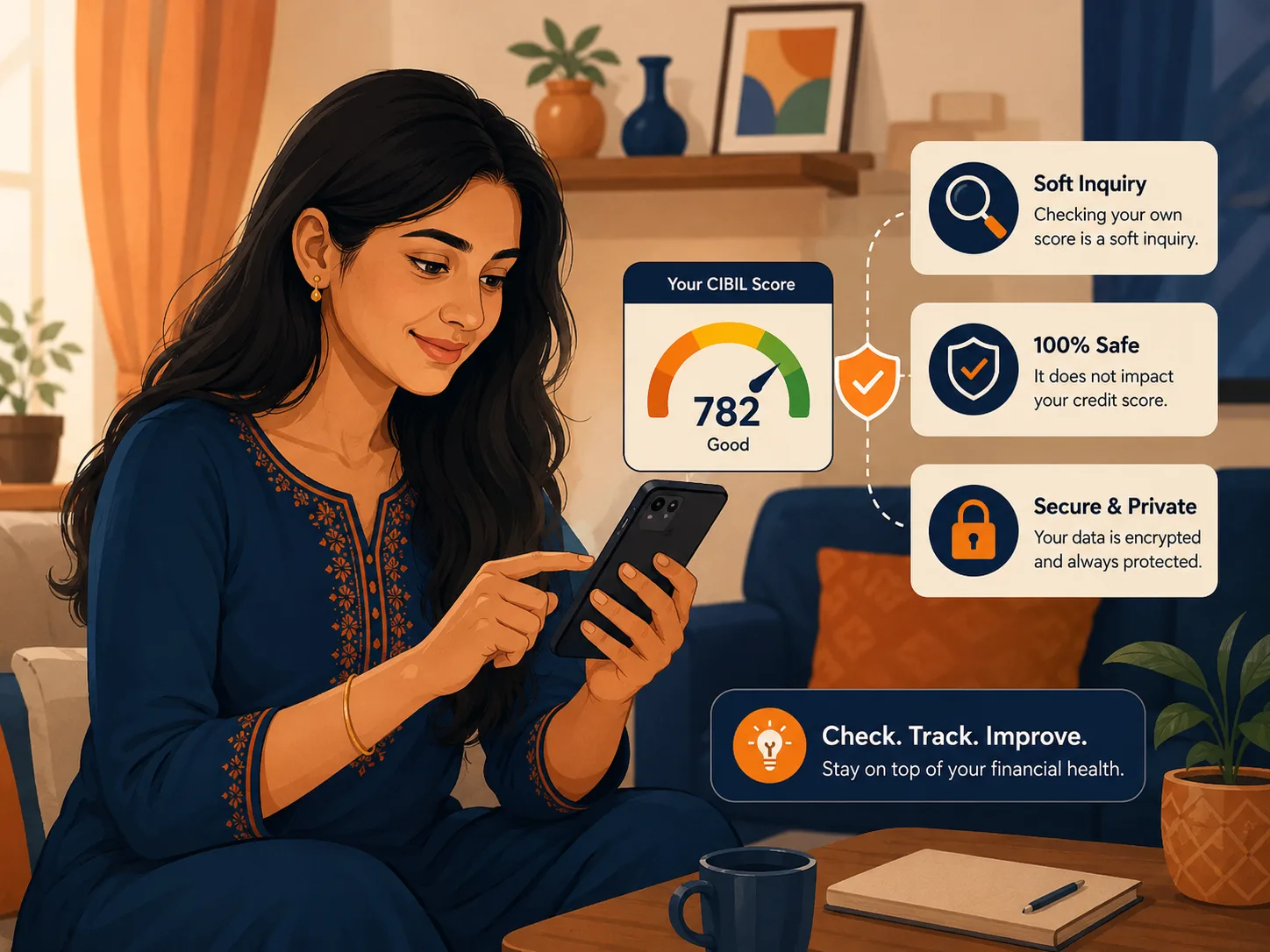
No. Checking your own score is a soft enquiry, and it doesn’t affect your score. CIBIL’s free score page says “Checking your own credit score doesn’t impact it.” Tata Capital’s and IDFC FIRST Bank’s own pages use the words “soft inquiry”.
A lender’s check when you apply for a card or loan is different. That’s a hard enquiry, and it can have a small, temporary effect. One or two over a year isn’t a problem. Several in a few weeks can look like you’re short of money.
So look at your report as often as you like. Be careful about applying again and again, especially after a rejection. Each new application adds an enquiry. For the difference in detail, see Related below.

What the Law Says
Checking your own score does not lower it. Each credit bureau must give you one free full credit report with your score every calendar year. If a wrong entry isn't fixed within 30 days of your complaint, you may get ₹100 for each day of delay.
Check My EMI ScoreWhat Should You Check on Your ICICI Loan or Card Line?
Find each ICICI account on your report, and check the details against your papers.
Account type. A credit card, personal loan, home loan or other type, matching what you took.
Limit or sanctioned amount. The card limit, or the loan amount you were approved for.
Current balance. It should match your latest statement.
Days past due. If you paid on time, this should show zero.
Status. Look for Standard, Closed, Settled or Written Off, and check it matches the account.
Date reported. This tells you how recent the entry is.
Take one account at a time, and tick each item against your statement. The three things to flag are a wrong balance, a status that’s worse than your account, and an account you don’t recognise.
Check how many ICICI lines you see. If you hold one card and the report shows two, look closer. It could be a card you forgot, a replacement card, or an error. Match the limit and the start date to your papers.
Late payment charges on a card are a separate matter from what shows on your report. For how a late fee and a late mark connect, see our guide on ICICI credit card late payment fees and their CIBIL impact. For a full guide to every section of the report, see how to read your CIBIL report.

FREED Expert Tip
If you converted a card purchase or bill to EMI, check that it shows once and doesn’t show as a missed card payment.
Check My EMI ScoreHow Do You Read the Payment History, Month by Month?
The payment history is the part lenders look at most closely. Each account shows a row of months, and each month is marked as paid on time, late, or not due.
A run of on-time months shows steady repayment. That’s what you want to see.
A late month shows a delay. Check whether it matches a payment you actually made late.
A gap or “not due” can mean the account was closed or not yet active.
A recent late mark matters more than an old one, as a general guide, so fix recent errors first.
Pick three months at random and check them against your bank statement. If a month shows late but your statement shows an on-time payment, write down the month and the date you paid. That’s the evidence you’ll need for a dispute.
A single late month is a record, not a verdict. Lenders look at the whole pattern. If you’ve paid on time since, the pattern keeps improving, month by month.
How Do You Fix a Wrong ICICI Entry?
Raise it with the bureau and with ICICI, in writing, and keep every reference number. Here are four steps.
Raise a dispute with the bureau online. Use the dispute option on your report. CIBIL’s FAQ says a dispute may take approximately 30 days to resolve, depending on the lender’s response.
Write to ICICI. Use its grievance channel, and keep a copy.
Keep every reference number. Note the date and what you reported.
Check again after the bureau replies. Look at the report once the dispute is closed.
In your message, be specific. Say which account, which month and what the entry should say. Attach your statement or receipt. A clear, short message with proof moves faster than a long complaint.
Here’s the timing from RBI. If a credit information complaint isn’t resolved within 30 days, the bureau pays ₹100 for each day of delay. The lender has 21 days to send the corrected details, and the bureau gets the remaining days. It doesn’t cover disputes about how a score is calculated.
Don’t count on compensation, and don’t expect a fix overnight. For the full process, read our guide on fixing wrong entries on your report.
Not Sure Which Option Fits You?
Open the FREED app, add your details and see which plan fits your situation.
See My Options on FREEDWhat Should You Do After You Pay Off or Close an ICICI Account?
Get a no-dues or closure letter, keep it safe, and check your report a month or two later. Closing an account doesn’t update the report on its own. The lender has to report the change, and that takes time.
Ask ICICI for a no-dues or closure letter in writing, and keep a copy.
Save your last payment receipt.
Wait a month or two for the update to reach the bureau.
Check your report. The account should show as closed, with a zero balance.
If it doesn’t, dispute it, using the steps above and your letter as proof.
For a card, make sure you’ve paid the full outstanding amount, including any charges, before you close it. A small unpaid balance can keep the account open on the report.
Don’t close an old card only to look tidier. Closing it cuts your total limit, so your balance on other cards can look larger against what’s left. If the card has a fee you don’t want to pay, ask ICICI about a no-fee option before you close.
What Score Does ICICI Look For?
ICICI sets its own cut-offs, and it also looks at income, existing EMIs and repayment history. A strong score alone doesn’t guarantee approval, and a lower one doesn’t always mean a refusal. We don’t repeat score bands here. For how scores connect to personal loans in general, see our guide on the CIBIL score for a personal loan.
How Often Should You Check Your Score?
Every few months is enough for most people, and always before you apply for a new card or loan. A self-check doesn’t lower your score, so the question is what’s useful. Once a quarter lets you catch errors and see whether your habits are working.
Check after you close or pay off a loan, once the lender has had time to report. Check if you get a message about an account you don’t recognise. And use each bureau’s free yearly report for a deeper look. Write down the date, the bureau and the score each time, so you can see the trend.
How Does FREED Help You Track Your Score?
FREED Credit Insights shows your credit report and score, and points to what’s holding the score back. It reads your Experian report, so the number can differ from your CIBIL score. Each bureau uses its own model, so a gap between two numbers is normal.
Over 30,000 borrowers trust Credit Insights, and over 20 lakh people trust FREED. FREED isn’t a loan provider. Credit Insights explains your report, and it doesn’t remove entries that are correct. If something on your report is wrong, you still raise the dispute with the bureau and the lender.
Use it next to a CIBIL check, not instead of one. The CIBIL report shows what lenders may see, and a second bureau shows whether the picture matches. If both show your ICICI accounts the same way, you can relax. If they differ, check the dates first. You can start on the Credit Insights page.
Track Your Score in One Place
Check your Experian report with FREED Credit Insights.
Check My Credit Insights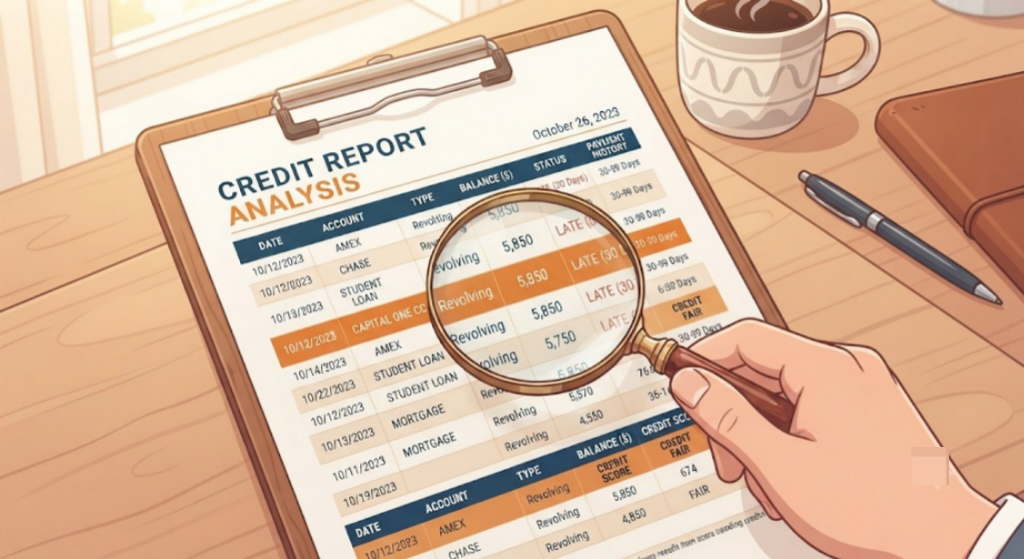
What If Your Score Is Too Low or Your EMIs Are Too High?
Match the fix to the cause. Here are three routes.
Errors on the report. Dispute them, using the steps above.
Still paying, but stretched. If most of your salary goes towards paying multiple EMIs, FREED’s Loan Consolidation Plan helps you combine multiple loans into a single monthly EMI. It’s only for people who haven’t missed payments. Read more about the Loan Consolidation Plan.
Cannot pay an ICICI loan. Settlement is not something a borrower chooses out of preference. If you genuinely cannot repay your loans, FREED negotiates with your lenders to settle them for less than 50%* of your outstanding dues. See how ICICI personal loan settlement works.
Rates and ranges shown are indicative. Final terms decided by the bank/lender. FREED is not a Loan Provider. No outcome is guaranteed. Please verify directly with your bank.
Outcomes vary by lender and borrower profile. Settlement terms are decided by the lender. No percentage is guaranteed.
Don’t take new loans or cards just to raise a score. Each application adds an enquiry, and new debt adds pressure. Your report shows whether you have missed payments, and that decides which option is open to you. Before you act, add up your EMIs and compare them with your monthly take-home pay.
Not Sure Which Option Fits You?
Open the FREED app, add your details and see which plan fits your situation.
See My Options on FREED
Mohit Juneja
Mohit Juneja is FREED’s Content & Communication Lead with 12+ years of experience across content, media, advertising and digital communications. He holds a postgraduate diploma in Communications from Xavier Institute of Communications, Mumbai, and has worked with organisations including NDTV, The Indian Express, McCann Worldgroup and NABARD.
At FREED, he leads content and communication across loan management, debt resolution, debt consolidation and financial well-being. His work combines research, storytelling and consumer-focused communication to make complex financial topics easier to understand and act on. He has also scripted and produced 11 documentaries on rural development and agriculture for NABARD, with film's selected for the Mumbai International Film Festival.
mohit.juneja@freed.care

FREED is India's trusted loan management platform. We help India settle their loans, consolidate their EMIs, improve their credit score, and manage their loans better. Over 20 lakh people trust FREED. We have managed more than ₹3,500 crore in loans and saved our users over ₹450 crore.
Media Mentions