Home Credit CIBIL Score Check: How to See Your Score for Free
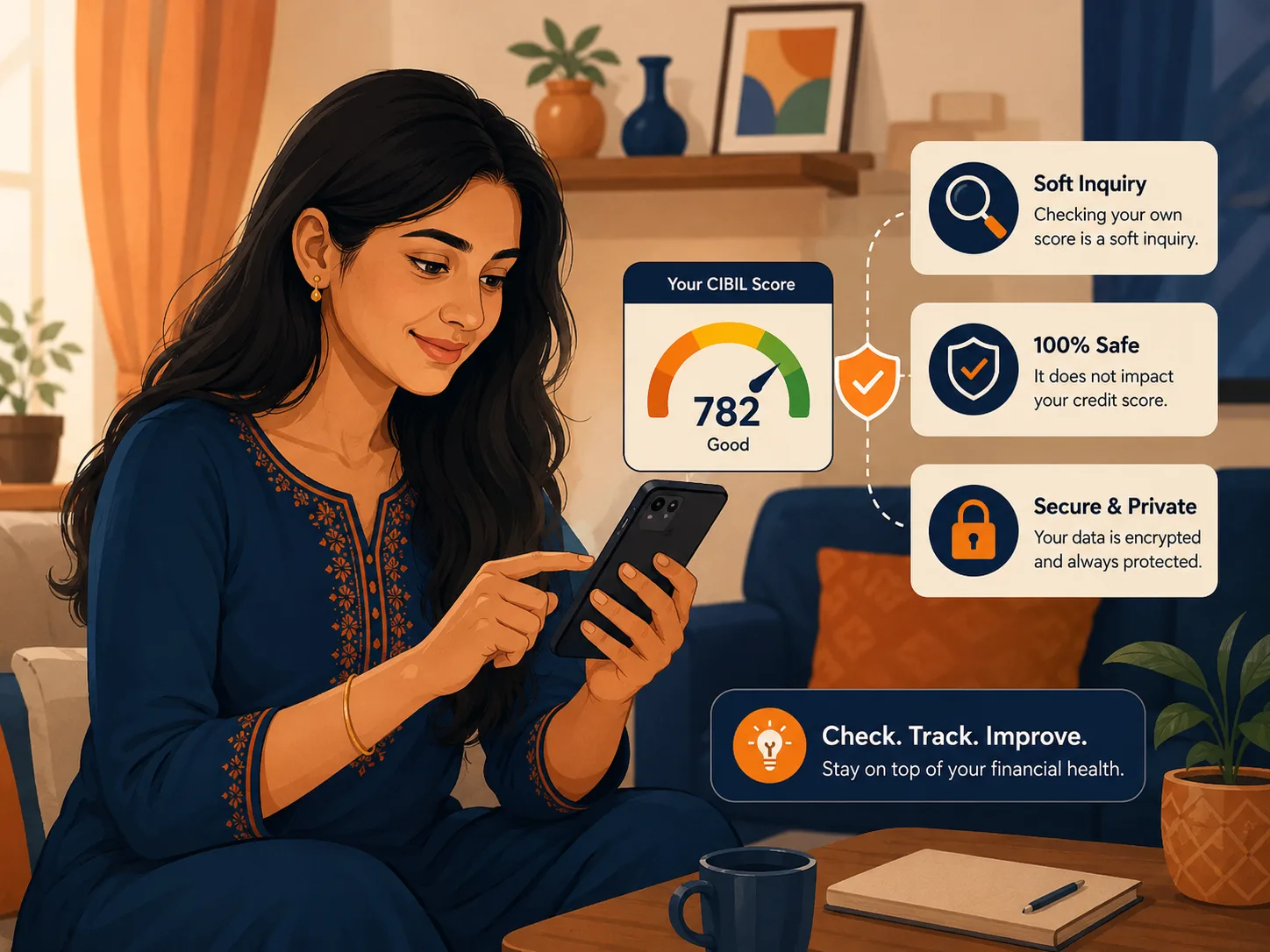
To check your CIBIL score as a Home Credit borrower, register on CIBIL’s website with your identity details and verify with an OTP. CIBIL says it gives one score and report free once a year. Checking your own score does not lower it.
Mohit Juneja
Reviewed by FREED India, Debt Resolution Specialists
 4.7/5
 ₹3,200Cr+
 20,000+
 20,00,000+4.7/5₹3,200Cr+20,000+20,00,000+
Key Summary

A Home Credit CIBIL score check starts on CIBIL’s free website.
Your Home Credit loan shows as its own line on your report.
A self-check does not lower your score.
Small loans paid on time can help build your score.
What Does a Home Credit CIBIL Score Check Mean?
A Home Credit CIBIL score check generally means reviewing your credit score and report as a borrower with a Home Credit loan. Home Credit is a non-banking financial company (NBFC), and its website mentions a free credit score assessment. You can also obtain your CIBIL score and report directly from TransUnion CIBIL. Checking your own credit report is generally a soft enquiry and does not lower your score. This page shows you how to check, how to find your Home Credit loan on the report, and what to do if something looks wrong.
It means you look at your own score and report, as someone who has a loan from Home Credit. It doesn’t mean Home Credit is checking you. When you check your own score, nobody is making a decision about you. You’re only reading the same record that a lender would read later, when you apply for something new.
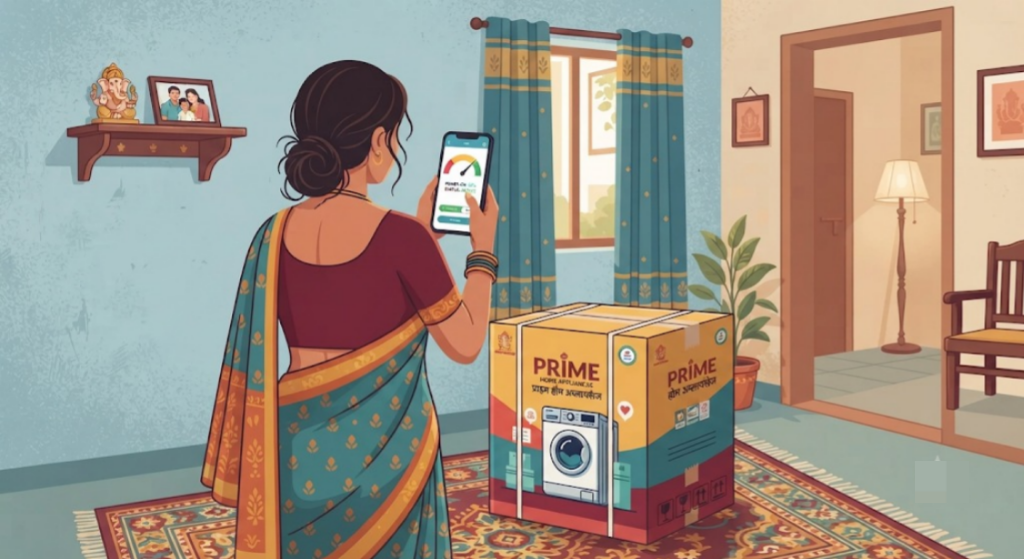
Home Credit is an NBFC, a non-banking finance company. It’s best known for small consumer loans, such as a loan to buy a phone or an appliance. If you bought something on EMI, there’s a good chance that loan is now a line on your credit report. This page shows you how to find it.
Many readers searching this are looking at a credit report for the first time. That’s completely fine. Nothing on this page assumes you know the terms, and we explain each one in plain words as we go. If a word is new, the next section covers it.
The score itself doesn’t belong to Home Credit. It comes from a credit bureau, which keeps a record of every loan and card you’ve had, from every lender. So the same report holds your Home Credit loan, any bank loan, and any credit card. If you’re comparing banks, our pillar guide on a free CIBIL score check for bank customers covers the same idea for SBI. Most of the steps carry across to Home Credit.
There are two common reasons to search for this. Some people want a quick look at their score before they apply for another loan. Others have a Home Credit loan running, or just finished, and want to be sure it shows correctly. Both are good reasons, and both are covered below.

Not Sure Which Option Fits You?
Open the FREED app, add your details and see which plan fits you.
See My Options on FREEDWhat Is a Credit Score and a Credit Report, in Simple Words?
A credit report is a record of every loan and card you’ve had, and whether you paid on time. A credit score is one number that sums up that record. In India, the score usually runs from 300 to 900, and a higher number is better.
Think of the report as your payment diary, and the score as the grade at the bottom. Lenders read both before they give you a new loan. If the diary shows on-time payments, the grade tends to be better. If it shows missed EMIs, the grade tends to be worse. The diary also shows how long you’ve been borrowing, how many loans you have, and how much you owe on each.
Each bureau keeps its own diary and gives its own grade. CIBIL is one bureau. Others are Experian, Equifax and CRIF High Mark. A lender may report to one bureau, several, or all of them, so the diaries aren’t always identical. That’s why your score can differ a little from one bureau to the next, and why that’s normal.
A loan of a few thousand rupees counts too. People often think only big loans matter. But a phone loan paid on time is a record, and a phone loan missed is a record as well. Both go into the diary. So even a small EMI deserves the same care as a big one.
One more word you’ll see is EMI, which stands for equated monthly instalment. It’s the fixed amount you pay each month until the loan is done. Your credit report tracks whether each of those payments arrived on time. That’s the part that matters most.
Can You Check Your Score Through Home Credit?
Home Credit’s website offers a free credit score assessment, but it doesn’t say how it works. Its credit score check page says: “Secure your borrowing potential with a free credit score assessment.” It names no bureau, lists no steps, and doesn’t say whether the check is a soft enquiry or open to people without a Home Credit loan.
We also saw a search result for a “Credit Health Score” page on Home Credit’s online services site. We couldn’t open it, because the site blocks automated readers.
So the honest answer is this. Home Credit mentions a free assessment, and the details aren’t on the page we could read. If you use it, check these before you enter your PAN.
- Which bureau gives the score. It may not be CIBIL, and the number can differ from a CIBIL score.
- What you’re agreeing to. Read the consent box. Some score pages let the lender use your data to send offers.
- Whether it’s a soft enquiry. The page doesn’t say, so don’t assume.
- Whether you need a Home Credit loan. The page doesn’t say who can use it.
If any of these isn’t clear, use the CIBIL website instead. It works for everyone, and you deal with the bureau directly. The next section shows you how. Whichever route you use, write down the date and the bureau, because you’ll want to compare later.
How Do You Check Your CIBIL Score for Free?
Go to CIBIL’s own website, because that’s the one route that gives you a CIBIL score straight from the source. CIBIL’s FAQ says it provides “one CIBIL Score and Report without any charge once a year”. Here are the main free routes side by side.
| Route | Cost | Bureau | Score or full report | Needs a Home Credit loan? |
|---|---|---|---|---|
| CIBIL website | One free score and report a year, per CIBIL’s FAQ | TransUnion CIBIL | Score and full report | No |
| Other free platforms | Many show a score at no charge | Varies by platform | Usually score only | No |
| FREED Credit Insights | Check the page for current terms | Experian | Report and score, with an action plan | No |
| Home Credit | Described as free on its page | Not named | Not stated | Not stated |
You don’t need a Home Credit loan for any of the first three. Your Home Credit loan will show on the report whichever route you pick, because the report comes from the bureau and not from the lender.
Here are the steps for the CIBIL website.
- Open the official CIBIL website. Type the address yourself.
- Sign up if you’re a new user. CIBIL’s FAQ points non-members to the sign-up link on its page. Expect to be asked for identity details such as your PAN and a mobile number, and to confirm with an OTP.
- Log in to myCIBIL if you already have an account.
- Find the free report option. CIBIL’s FAQ says to open “My Account” and click “Get your Free Report”.
- Read your score and report. Take your time, and go through each account.
If CIBIL can’t verify you online, its FAQ says to call CIBIL customer support to finish the check. That can happen if your details don’t match what the bureau holds, for example an old mobile number.
Two small points help. Use the same name and date of birth as on your PAN card, so the details match. And save or screenshot the report on the day you check it, because the next one may look different. For more detail, read our guide to the official CIBIL score check website.
What Should You Have Ready Before You Check?
Have your PAN, your mobile number and a phone you can answer right now. The OTP goes to that number, and it expires after a short time. If the number on your loan is old, use the one you have today, and be ready for a verification step.
Have your loan papers to hand too.
- Your Home Credit loan agreement. It shows the loan amount, the EMI and the tenure.
- Your EMI schedule or statement. You’ll compare each month with the report.
- Your last payment receipt. It helps if the report shows a late payment you didn’t make.
- Your invoice for the phone or appliance. It helps you match the loan to what you bought.
Type the website address yourself, and don’t tap a link in a message that asks for your PAN. A real score check never asks for your card PIN or net banking password. If a page does, close it. And if someone calls offering to “fix” your score for a fee, don’t share your PAN or OTP with them.
Keep your first check simple. Write down the date, the bureau and the score. You’ll want that note next month, and again when you apply for a new loan.

Want Your Full Report, Not Just a Number?
See your Experian report with FREED Credit Insights.
Check My Credit InsightsDoes Checking Your Own Score Lower It?
No. Checking your own score is a soft enquiry, and it doesn’t affect your score. Tata Capital’s and IDFC FIRST Bank’s own credit score pages say the same. CIBIL’s free report FAQ doesn’t state it either way, so we rely on those lender pages for the wording.
A lender’s check when you apply for a loan is different. That’s a hard enquiry, and it can have a small, temporary effect on your score. One or two over a year isn’t a problem. Several in a few weeks can look like you’re short of money.
So look at your report as often as you like. Be careful about applying for a loan or card again and again. And if a Home Credit offer arrives after you check, you don’t have to take it. An offer isn’t an approved loan, and you can compare it with others.
How Does a Home Credit Loan Show on Your Report?
It shows as its own line, with the lender’s name, the loan type and your payment record. A consumer loan for a phone or appliance usually shows as a consumer durable loan or a personal loan. The exact label depends on the live report, so check what yours says.
Each line usually carries a few details: when the loan started, the amount, your current balance, and a month-by-month record of payments. You’ll see where payments were on time and where they were late. That month-by-month record is what lenders read most closely.
Here’s one fact worth knowing. In February 2025, Home Credit Group sold its India business. TVS Holdings took 80.74%, and Premji Invest and associates took the rest. The sale notice doesn’t say whether the Home Credit name continues, and it says nothing about existing loans or terms. So we can’t say how, or whether, the lender’s name shows differently on any report. Don’t assume it has changed, and don’t assume it hasn’t. Match each line by your loan number and the amount, not only by the name.
Your loan agreement is the document that sets your terms. If you have questions about your loan after the sale, ask Home Credit in writing and keep the reply. For a full guide to every section of the report, see how to read your CIBIL report.

What the Law Says
Checking your own score does not lower it. Each credit bureau must give you one free full credit report with your score every calendar year. If a wrong entry isn't fixed within 30 days of your complaint, you may get ₹100 for each day of delay.
Check My Credit InsightsWhy Might the Same Loan Look Different on Two Reports?
Because each bureau builds its own report from what lenders send it. A lender may report to one bureau earlier than another. It may also report a detail slightly differently. So your Home Credit loan can show a different balance or a different date on two reports, even on the same day.
Here are the common reasons.
- Different reporting dates. One bureau may have received an update that the other hasn’t yet.
- Different bureaus. Not every lender reports to every bureau, or at the same speed.
- Different date of check. A report from last week doesn’t include this week’s payment.
- Different models for the score. Each bureau calculates its number its own way.
A small gap isn’t an error. A big gap, or a line that’s missing from one report, is worth a closer look. Check the date reported on each, and compare the loan number and balance.
Don’t dispute something just because two numbers differ. First check the dates. Then, if a detail is truly wrong, such as a loan you didn’t take or a payment you made showing as missed, dispute it. We cover how in a moment.
What Should You Check on Your Home Credit Line?
Check each detail against your loan papers. Here’s the walkthrough.
- Sanctioned amount. The loan amount you were approved for. For a phone loan, this may be the price minus your down payment.
- Current balance. It should match your latest statement.
- Days past due. If you paid on time, this should show zero.
- Status. Look for Standard, Closed, Settled or Written Off, and check it matches your loan.
- Date reported. This tells you how recent the entry is.
A fully paid loan should show as closed. If you’ve paid your last EMI and the line still shows an open balance, note the date. Reporting takes time, and the update may not have arrived yet.
Also check how many Home Credit lines you see. If you took one phone loan and the report shows two, that’s worth a closer look. It might be a second loan you forgot about, or it might be an error. Match the amount and the start date to your papers.
Go through the month-by-month payment record too. Pick two or three months and compare them with your bank statement. If a payment you made shows as late, write down the month, and keep your receipt.
Write down anything that doesn’t match. The three things to flag are a wrong balance, a status that’s worse than your loan, and a loan you don’t recognise. If you don’t recognise a loan at all, treat it seriously, because it could mean someone used your details.

FREED Expert Tip
After your last EMI, check your report one to two months later, and keep your no-dues letter.
Check My Credit InsightsHow Do You Fix a Wrong Home Credit Entry?
Raise it with the bureau and with Home Credit, in writing, and keep every reference number. Here are four steps.
- Raise a dispute with the bureau online. Use the dispute option on your report. CIBIL’s FAQ says a dispute may take approximately 30 days to resolve, depending on the lender’s response.
- Write to Home Credit. Use its grievance channel, and keep a copy.
- Keep every reference number. Note the date and what you reported.
- Check again after the bureau replies. Look at the report once the dispute is closed.
In your message, be specific. Say which account, which month and what the entry should say. Attach your no-dues letter, receipt or statement. A clear, short message with proof moves faster than a long complaint.
Here’s the timing from RBI. If a credit information complaint isn’t resolved within 30 days, the bureau pays ₹100 for each day of delay. The lender has 21 days to send the corrected details, and the bureau gets the remaining days. It doesn’t cover disputes about how a score is calculated.
Don’t expect a fix overnight, and don’t count on compensation. Each case differs. Keep your no-dues letter, your payment receipts and any message from Home Credit, because those prove your side. For the full process, read our guide on fixing wrong entries on your report.
Not Sure Which Option Fits You?
Add your details in the FREED app and see your options in minutes.
See My Options on FREEDWhat If You Can’t Find Your Home Credit Loan on the Report?
First, don’t panic, and don’t assume it’s an error. There are a few common reasons a loan may not appear.
- The loan is very new. Lenders report on set dates, so a new loan can take weeks to show.
- The loan is on a different bureau’s report. Not every lender reports to every bureau.
- Your details don’t match. A different name spelling, date of birth or PAN on the loan can stop it from linking to your report.
- The loan was taken in someone else’s name. For example, a family member’s.
Check the other bureaus before you decide. A free yearly report from each bureau lets you look at all of them. Check that the PAN and name on your Home Credit papers match what you used.
If the loan is truly missing from every report, that’s not harmful to your score. But it also means those on-time payments aren’t helping you. You can ask Home Credit in writing which bureaus it reports to, and whether your PAN is on the loan. Keep the reply for your records.
What Mistakes Do First-Time Borrowers Make With Small EMIs?
Small loans feel small, so people stop watching them. That’s the biggest mistake. A missed EMI of a few hundred rupees can still show as a late payment on your report.
Watch for these five.
- Missing a payment because the amount is small. The report records the delay, not the size.
- Forgetting the due date. Set a reminder or auto-pay, and keep money in the account the day before.
- Not keeping the no-dues letter. It’s your proof if the report still shows dues.
- Taking several small loans at once. Each one adds an enquiry and a monthly EMI.
- Paying someone to “clean” your report. No one can remove correct entries. You can dispute wrong ones yourself.
A habit that helps is to check the report once the loan is closed. If it shows as closed, keep the screenshot. If it doesn’t, you’ve caught the problem early, while your receipts are fresh.
Be honest with yourself about the budget, too. Before you take a new EMI, add it to your existing ones and compare the total with your monthly take-home pay. If it stretches you, wait or choose a smaller loan.
Can a Small Home Credit Loan Help Build Your Score?
Yes, if you pay every EMI on time. A small loan paid on schedule becomes a record of repayment. For someone with no credit history, that record is how a score starts to form.
We can’t tell you how many points it adds, and nobody honestly can. It depends on the rest of your report. What we can say is that the habit matters more than the size of the loan. A phone loan paid on time for a year says more about you than a big loan paid late.
A few cautions go with that.
- Don’t take a loan only to build a score. You’ll pay interest, and a missed EMI does damage.
- Keep EMIs inside your budget. A loan you can’t pay hurts more than no loan.
- Pay before the due date, not on it. A delay by a day or two can be reported.
If you have no other credit, a small loan or a card used lightly can start a history. Use it for something you’d have bought anyway, and pay it off in full where you can. The core idea is simple. Borrow only what you need, and pay it on time. See Related below for our full guide on building a score from scratch.
How Often Should You Check Your Score?
Every few months is enough for most people, and always before you apply for a new loan. A self-check doesn’t lower your score, so the question is what’s useful. Once a quarter lets you catch errors and see whether your habits are working.
Check after you close a loan, once the lender has had time to report. Check if you get a message about a loan you don’t recognise. And use each bureau’s free yearly report for a deeper look. Write down the date, the bureau and the score each time, so you can see the trend.
A short notebook entry is enough. Date, bureau, score, and one line on anything that changed. After a year you’ll have a clear picture of what’s working, and you’ll know quickly if something goes wrong.
How Does FREED Help You Track Your Score?
FREED Credit Insights shows your credit report and score, and points to what’s holding the score back. It reads your Experian report, so the number can differ from your CIBIL score. Each bureau uses its own model, so a gap between two numbers is normal.
Over 30,000 borrowers trust Credit Insights, and over 20 lakh people trust FREED. FREED isn’t a loan provider. Credit Insights explains your report, and it doesn’t remove entries that are correct. If something on your report is wrong, you still raise the dispute with the bureau and the lender.
Here’s how it fits. You can use a CIBIL report alongside Credit Insights to review your credit information. If the two reports show different details, compare the bureau names, account information and report dates before deciding whether to raise a dispute.” If they differ, check the dates first. You can start on the Credit Insights page.
Track Your Score in One Place
Check your Experian report with FREED Credit Insights.
Check My Credit InsightsWhat If You Cannot Pay Your Home Credit EMI?
Talk to Home Credit first, and don’t ignore the problem. Missed EMIs show on your report, and the picture gets worse the longer you wait. Ask what options it has, and keep every reply in writing. Then match the next step to where you are.
- Still paying, but stretched. If most of your salary goes towards paying multiple EMIs, FREED’s Loan Consolidation Plan helps you combine multiple loans into a single monthly EMI. It’s only for people who haven’t missed payments. Read more about the Loan Consolidation Plan.
- Cannot pay in full. Settlement is not something a borrower chooses out of preference. If you genuinely cannot repay your loans, FREED negotiates with your lenders to settle them for less than 50%* of your outstanding dues. See how the Home Credit loan settlement process works. A settled account shows as “Settled” on your report, and lenders can see it.
Rates and ranges shown are indicative. Final terms decided by the bank/lender. FREED is not a Loan Provider. No outcome is guaranteed. Please verify directly with your bank.
Outcomes vary by lender and borrower profile. Settlement terms are decided by the lender. No percentage is guaranteed.
A report that shows missed payments tells you which group you’re in. Check it first, then decide. And before you act, add up all your EMIs and compare them with your monthly take-home pay. That one number often makes the next step clear.
Not Sure Which Option Fits You?
See your options in the FREED app. Clear answers, no guesswork.
See My Options on FREED
Mohit Juneja
Mohit Juneja is FREED’s Content & Communication Lead with 12+ years of experience across content, media, advertising and digital communications. He holds a postgraduate diploma in Communications from Xavier Institute of Communications, Mumbai, and has worked with organisations including NDTV, The Indian Express, McCann Worldgroup and NABARD.
At FREED, he leads content and communication across loan management, debt resolution, debt consolidation and financial well-being. His work combines research, storytelling and consumer-focused communication to make complex financial topics easier to understand and act on. He has also scripted and produced 11 documentaries on rural development and agriculture for NABARD, with film's selected for the Mumbai International Film Festival.
mohit.juneja@freed.care

FREED is India's trusted loan management platform. We help India settle their loans, consolidate their EMIs, improve their credit score, and manage their loans better. Over 20 lakh people trust FREED. We have managed more than ₹3,500 crore in loans and saved our users over ₹450 crore.
Media Mentions