Good Debt vs Bad Debt: Explained With Simple Examples
Debt is often called ‘good’ when it finances an asset, education or activity that can create lasting value. Debt is often called ‘bad’ when it finances consumption without creating lasting value or becomes difficult to repay. The real test isn't the loan type. It's whether there's a realistic plan to repay it.
Mohit Juneja
Reviewed by Shweta, FREED India's Debt Resolution Specialists team

 4.7/5
4.7/5 ₹3,200Cr+
 20,000+
 20,00,000+4.7/5₹3,200Cr+20,000+20,00,000+
Key Summary

Bad debt funds things that lose value fast: credit cards, payday loans, EMI purchases with no return.
Good debt builds value, education, a home, a business, but only when there's a clear repayment plan behind it.
Under RBI's prudential framework, certain loan accounts can be classified as non-performing assets when specified amounts remain overdue for more than 90 days, subject to the applicable rules.
FREED can help once EMIs, good debt or bad, become impossible to manage.
What Is Good Debt and Bad Debt?
Good debt creates future value that outweighs what it costs to borrow. Bad debt doesn't. A loan can plant a seed that grows into something worth more later, but that's the only place this metaphor needs to go.
The loan category alone never decides which side of the line you're on. A home loan, usually the textbook example of good debt, turns bad the moment there's no realistic plan to pay it back. A credit card, usually the textbook example of bad debt, stays entirely good if the full bill gets cleared every single cycle.
Most articles on this topic hand you a fixed list: home loans good, credit cards bad, end of discussion. That list misses the actual mechanism. The plan behind the borrowing decides the outcome far more than the label on the loan does, a point covered in more depth in what bad debt actually is and how to prevent it. Three factors make that call, and they apply the same way whether the debt in question looks good or bad on paper.
What Makes Debt Good or Bad?
- Does it create value? An asset, a skill, an income stream on one side. Something that depreciates or gets consumed immediately on the other. A business loan that funds equipment generating revenue sits in the first camp. A personal loan for a vacation sits in the second, no matter how well it's repaid.
- What's the interest rate? Good debt tends to carry a lower rate, tied to an asset or a qualification backing it. Bad debt runs expensive by comparison. Credit-card revolving balances can carry substantially higher annualised interest rates than many personal loans, depending on the issuer and card.
- Is there a realistic repayment plan? Or is the plan closer to "pay the minimum and see what happens"? This single question separates a manageable loan from one quietly turning into a problem.
Here's the line most competitor blogs bury: any debt, including good debt, becomes bad debt the moment its repayment plan disappears. A home loan with no plan behind it and a credit card with no plan behind it fail the same way. Real examples make this easier to see.

Expert Tip
The interest rate alone doesn't make debt bad. A low-rate loan with no repayment plan is riskier than a high-rate one you can clearly pay off.
Check My ScoreExamples of Good Debt in India
Education loan. Riya took an ₹8,00,000 education loan for a postgraduate degree that led directly to a job offer paying nearly double what she earned before. The loan created a skill, and that skill generated income well beyond what the loan cost her in interest. The degree paid for itself within the first two years of the new salary.
Home loan. Suresh took a ₹25,00,000 home loan at 8.5% to buy an apartment his family was already renting. His EMI ended up close to what he was paying in rent anyway, except now that payment builds equity in an asset instead of disappearing into a landlord's account every month. Property in his city has also appreciated since, adding value on top of what the EMI alone was building.
Business loan. Priya borrowed ₹5,00,000 to expand her small bakery into a second location. The loan funded ovens and initial working capital, and the new location became profitable within eight months, generating far more than the loan's total interest cost over its tenure.
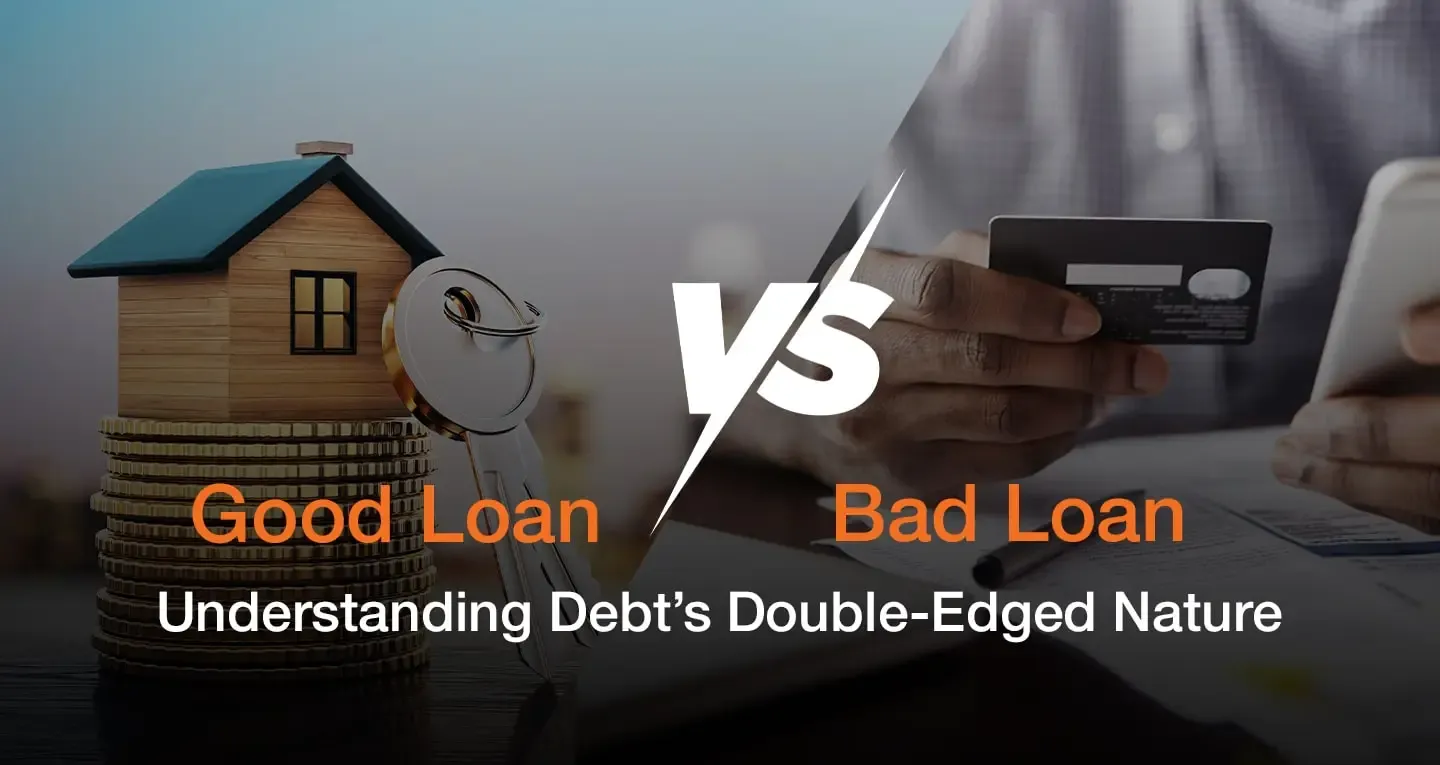
Each of these examples has one thing in common beyond the rupee figures: a plan existed before the loan was taken, not after. For a closer look at how this reasoning applies loan by loan, good loan vs bad loan, understanding debt's double-edged nature breaks down more scenarios. The picture flips when that plan is missing.
See What a Good Debt Plan Actually Looks Like
Free assessment, understand your repayment capacity before you borrow.
Talk to FREED Team
Examples of Bad Debt in India
Credit card debt for daily expenses. Vikram started putting groceries and fuel on his credit card during a tight quarter, planning to clear it once things eased up. They didn't ease up fast enough. His outstanding balance sat there for months, compounding at 30% to 45% annually, and daily expenses that should have cost him nothing extra ended up costing thousands in interest alone.
A luxury purchase on EMI. A ₹1,20,000 flagship phone bought on a no-cost EMI plan still carries a real cost once processing fees and the opportunity cost of that money are counted. Personal-loan rates vary significantly by lender and borrower profile. Eighteen months later, the phone is worth a fraction of what was paid for it, while the EMI is still running.
Payday loans and instant app loans. Built for one emergency, short tenure, high effective rate once fees are factored in. The trouble starts when one loan becomes a pattern, a new app loan taken out to cover the last one's due date. One caution belongs here specifically: stick to RBI-registered NBFCs or their officially listed digital lending partners. Unlicensed lending apps carry a separate, serious risk beyond just the interest rate.
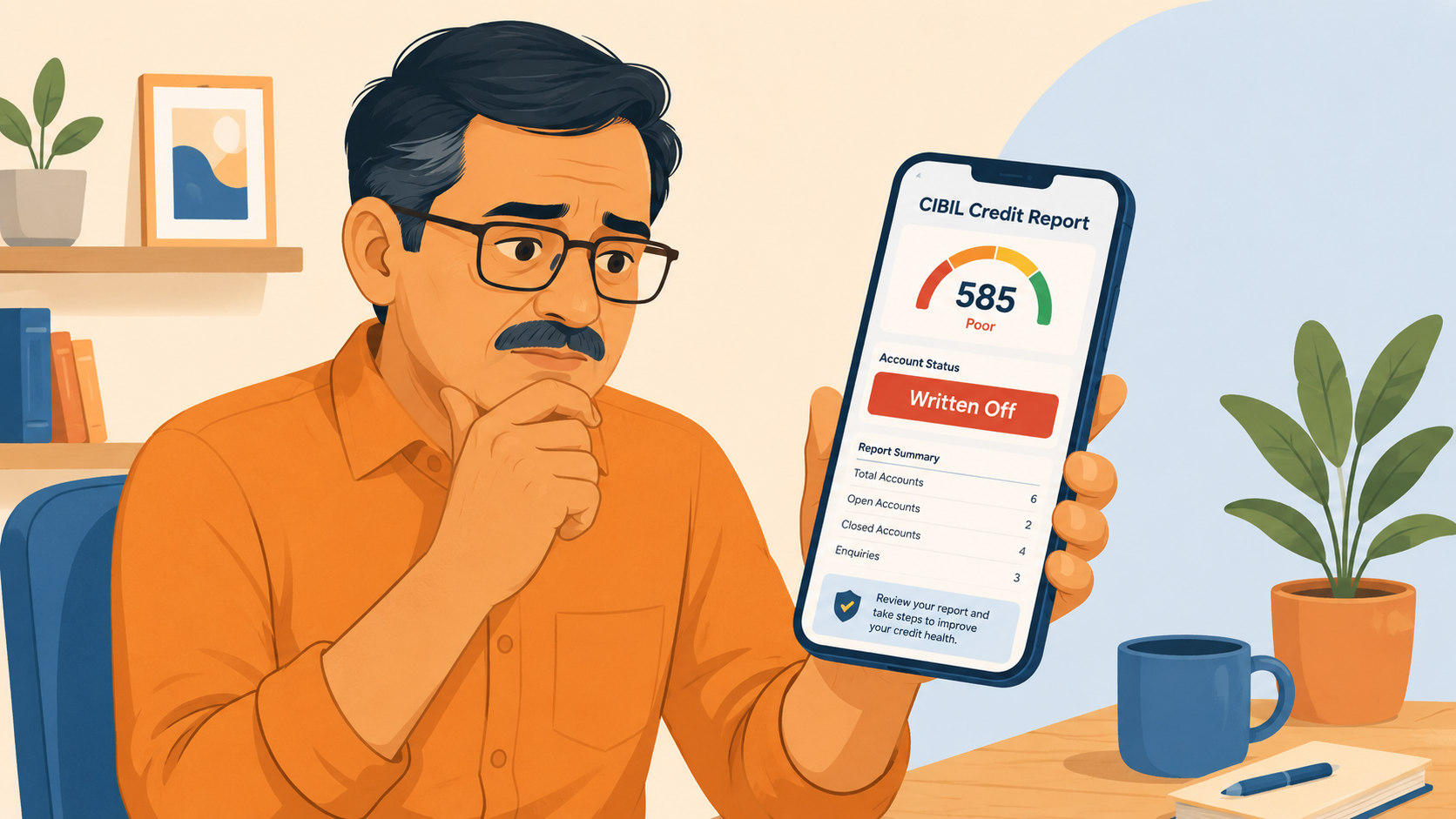
None of this is a character judgment. It's mechanics, and when a debt like this stays unpaid long enough, it can end up written off entirely, a topic bad debts written off, meaning and CIBIL impact covers in full. The same mechanics can also flip a good loan bad given the wrong conditions.
Can Good Debt Turn Into Bad Debt?
Yes, and it happens in three specific ways, not through bad luck alone.
The underlying value sometimes doesn't materialise. An education loan for a degree that doesn't lead to the expected job offer. A business loan for a venture that never generates the return it was built around. The debt stays the same size while the value it was supposed to create simply doesn't show up.
The repayment plan itself can break. Income drops, a medical emergency hits, and an EMI that was comfortable six months ago stops being comfortable now. Nothing about the loan changed. The income behind it did.
Multiple debts can stack. Each one looks reasonable in isolation, a car EMI here, a personal loan there, a credit card balance carried for a bad month. None of them individually look unreasonable, yet combined they outgrow what income can absorb, and this kind of strain shows up on your credit report the same way a single bad loan would, something covered in how CIBIL score ranges actually work.
If a large share of your take-home income is going toward EMIs and you're struggling to cover essential expenses or save for emergencies, your debt load may need active management. None of this reflects a borrower's failure. Income shocks and debt stacking are structural realities, not character flaws.

What the Law Says
RBI classifies a loan as a non-performing asset once interest or principal stays overdue for more than 90 days, the formal point where "bad debt" becomes an official status, not just a feeling.
SourceWhat to Do If Your Debt Has Become Unmanageable
If you're still paying but multiple EMIs feel overwhelming to keep track of, loan consolidation is the direct path. Consistent, on-time repayment after consolidation can help strengthen your credit profile over time. How loan consolidation actually works walks through the mechanics in more detail than this section has room for.
Settlement is generally considered when full repayment has become genuinely unaffordable and the borrower cannot repay the outstanding debt under the existing terms. Settlement is not something a borrower chooses out of preference. In some cases, FREED may negotiate a settlement for less than the outstanding amount. Actual outcomes vary by lender, account and borrower circumstances, and no specific reduction is guaranteed.
If you're unsure which track actually fits your situation, a free assessment answers that faster than trying to work it out alone. The two tracks aren't interchangeable, and picking the wrong one wastes time you don't need to lose.

How FREED Helps
For those still repaying but stretched across multiple EMIs, consolidation comes first.
FREED's Debt Consolidation Program, known to customers as Reduce My EMI, assesses your existing unsecured loans and card dues, then matches you to a lending partner from its network. That partner disburses one new loan that pays off your existing eligible debt instantly. What's left is one loan, one EMI, lower than the combined total you were juggling before.
Here's the point worth stating plainly, since a reader who just read about "bad debt" might assume any restructuring hurts their credit. It doesn't. Consolidation improves your CIBIL score, it doesn't drop it, since the new loan reports as paid on time. FREED charges its success-based fee only once consolidation actually completes.
For genuine inability to repay, settlement is the separate path.
FREED's Debt Resolution Program, known as Settle My Loans, exists for borrowers who genuinely cannot repay in full, not as a shortcut for anyone who'd simply prefer to pay less. You save a fixed amount monthly into a Special Purpose Account, an independent savings pool separate from FREED, and once enough corpus builds, FREED negotiates with each bank on your behalf. Waivers run up to 50%* of what's owed. Your CIBIL score does take a hit here, and the "Settled" mark stays visible for up to 7 years, worth stating plainly rather than softening. One strong trust signal worth knowing: if a bank declines to settle, FREED refunds its evaluation fee rather than keeping it. The full mechanics and CIBIL impact of this path are covered in loan settlement meaning, process, and CIBIL impact.
These two programs are never interchangeable for the same person. See what loan consolidation actually involves, or explore how loan settlement works if repayment has genuinely stopped being possible.
Turn Unmanageable Debt Into a Plan
Consolidation or settlement, whichever fits.
Get My Free Debt AssessmentSee Where Your EMI Load Stands
Add up your total monthly EMIs against your monthly take-home income, and the calculator shows your EMI burden as a percentage, along with a plain status: comfortable, caution, or high burden. If your number falls into a high-burden range, the calculator can help you assess whether you may need to explore options such as budgeting, consolidation or professional debt counselling.
How to Keep Your Debt in the Good Column
- Before borrowing, ask what value this creates. An asset, a skill, an income stream. If the honest answer is nothing lasting, that's a signal to pause before signing anything.
- Match the loan term to the life of what it's funding. A 5-year loan for something that loses its value within a year is a mismatch worth avoiding.
- Pay credit cards in full every cycle. That single habit alone keeps card debt entirely out of the bad-debt column.
- Keep combined EMIs comfortably under half of take-home income. Revisit this number whenever income or obligations change, not just once at the start.
- Revisit good debt periodically too. An education loan or business loan that stops generating the return it was supposed to needs a plan of its own, not just continued payments made out of habit.
If any of this is already feeling harder than it should, washing your debt away covers what a genuine reset looks like once good habits alone aren't enough to catch up.
Source
Claim | Source |
A loan is classified as a non-performing asset after 90-plus days of overdue interest or principal | RBI Master Circular, Prudential Norms on Income Recognition, Asset Classification and Provisioning pertaining to Advances (https://www.rbi.org.in/upload/notification/pdfs/59027.pdf) |

Mohit Juneja
Mohit Juneja writes educational content at FREED on debt management, credit scores, loan repayment, and borrowing best practices. His content is shaped by expert insights and industry knowledge, helping readers better understand their financial options and make informed decisions.
mohit.juneja@freed.care

FREED is India's trusted loan management platform. Founded in 2020 and headquartered in Gurugram, FREED has counselled 20 lakh+ people on personal loans, credit cards, and app loans. FREED charges fees only on successful settlement, not upfront. FREED does not handle secured loans (home loans, car loans, gold loans).
Media Mentions