What "Easy EMI" Really Means Before You Say Yes
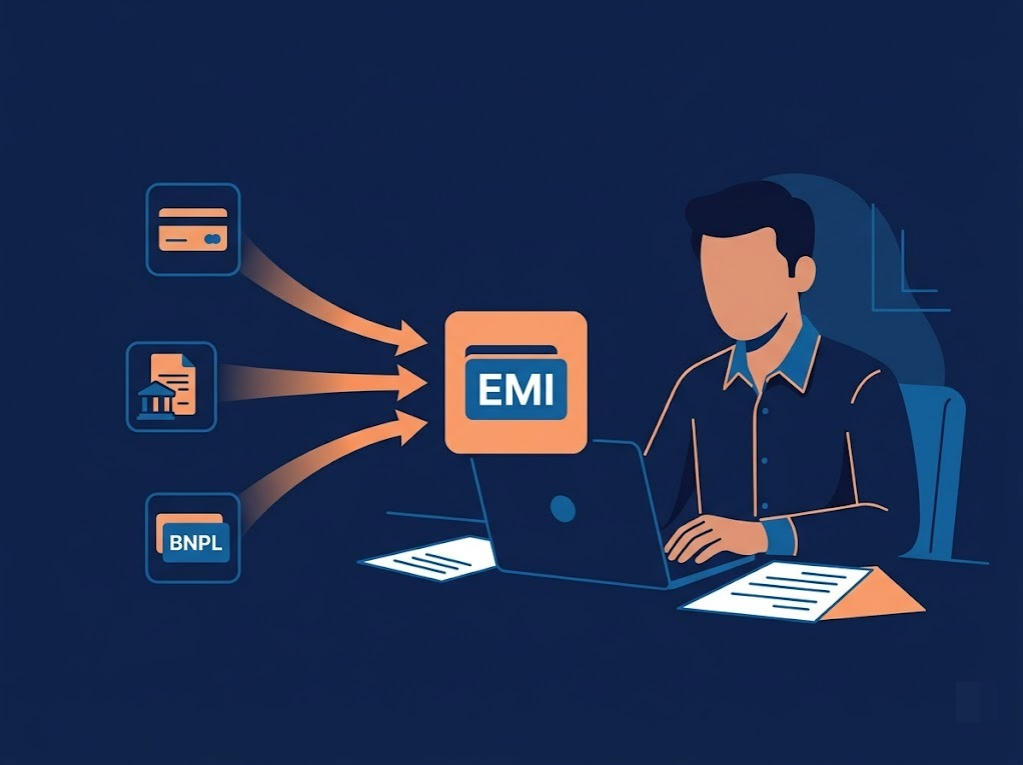
Easy EMI is a marketing term for financing that divides a purchase into monthly instalments. In a no-cost EMI offer, an upfront discount may offset the interest, while processing fees, taxes, or other charges may still apply depending on the offer’s terms.
Mohit Juneja
Reviewed by FREED India, Debt Resolution Specialists

 4.7/5
4.7/5 ₹3,200Cr+
 20,000+
 20,00,000+4.7/5₹3,200Cr+20,000+20,00,000+
KEY TAKEAWAYS

A no-cost EMI offer may use an upfront discount to offset the interest, but processing fees, taxes, or other charges may still apply.
Common hidden costs: processing fees, GST charged on the interest portion, and foreclosure charges if you pay it off early.
Missing an easy EMI payment affects your CIBIL score the same way any other missed EMI does.
Stacking several easy EMI purchases across different cards and platforms is a common, quiet path into over-leverage.
Comparing the EMI total against the cash price is the one check that reveals whether an offer is genuinely worth it.
What Does "Easy EMI" Actually Mean?
"Easy EMI" isn't a regulated financial term with a fixed legal definition anywhere. No RBI circular defines it; no consumer protection law spells out what it must include. It's a marketing phrase, coined and used by retailers, e-commerce platforms, and the banks that partner with them, to describe a promotional instalment plan attached to a purchase. Its most common form is "no-cost EMI," the label you'll see on the checkout page of a phone, laptop, television, or major appliance.
The mechanic behind it is fairly simple once someone actually walks you through it, which the checkout page rarely does. Say a laptop is priced at ₹60,000 for cash payment, but the retailer normally offers cash buyers a discount of ₹3,000, bringing the real cash price down to ₹57,000. Choose the "no cost EMI" option instead, and that ₹3,000 discount is usually the first thing you lose. The retailer effectively uses the forfeited discount to cover the interest the bank would otherwise charge you across the instalments, so your total EMI payments add up to something very close to the original ₹60,000 sticker price rather than the ₹57,000 a cash buyer actually paid.
The interest hasn't been erased from the transaction anywhere. It's been relabelled, folded quietly into a discount you never received, and dressed up as "0% interest" on the page that convinced you to click buy.
None of this makes Easy EMI a scam or something to avoid in principle. It's a legitimate financing structure, genuinely used by banks and NBFCs across the country, and for the right purchase on the right terms, it can spread a real cost over several months without straining a tight budget in one shot. The structure itself isn't the problem. The problem is that the phrase "no cost" makes people assume there's no cost anywhere in the transaction, when the more honest read is that the cost simply moved to a place that's harder to see. Where exactly it hides and how much it typically adds up to are worth walking through in detail.

Where Do the Hidden Costs in Easy EMI Actually Come From?
- The lost upfront discount. This is usually the single biggest hidden cost, and also the easiest one to miss, because it never shows up as a line item labelled "interest" anywhere on your statement. Retailers routinely offer a cash-payment discount that simply isn't extended to EMI buyers. On a ₹60,000 purchase, a forfeited discount of ₹2,000 to ₹3,000 is, in every practical sense, the interest cost of the loan wearing a different name. It's built into the price you didn't get, not into a fee you can point to.
- Processing fees charged by the bank or NBFC. Some EMI plans include a processing fee. Check the exact amount in the lender's or card issuer’s disclosure before accepting the offer.
- GST on applicable charges. GST may apply to the interest or fees associated with an EMI plan. Check the lender’s final cost breakdown to understand the amount payable.
- Foreclosure or prepayment charges. A foreclosure or prepayment charge may apply if you close the EMI plan early. The amount and applicability depend on the lender and the terms of the plan.
Put these four together on a mid-range purchase: the lost ₹3,000 discount, a ₹1,200 processing fee, a few hundred rupees of GST on the interest, and it's entirely possible for the true EMI total to land at or above the cash price, even while the checkout page proudly advertises "0% interest" in bold letters. The only way to know for certain, for any specific offer, is to actually add up every instalment and compare it against what you'd have paid in cash. That comparison is exactly the check worth running before you commit to anything.
How Do You Check If an Easy EMI Offer Is Actually Worth It?
- Add up every single instalment and compare the total to the cash price. This is the one number that cuts through all the marketing language on the page. If nine EMIs of ₹6,700 add up to ₹60,300 and the cash price with the discount applied was ₹57,000, the "no cost" plan just cost you an extra ₹3,300 you never accounted for.
- Ask specifically whether a processing fee applies, and get the exact rupee figure. Don't accept a vague "minimal fee" answer at the counter or on a chat support window. Ask for the exact amount or percentage before you agree to anything, since this fee often isn't displayed clearly anywhere on the product page itself.
- Check whether the cash-price discount is forfeited the moment you choose EMI. Many retailers only confirm this if you ask directly, since the discounted cash price and the EMI price are rarely shown side by side on the same screen for comparison.
- Read the foreclosure terms before you commit, not after you've already signed up. If there's any real chance your financial situation could shift over the coming months, know upfront exactly what closing the plan early would cost you in fees.
The rule of thumb that ties all four checks together is simple and worth remembering the next time a checkout page flashes "0% EMI" at you: if the full EMI total comes out higher than the cash price for the same product, the "no cost" label is doing far more marketing than actual math.

Freed Expert Tip
Before saying yes to an easy EMI, add up the full instalment total and compare it to the cash price. That single check reveals most hidden costs.
Check your optionsDoes Missing an Easy EMI Payment Affect Your CIBIL Score?
An easy EMI financed by a bank or NBFC is a credit obligation. A missed payment may be reported to credit bureaus and may negatively affect your credit profile, depending on the lender’s reporting and your overall credit history.
This catches people off guard because the word "easy" makes the whole arrangement feel casual, almost like a payment convenience rather than an actual loan, something closer to splitting a restaurant bill than borrowing money. It is a loan in every way that matters to a credit bureau. The bank or NBFC financing the purchase reports your payment record on that account exactly like they would for any other credit line, and a missed instalment shows up on your file with the same downstream consequences: late fees, a ding on your score, and eventually collections contact if it continues. "No cost" was only ever a claim about the interest rate you'd be charged. It was never a promise about what happens if a payment doesn't come through, and as covered above, even the interest-rate claim usually comes with a few strings attached.
How Easy EMI Purchases Can Quietly Add Up to a Debt Trap
Here's the structural problem with easy EMI, and it has very little to do with anyone being careless with money. Each individual purchase, taken entirely on its own, genuinely feels small and manageable. A ₹1,500 EMI for a phone accessory here, an ₹800 EMI for a fitness tracker there, a ₹2,200 EMI on a kitchen appliance somewhere else entirely. None of these numbers, viewed by themselves in the moment you click "buy," look like anything worth worrying about.
The trouble is where these plans actually live. They're spread across different cards, different retailers, and different platforms, and almost nothing in the checkout flow of any single one of them ever asks you to think about the other four or five you're already carrying elsewhere. Buy something on one platform's EMI plan in March, another on a different card in May, a third through yet another retailer in July, and by August you could easily be carrying five separate easy EMI obligations without ever having sat down in one place to add them all up.
Individually, every single one of those purchases felt completely fine at the moment of the decision. Combined, month over month, they can push your total EMI obligation toward an unhealthy share of your income without a single choice along the way that felt reckless, careless, or even slightly out of line. This isn't a story about poor spending discipline or a lack of self-control. It's a structural blind spot built directly into how these offers are designed and marketed, one purchase, one screen, one decision at a time, with nothing in the process ever nudging you to step back and look at the combined picture. The only real fix is a deliberate gut check that none of these platforms will run for you automatically.
See Your Real EMI Burden Across Every Easy EMI You're Carrying
The number that actually matters here isn't any single easy EMI instalment sitting on one card or one app. It's the combined total across every EMI you're currently paying, easy EMI purchases fully included, measured against your monthly income. This calculator adds all of it up in one place, so you can see your real combined burden as a percentage of what you actually earn, rather than judging each purchase in isolation the way every checkout screen quietly encourages you to.
Comparison Table: Cash Purchase vs Easy EMI, What Actually Differs
Factor | Paying Cash | Easy EMI |
Upfront discount | Often available | Often forfeited |
Processing fee | None | Commonly charged |
GST on interest | Not applicable | Applied to the interest portion |
Impact if you can't pay | No ongoing obligation | Missed EMI affects CIBIL like any other loan |
Terms vary by retailer, bank, and NBFC. Always confirm the exact fees and discount terms before purchase.
What If You're Already Stretched Across Multiple EMIs?
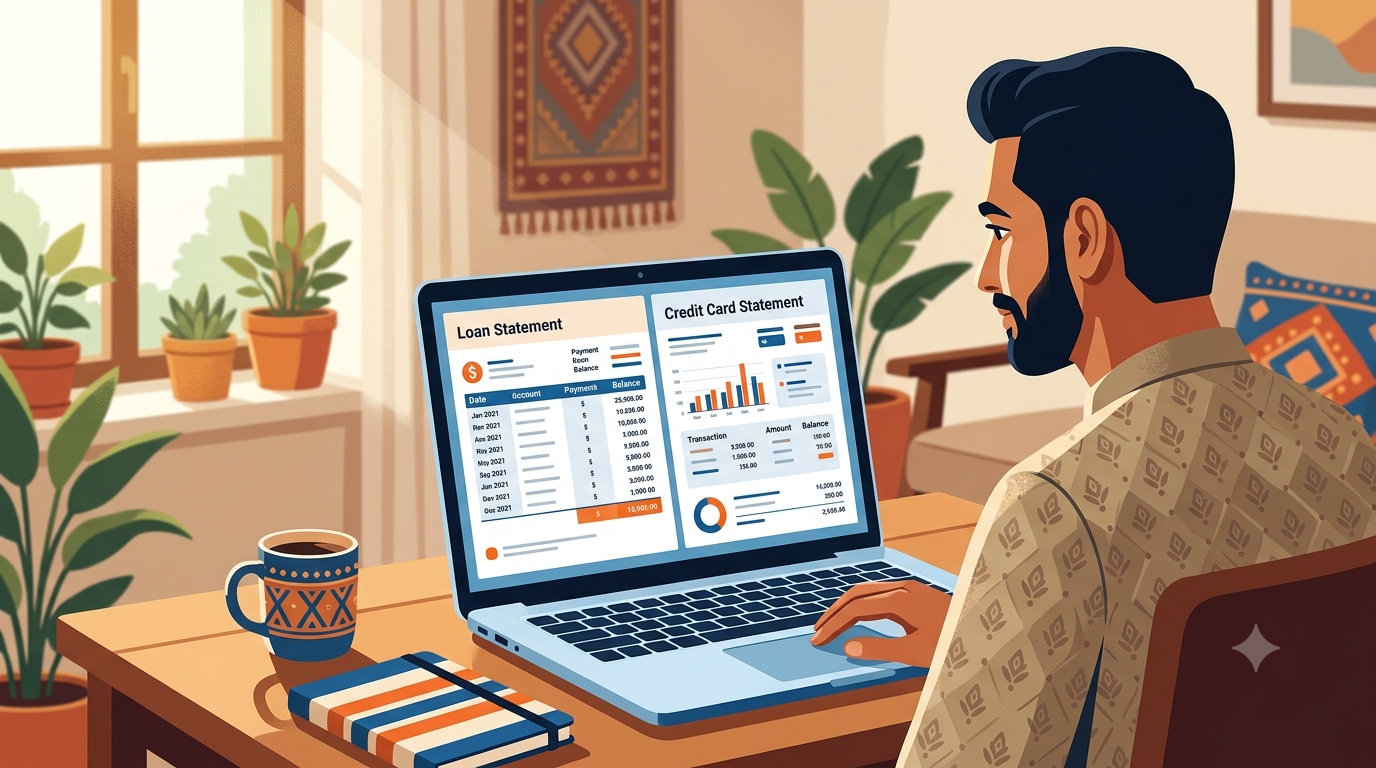
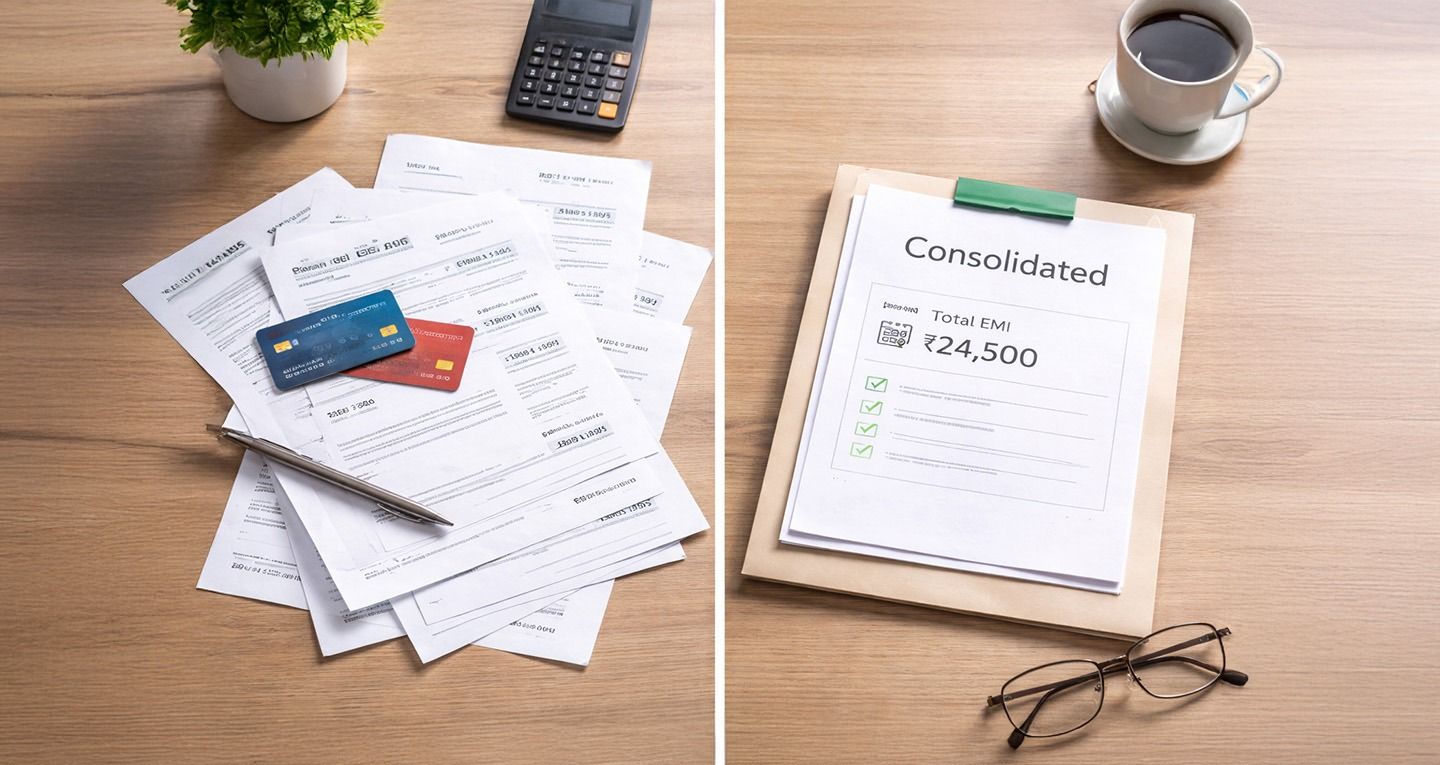
If easy EMI purchases have piled up alongside a personal loan, a credit card balance, or any other EMI you're already carrying, it's worth actually adding up the total rather than guessing. Take a realistic case. Someone is paying ₹9,000 a month on a personal loan, ₹4,000 as a minimum credit card due, and has three separate easy EMI purchases running at ₹1,500, ₹900, and ₹1,800, respectively. Add all five together, and the combined monthly EMI comes to ₹17,200, spread across four different banks or platforms, with four different due dates to track every single month. On a take-home salary of ₹35,000, that's already 49% of income gone before rent or groceries, and it happened one small purchase at a time, not through one big decision.
FREED may assess your financial profile and connect eligible borrowers with a lending partner that may consolidate eligible unsecured debts into one repayment, subject to the lender’s approval and final terms. FREED is not a lender, and approval, a lower EMI or a particular credit-score outcome is not guaranteed. FREED’s consolidation fee is success-based and charged only after consolidation is completed.
This is a prevention-stage option, not something reserved for a crisis. If every single payment is still being made on time, but keeping track of several small EMIs has become its own quiet source of stress, that combined weight is exactly the situation this plan is built to simplify.

Mohit Juneja
Mohit Juneja writes educational content at FREED on debt management, credit scores, loan repayment, and borrowing best practices. His content is shaped by expert insights and industry knowledge, helping readers better understand their financial options and make informed decisions.
mohit.juneja@freed.care

FREED is India's trusted loan management platform. Founded in 2020 and headquartered in Gurugram, FREED has counselled 20 lakh+ people on personal loans, credit cards, and app loans. FREED charges fees only on successful settlement, not upfront. FREED does not handle secured loans (home loans, car loans, gold loans).
Media Mentions