Debt Management Options for Borrowers Falling Behind
Debt management options for borrowers falling behind are the steps you can take after missing, or before missing, an EMI. They range from asking your bank for time and getting advice, to a settlement for loans you genuinely cannot repay. The right option depends on how far behind you are.
Mohit Juneja
Reviewed by FREED India, Debt Resolution Specialists
 4.7/5
 ₹3,200Cr+
 20,000+
 20,00,000+4.7/5₹3,200Cr+20,000+20,00,000+
Key Summary

Your debt management options depend on how far behind you are, so check the stage first.
In our example, two missed ₹15,000 EMIs add ₹2,500 to each EMI if spread over 12 months.
A bank usually marks a loan as bad after 90 days of missed EMIs.
RBI says recovery agents must not call before 8 am or after 7 pm.
Settlement is for those who genuinely cannot repay in full, and it has lasting consequences.

What Debt Management Options Do You Have When You’re Falling Behind?
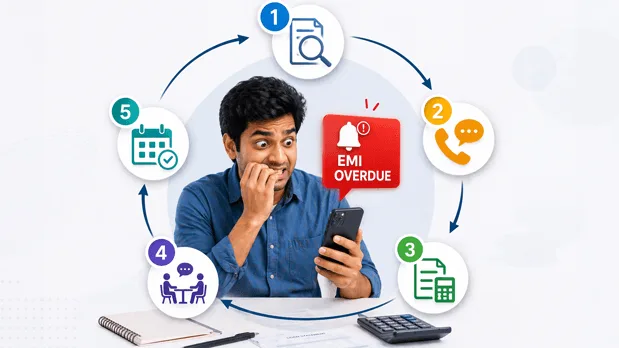
You have more options than you think, and the right one depends on how far behind you are. Someone who’s about to miss an EMI has different choices from someone who’s three months in. So the first job is to find your stage, and the second is to match a step to it.
Here are the options, in the order to try them.
Talk to your bank. Call before the next due date if you can, and say why.
Get advice or counselling. A session can look at all your loans and what’s most urgent.
Change your plan or ask for time. This could be a short break, a longer tenure or a spread of the missed EMIs.
Settlement, only for loans you genuinely cannot repay. It comes last, and it has lasting consequences.
Take Ramesh, 41, who missed two EMIs after a delayed salary. He’s now getting calls, and he isn’t sure what to do first. His case is common, and it’s fixable in steps. The same steps help anyone who’s close to the edge but hasn’t fallen yet.
Here’s the part that surprises most people. The earlier you act, the more of these debt management options stay open. A missed EMI in week one is easier to handle than a missed EMI in month three. Banks tend to be more willing to talk when you call first, and the talk is simpler before charges and calls pile up.
If you’re asking what to do when you can’t pay your EMI, start with the call, not with a search for a quick loan. A new loan feels like relief, but it moves the problem into next month and adds cost. A plan with your bank is a better first move, and it costs you nothing to ask. Our pillar guide covers the first step when payments slip, and where counselling fits in.
We aren’t going to blame you for getting here. Delayed salaries, medical bills, a job change and a few tight months are the usual causes, and they happen to careful people too. What matters now is a clear picture and a steady next step. For the full overdue steps, read our guide on what to do when a loan becomes overdue.
This guide adds a stage table, a way to prepare for the call, an example of spreading missed EMIs, and a look at your rights. Let’s start with how far behind you are.
Want Every Loan and Card on One Page?
See your accounts and balances in plain words.
Check My Credit InsightsHow Far Behind Are You, and What Does That Mean for Your Options?
The stage decides what’s open to you. Debt options when falling behind change as time passes, so the same step can be easy at one stage and hard at the next. Here’s a simple table to find yours.
Stage | What it looks like | Usual first step |
|---|---|---|
About to miss | You know next month will be short | Call your bank before the due date and ask for options |
Missed one or two EMIs | You’re still within the first weeks | Call now, explain, and ask for a plan in writing |
Well behind | Usually 90 days or more; the bank marks the loan as bad | Get advice, and know your options and your rights |
Recovery calls or a legal notice | Agents are calling, or a letter has arrived | Note every call, check your rights, and get help with the reply |
Here’s how to read each row.
About to miss. This is the best stage to act at. You have the most choices, and a call costs nothing. Contacting your lender before a payment is missed gives you an opportunity to explain the situation and ask what options may be available.
Missed one or two. Speed matters here. The longer you wait, the more charges and calls pile up. A short, honest call usually helps more than silence, and it starts a record that you tried.
Well behind. A bank usually marks a loan as bad, called an NPA (non-performing asset), after about 90 days of missed EMIs. The exact timing depends on the bank and the loan, so ask yours which stage you’re in. At this stage the bank’s approach changes, and your choices narrow.
Recovery calls or a legal notice. These can come at any stage after a miss, and they can feel frightening. We cover your rights in a later section, and none of it means you’re out of options.
You can have loans at different stages at once. One card might be on time while a personal loan is three months behind. So sort loan by loan, not by person. That also tells you where to put your effort first, which is usually the loan closest to the next stage.
Time limits vary by bank, so treat the table as a guide and not a rule. For the stages in detail, read our guide on NPA, SMA and recovery stages. For what default means, our guide on what happens if you default on a loan covers it.

See What Share of Your Salary Goes to EMIs
Check how much of your pay your EMIs take today.
Check My EMI ScoreHow Should You Prepare Before You Call Your Bank?
Ten minutes of preparation makes the call shorter and your ask clearer. People who call without numbers tend to end up agreeing to whatever’s offered. A short list on paper changes that. It also calms you down, because you know what you want to say.
Gather these before you dial.
Your loan details. The loan number, the EMI, the due date and how many EMIs you’ve missed.
Your outstanding balance. Check the latest statement or the bank’s app.
Your income and essentials. What comes in each month, and what has to go out for rent, food, bills, fees and transport.
The amount you can pay. Not the amount you wish you could pay. The amount you can pay, every month, without borrowing.
A short reason. Delayed salary, medical cost, job change. One line is enough.
Then decide your ask, and write it down. It might be “a two-month break”, “a longer tenure with a lower EMI”, or “spreading my two missed EMIs over the next twelve months”. Pick one main ask and one fallback. You’ll sound clearer, and the bank will find it easier to say yes.
A call can sound like this. “Hello, I’m calling about my personal loan. I missed two EMIs because my salary was delayed, and it’s now regular again. I can pay a bit more than the usual EMI each month. Can you spread the missed amount over twelve months, and send me the new schedule by email?” It’s short, honest and specific.
Keep the tone steady. You don’t need to apologise at length, and you don’t need to explain your whole life. If the person you reach can’t help, ask who can, and ask for their name. Write the date, the time and what was said as soon as the call ends. Before you call, it helps to see all your accounts in one place, so your numbers are right.
See Your Whole Debt Picture
Your loans, cards and balances in plain words, with an action plan.
Check My Credit InsightsCan Your Bank Give You Time, and What Does It Cost?
Ask before the due date if you can. A bank can’t agree to something it hasn’t heard about, and a plain request in writing gives it something to act on. We can’t promise it will say yes, and we found no neutral data on how often banks agree. But asking costs nothing, and many people never do.
Here are three asks, all worth putting in writing.
A short break. A pause of a month or two, so you can catch up when your pay returns.
A longer tenure. The same loan over more months, which lowers each EMI.
A spread of the missed EMIs. The missed amount is split across the coming months, so you don’t pay it all at once.
Here’s an illustrative example of the third ask. The figures are invented, and they leave out interest and late charges, because we found no verified rule on those amounts.
Item | Amount |
|---|---|
Monthly EMI | ₹15,000 |
Two EMIs missed | ₹30,000 behind |
Pay it all with the next EMI | ₹45,000 in one month |
Spread over 12 months | ₹2,500 more a month, so ₹17,500 (about 16.7% higher) |
Spread over 6 months | ₹5,000 more a month, so ₹20,000 (about 33.3% higher) |
The all-at-once route means ₹45,000 in one month, three times the usual EMI. For most people in this position, that isn’t possible. A spread makes each month manageable. Over 12 months, the ₹2,500 extra adds up to the same ₹30,000 you missed, before any interest or charges.
Here’s what the example shows.
A spread keeps the month manageable. ₹17,500 is a stretch, but it’s a stretch you can plan for.
A longer spread costs more over time. Twelve months means a smaller jump each month, and it usually means more interest overall. Ask your bank for the total.
A shorter spread clears the gap faster. Six months means a bigger monthly jump, so check it against your essentials first.
Get the total in writing. Ask for the new EMI, the new end date and every charge.
Check the new figure against your own budget before you agree. If ₹17,500 leaves you short on rent and food, ask for the longer spread, or a short break first. An EMI you can’t keep is worse than a smaller one you can. And remember, the bank decides whether to agree, and what it charges for the change.
Don’t treat a verbal yes as final. Ask for the new schedule by email or letter, and keep it. For what a bounced EMI can cost, read our guide on EMI bounce charges.


FREED Expert Tip
Call before the due date, say why, and ask for the new schedule in writing. A date and a name on your note helps if the answer changes later. See your accounts in one place before the call.
Check My Credit InsightsCan Credit Counselling Help When You’re Already Behind?
Yes, and a session looks at the whole picture, not only the loan you’re worried about. If you’re facing options for missed loan payments, a counsellor can help you sort them. That’s often what people need most, because stress makes it hard to see all the numbers at once.
Here’s what a session usually covers.
Your income and essentials. What comes in, and what has to go out each month.
Every loan and card. Balances, rates, due dates and what’s overdue.
What’s urgent. Which debts need action this week, and which can wait.
A written next step. A short plan you can follow, with dates.
Here’s what it can’t do. It doesn’t pay your loans, and it doesn’t stop recovery calls. It also can’t make a bank agree to a plan. A session gives you clarity and a direction, and the action is still yours.
One practical point. We found no RBI statement that all counselling is cost-free, so ask each centre what it charges, and ask for the answer in writing. Be wary of anyone who asks for money up front and promises a result. Ask what happens if the result doesn’t come.
Counselling comes before settlement for a reason. It takes less effort, it keeps more doors open, and it often turns up a step you hadn’t thought of. A bank may be willing to change your plan if you arrive with a clear budget. For what a session looks like in practice, read our guide on debt counselling in India.
Our pillar guide explains counselling when you’re already behind, and how it differs from a settlement. If you’re weighing the two, our guide on credit counselling versus debt settlement sets out the difference. Next, let’s look at what to do if you can pay part of what you owe.
Not Sure What Your Salary Can Carry?
Check your EMIs as a share of your salary before any call.
Check My EMI ScoreWhat If You Can Pay Part of It, but Not All?
Partial ability is common, and it matters. Many people can carry one or two loans but not all of them. That changes the options, and it gives you something to offer when you talk to a bank.
Here are two paths.
Pay what you can, and agree a plan for the rest. Keep paying the loan you can still carry. Then agree a plan with your bank for the one you can’t, using the asks above.
Talk to a professional if the total is too large. If your EMIs together are more than your pay can hold, a plan on one loan won’t be enough. Get advice on the whole picture.
Start by listing your loans from the one you can keep paying to the one you can’t. The loan you can still carry stays on time, so it doesn’t join the problem. The loan you can’t carry gets the call, the ask and the plan. This keeps one fire from becoming three.
Here’s one firm rule. Don’t take a new loan, or a card advance, to pay old EMIs. It moves the problem into next month and adds a new cost. Missed payments need a plan, not another loan.
Watch out for the trap of paying the loudest caller first. A loan app that calls twice a day isn’t always the one that matters most. Look at the amount, the stage and the consequences, and pay in that order where you can. Your essentials always come first, because a plan that costs you rent and food won’t last.
If you’re unsure which group you’re in, FREED’s team can assess your situation and tell you what options are available. You don’t need to have it all figured out first. A short look at your income, your loans and what’s overdue is usually enough to sort the groups.
For the card side, our guide on how to get rid of credit card debt covers the routes. We can’t promise any option works for every person. But paying part and agreeing a plan for the rest keeps you moving, and it shows the bank you’re trying. Next, let’s look at settlement, and when it fits.
See Your Whole Debt Picture
Your loans, cards and balances in plain words, with an action plan.
Check My Credit InsightsWhen Is Settlement One of Your Debt Management Options?
Settlement is not something a borrower chooses out of preference. It’s for people who genuinely cannot repay in full, and it comes after the other debt management options. If you can still pay, a plan with your bank is usually the better first move.
In plain words, settlement means agreeing a smaller one-time payment with the bank to close the loan. The bank has to agree, and you don’t have a right to a settlement. Here are the consequences, stated first.
A “Settled” mark on your credit report. A ‘Settled’ status may appear on your credit report when the lender accepts less than the full amount due. This is different from an account reported as ‘Closed’ after full repayment and may affect future credit applications. Check how the lender will report the account before accepting the settlement.
Harder future loans. Banks look at the mark, and RBI’s framework adds a cooling period before fresh credit from the same lender.
The bank decides. Terms differ from one bank, and one borrower, to another.
It takes time. No result is guaranteed, and settlement is rarely quick.
RBI’s framework on compromise settlements (RBI/2023-24/40, 8 June 2023) applies to specified regulated entities, including banks, co-operative banks, NBFCs and All-India Financial Institutions. It requires these entities to maintain Board-approved policies for compromise settlements and technical write-offs. It also prescribes a cooling period before fresh credit exposure to the same borrower; the minimum period is 12 months for non-farm credit exposures.
A technical write-off is an accounting action and does not, by itself, waive the borrower’s repayment obligation. The lender may continue recovery efforts after a technical write-off. If you are told that your loan has been written off, ask the lender to confirm the account status and outstanding liability in writing.
If a settlement is on the table, ask a few plain questions before you agree.
What’s the exact amount, and by what date? Get both in writing.
Will the bank send a closure letter? Ask what it will say, and when you’ll receive it.
How will the loan show on your credit report? Check the report a few weeks after payment.
We aren’t saying settlement is wrong. For some people it’s the only realistic step, and it can end a debt that can’t be paid any other way. But it’s a serious decision, and it should come after you’ve tried the ones above. For a side-by-side look, read our guide on debt settlement versus debt management. For what happens when a loan goes into default, read our guide on what happens when you default.
Next, let’s look at your rights while all this is going on.
Can’t Repay Your Loans in Full?
If you genuinely cannot repay your loans, FREED negotiates with your lenders to settle them for less than 50%* of your outstanding dues.
Settle My LoansWhat Are Your Rights While You’re Behind?
Owing money doesn’t remove your rights. Knowing them lets you stay calm and clear when the phone rings. Falling behind on loan payments in India doesn’t give anyone the right to harass you, and the rules say so. Here’s what RBI says, and what you can do.
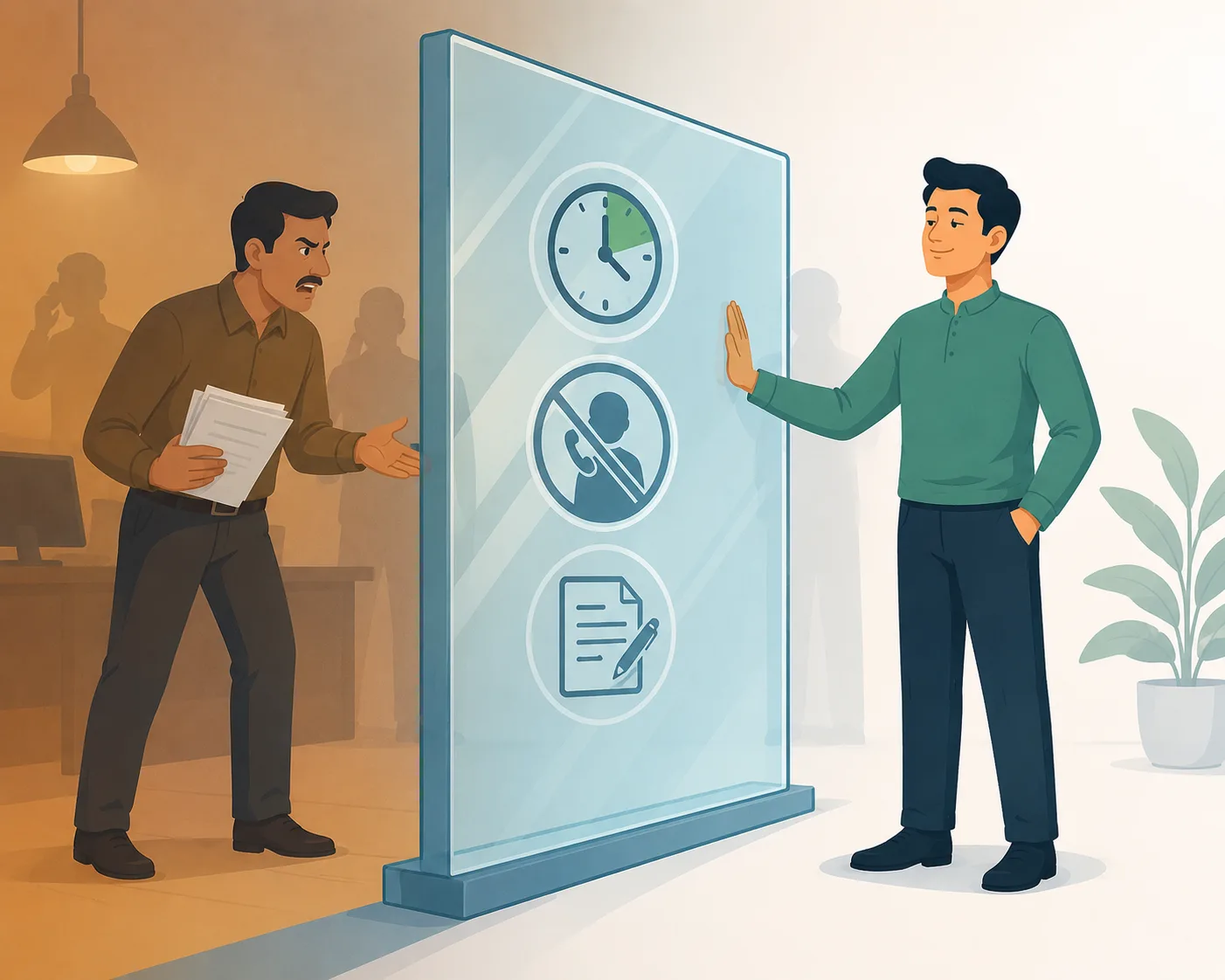
RBI’s direction on recovery agents (RBI/2022-23/108, 12 August 2022) requires the regulated entities covered by the direction to ensure that they and their recovery agents do not intimidate or harass borrowers, make threatening or anonymous calls, call persistently, or call before 8 am or after 7 pm to recover overdue loans. The direction applies to specified categories of regulated entities, including commercial banks other than payments banks, All-India Financial Institutions, NBFCs and specified co-operative banks. Microfinance loans covered by the separate microfinance framework are excluded.
Here’s how to act on it.
Note the time of every call. A call outside 8 am to 7 pm is worth recording.
Ask the caller’s name and company. The direction doesn’t say agents must give them, but asking is sensible, and you can write them down.
Stay calm and keep a record. Write the date, the number and what was said.
Complain to the bank first. Do it in writing, and keep a copy.
If the lender does not resolve your complaint, you may be able to approach the RBI Ombudsman under the Reserve Bank – Integrated Ombudsman Scheme, 2026, provided the lender and complaint are covered. You must first complain to the regulated entity. If you receive no response within 30 days, or the applicable response period specified by RBI, NPCI or the card network, whichever is higher, you may approach the Ombudsman. You may also approach the Ombudsman if you are dissatisfied with the entity’s response. The complaint must generally be filed within 90 days from the expiry of the applicable response period or the date of the entity’s last communication, whichever is later. The scheme is free.
FREED Shield is open to everyone. If you are facing recovery agent harassment, FREED helps you understand your legal rights as a borrower, report inappropriate recovery practices, and raise complaints with your lender. Where harassment is frequent, our experts speak to recovery agents on your behalf. And if you receive a legal notice about your loan, FREED helps you understand your options and draft a suitable reply. You can read more on the FREED Shield page.
A legal notice is frightening, but it isn’t the end of your options. Read it fully, note the date it arrived, and don’t ignore it. Ask someone who knows the rules to help you understand it, and reply in writing. Don’t ignore the calls either, in the hope they stop. Silence usually makes the next step harder.
For the rules in detail, read our guides on RBI guidelines for loan recovery and the loan recovery agent harassment complaint process.

What the Law Says
RBI rules bar lenders and their recovery agents from calling you before 8 am or after 7 pm, or from harassing you. If it happens, note the details and complain to the lender. FREED Shield can help you raise it.
Get FREED ShieldWhat Should You Avoid When You’re Falling Behind?
Some moves make it worse, and they’re easy to fall into when you’re under pressure. Here’s the list, each with a better move.
Taking a new loan or card advance to pay EMIs. It adds a new EMI and a new cost. Better: call your bank and ask for a plan on the loan you have.
Ignoring calls and letters. Silence tends to make the next step harder. Better: answer, note the details, and reply in writing.
Paying anyone an upfront fee for a promise to “fix” your credit report. No one can promise that. Better: ask for the terms in writing, and ask why a promise is possible.
Signing papers you haven’t read. You may agree to charges you didn’t expect. Better: ask for each line in plain words before you sign.
Agreeing to a payment you can’t keep. A broken plan can leave you worse off. Better: offer the amount you can pay each month, even if it’s smaller.
Pay particular attention to the first one. When a month is short, a quick loan feels like relief. But it puts the problem into next month with extra cost on top, and for someone who has already missed payments, it can deepen the hole. A loan app that approves you in minutes is not on your side.
That’s also why, if you’ve missed payments, you shouldn’t take a consolidation loan. Talk about your options first, with your bank, and with FREED’s team if you want a second view. A new loan isn’t a plan.
The fourth point matters more than it sounds. In a stressful week, people sign quickly to end the pressure. Take the paper home, read every line, and ask for the figures by email. A day’s delay almost never costs you anything, and a rushed signature can cost a lot.
For more on what a bounced EMI can cost, read our guide on EMI bounce charges. Many of the choices above are small, and they’re all in your hands.
What Records Should You Keep While You Sort This Out?
Good records protect you, and they take five minutes a day. If a call, a charge or a plan goes wrong later, a clear note is your best evidence. It also helps a counsellor or an expert see your case quickly.
Keep these in one folder, on paper or on your phone.
Your loan papers. The sanction letter, the agreement and the Key Facts Statement, if you got one.
Every statement and receipt. Keep proof of each payment you make, with the date.
Written replies from your bank. The new schedule, the new EMI and the new end date.
A call log. Date, time, the number, the person’s name and what was said.
Letters and legal notices. Keep the envelope too, so you know when it arrived.
A copy of your credit report. RBI’s 2016 direction says each credit bureau gives you one full report a year, at no charge, after you verify your identity.
Check the report for loans you don’t recognise, wrong balances and wrong statuses. If something looks off, raise it with the bank and the bureau, and attach your proof. A clean record also helps if you later agree a plan or settle a loan.
One more habit. When a call ends, send a short message that sums it up, such as “Thanks for your time today. As we discussed, my two missed EMIs will be spread over twelve months. Please send the new schedule.” That turns a spoken promise into something written.
It’s dull work, and it’s the work that protects you most. Keep it going until every loan is sorted, and keep the folder after that. Banks do make mistakes, and a record is how you fix them.
See What Your EMIs Take Today
Check your EMIs as a share of your salary before you decide your next step.
Check My EMI ScoreWhere FREED Fits When You’re Behind
FREED is a company that charges, and it starts with an assessment. Over 20 lakh people trust FREED, India’s trusted loan management platform. This section sets out what FREED does, and for whom.
Your accounts first. Credit Insights gives you a personalised action plan from your accounts, so you can see where you stand before you decide anything. Many people who are behind have never seen all their loans and cards on one page. That alone often shows which loan to deal with first.
For borrowers who cannot repay. Settlement is not something a borrower chooses out of preference. If you genuinely cannot repay your loans, FREED negotiates with your lenders to settle them for less than 50%* of your outstanding dues.
Here’s the journey, in plain words.
FREED looks at your full picture. That means your loans, your income and your expenses.
FREED builds a plan with you.
You save a fixed amount each month into an account in your own name.
FREED negotiates with your lenders when the amount saved is enough.
Anything left after your loans are settled comes back to you.
The bank decides, no percentage is guaranteed, and the process takes time. Settlement is not quick, and it has the consequences set out earlier in this guide.
For people who are only slightly behind. If you’re only slightly behind and unsure where you fit, FREED’s team can assess your situation and tell you what options are available. You don’t need to be in default to ask. Sometimes the answer is a call to your bank, and sometimes it’s something more.
For recovery pressure. FREED Shield is described in the rights section above, and it’s open to everyone.
To see what the first weeks look like, read our guide on what happens when you join a debt relief program. You can also see the Loan Settlement Plan page.
Outcomes vary by lender and borrower profile. Settlement terms are decided by the lender. No percentage is guaranteed.
See Your Options Before You Decide
Credit Insights shows your loans and cards with a personalised action plan.
Get Started on FREED
Mohit Juneja
Mohit Juneja is FREED’s Content & Communication Lead with 12+ years of experience across content, media, advertising and digital communications. He holds a postgraduate diploma in Communications from Xavier Institute of Communications, Mumbai, and has worked with organisations including NDTV, The Indian Express, McCann Worldgroup and NABARD.
At FREED, he leads content and communication across loan management, debt resolution, debt consolidation and financial well-being. His work combines research, storytelling and consumer-focused communication to make complex financial topics easier to understand and act on. He has also scripted and produced 11 documentaries on rural development and agriculture for NABARD, with film's selected for the Mumbai International Film Festival.
mohit.juneja@freed.care

FREED is India's trusted loan management platform. We help India settle their loans, consolidate their EMIs, improve their credit score, and manage their loans better. Over 20 lakh people trust FREED. We have managed more than ₹3,500 crore in loans and saved our users over ₹450 crore.
Media Mentions