Debt Management Assistance: Where to Find Help in India
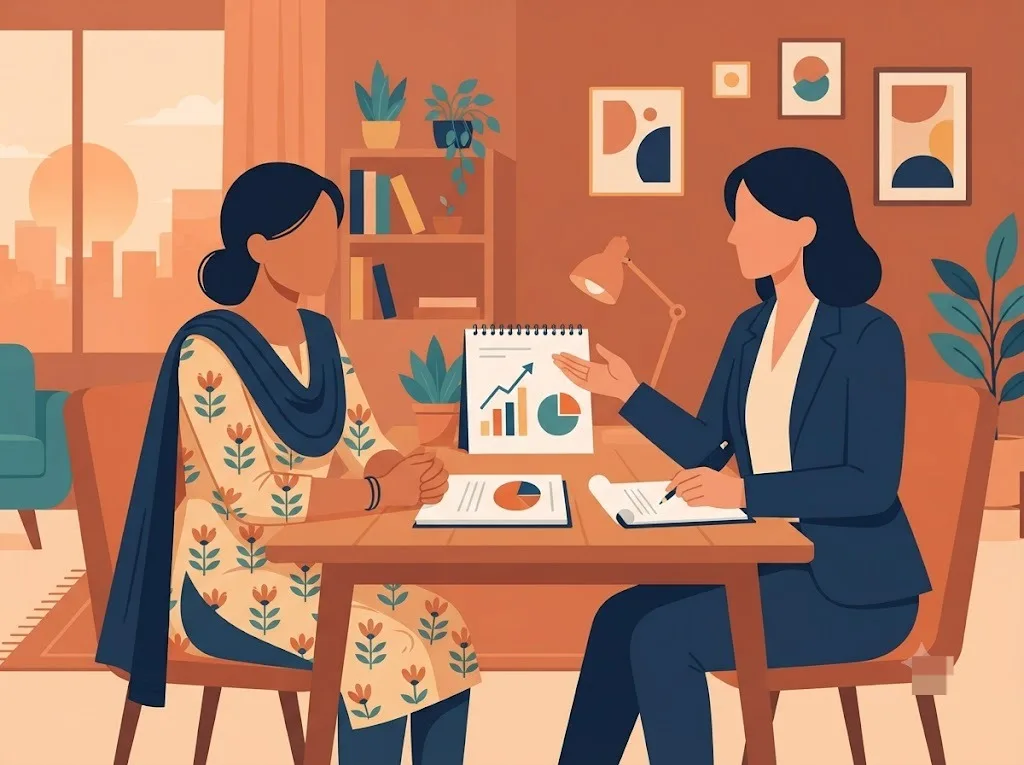
Debt management assistance is help to understand, organise, and repay what you owe. It can come from credit counselling (advice on managing your debt) at a literacy centre, from your own bank, or from paid services. The right source depends on your situation, such as whether you’re still paying or already struggling. Free help is a good first step, but some situations need more.
Mohit Juneja
Reviewed by FREED India, Debt Resolution Specialists
 4.7/5
 ₹3,200Cr+
 20,000+
 20,00,000+4.7/5₹3,200Cr+20,000+20,00,000+
Key Summary

Debt management assistance in India starts with free options before any paid service.
RBI’s 2009 model scheme says literacy and credit counselling centres should counsel free of charge.
Your bank can change your repayment plan. Ask in writing before you miss a payment.
If a bank doesn’t reply in 30 days, you can complain to the RBI Ombudsman.
Check any helper’s fees and promises in writing before sharing documents.
What Is Debt Management Assistance?
Debt management assistance is any help that makes your debts easier to understand and repay. That’s a wide net, and it’s why the phrase confuses people. A free talk at a community centre and a paid programme that works with lenders both count. They’re very different things, and they suit very different situations.
Many people have more than one loan today. A personal loan, a card, a bike loan, maybe a small app loan. Each has its own date and its own rate. Needing help to keep track isn’t a failing. It’s common, and the earlier you ask, the more choices you keep.
Here are the four kinds of help in India, in the order most people meet them:
Free education and counselling. Advice on budgeting and your options. Some centres can also help you approach your bank, but what each one does varies, so ask.
Help from your own bank. A changed plan, a longer tenure (the number of months you repay over), or a short break. The bank decides, and you have to ask.
Complaint channels. For when a bank isn’t responding, or isn’t treating you fairly. The RBI Ombudsman is the main one.
Paid programmes. Services that work with lenders or lending partners on your behalf. These come with fees and terms you should read.
Notice that three of the four are free to start with. That’s why this guide goes in that order. Begin where the cost is lowest, and move on only when the free route isn’t enough.
Before you contact anyone, it helps to see all your accounts on one page. FREED’s Credit Insights shows your credit report in plain words, so you know what every lender has on file. Loans you’d forgotten often show up there.
For the wider meaning of managing debt, see what debt management is. Here we focus on a more practical question: where do you actually go?

See Every Loan on One Page
Your credit report in plain words, so nothing you owe is a surprise.
Check My Credit InsightsWhere Can You Find Debt Management Assistance in India?
The right place depends on your situation, so start from the problem, not the product. Ask yourself one thing first: am I still paying on time, or have I started to miss payments? The answer points you to different doors. Here’s a map, from the situation to the place to go:
| Your situation | Where to go | Free or paid | What it can do | What it cannot do |
|---|---|---|---|---|
| Confused about your debts, no missed payments yet | A Centre for Financial Literacy, or a financial literacy and credit counselling centre | Free, per RBI’s scheme; confirm with the centre | Budget help and options | Decide for your bank, or handle your money |
| Struggling to pay one loan | Your bank’s customer care, then its nodal officer | Free | A changed tenure or plan, if the bank agrees | Force the bank to agree |
| Bank not responding or treating you unfairly | RBI Ombudsman, after waiting 30 days for the bank | Free | Take up a service complaint | Reduce what you owe |
| Many EMIs, still paying, stretched thin | A debt consolidation programme | Costs vary; ask for fees in writing | One new loan that pays off several | Help if you’ve already defaulted |
| Genuinely unable to repay in full | A settlement programme, or your bank directly | Programme fees apply; your bank is free to talk to | Negotiate a reduced payoff | Remove the “Settled” mark |
| Recovery calls that cross the line | The bank, the Ombudsman, and FREED Shield | Mixed | Document and report | Stop every call |
| A wrong entry on your credit report | The credit bureau’s dispute process | Free | Correct a real error | Remove a real “Settled” mark |
This is a starting guide. The best fit depends on your numbers.
A few points to read the table well:
Start at the top and move down only if you need to. The first three rows cost nothing. Many people find their answer there.
“Free” needs a check. RBI’s model scheme says counselling should be free of charge, but a scheme is guidance to banks. Ask the centre what it charges, if anything, before you start.
The Ombudsman only covers certain lenders. It covers banks, larger NBFCs and a few other regulated entities. A smaller NBFC, or a company RBI doesn’t regulate, may fall outside it.
One door doesn’t close another. You can use a centre for advice, write to your bank, and fix a report error, all in the same month.
The last row is easy to miss. A wrong entry on your credit report can hurt your chances of getting help from a bank. If you see one, here’s how to dispute wrong entries. Only a real error can be corrected. A genuine “Settled” mark stays for its full period.
Each of these doors has its own steps, and we’ll go through them one by one.

FREED Expert Tip
Before you call anyone, write down each lender, balance, and EMI on one page. It makes every conversation shorter, and you’ll see your own numbers clearly.
Check My EMI ScoreHow to Get Free Credit Counselling From a Financial Literacy Centre
Start with what RBI itself says. In a circular dated 4 February 2009 (RBI/2008-09/371), RBI sent banks a model scheme for Financial Literacy and Credit Counselling Centres. The scheme says counselling and debt management services should be provided “free of charge to the customers”. It says counselling can be preventive, such as building awareness of what credit costs. It can also be curative, which means working out a plan for debt that has become hard to manage.
In 2011, RBI asked banks to set up these centres, through a circular dated 31 March 2011 (RBI/2010-11/456). That circular doesn’t say whether the service is free. So the 2009 scheme is where the “free” comes from. Whether a particular bank’s centre works that way is something to confirm with the centre.
There’s also a newer set-up. Centres for Financial Literacy (CFLs) are run by NGOs together with sponsor banks, and one CFL serves about three blocks. RBI’s page says their camps are free of charge. The page doesn’t mention credit counselling, so don’t expect a CFL camp to handle your loans. It’s a place to learn money basics. Here’s what credit counselling means, if you want the concept first.
For the full details on these centres and how they’re set up, see our guide to financial literacy and credit counselling centres. We won’t repeat it here.
Get the most from a visit by bringing a few things:
A list of every loan and card. Lender, balance, and EMI for each.
Your last three months’ statements. They show what you’re actually paying.
Your monthly take-home pay and main expenses. Rent, food, fees, and anything you can’t cut.
Any letters or notices you’ve received. Even the ones you haven’t opened.
A counsellor can do far more with this on the table than with a vague worry.
Now the limits. RBI’s model scheme says a centre could assist you in negotiating with your bank. For one lender, it may help you approach that bank. For several, it may deal with the bank that has the largest share. But the bank makes the final call on any proposal, and the centre doesn’t handle money or pay anyone off. In practice, what each centre does varies, so ask what they’ll do for you before you start.
A free centre shouldn’t ask you for a fee for counselling. If one does, stop and ask for the reason in writing.
One more option is Abhay, a trust set up by a bank to offer counselling. Here’s how Abhay credit counselling works. Check its current status and locations directly, because they can change.
How to Ask Your Bank for Help With Repayment
Your bank is the first place to ask, and the best time to ask is before you miss a payment. A bank is more likely to consider a change for a borrower who’s still paying. Once dues pile up, the choices narrow. Here are the steps:
List your dues. Write the loan, balance, EMI, and due date. Have them in front of you before you call.
Write, don’t only call. Send an email or letter, and ask for a reference number. A phone call leaves no trace.
Say what you need, and why. A longer tenure, a lower EMI, or a short break. Give a real reason, like a job change or a medical cost.
Ask for the answer in writing. Keep every reply. If a promise is made on a call, send a short email afterwards recapping it.
Contact the nodal officer if customer care doesn’t reply. Banks list this officer on their website. It’s an escalation step within the bank.
Go to the RBI Ombudsman if needed. If the bank doesn’t reply within 30 days, or you’re unhappy with its reply, you can complain.
Here are the practical details on step 6. Under RBI’s Integrated Ombudsman Scheme 2026 (RB-IOS 2026), you file at cms.rbi.org.in, or by email to crpc@rbi.org.in. Filing costs nothing, and you don’t need to pay anyone to file for you. You must file within 90 days after the bank’s 30-day window ends, or after its last reply, whichever is later.
The toll-free number, 14448, provides help and status. But RBI’s FAQ says you can’t file a complaint through that line. Use the portal or the email for that.
The scheme lets the Ombudsman award compensation up to ₹30 lakh for consequential loss, and up to ₹3 lakh for loss of time, expenses, harassment, or mental anguish. Those are upper limits, not amounts you’re owed. Most complaints don’t reach them.
Be honest about two limits. The Ombudsman handles service problems. It doesn’t reduce the amount you owe, and it won’t review a bank’s commercial decision, such as refusing to change your loan. Also, it covers banks, NBFCs with assets of ₹100 crore or more, and a few other regulated entities. Some lenders fall outside it.
Keep records at every step. A folder with your emails, replies, and reference numbers turns a vague complaint into a clear one. And if the bank agrees to a change, ask it to confirm how the change will show on your credit report.
How to Check Any Debt Helper Before You Share Your Documents
Anyone offering debt help will ask for your documents: statements, ID, bank details. That’s a lot to hand over to a stranger. So ask a few questions first. These apply to every helper, free or paid. Here are 8:
What do you charge, and when? Ask for the fee in writing. Know what’s due upfront and what’s due later.
What happens if the bank refuses? Ask whether any fee is refunded, and under what conditions.
Do you promise a result? Be careful with any helper who guarantees an outcome. Banks decide their own terms, and no one else can.
Do you ask me to stop paying everything? Understand the effect on your credit report before you agree. A missed EMI shows on your report, whatever the plan is called.
Where is my money held? If you save towards a payoff, ask who holds the money and who can release it.
Will I approve every payment? You should sign off on each payout, not hand over open access.
Who will speak to my bank? Ask who they are and in what role, and get it in writing.
Do you ask for OTPs, passwords, or card PINs? No genuine helper needs these. An OTP gives someone access to your money.
Keep the tone of your questions plain and calm. You aren’t accusing anyone. You’re doing what you’d do before handing your house keys to someone. A genuine helper answers all eight without fuss. If someone gets vague, annoyed, or hurried, that’s an answer in itself.
Write down the answers, with the date and the person’s name. Ask for the terms by email, and read them with someone you trust before you sign anything. A day’s gap costs you nothing, and a real offer will still be there.
If you want the settlement-specific version of this list, see how to evaluate a loan settlement agency before signing. We haven’t repeated it here.

What the Law Says
Under RBI’s Integrated Ombudsman Scheme 2026, you can approach the RBI Ombudsman if a covered bank or NBFC doesn’t reply within 30 days, or you’re unhappy with its reply. Filing costs nothing, and you must file within 90 days after that.
Check My Credit InsightsWhen Do You Need More Than Free Advice?
Free advice works well when your numbers can be fixed with a budget and a few conversations with your bank. Some situations are bigger than that. When EMIs take most of your pay, advice alone doesn’t lower them. Here’s a short ladder, with the softest step first.
Still paying, but many EMIs. Consolidation may help. One new loan pays off several, and you’re left with one EMI and one date. Your CIBIL score doesn’t drop with consolidation, and it tends to improve as you pay the new loan on time. See the Loan Consolidation Plan, and this guide on consolidating credit card debt. Check the new loan’s rate and fees before you agree.
Mostly one card, still paying. Converting the bill into EMIs may cost less than any new loan. Ask your card bank for the rate and fees, and compare the total. Here’s how credit card EMI conversion works.
Genuinely unable to repay in full. Settlement is not something a borrower chooses out of preference. Banks consider it only when repaying in full has become genuinely impossible. The “Settled” mark can stay on your credit report for up to 7 years, and new loans can be harder to get. Before you go there, talk to your bank first. See FREED’s Loan Settlement Plan for how it works.
Even at this stage, advice helps. Our guide covers what credit counselling can’t do, and what comes after it. Read it if you’re not sure which step is yours.
Notice the order. Consolidation and settlement aren’t equal choices. One is for people who can still pay. The other is for people who can’t. If you’ve already missed EMIs, a new loan generally isn’t the next step, because banks look for a clean recent record first.
If you’re unsure whether you qualify for consolidation, FREED’s team can look at your situation on a call.
Rates and ranges shown are indicative. Final terms are decided by the bank. FREED is not a Loan Provider. No outcome is guaranteed. Please verify directly with your bank.
Talk to FREED’s Team Before You Decide
A counsellor reviews your dues and explains your options.
Settle My LoansHow FREED Helps With Debt Management Assistance
FREED’s Loan Consolidation Plan is for people who can still repay but need a smarter way to manage their debt. It’s one of the routes in this guide, and it works only for people who are still paying their EMIs. FREED is India’s trusted loan management platform, and over 20 lakh people trust it.
Here’s how it works. Every step is one you can check:
FREED assesses your profile. It looks at your loans, income, and repayment record.
FREED matches you to a lending partner from its network. You don’t have to hunt for an offer yourself.
The lending partner disburses one new loan. That loan pays off your existing credit card dues and unsecured loans.
You’re left with one loan, one EMI, and one due date. The EMI is lower than the combined EMIs you were paying.
If one partner declines, FREED tries others that match your profile.
FREED handles the process end to end. You don’t have to chase each old loan’s closure yourself.
Debt consolidation may help improve your credit score over time through consistent, timely repayments. However, applying for a new loan may initially affect your score, and improvement is not guaranteed. This route covers unsecured dues only, like credit cards, personal loans, BNPL, and app loans. It doesn’t cover home or car loans.
Use the checks from the section above on any offer you get, including FREED. Ask for the Key Facts Statement, and look at the all-in yearly cost. Ask when each old loan will be closed, and get the closure letters.
How FREED Shield helps
If you are facing recovery agent harassment, FREED helps you understand your legal rights as a borrower, report inappropriate recovery practices, and raise complaints with your lender. Where harassment is frequent, our experts speak to recovery agents on your behalf. And if you receive a legal notice about your loan, FREED helps you understand your options and draft a suitable reply. FREED Shield is available to everyone, whether or not you’re on a FREED plan.
One honest note. Legitimate recovery calls continue until the dues are paid or settled. The rules stop harassment, not a bank’s right to ask for its money.
Combine Your Loans Into One EMI With FREED
One monthly EMI instead of several, with the process handled for you.
Reduce My EMIHow Much of Your Take-Home Pay Do Your EMIs Take?
FREED’s EMI Score compares your EMIs with your take-home pay, so you can see in one view where you stand against the 50% guide used in this article. Results are indicative. Your lender statements are the final word.
How to Prepare Before You Ask for Debt Management Assistance
A one-page summary makes every conversation shorter. It works with a counsellor, a bank or any other helper. It also shows you your own situation, which many people haven’t seen laid out in one place. Here’s a sample, as an example only and not a real person:
| Lender | Type | Balance | EMI or minimum due | Status |
|---|---|---|---|---|
| Bank A | Personal loan | ₹1,80,000 | ₹6,000 | Current |
| Bank B | Credit card | ₹60,000 | ₹3,000 | Current |
| NBFC C | Personal loan | ₹90,000 | ₹4,500 | Current |
| Bank D | Bike loan | ₹40,000 | ₹5,200 | Current |
This example is illustrative. Figures are for explanation only.
Now the ratio. The EMIs and card minimums add up to ₹18,700 a month (₹6,000 + ₹3,000 + ₹4,500 + ₹5,200). On a take-home pay of ₹45,000, that’s about 42% (₹18,700 ÷ ₹45,000 = 0.416).
Now say one more EMI of ₹4,000 comes in. The total becomes ₹22,700, which is about 50% of ₹45,000. That’s the point at which FREED suggests looking for help. It’s FREED’s rule of thumb, not an RBI rule. You can check your own share on EMI Score.
Notice how fast it moved. A single new EMI took the same borrower from “careful” to “stretched”. That’s why the summary matters. You see the number before it surprises you.
Three small habits keep it useful:
Update the sheet every month. After each payment, change the balance. It takes five minutes.
Bring it to your first conversation. Whether it’s a counsellor, a bank or any other helper, they’ll ask for exactly this.
Keep copies of every letter. Put paper and scans in one folder, so nothing goes missing.
A few lines of numbers, written once and kept current, do more for you than any amount of worry. Start there, and the rest of the map in this guide gets easier to use.
Pull Your Loan List in One Click
Your credit report lists every loan in plain words, which makes the one-page summary quick to fill.
Check My Credit Insights
Mohit Juneja
Mohit Juneja is FREED’s Content & Communication Lead with 12+ years of experience across content, media, advertising and digital communications. He holds a postgraduate diploma in Communications from Xavier Institute of Communications, Mumbai, and has worked with organisations including NDTV, The Indian Express, McCann Worldgroup and NABARD.
At FREED, he leads content and communication across loan management, debt resolution, debt consolidation and financial well-being. His work combines research, storytelling and consumer-focused communication to make complex financial topics easier to understand and act on. He has also scripted and produced 11 documentaries on rural development and agriculture for NABARD, with film's selected for the Mumbai International Film Festival.
mohit.juneja@freed.care

FREED is India's trusted loan management platform. Founded in 2020 and headquartered in Gurugram, FREED has counselled 20 lakh+ people on personal loans, credit cards, and app loans. FREED charges fees only on successful settlement, not upfront. FREED does not handle secured loans (home loans, car loans, gold loans).
Media Mentions