Financial Literacy Credit Counselling Centres: Complete Guide
Financial Literacy and Credit Counselling Centres (FLCCs) began as individual bank-led initiatives before RBI formalised the model through its 2009 scheme.Today, they've grown into something considerably larger, a formal national network of over 2,400 Centres for Financial Literacy (CFLs), backed by a dedicated national strategy and an annual RBI awareness campaign most borrowers have genuinely never heard of.
Mohit Juneja
Reviewed by FREED India, Debt Resolution Specialists
 4.7/5
4.7/5 ₹3,200Cr+
 20,000+
 20,00,000+4.7/5₹3,200Cr+20,000+20,00,000+
Key Takeaways

As of March 2025, 2,421 Centres for Financial Literacy (CFLs) have been set up nationally, each covering roughly three administrative blocks on average.
CFLs are a newer, scaled-up initiative distinct from the original bank-sponsored FLCC model, though they share the same core free, advisory purpose.
India's National Strategy for Financial Education (2020-2025) guides this entire effort through what RBI calls its "5 C" approach: Content, Capacity, Community, Communication, and Collaboration.
RBI has run an annual Financial Literacy Week since 2016; its 11th edition, in February 2026, focused specifically on KYC awareness.
From a Few Bank Initiatives to a National Network
The original FLCC model goes back to 2009, when RBI issued a model scheme that individual banks used to set up their own counselling centres. Bank of India's Abhay and ICICI Bank's Disha are two names that came out of that first wave, and they're worth knowing about on their own terms if you want the fuller history of how this started.
What's changed since then is scale. Individual banks now run networks large enough that a single one can dwarf the entire original FLCC count. State Bank of India alone operates 341 FLCs spread across 28 states and 6 union territories, and on top of that has been separately allotted 595 CFLs covering 1,780 blocks in 249 districts. That's one bank's contribution to a much larger, coordinated national picture.
This is the part worth sitting with for a second: this is no longer a handful of scattered, individually-run centres that a bank set up because RBI asked it to. It's a structured, nationally-coordinated effort with genuine reach, one designed specifically to close the gap in areas where a single bank's branch presence never would have justified opening a dedicated counselling office. If you want the full story of the older, bank-specific model, including how a centre like Abhay actually works, that's covered in more depth elsewhere on FREED. Here, the focus is the bigger, current picture.

What a CFL Actually Is, and How It Differs From the Older FLCC Model
A Centre for Financial Literacy, or CFL, is RBI's more systematic answer to a gap the original FLCC model left open. Rather than relying on individual banks to decide where to open a centre, largely based on their own branch footprint and priorities, CFLs were designed from the start to push coverage down to the block level, so that geography stops being the reason someone can't reach one.
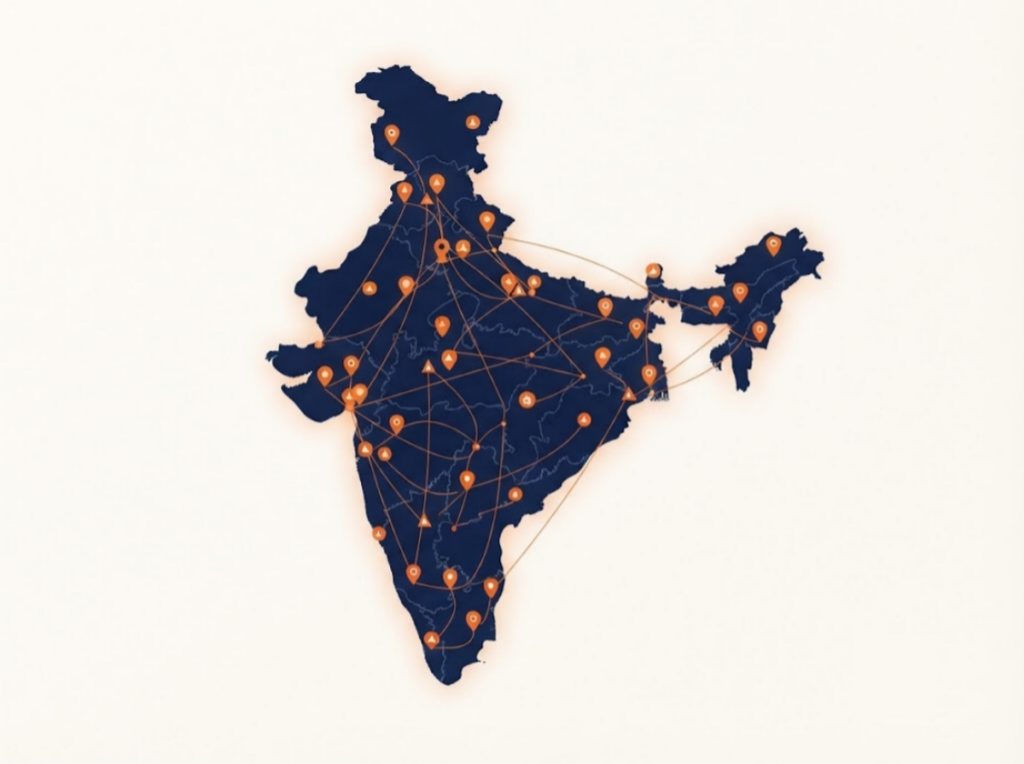
The scale backs this up. As of March 31, 2025, 2,421 CFLs had been established across the country, each one covering roughly three administrative blocks on average. That's a meaningfully more deliberate spread than the earlier model ever managed on its own, and it's the reason a borrower in a smaller district today has a genuinely better shot at reaching a centre than someone in the same district would have a decade ago.
What hasn't changed between the two models is the one thing that matters most if you're actually considering visiting one: cost. Financial education, counselling, and debt management guidance offered through a CFL or an FLCC are free, and both are explicitly barred from charging anything at all for these services. If anyone claims otherwise or asks for a fee at a centre calling itself an FLCC or CFL, that's worth questioning directly.

Freed Expert Tip
If your nearest older-style FLCC seems inactive or hard to reach, ask specifically about a CFL in your district instead; the newer network is considerably larger and more actively maintained.
Talk to FREED's TeamThe National Strategy Behind All of This: NSFE and the "5 C" Approach
None of this scale-up happened by accident. It sits under India's National Strategy for Financial Education (NSFE), a coordinated framework covering the 2020 to 2025 period that ties together what CFLs, FLCCs, and a handful of related initiatives are all actually working toward, rather than leaving each bank or institution to figure out financial literacy on its own.
RBI has described the strategy's approach using five words that all happen to start with C, which makes it easy to remember even if it sounds a little like a slogan on first read. Content means building financial education material into school, college, and vocational training curricula, so the basics show up before someone's already deep into a borrowing decision. Capacity means training up the actual intermediaries, bank staff, counsellors, agents, who deliver financial services day to day, since a strategy is only as good as the people executing it on the ground. Community leans on a community-led delivery model rather than a top-down one. Communication is about choosing the right way to reach people, not just producing content and hoping it lands. And Collaboration ties government bodies, financial institutions, and other stakeholders together instead of letting them work in silos.
Why any of this matters beyond bureaucratic detail: it's the reason financial literacy work in India increasingly looks joined-up. Banks, NABARD, and RBI aren't each running their own disconnected campaigns anymore, at least not by design. There's a shared direction behind the CFL rollout, the annual awareness week covered next, and even the curriculum work happening in schools, and that coordination is a big part of why the network has grown as fast as it has over the past few years.
Financial Literacy Week: The Annual Campaign You've Probably Never Heard Of
Since 2016, RBI has observed an annual Financial Literacy Week, a coordinated, week-long push involving RBI, banks, and NABARD across the country. Despite running for close to a decade now, it's genuinely one of the least-known recurring campaigns in Indian banking, mostly because it plays out through banks and centres rather than mass advertising.
It's also very much a living, evolving campaign, not something run once and repeated on autopilot. The 2025 edition focused on "Financial Literacy – Women's Prosperity." The 11th edition, held in February 2026, shifted focus to "KYC – Your First Step to Safe Banking," addressing how to complete KYC safely and, notably, how to spot and avoid fraudulent calls and messages that impersonate banks asking for KYC updates, a scam pattern that's picked up considerably in recent years.
The practical connection to CFLs and FLCCs is worth knowing. This annual week is often when these centres run focused camps and outreach tied directly to that year's theme, so if the current theme happens to touch something relevant to your situation, that week can be a genuinely useful window to visit or attend a session rather than waiting for a general appointment.

What the Law Says
Financial education, counselling, and debt management services provided through CFLs and FLCCs are required to be free of charge. These centres are explicitly prohibited from levying any fee for these services.
Understand My RightsWhat This Network Can and Can't Do for You
Whether you end up at an older-style FLCC or a newer CFL, the help on offer is genuinely useful within its scope. These centres can walk you through understanding your overall financial situation, budgeting realistically around what you actually earn, borrowing more responsibly going forward, and becoming aware of the formal financial products and consumer protections available to you.
What they don't do is negotiate anything on your behalf. A CFL or FLCC counsellor won't call your bank and work out a reduced settlement, and they won't step in on a legal enforcement matter if one is already underway. Their role is advisory and educational by design, not representational. That's not a shortcoming of the model; it's simply what it was built to do, and it's a genuinely different function from what happens once negotiation with a specific lender becomes necessary. The fuller breakdown of what a typical counselling session actually looks like, and where its limits sit day to day, is covered in more detail in FREED's guide to credit counselling, which is worth reading before or after your visit.
What Are Your Options If You Need More Than Counselling
If a session at one of these centres has helped you understand your situation clearly, but what you actually need is someone to sit across the table from your lender and negotiate, that's a different service category entirely, and it's worth knowing what exists beyond free counselling.
If you're still managing to make payments across several unsecured debts but the number of EMIs and due dates has become genuinely unmanageable, FREED's Debt Consolidation Program is worth exploring; it replaces multiple loans and card dues with one new loan and a single monthly payment.
For a more serious situation, where repaying in full has become genuinely impossible rather than just difficult to track, settlement is the separate, structured path that exists for that specific circumstance. Settlement is not something a borrower chooses out of preference. Banks only consider it when someone is genuinely unable to repay in full. Counselling can help you see clearly which of these two situations you're actually in, even if it can't carry out either one for you.
How FREED Helps When Counselling Isn't Enough
Free advisory counselling through a CFL or FLCC is a genuinely good starting point, but it stops at advice. FREED's Debt Consolidation Program and Debt Resolution Program pick up exactly where that leaves off, actually engaging with lenders on your behalf rather than only helping you understand your options.
For consolidation, that means assessing your full financial picture and matching you to a suitable lending partner so your existing unsecured debts get paid off through one new, single loan. For settlement, it means building toward a lump sum through a structured savings plan and negotiating with your lenders once that fund is sufficient, aiming to bring your total debt down through a bank-approved reduced payoff. No specific outcome or timeline is guaranteed for either path, since both depend on your individual lenders and financial profile, but the negotiation itself, the part free counselling centres can't do, is exactly where FREED's role begins.
Tips for Using This Network Well
A few practical pointers to get more out of this system, whichever centre you end up visiting.
Check specifically for a CFL in your district, not just whatever older-style FLCC you've heard of locally. The newer network has considerably broader coverage, and a CFL is more likely to be active and well-staffed.
Keep an eye out for Financial Literacy Week each year. Centres often run focused, theme-specific camps during that particular week, and if the year's theme lines up with something you're dealing with, that's often a better time to go than any random weekday.
Bring your actual documents and real numbers to a session, not just a general question. Generic advice helps less than a conversation built around your specific loans, income, and EMIs.
And treat a counselling session as a starting point for understanding your situation, not a substitute for actual negotiation if that's what you genuinely need. Knowing where you stand is valuable. Getting a lender to agree to new terms is a separate job.

Mohit Juneja
Mohit Juneja writes educational content at FREED on debt management, credit scores, loan repayment, and borrowing best practices. His content is shaped by expert insights and industry knowledge, helping readers better understand their financial options and make informed decisions.
mohit.juneja@freed.care

FREED is India's trusted loan management platform. Founded in 2020 and headquartered in Gurugram, FREED has counselled 20 lakh+ people on personal loans, credit cards, and app loans. FREED charges fees only on successful settlement, not upfront. FREED does not handle secured loans (home loans, car loans, gold loans).
Media Mentions