How to Combine Multiple Loans Into One Payment: Consolidation Process Explained
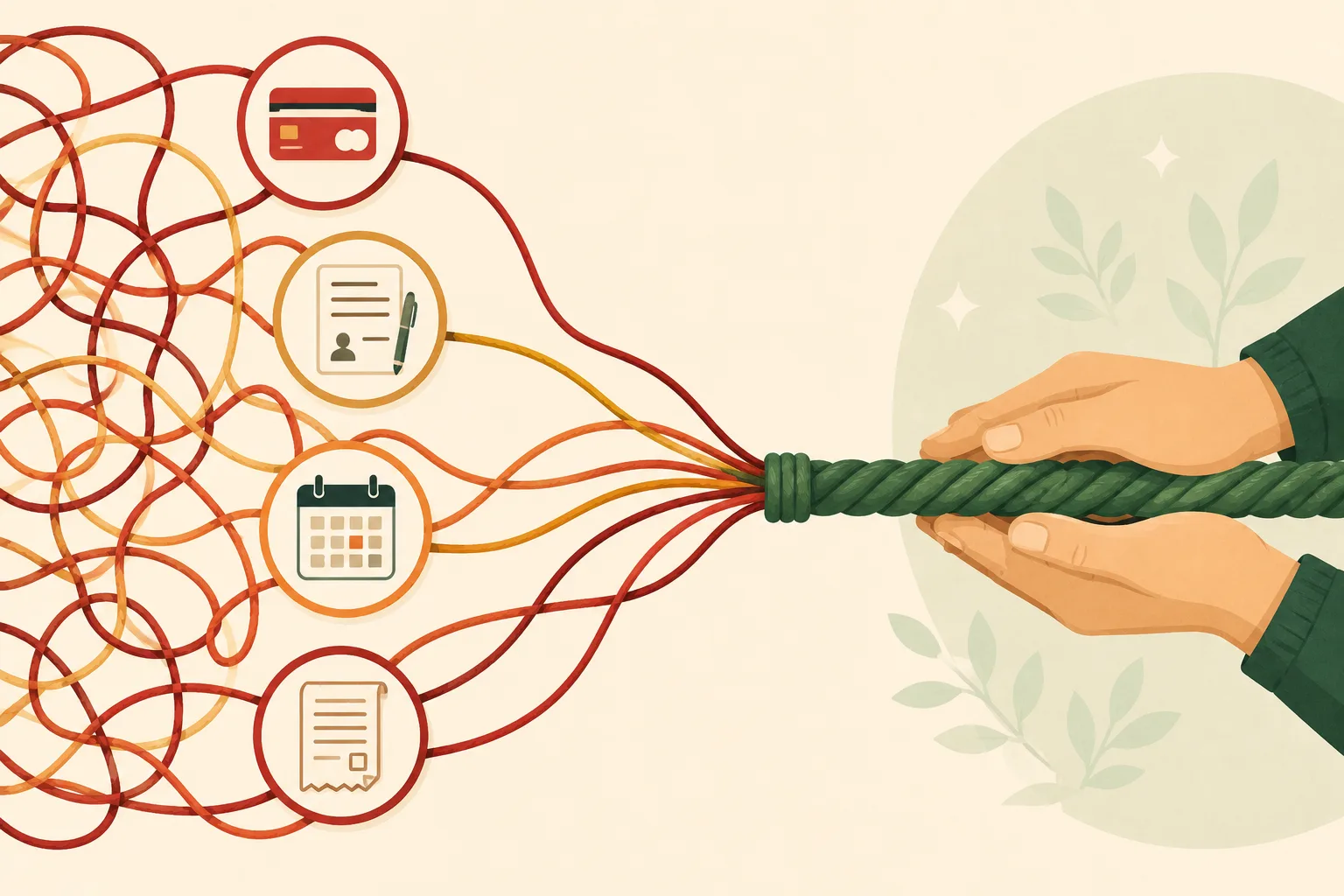
Consolidating loans means replacing several existing unsecured debts, personal loans, credit cards, BNPL, with one new loan and a single monthly payment, with the old debts paid off and closed in the process.

Mohit Juneja
Reviewed by Shweta, FREED India's Debt Resolution Specialists
 4.7/5
4.7/5 ₹3,200Cr+
 20,000+
 20,00,000+4.7/5₹3,200Cr+20,000+20,00,000+
Key Summary

Consolidating loans means replacing several existing unsecured debts, personal loans, credit cards, BNPL, with one new loan and a single monthly payment.
The process generally runs: list your debts, check eligibility, compare options, apply, get the new loan disbursed to close the old ones, then make one EMI going forward.
RBI requires credit information to be updated on a fortnightly basis from January 1, 2025. However, the exact time for a paid-off account to appear as closed can vary depending on the lender's submission and the bureau's processing.
The most common mistake isn't picking the wrong lender, it's stopping payments on old loans before the new one has actually closed them.
What "Consolidating Loans" Actually Means Here?
In one sentence, consolidation means replacing several existing unsecured loans and cards with one new loan that pays them all off, leaving you with a single EMI going forward instead of several scattered across different dates and lenders.
This piece is specifically about the mechanical process of actually doing it, not the broader case for whether consolidation is the right move for your situation. If you're still weighing that decision, FREED's fuller explainer on what loan consolidation is covers the reasoning and the trade-offs in depth. What follows here assumes you've already decided this is the direction you want to go, and walks through exactly what happens next.
Before starting, there are a few things worth checking first.

Expert Tip
This process works for unsecured debt, personal loans, credit cards, BNPL.This article focuses on unsecured debt. Home and car loans are secured loans and are generally handled through products such as balance transfer or refinancing rather than the unsecured consolidation process described here.
Talk to FREEDBefore You Start: What to Check First
A few things are worth confirming before you begin the actual process, since getting these wrong upfront tends to cost more time later than checking them properly now.
List every unsecured debt with its lender, outstanding balance, interest rate, and remaining tenure. Most people underestimate how scattered this picture actually is until they sit down and write it out in one place.
Check your current credit score. Eligibility depends on factors such as income, existing obligations, repayment history, credit profile and the lender's underwriting criteria.
Calculate your combined current EMI total. This is the specific number a consolidated loan needs to beat for the whole exercise to actually be worth doing.
Confirm none of your existing debts are already significantly overdue. Consolidation may be easier to arrange while your existing accounts are current. Significant overdue payments or defaults can limit some available options.
With that in hand, here's the process itself.
Expert Tip
Pull your credit report before you start, not after applying. Knowing your starting number helps you judge whether an offered rate is actually competitive.
Check My Credit ScoreThe Consolidation Process, Step by Step
Here's what the process actually looks like from start to finish, in order:
List and total your debts. Using the checklist from the previous section, get every lender, balance, rate, and EMI down in one place.
Check eligibility. Either directly with individual lenders, or through a consolidation program that matches you to a partner lender based on your income and credit profile.
Compare the new loan's true cost against your current combined EMI. Not just the headline interest rate, factor in any processing fee on the new loan too, since that changes the real comparison meaningfully.
Apply and get approved. Documentation typically mirrors any standard personal loan application, income proof, bank statements, and standard KYC.
Disbursement and payoff. The new loan amount is used to pay off the listed existing debts directly, either handled by the new lender or by you using the disbursed funds yourself.
Confirm closure with each old lender. Get a written closure or NOC confirmation for every single account paid off, don't assume this happens automatically just because the payment went through.
Begin the single new EMI. One payment, one due date, going forward from here.
Step 6 is the one people most often assume happens on its own and later regret not confirming directly.

Want This Process Handled for You?
See if FREED's Debt Consolidation Program fits your situation.
Get a Free AssessmentWhat Happens to Your Old Loans and Credit Score During the Process?
Once an old debt is actually paid off, the lender updates its own internal records, but this doesn't reach your credit report on the same day, and that gap is worth understanding so you're not caught off guard by it.
Since January 2025, RBI requires lenders to report credit information to bureaus fortnightly rather than monthly, so a paid-off account typically shows as "closed" within about 15 days rather than the up-to-a-month delay that was standard before. Still not instant, but meaningfully faster than it used to be.
A lender may record a hard inquiry when you apply for the new loan. A small, temporary dip in your score right around this point is normal and expected, not a sign that anything has gone wrong with your application or your credit standing.
The effect on your credit profile can vary. What matters going forward is that the new account is managed responsibly and the old accounts are accurately reported as closed. Fewer open accounts, a clean single on-time payment history building up, and lower overall utilisation if any credit cards were part of what got consolidated. The credit picture generally improves from here, it just doesn't happen the moment the new loan disburses.

What the Law Says
Since January 2025, RBI requires lenders to report credit information to bureaus every 15 days instead of monthly, so a loan you've paid off through consolidation typically shows as closed within about two weeks, not instantly.
Book My CallCommon Mistakes That Delay or Derail the Process
A handful of avoidable mistakes account for most of the problems people run into during consolidation.
Stopping payments on old loans before confirming they're actually closed. A gap here shows up as a missed payment, the exact opposite of what the whole process was meant to achieve.
Not getting written closure confirmation from each old lender. A verbal assurance from a call centre isn't proof of anything if a discrepancy turns up on your report later.
Comparing only the new loan's interest rate. Ignoring processing fees changes the real comparison meaningfully, sometimes enough to flip which option is actually cheaper.
Applying to multiple lenders simultaneously without spacing it out. Avoid submitting unnecessary applications to multiple lenders, since each application may result in a hard inquiry and multiple recent inquiries can affect how your credit profile is assessed.
Consolidating while still adding new debt elsewhere. This defeats the entire purpose, and can leave you carrying both the new consolidated loan and fresh balances on top of it.
Doing It Yourself vs Going Through a Consolidation Program
Both routes here are genuinely legitimate, the right one depends on your own credit profile, how many debts are involved, and how much of the coordination you actually want to handle yourself.
Doing it yourself means approaching individual banks or NBFCs directly for a balance transfer or a fresh personal loan sized to cover your existing debts. This works well for borrowers with a strong credit profile and the time to compare multiple lenders directly, since you're doing all the legwork of applications, comparisons, and closures on your own.
Going through a consolidation program means using a structured program that matches you to a partner lender based on your profile. This tends to suit borrowers juggling several different lenders, where coordinating payoff and closure across every single one of them directly would eat up a lot of time, or where your credit profile makes securing direct bank approval on your own harder than it needs to be.
Neither is objectively better, it comes down to which fits your actual situation.
Expert Tip
Keep every closure confirmation and the new loan's disbursement proof in one folder until you've verified all the old accounts show closed on your credit report.
Understand My RightsHow FREED Helps With the Process?
FREED's Debt Consolidation Program, "Reduce My EMI," is built specifically to handle the coordination this article describes. It matches you to a partner lender, structures disbursement so the new loan pays off your listed existing unsecured debts directly, replacing multiple EMIs to different lenders with one loan, one EMI, one due date.
Worth being plain that this covers unsecured debt only, personal loans, credit cards, BNPL. For borrowers who are genuinely unable to repay at all, rather than simply needing a lower combined EMI, FREED's Debt Resolution Program is the separate, different-purpose path built for that situation instead.
See What Consolidation Could Look Like for You
A free assessment shows your real options.
Start My Free Assessment
Tips for a Smooth Consolidation
A few habits make the whole process go noticeably more smoothly.
Time the process when you're current on every existing payment, not after one has already slipped.
Get every number written down before deciding. Old EMIs, the new EMI, and total interest either way, all on paper, not just estimated mentally.
Don't close any old account informally. Wait for the formal, documented closure before you consider that debt settled.
Avoid taking on unnecessary new unsecured debt immediately after consolidation, particularly if it would undermine the repayment plan. Let your credit report reflect the improvement first, before adding anything new on top of it.
Recheck your credit report about a month after disbursement to confirm the old accounts show closed and the new one shows correctly.
Expert Tip
Set a calendar reminder for 30 days after disbursement specifically to check your credit report. Set a reminder to review your credit report after the consolidation has been processed, allowing enough time for lender and bureau updates to appear.
Start My Free AssessmentSourcing Table
Claim | Source |
RBI requires fortnightly (roughly 15-day) credit information reporting, effective January 1, 2025 |

Mohit Juneja
Mohit Juneja writes educational content at FREED on debt management, credit scores, loan repayment, and borrowing best practices. His content is shaped by expert insights and industry knowledge, helping readers better understand their financial options and make informed decisions.
mohit.juneja@freed.care

FREED is India's trusted loan management platform. Founded in 2020 and headquartered in Gurugram, FREED has counselled 20 lakh+ people on personal loans, credit cards, and app loans. FREED charges fees only on successful settlement, not upfront. FREED does not handle secured loans (home loans, car loans, gold loans).
Media Mentions