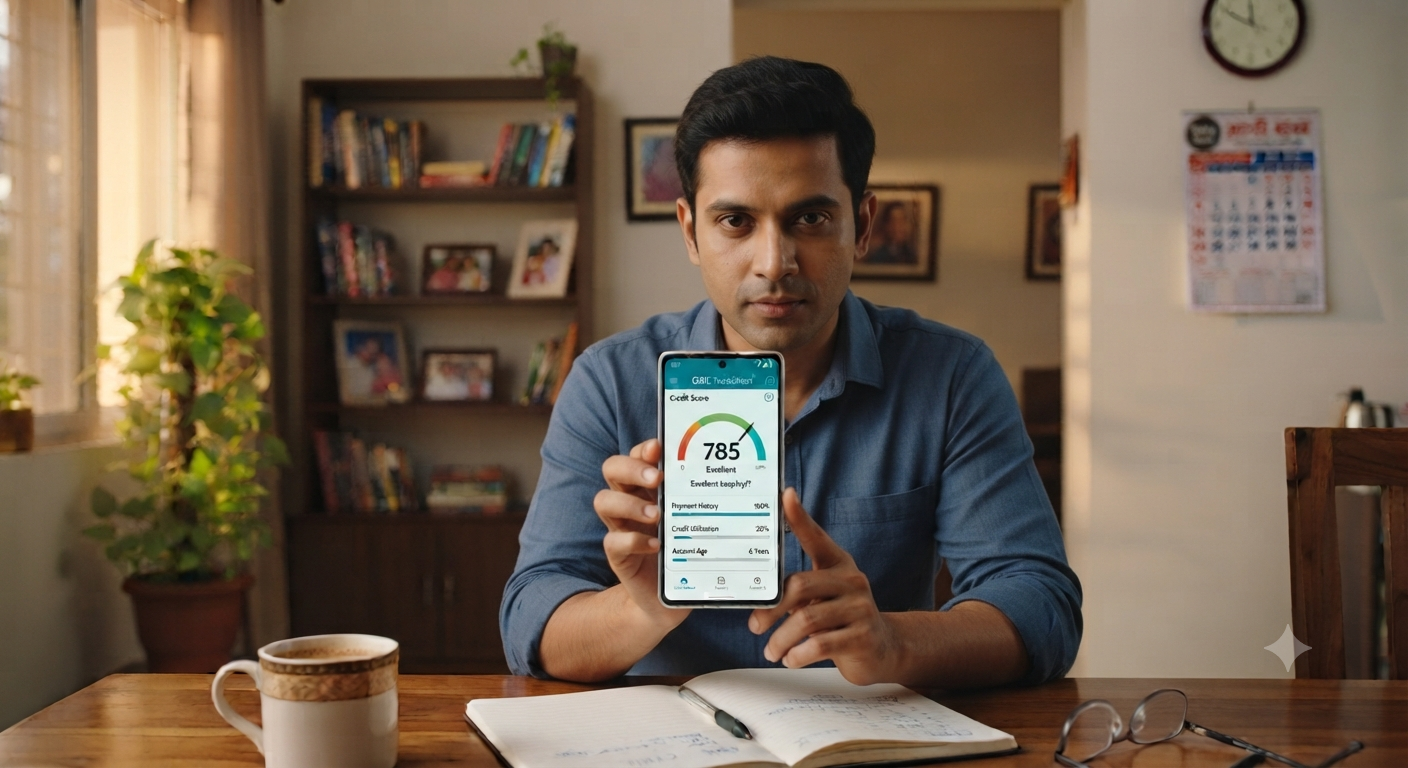
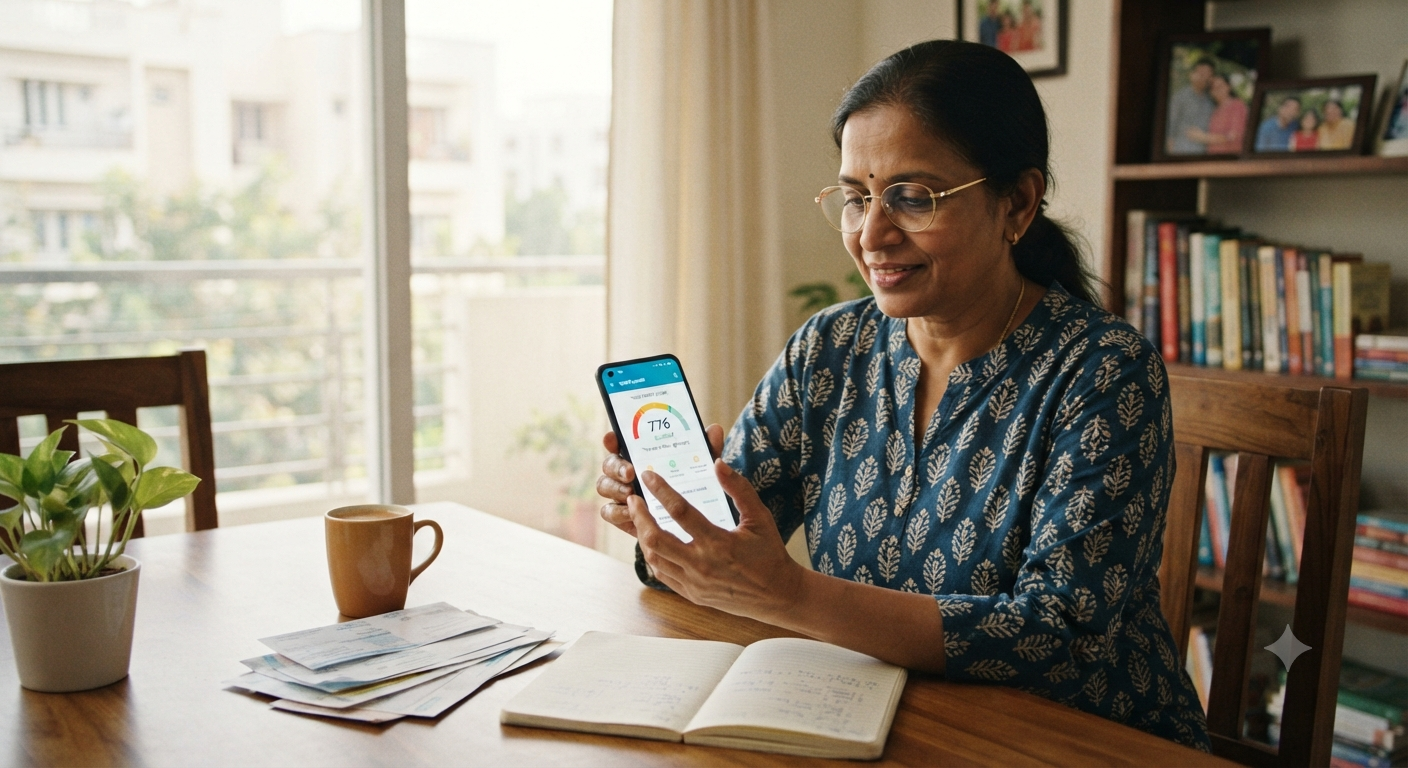
How to Check Your Credit Score with PAN Card for Free
Your PAN card is all you need. Here is the step-by-step process, where to go, what you will see, and what to do with the number once you have it.
Mohit Juneja
Reviewed by FREED India, Debt Resolution Specialists
 4.7/5
4.7/5 ₹3,200Cr+
 20,000+
 20,00,000+4.7/5₹3,200Cr+20,000+20,00,000+
Key Takeaways

Your PAN card is linked to every loan, credit card, and financial product you have ever taken, making it the unique identifier that credit bureaus use to retrieve your full credit history.
Every Indian is legally entitled to one free credit report per year from each of the four RBI-licensed bureaus: CIBIL, Experian, Equifax, and CRIF High Mark.
Checking your own credit score is a soft enquiry and has absolutely no impact on your score. Check it as often as you need to.
FREED Credit Insights allows you to check your score for free instantly, with a clear explanation of what is affecting it and what to do next.
If the score reveals a problem, whether errors, high utilisation, or the impact of existing debt, the steps to address it are specific and learnable.
Why Your PAN Card Is the Key to Your Credit Score
Your PAN (Permanent Account Number) is the unique identifier that the Indian financial system uses to link all your financial activity to your identity. Every bank account you open, every loan you take, every credit card you hold, every EMI you pay or miss, all of it is recorded against your PAN number.
Credit bureaus, CIBIL, Experian, Equifax, and CRIF High Mark, maintain credit reports built from data provided by banks and NBFCs. When you request your credit report, you provide your PAN, and the bureau retrieves all financial activity linked to that number.
This is why PAN is the starting point for any credit score check. It is the key that unlocks your complete credit history.

FREED Expert Tip:
If you have never checked your credit score before, start with FREED Credit Insights. It shows your score instantly, with a clear explanation of the factors affecting it, in plain language. The official bureau websites show the full detailed report, which is more comprehensive but also more complex to interpret. Check FREED first, then the official bureau report once a year for the full picture.
Check My Credit ScoreWhere to Check Your Credit Score for Free in India
There are five main options for checking your credit score for free in India.
FREED Credit Insights at freed.care/credit-check. Free, instant, and includes an explanation of what is affecting the score and what to do next. This is the easiest starting point for most people.
TransUnion CIBIL at cibil.com. One free report per year. The most widely used bureau in India. Most lenders pull from CIBIL, so this report shows what most banks will see when you apply.
Experian India at experian.in. One free report per year. Experian's scoring model differs from CIBIL, so the number may differ slightly from the CIBIL score.
Equifax India at equifax.co.in. One free report per year. Less commonly used by mainstream lenders but provides a useful cross-check.
CRIF High Mark at crifhighmark.com. One free report per year. Particularly strong on microfinance and rural lending data.
Checking your own score on any of these platforms is a soft enquiry and has no impact on your score whatsoever.
Step-by-Step: How to Check Using FREED Credit Insights
This is the fastest route to your credit score.
Step 1: Go to freed.care/credit-check.
Step 2: Enter your mobile number and verify with the OTP sent to your phone.
Step 3: Enter your PAN card number along with basic details: name, date of birth, and email address.
Step 4: Your credit score appears instantly on screen, along with a breakdown of the key factors affecting it.
Step 5: Review the insights. FREED shows you which factors are helping your score, which are hurting it, and specific actions to improve it.
The entire process takes under 3 minutes. There is no charge. The score check does not affect your credit score.

Tool: FREED Credit Insights
Check your score in under 3 minutes. Free. No impact on your CIBIL score.
Check Your Credit Score →Step-by-Step: How to Check Directly with CIBIL
For the full detailed credit report that banks actually see, the official CIBIL website provides one free report per year.
Step 1: Go to cibil.com and click on "Get Your CIBIL Score."
Step 2: Choose the free report option (one per year).
Step 3: Create an account or log in if you already have one.
Step 4: Enter your PAN card number, name, date of birth, mobile number, and email address exactly as they appear on your official documents.
Step 5: Verify your identity through the OTP sent to your registered mobile number.
Step 6: Your credit report and score appear on screen and can be downloaded as a PDF.
The report includes your credit score, a full account-by-account breakdown of every loan and credit card, payment history for each account, credit enquiry history, and personal information as recorded by the bureau.
Review every entry in the report. Check payment histories for accuracy. Check account statuses. Check the personal information section for any errors. If anything is incorrect, raise a dispute immediately through the CIBIL dispute portal.

Legal Note:
Under the Credit Information Companies (Regulation) Act and RBI guidelines, every individual in India is entitled to one free credit report per year from each of the four licensed credit bureaus. Credit bureaus are required to investigate disputes and respond within 30 days. If the bureau does not respond within 30 days or fails to correct a confirmed error, you can escalate to the RBI Banking Ombudsman at bankingombudsman.rbi.org.in.
Know your credit rightsWhat You Will See in the Credit Report
A credit report has several sections.
Personal information: Name, date of birth, PAN number, address, and contact details as recorded by the bureau. Check this for accuracy. Errors here can sometimes indicate identity fraud.
Account information: Every credit product linked to your PAN, each loan, each credit card. For each account: the lender's name, account type, current outstanding balance, account status (active, closed, settled, written off), and a month-by-month payment history showing on-time payments and missed payments.
Enquiry information: Every time a lender has pulled your report as part of a credit application. Each hard enquiry is recorded with the date and the name of the lender.
Credit score: The three-digit number between 300 and 900 that summarises all of the above.
The payment history section is the most important to scrutinise. Any month marked as late or missed when you believe you paid on time should be disputed immediately.
What the Score Ranges Mean
750 to 900: Excellent. Access to the best rates and fastest approvals from most major banks. Lenders compete for borrowers in this range.
700 to 749: Good. Qualifies for most products, sometimes at slightly higher rates. A few months of consistent positive behaviour can push this into the excellent range.
650 to 699: Acceptable but limited. Some lenders will approve at this range, often with higher interest rates and lower loan amounts. Focused improvement is needed.
600 to 649: Low. Most mainstream credit card and personal loan applications are difficult. Home loan applications require improvement first.
Below 600: Very low. Most applications are declined outright. Recovery requires sustained positive behaviour over 12 to 24 months.
No history (NH) or Not Applicable (NA): No credit products have been taken yet. Not the same as a low score. Can be improved by taking and responsibly managing a first credit product, typically a secured credit card.
Common Questions About Checking Your Score
Will checking my score reduce it? No. Checking your own score from any platform, FREED, official bureau websites, or bank apps, is a soft enquiry and has no impact whatsoever on your credit score. Only hard enquiries, triggered when a lender pulls your report as part of a credit application, affect the score.
Why does my score look different on different apps? Each bureau uses a different scoring algorithm. Different apps may pull from different bureaus or show estimated scores rather than official bureau scores. Small differences between platforms are normal. The direction of the score (improving or declining) is consistent across bureaus even when exact numbers differ.
Can I check my score without a PAN card? Not reliably. PAN is how credit bureaus identify your complete credit history. Without it, a bureau cannot accurately retrieve all accounts linked to your financial identity. Some platforms may show a partial report with Aadhaar, but PAN is the most complete and reliable identifier.
What if I find an error on my report? Raise a dispute directly with the bureau through their official dispute portal. Under the Credit Information Companies (Regulation) Act, bureaus must investigate and respond within 30 days. If the dispute is upheld, the error must be corrected. FREED Credit Insights also provides guidance on the dispute process.
What to Do Once You Know Your Score
If the score is above 750: maintain current habits. Continue paying all dues on time. Keep credit utilisation below 30%.
If the score is between 650 and 750: focus on on-time payments for every obligation for the next 6 to 12 months. Reduce credit card utilisation. Check the report for errors that can be disputed.
If the score is below 650: assess what is specifically causing the suppression. Missed payment history takes 12 to 18 months of consistent positive behaviour to recover from. High utilisation can improve within one to two billing cycles. Errors can be fixed within 30 to 60 days. Begin the most impactful fix first.
If the score is low because of debt that is causing missed payments and high utilisation, the score cannot improve until the underlying debt is addressed. FREED can help reduce that debt through consolidation or resolution, creating the conditions where consistent on-time payment becomes possible and score recovery can begin.
Low credit score from debt that is hard to manage?
FREED addresses the root cause. Talk to a FREED Expert, Free, no pressure.
Connect Now
Mohit Juneja
Mohit Juneja writes educational content at FREED on debt management, credit scores, loan repayment, and borrowing best practices. His content is shaped by expert insights and industry knowledge, helping readers better understand their financial options and make informed decisions.
mohit.juneja@freed.care

FREED is India's trusted loan management platform. Founded in 2020 and headquartered in Gurugram, FREED has counselled 20 lakh+ people on personal loans, credit cards, and app loans. FREED charges fees only on successful settlement, not upfront. FREED does not handle secured loans (home loans, car loans, gold loans).
Media Mentions