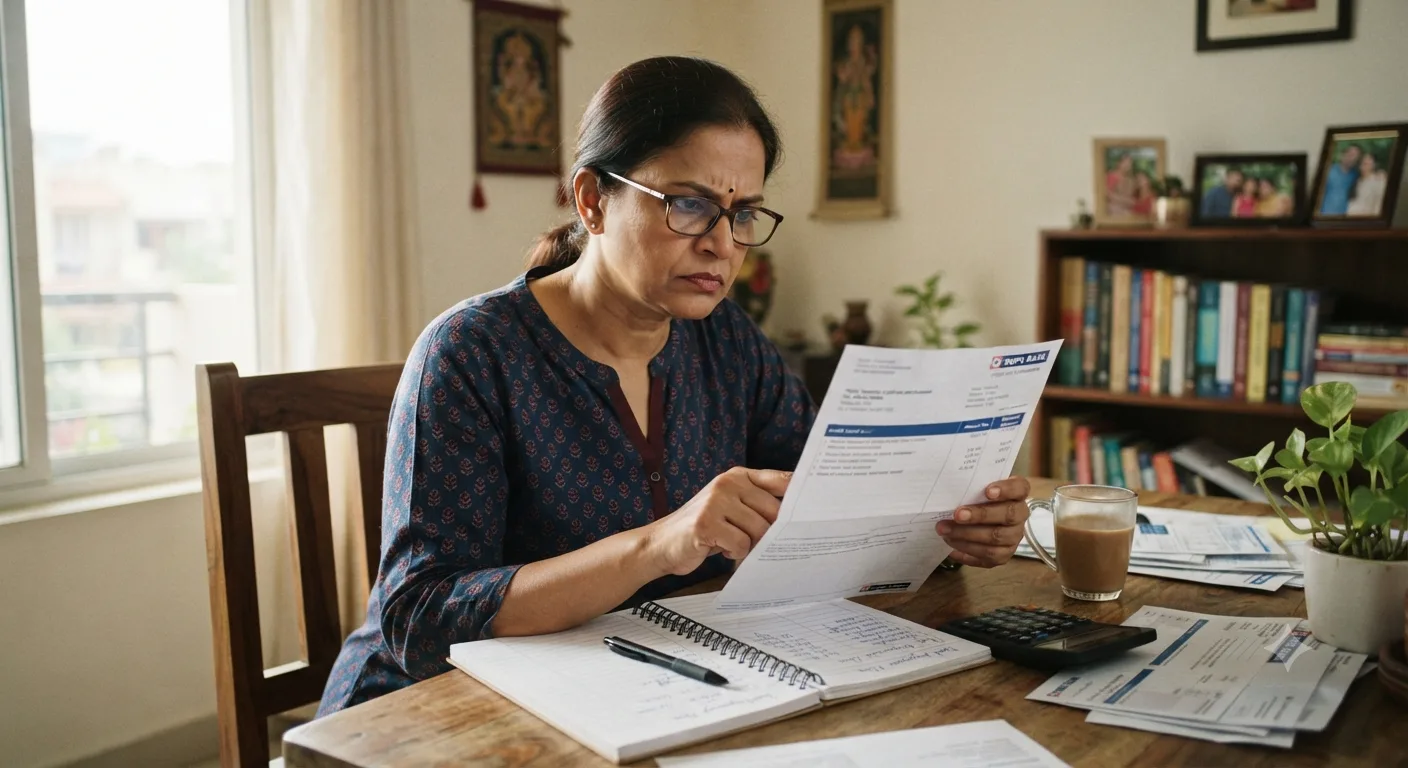
How to Increase CIBIL Score from 300 to 750: Can It Be Done & How Long Will It Take?
A CIBIL score of 300 usually means you have a lot of defaults/write-offs/settled loans in your report. You can get from 300 to 750 but it will take 18 to 36 months of consistent effort. Fastest way is to clear the pending dues, get the errors in the report corrected, stop taking new loans and let time wear off the older negative marks.
Mohit Juneja
Reviewed by FREED India, Debt Resolution Specialists

 4.7/5
4.7/5 ₹3,200Cr+
 20,000+
 20,00,000+4.7/5₹3,200Cr+20,000+20,00,000+
Key Takeaways

A 300 score is not random. Something specific on your report pulled it there, usually 90+ days of missed payments, a write-off, or a settled tag.
The honest timeline to improve a credit score of 300 is 18 to 36 months.
The single biggest mistake people make is taking one more app loan "just to get through this month." It resets the clock every time.
A "Settled" tag and a "Closed" tag mean very different things on your report. One hurts you for 7 years. The other doesn't.
If you have more than two defaulted accounts, doing this alone gets harder fast. That's the point where most people ask for help.
CIBIL Score Stuck at 300? Why? - (And What It Means)
The range for CIBIL scores is fixed, 300-900. Here's the real breakdown of the bands:
300 to 549 Poor. Loans get rejected almost everywhere.
550 to 649 Fair. Some banks may consider you, but at higher rates.
650 to 749 Good. Most banks and NBFCs will work with you.
750 and above Excellent. You get the best offers and lowest rates.
A score of 300 is not bad luck. It is the result of specific events that got reported to CIBIL. Usually one or more of these:
- A loan EMI missed for 90 days or more
- An account marked as "Written Off" by the banks
- A loan closed with a "Settled" tag instead of a clean closure
- Multiple loans going into default around the same time
- Recovery action started against the account
A score of 300 also shows up when three or four unsecured loans credit cards, personal loans, and app loans together start going bad at the same time. This is more common than people realise. Job loss, a medical emergency, or a small business that didn't take off can push three accounts over the edge at once.
If your score is 300, the banks already think the money is lost. Your job from here is to prove them wrong.
Per RBI guidelines, an account becomes NPA (Non-Performing Asset) after 90 days of missed payment. Once it crosses that line, every bank reports it to CIBIL, and the score drops sharply.
Can You Actually Go from 300 to 750? The Honest Answer
Yes. But not in 30 days. Not in 3 months. Not even in 6 months.
Here is what the recovery actually looks like in real numbers:
300 to 550 6 to 9 months
550 to 650 6 to 12 months
650 to 750 6 to 12 months
Total 18 to 36 months
Why this long? Because CIBIL keeps a default or a "Settled" tag on your report for up to 7 years. The score can still go up while those tags are sitting there but only if your newer, positive activity is strong enough to outweigh the older damage.
You didn't fall to 300 in one day. Coming back takes time too. But it does end.
The 5 Things Stopping Your CIBIL Score from Going Up
Most people work hard on their score recovery and still don't see it move. Usually, it's one of these five things sitting in the background.
1. Old "Settled" status sitting on your report A settled loan keeps your score suppressed for up to 7 years. Most people don't know this when they accept a direct settlement from the Bank.
2. Paying only the minimum due on credit cards every month You stay technically current, but the balance keeps growing. Your card usage stays high, and the score has no room to recover.
3. One or two new app loans every month Every hard enquiry pulls 5 to 10 points off your score. Five enquiries in one month is a real, visible drop.
4. Errors on your CIBIL report A wrong account marked as defaulted. A paid loan still shown as active. Duplicate entries. These mistakes are far more common than people realise and they can cost you 30 to 60 points without you doing anything wrong.
5. No fresh positive credit at all If you've stopped using credit completely, the score has nothing positive to balance the old damage with. Time alone won't fix it.

FREED Expert Tip
Don't check your CIBIL score every week. Check it once every 45 to 60 days. Constant checking through different apps creates soft enquiries; these don't hurt your score, but they make YOU more anxious. Recovery is slow. Trust the process.
Talk to a FREED counsellor for free →How to Improve Your CIBIL Score from 300 to 750: The Step-by-Step Plan
Step 1 Pull Your Full CIBIL Report Most people only check the score. The actual report shows every loan, every status tag, every error. At FREED, we read this report with you and mark exactly what's pulling the score down.
Step 2 Fix the Errors First (These Are Free Wins) Wrong entries, duplicate accounts, paid loans still showing active. Fixing these can move your score 30 to 60 points within 30 to 45 days. We help you raise the dispute with CIBIL the right way.
Step 3 Settle the Pending Defaults the Right Way Settling on your own usually leaves a "Settled" tag that hurts your score for 7 years. At FREED, we negotiate directly with your Banks to bring the settlement amount down .The final settlement status on your report is decided by the bank.
Step 4 Convert "Settled" Tags to "Closed" If you have old settled loans, paying the remaining balance and getting an NOC can change the status to "Closed". This single change can push your score up by 50 to 80 points.
Step 5 Stop All New Loan Applications for 6 Months No new credit cards. No app loans. No personal loans. Every enquiry resets your recovery clock.
Step 6 Build One Small Positive Account A secured credit card (against an FD) or one small loan paid on time for 6 to 12 months. This gives the score something fresh and positive to count.
Step 7 Stick with it for 18 to 36 months The score won’t change in leaps and bounds. It will move 20-40 points every 2-3 months. Believe the process.
Why Settlement Is Difficult to Navigate on Your Own
Settlement is a structured financial and documentation-heavy process. Most borrowers are not familiar with how it works and that unfamiliarity is where things go wrong.
Banks and financial companies follow internal policies, compliance procedures, and recovery frameworks. Settlement terms, including what gets documented in the settlement letter and what status appears on your CIBIL report, are part of a process that requires preparation, follow-up, and the right documentation at each step.
In stressful situations, borrowers often agree to terms quickly without fully understanding the long-term impact on their credit profile or whether the repayment is realistically sustainable.
Here is what FREED does through this process:
- We connect with the relevant settlement team at the bank or financial company and handle the communication on your behalf.
- We ensure you receive a proper written settlement letter with a CIBIL status update clause built in.
- We follow up until the status is correctly reflected on your CIBIL report.
- We support you if recovery agent calls become threatening or abusive during the process.
- We structure a plan based on what you can actually afford not a single large payment that creates new pressure.

Stuck with multiple settled loans and a score below 400?
FREED has helped 60,000+ Indians rebuild their credit, the legal way.
Get My Free Credit AssessmentWhat If My Score Has Multiple Settled Loans?
This is the most common situation we see. If your report has three or four "Settled" tags, here is what you should know.
Each "Settled" status on your report works independently. Paying off one and converting it to "Closed" still leaves the others pulling your score down.
The correct sequence is this:
- Start with the oldest settled loans first these are closest to ageing out anyway
- Then work on the settled loans with the highest balance these carry the most weight on your score
At FREED, we review all your settled accounts, help you understand which ones need attention first, and negotiate with the bank on your behalf.
What the Law Says
As per RBI’s Master Direction on Credit Information Companies, you can dispute any incorrect information in your CIBIL report. The credit bureau has 30 days to respond. You also get one free credit report each year from each bureau. If you’ve paid in full and a Bank won’t update a “Closed” status, that’s a violation you can complain about.
Find out all your borrower rights →Common Mistakes That Reset Your Score Recovery

Mohit Juneja
Mohit Juneja writes educational content at FREED on debt management, credit scores, loan repayment, and borrowing best practices. His content is shaped by expert insights and industry knowledge, helping readers better understand their financial options and make informed decisions.
mohit.juneja@freed.care

FREED is India's trusted loan management platform. Founded in 2020 and headquartered in Gurugram, FREED has counselled 20 lakh+ people on personal loans, credit cards, and app loans. FREED charges fees only on successful settlement, not upfront. FREED does not handle secured loans (home loans, car loans, gold loans).
Media Mentions