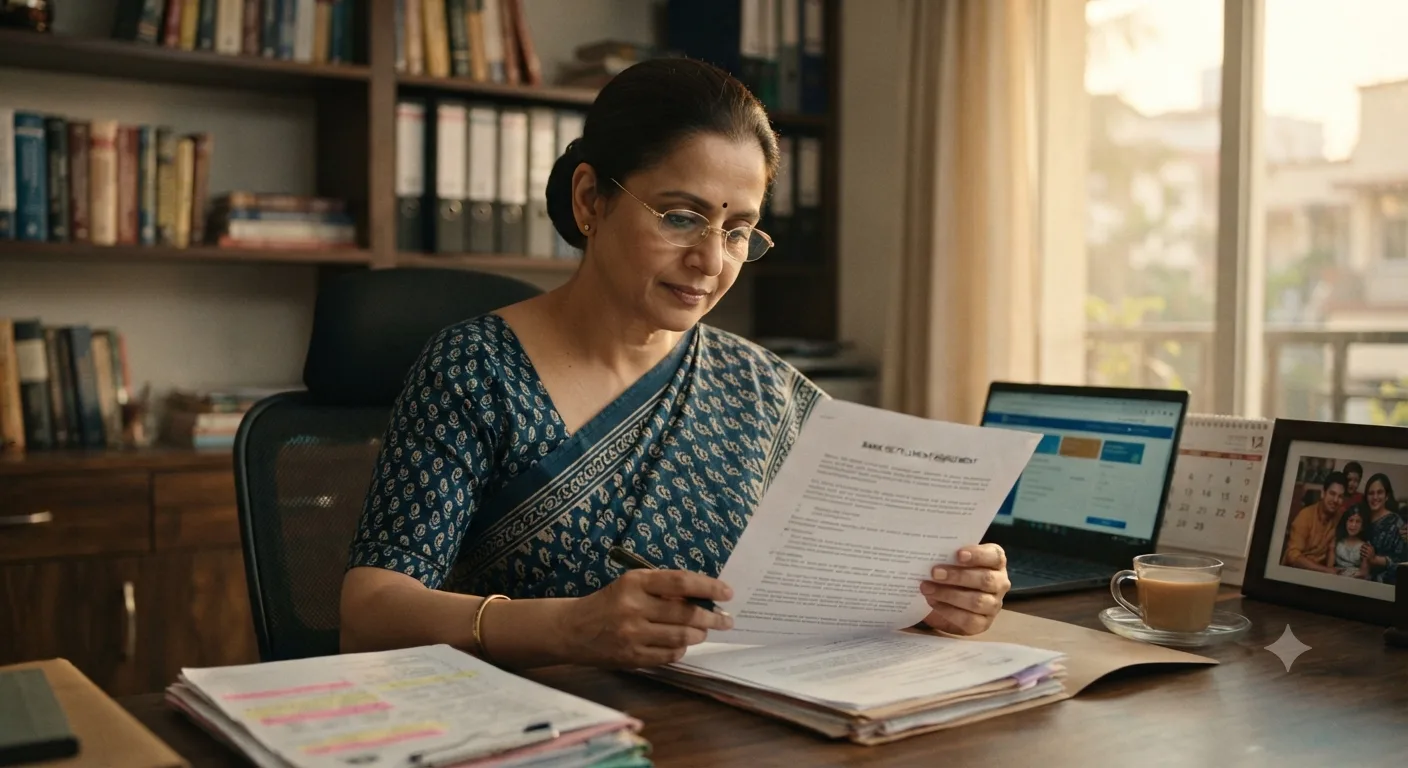
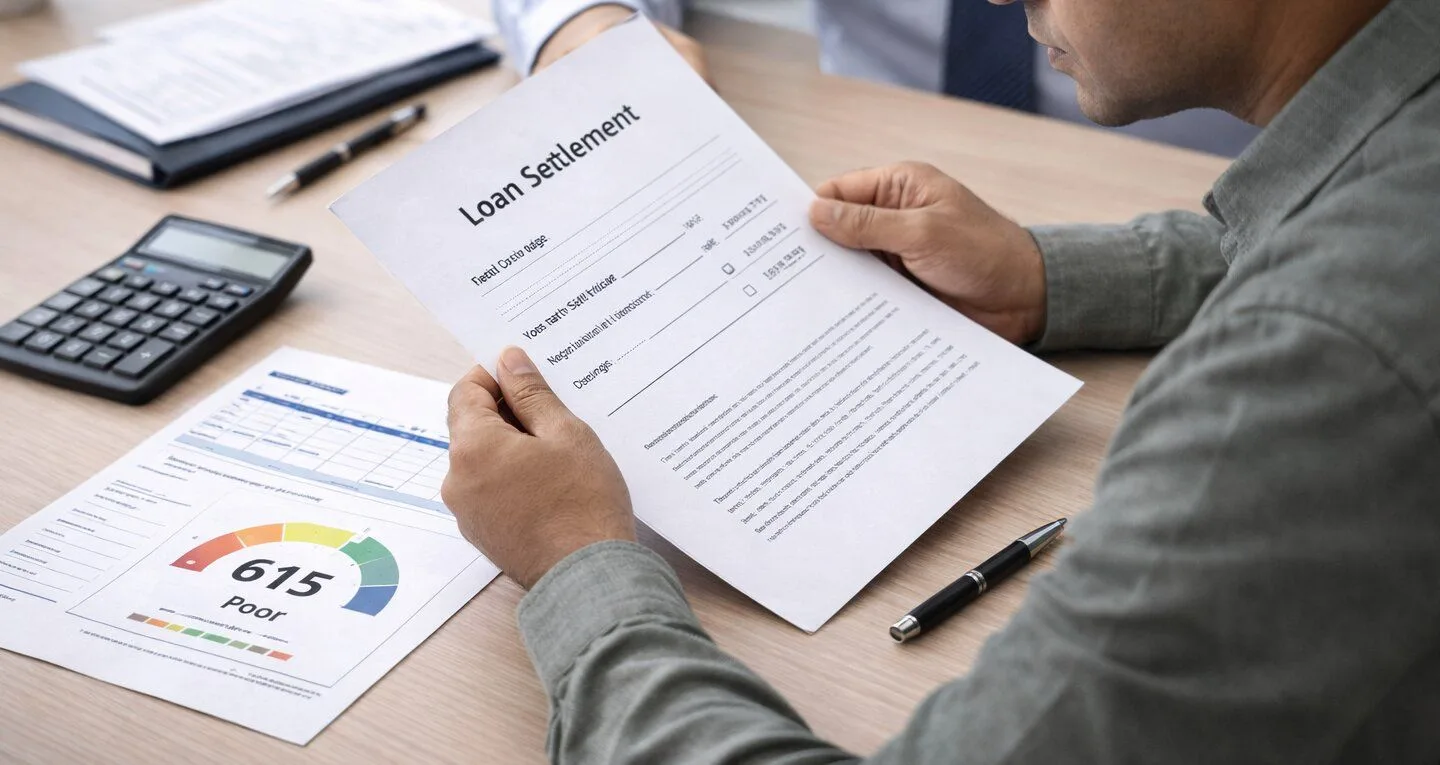
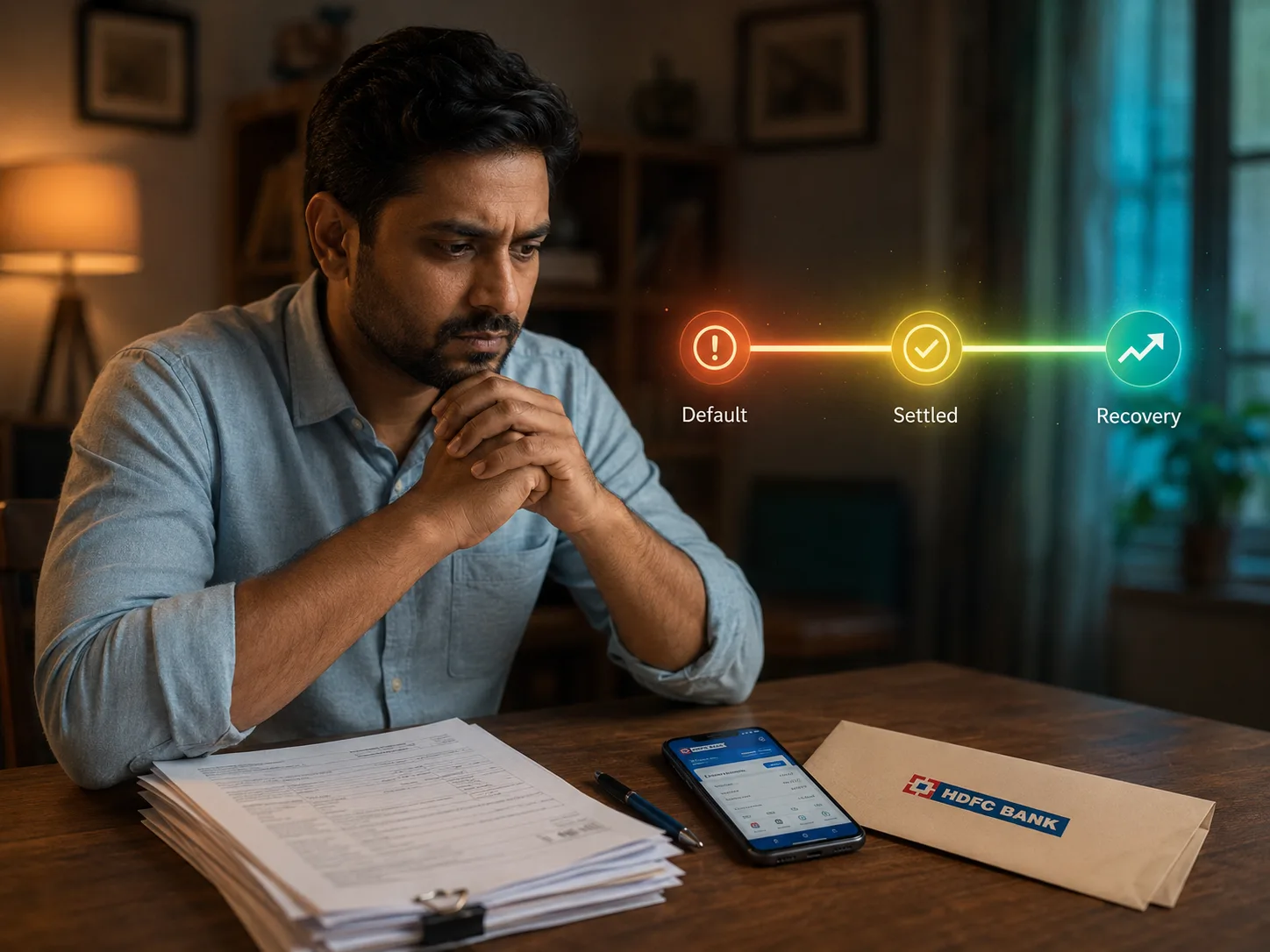
Canara Bank One-Time Settlement: How It Works
Canara Bank one-time settlement is when the bank agrees to close your NPA account for less than what you actually owe. That's it. You pay a reduced lump sum, the account gets marked "Settled," and the debt ends. You're not paying the full amount back.
Mohit Juneja
Reviewed by FREED India, Debt Resolution Specialists
 4.7/5
4.7/5 ₹3,200Cr+
 20,000+
 20,00,000+4.7/5₹3,200Cr+20,000+20,00,000+
KEY TAKEAWAYS

Canara Bank one-time settlement closes an NPA account for less than you owe.
The bank pushes settlement hardest between October and March each year.
Settlement can negatively affect your CIBIL score and may make future borrowing more difficult.
A ‘Settled’ status can remain visible on your credit report and may affect how lenders assess future credit applications.
A bounced EMI cheque can trigger Section 138 NI Act charges, up to 2 years jail or a fine double the cheque amount.
What Is Canara Bank One-Time Settlement (OTS)?
You've missed payments. It's been three months. Then four. The bank classified your loan as NPA (that means non-performing asset, the bank's way of saying you're not paying). Now they're willing to settle.
Settlement doesn't mean you're off the hook cheap. The bank may consider accepting an agreed amount below the full outstanding, depending on its policy and assessment of the account. You find the money somewhere. You pay once. It's done.
The catch? Settlement is generally considered for seriously delinquent accounts, particularly where the borrower cannot realistically repay the full outstanding. Eligibility depends on the lender's applicable policy and the individual account. And you can't ask for it. The bank offers it. Settlement may be considered when the lender determines that full recovery is unlikely or the borrower cannot realistically repay the outstanding amount.
What loans qualify? This article focuses on eligible unsecured loans and credit-card dues with Canara Bank. Secured loans work differently because the lender has security over an asset. Any negotiated resolution therefore needs to be considered alongside the lender's rights over that security.
Most people land here not because they're careless. A company restructured and your job vanished. Your kid got sick and the hospital bills wiped out savings. One missed payment rolled into two, then three, and suddenly the whole thing collapsed. It happens to careful people. All the time.
Why Do Canara Bank Accounts Reach the OTS Stage?
Miss one EMI. The bank sends a letter. Miss two. Recovery calls start. You dodge them. As overdue days increase, applicable loan accounts can move through the RBI's SMA categories before reaching NPA classification. These classifications are based on days past due, not simply the number of missed EMIs.
But why does it happen? Life. Someone loses their job in a layoff. Another person's spouse gets diabetes and suddenly ₹50,000 a month goes to doctors instead of EMIs. A family member in another city needs a bail amount and you empty your savings. These aren't excuses. They're what happens.
One loan defaults. You miss the payment on that. Then you can't cover your credit card. Then the second personal loan. It cascades. One door closes, the whole structure shakes.
By the time Canara Bank is calling, you're already months behind. You've fought to keep up. You've borrowed from family. You've sold things. None of it worked.
Signs You Should Consider Canara Bank One-Time Settlement
You've missed two or more EMIs and the calls have started coming.
Your CIBIL report shows the Canara Bank account as NPA.
You have no way to get back on track with the full EMI. Not in three months. Not in six.
A legal notice from the bank's lawyers arrived.
Your income has dropped and you don't see it coming back to cover the payment.
Consolidation fell through or the bank rejected you.
If several of these situations apply, it may be worth assessing settlement alongside other available repayment options.
How Does Canara Bank One-Time Settlement Work?
Step 1: Pull your credit report and check what Canara Bank says you owe.
Log into Experian or CIBIL. See the exact number the bank is claiming. This is your anchor. You can't negotiate if you don't know what they think is owed. Include penal charges, legal fees, everything they've added.
Step 2: Write a letter to the bank's branch or Recovery Officer.
Don't make it fancy. State the loan account number. Explain why you can't pay (job loss, medical crisis, income drop, whatever it was). Propose an amount you can actually arrange. Keep it to one page. The bank doesn't care about your story. It cares whether it can collect money.
Step 3: Attach proof that you can't pay.
Termination letter from your job. Medical bills. Bank statements showing what you actually earn. Six months of statements. This is critical. The letter alone means nothing. Documents prove you're not lying.
Step 4: Send it to the branch via registered post. Get a receipt.
Hand-deliver if your branch is close. Submit the request through a channel confirmed by Canara Bank and retain proof of submission. You get a date stamp. If the bank claims later they never got it, you have proof.
Step 5: Wait for Canara Bank to review. This takes 2 to 8 weeks.
They pull your file. Check your history with the bank. Look at what you owe. Check if you have other assets. Decide if settlement makes sense. Multiple people approve it at a PSU bank. That's why it takes time.
Step 6: Negotiate penal interest and legal charges before the principal.
Ask for a written breakup of principal, interest, penal charges and legal costs. What the bank is willing to waive or reduce depends on its policy and the individual settlement case.
Step 7: Get the offer in writing before you do anything else.
A phone call means nothing. A verbal promise from a branch officer vanishes. You need a letter. It states the exact amount, the deadline to pay, what they're waiving. Once you have that letter, you can move.
Step 8: Arrange the money and pay within the deadline.
The bank will tell you how. Bank transfer. Cheque. Don't miss the deadline. This is your one shot.
Step 9: Collect the NOC and settlement letter. Check the bureaus in 30 to 45 days.
The NOC is your clearance. The settlement letter documents what was paid and that it's closed. Then monitor your credit report. Check the credit reports available to you after the lender's applicable reporting cycle and confirm that the account has been updated accurately. If it doesn't show up after 45 days, call Canara Bank and push them to report it.

Freed Expert Tip
Negotiate penal interest and legal charges first. Canara Bank rarely cuts the principal. But the bank added all those extra charges as a buffer. Push on those. A ₹5 lakh loan with ₹1 lakh in penalties can drop to ₹4.2 lakh if you get the charges removed.
Check your options
What Makes Canara Bank's OTS Process Different?
Canara Bank is a public sector bank. That means bureaucracy. That means layers.
Every bank has to follow RBI's June 2023 Framework for Compromise Settlements. It's a rule. But each bank runs their own process. Canara Bank's version is slow but predictable.
Canara Bank may run time-bound recovery or settlement initiatives. Check the bank's current announcements for any active OTS or resolution window. If you file during this window, your case moves faster. The bank has set aside money for settlements. The recovery team is focused. Decisions happen quicker. File in July? You wait months. File in November? The machinery is running.
Check Canara Bank's current official website or branch for the currently available OTS application route. You don't upload documents on their website. You go to the branch. You meet a recovery officer. You hand over your letter and documents. Face to face or through the mail. That's it.
Once you hit 90 days without payment, you're classified NPA. The clock starts. Continued default can lead to recovery action, which may include legal proceedings depending on the account and applicable law. Use the window between NPA classification and legal filing. That's your settlement window.

What the Law Says
RBI's June 2023 Framework mandates that every bank's settlement policy be Board-approved. And whatever Canara Bank settles must be reported to all four credit bureaus accurately. Your "Settled" status has to show on Equifax, Experian, CIBIL, and CRIF. If the account has not been updated after the applicable reporting cycle, contact Canara Bank and request clarification or correction. Escalate to the bank. Get them to report it.
Check My CreditWhat Are Your Options Before Canara Bank OTS?
Route | What It Does | CIBIL Impact | Who It's For |
Balance Transfer | Moves loan to a lower rate | Neutral to slightly positive | Still paying, decent score |
Debt Consolidation | Merges loans into one lower EMI | Score improves over time | Still paying but stretched |
OTS | Closes debt for less than owed | Drops 75-100 points, "Settled" for 7 years | Genuinely unable to repay |
Rates shown are typical. Your bank might differ. Check directly with them.
How FREED Helps With Canara Bank Loan Settlement
FREED doesn't just give advice and leave. FREED does the work.
You have multiple Canara Bank accounts. Some old credit cards. Maybe another personal loan elsewhere. FREED maps all of it. Figures out which account to prioritize. Builds a settlement plan specific to your numbers.
FREED drafts the hardship letter. Not generic. It's written to work with Canara Bank's recovery team. FREED prepares the documentation and settlement request based on the borrower's circumstances and account details.
You gather the documents. FREED organizes them. Every medical bill dated. Every income statement in order. Everything ready to submit.
FREED sets up a Special Purpose Account (SPA). Your money goes there instead of to EMI payments. Month after month, the SPA builds a corpus. Once there's enough, FREED negotiates with Canara Bank. You authorize every single payment before it leaves the SPA. You're in control.
FREED follows up. Tracks the case. Gets the NOC. Gets the settlement letter. Then monitors the credit bureaus to make sure all four update within 45 days.
The fee is success-based. FREED gets paid only after settlement closes. Not before.
This isn't fast. The overall process can take several months, depending on the account, negotiations, payment arrangement and lender response. In some cases, FREED may negotiate settlements for up to 50% less than the outstanding amount. Actual outcomes vary by lender, account and borrower circumstances. No specific outcome is guaranteed. Depends on the bank, the loan type, and how long you defaulted.
What Actually Helps During Settlement Negotiations
File during October to March if you can. The bank's machinery is running. Cases move faster.
Get everything in writing. A verbal promise from a branch officer doesn't hold. A phone call disappears. Written offers stick. Get the sanction letter before you pay anything.
Push on charges, not principal. The bank added penalties. Added legal fees. Push those away first. Principal rarely moves. But add-ons always do.
Keep a receipt when you submit documents. Registered post, dated. Proof you filed on time. Proof it's in the system.
Don't pay before the sanction letter arrives. Any payment before then gets logged as a partial EMI. Leaves the rest still owed.
Follow up after four weeks if you haven't heard back. Then again after eight weeks. A registered letter or email to the Recovery Officer. Phone calls don't create a paper trail. Written follow-ups do. And they speed things up.
The bureaus take 30 to 45 days to update after settlement. If your account still shows NPA after 45 days, call Canara Bank. Ask why the update is late. Get them to send a letter to the bureau. Don't assume it'll update on its own.
Sources
Claim | Source |
RBI Framework for Compromise Settlements, dated June 8, 2023 | |
NPA threshold is 90+ days of non-payment | RBI Credit Information Reporting Directions (standard classification) |
Settled status remains on credit report for up to 7 years | RBI Credit Information Reporting Directions and bureau retention policies |
Section 138 NI Act: up to 2 years jail or fine up to 2x cheque amount | |
Canara Bank resolution drive window: October to March | Canara Bank official announcements (verify current year on canarabank.com) |
Bank evaluation window: 2 to 8 weeks | Standard industry practice; verify with Canara Bank branch for current timelines |
Bureau verification window: 30 to 45 days post-settlement | RBI Credit Information Reporting Directions, standard bureau update cycle |

Mohit Juneja
Mohit Juneja writes educational content at FREED on debt management, credit scores, loan repayment, and borrowing best practices. His content is shaped by expert insights and industry knowledge, helping readers better understand their financial options and make informed decisions.
mohit.juneja@freed.care

FREED is India's trusted loan management platform. Founded in 2020 and headquartered in Gurugram, FREED has counselled 20 lakh+ people on personal loans, credit cards, and app loans. FREED charges fees only on successful settlement, not upfront. FREED does not handle secured loans (home loans, car loans, gold loans).
Media Mentions