What is bnpl how does it work
Buy Now Pay Later has become one of the most common checkout options in India, shopping apps, food delivery, even utility bills now offer it. Here is exactly what it is, the specific mechanics behind how it works, and precisely where it stops being simple.

Mohit Juneja
Reviewed by FREED India, Debt Resolution Specialists
 4.7/5
4.7/5 ₹3,200Cr+
 20,000+
 20,00,000+4.7/5₹3,200Cr+20,000+20,00,000+
Key Takeaways

BNPL is a short-term credit facility that lets you complete a purchase immediately while deferring payment, either as a single lump sum after a set period or across several instalments.
A BNPL provider, not the merchant, actually pays the merchant on your behalf at the time of purchase, then collects the deferred amount from you directly, according to the plan you selected.
The "interest-free" promise only holds if the full amount is repaid within the specific window offered, generally 15 to 30 days for single payment plans; missing this window shifts the balance to standard, often high, interest.
BNPL approval typically relies on a quick, automated credit check rather than a full loan application, which is what makes it fast, but this same speed makes it easy to accumulate multiple simultaneous commitments without fully tracking them.
Many BNPL providers now report payment behaviour to credit bureaus, meaning a missed payment can affect your CIBIL score just like a missed credit card bill, and if BNPL commitments have already grown difficult to manage, FREED can help.
BNPL, Defined Simply
Buy Now Pay Later, commonly shortened to BNPL, is a short-term credit facility offered at checkout, in-store or online, that allows you to receive a product or service immediately while paying for it later, either in one deferred payment or across several smaller instalments.
The core appeal is straightforward, no lengthy application, near-instant approval, and, when repaid on schedule, no interest at all. This is precisely why it has spread so quickly across Indian e-commerce, food delivery, and even utility payment platforms, it removes almost all of the friction typically associated with borrowing money.
Who Is Actually Involved in a BNPL Transaction
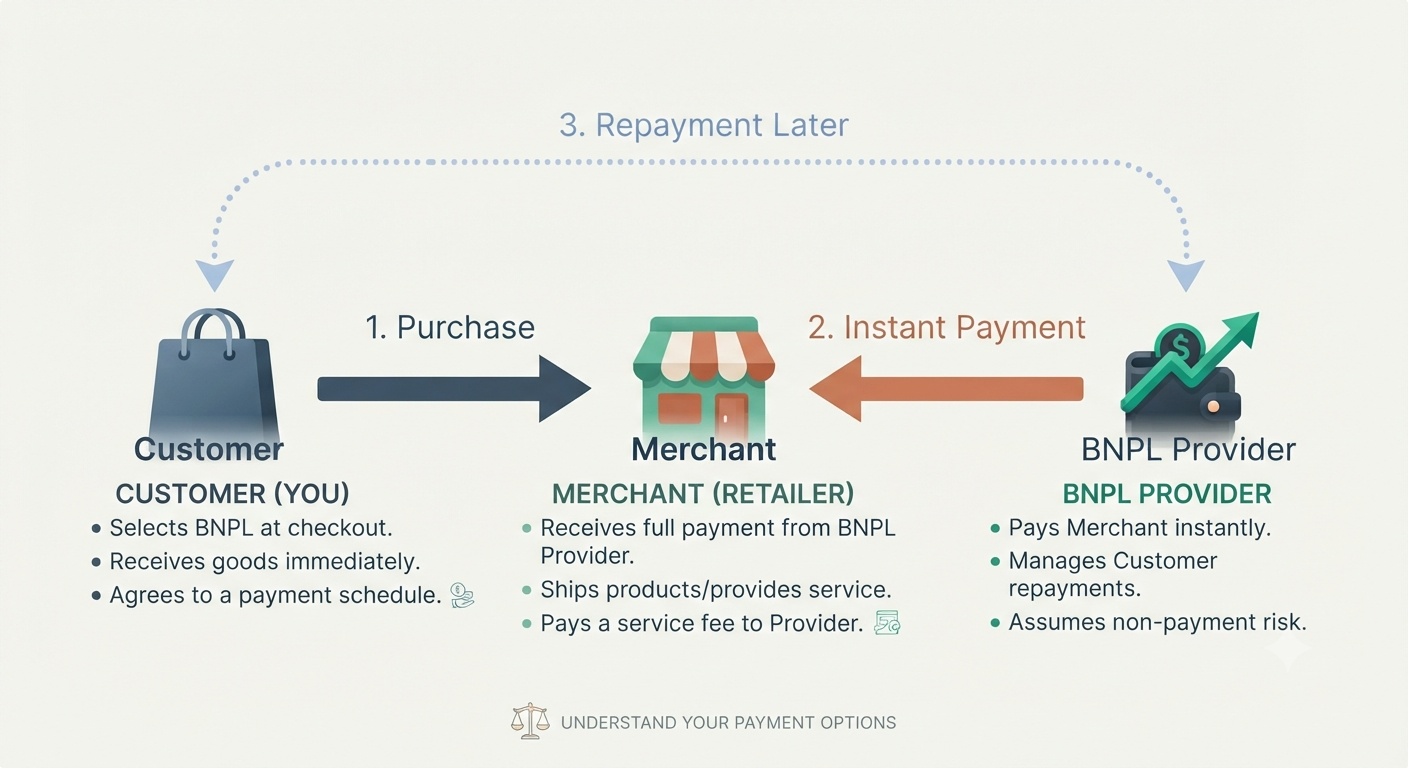
A BNPL purchase involves three specific parties, even though it can feel like a two-party transaction, you and the merchant, from the checkout screen alone.
The merchant, selling the actual product or service. The BNPL provider, a fintech company or an NBFC, LazyPay, Simpl, Amazon Pay Later, and similar platforms, which actually extends the credit and takes on the repayment risk. And you, the borrower, who receives the product immediately but owes the BNPL provider, not the merchant, for the amount, according to the specific repayment plan selected at checkout.
Step by Step: What Happens When You Choose BNPL at Checkout
At the point of purchase, selecting BNPL triggers a quick, automated approval check by the BNPL provider, typically completed within seconds, using a soft credit assessment rather than a full loan application process.
Once approved, the BNPL provider pays the merchant the full amount immediately, on your behalf, exactly as if you had paid with a card. You then owe this amount to the BNPL provider directly, according to whichever specific repayment structure you selected, a single payment after a set period, or several instalments spread across subsequent weeks or months. From this point forward, your relationship is entirely with the BNPL provider, the merchant is no longer involved in the transaction at all.
The Three Common BNPL Structures
Most BNPL plans in India fall into one of three structures. Pay in full later, where the entire amount is due as a single payment, typically within 15 to 30 days, interest-free if paid on time. Pay in instalments, where the amount is split into three, six, or more equal payments spread across several weeks or months, sometimes interest-free, sometimes carrying a small processing fee. And extended plans, functioning closer to a traditional short-term loan, spread over a longer period, generally carrying interest from the outset, similar in structure to a personal loan.
Understanding which specific structure a given BNPL offer follows, since apps often present these differently, is important, because the cost implications, and the consequences of a missed payment, differ meaningfully between them.
What "Interest-Free" Actually Means, and When It Stops Applying
The "interest-free" promise attached to most BNPL offers is genuinely real, but conditional, it applies only if the full amount is repaid within the specific window the plan defines, and it applies only to the base structure, some plans still carry a small flat processing fee regardless of timely repayment.
The moment a payment deadline is missed, even by a single day, the cost structure typically changes considerably, a late fee is charged, and depending on the specific provider, interest may then apply retroactively from the original purchase date, not just from the missed deadline forward, which can turn what looked like a small, free purchase into a considerably more expensive one almost overnight.
How BNPL Approval Actually Works Behind the Scenes
BNPL approval is typically based on a soft credit check, an automated assessment using available data, transaction history with the platform, basic credit bureau information, sometimes bank account activity, rather than the fuller documentation and manual review a traditional personal loan would require.
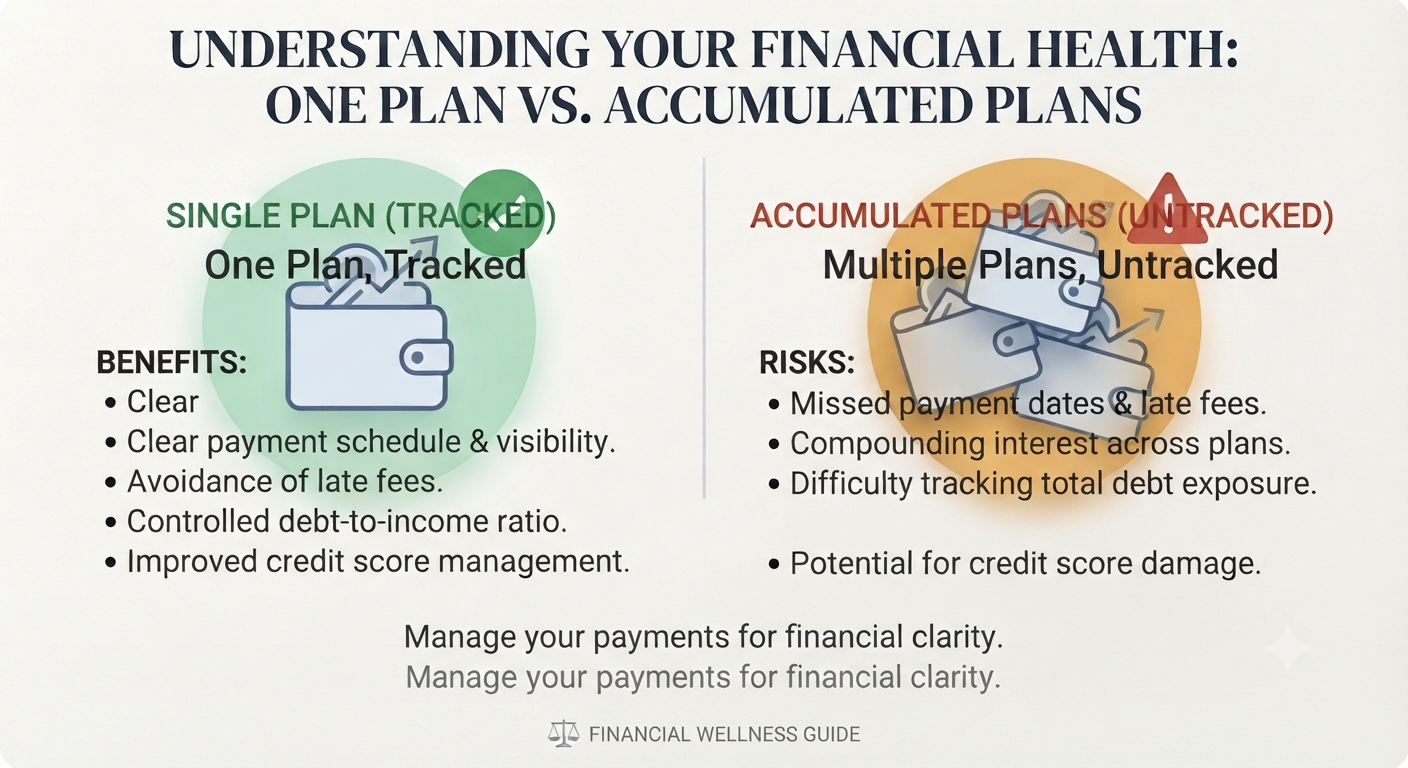
This is precisely what makes BNPL fast, often approved and completed within seconds at checkout, but it also means the approval process is considerably less thorough than a formal loan application, which can result in credit being extended relatively easily, sometimes across several different BNPL providers simultaneously, without any single provider having full visibility into your other active commitments.

Not sure how many active BNPL commitments you actually have right now?
Talk to a FREED Expert for free.
Talk to a FREED ExpertWhere BNPL Genuinely Fits Into a Sensible Budget
BNPL works well, genuinely as intended, for a planned, budgeted purchase where the full amount is already available and simply being deferred briefly for convenience, and where no other BNPL commitment is currently outstanding at the same time.
In this specific scenario, BNPL functions as a free, short-term payment tool, no different in cost from paying with cash or a debit card on the day the deferred payment is actually made, provided the deadline is met exactly as agreed.
The Specific Point Where BNPL Stops Being Simple
BNPL becomes genuinely risky in a few specific, identifiable situations, using it for a purchase that would not have been made with cash on hand, meaning the money to repay is not actually available yet. Holding more than one active BNPL commitment simultaneously, across different providers or repeated purchases with the same one. And using it repeatedly to bridge a monthly income shortfall, effectively functioning as a recurring, informal loan rather than an occasional payment convenience.
Any one of these patterns turns BNPL from a free convenience into a real financial obligation, carrying real consequences if not tracked and managed carefully.
How BNPL Reports to Credit Bureaus, and Why That Matters
A detail many users are unaware of is that several major BNPL providers in India now report payment behaviour to one or more of the four RBI-licensed credit bureaus, CIBIL, Experian, Equifax, and CRIF High Mark, treating it increasingly similarly to a formal credit product rather than a purely informal payment convenience.
This means a missed BNPL payment can lower your CIBIL score in much the same way a missed credit card payment would, and multiple active BNPL balances can affect your overall credit utilisation picture as well. Treating every BNPL deadline with the same seriousness as a credit card due date is a direct, practical consequence of this reporting relationship.

What the Law Says
Under RBI's digital lending guidelines, BNPL providers are required to clearly disclose the full Annual Percentage Cost, including any fees and the interest rate that applies once an interest-free window ends, before the credit is extended. This means the true cost of a specific BNPL plan, including what happens if a deadline is missed, should be available to review directly at the time of checkout, and is worth actually reading rather than assuming based on the general "interest-free" marketing language alone.
Check Your Credit Score FreeA Simple Checklist Before You Tap "Pay Later"
Before selecting BNPL at any checkout, a few quick questions are worth applying consistently, is the money to repay this already available, or is this purchase being financed. Is there already another active BNPL commitment outstanding right now. Is the repayment deadline noted somewhere it will actually be remembered, ideally with a reminder or auto-pay set up specifically for it. And would this purchase still make sense if it had to be paid in cash today, rather than deferred.
Answering these honestly, each time, before tapping "pay later," is the single most effective way to keep BNPL functioning as the free convenience it is designed to be.
Want help reviewing your current BNPL commitments against this checklist?
Talk to a FREED Expert for free.
Talk to a FREED ExpertWhen BNPL Has Already Turned Into Something Harder to Manage
For most people, BNPL used occasionally and tracked carefully remains exactly what it is designed to be, a free, convenient payment tool. For some, several BNPL commitments have accumulated across different platforms, combined with existing credit card or loan obligations, to a point where tracking every deadline and managing every payment has become genuinely difficult.
If this describes your situation, particularly if missed BNPL payments have already started affecting your credit score or triggering fees, addressing the combined picture directly is considerably more effective than continuing to manage several scattered, individually small commitments.
FREED's Debt Consolidation Program can combine BNPL balances alongside credit card and personal loan debt into one lower interest loan with a single, manageable EMI.
FREED's Debt Resolution Program can negotiate a reduced settlement where the combined outstanding, including BNPL, cannot realistically be repaid in full, on average 56% less than the original outstanding.
A free consultation can review your full picture, BNPL and otherwise, and recommend the most effective way forward.
Are You in a Loan Trap? Quick Check
Move the slider to your total EMIs as a % of monthly salary. See your debt stress level instantly.
EMIs as % of Monthly Salary

Mohit Juneja
Mohit Juneja writes educational content at FREED on debt management, credit scores, loan repayment, and borrowing best practices. His content is shaped by expert insights and industry knowledge, helping readers better understand their financial options and make informed decisions.
mohit.juneja@freed.care

FREED is India's trusted loan management platform. Founded in 2020 and headquartered in Gurugram, FREED has counselled 20 lakh+ people on personal loans, credit cards, and app loans. FREED charges fees only on successful settlement, not upfront. FREED does not handle secured loans (home loans, car loans, gold loans).
Media Mentions