BNPL: Buy Now Pay Later: The Modern Credit Boon or Curse?
Buy Now Pay Later feels like free money. It is not. Used smartly, it is a useful tool. Used carelessly, it is one of the fastest ways to accumulate hidden debt. Here is the honest truth about BNPL.
Mohit Juneja
Reviewed by FREED India, Debt Resolution Specialists
 4.7/5
4.7/5 ₹3,200Cr+
 20,000+
 20,00,000+4.7/5₹3,200Cr+20,000+20,00,000+
Key Takeaways

BNPL allows you to buy something now and pay for it in installments typically interest-free if paid within the defined period, and expensive if not.
The real cost of BNPL is often invisible at the point of purchase hidden in processing fees, late payment charges, and high interest rates that kick in after the interest-free window.
BNPL is most useful for planned, budgeted purchases you know you can clear within the interest-free period. It becomes dangerous when used for impulse purchases, daily expenses, or when multiple BNPL commitments accumulate simultaneously.
BNPL credit is reported to credit bureaus by many providers which means missed payments affect your CIBIL score just like a missed loan EMI.
If BNPL commitments have grown into unmanageable debt, FREED can help you consolidate or settle them.
What is BNPL and How Did It Grow So Fast in India?
Buy Now Pay Later is a short-term credit facility that lets you make a purchase immediately and pay for it later either in a single deferred payment or in multiple smaller instalments spread over weeks or months.
In India, BNPL has grown explosively. Platforms like LazyPay, ZestMoney, Simpl, Amazon Pay Later, Flipkart Pay Later, and dozens of others have made BNPL available at nearly every digital checkout. Banks and NBFCs have launched their own versions. Even UPI has integrated deferred payment features.
The appeal is obvious. No credit card required. No lengthy application process. Instant approval in seconds. Zero interest if you pay within the specified period. The purchase happens now. The financial impact feels like it is happening later.
This combination of convenience, speed, and the psychological distancing of payment from purchase is what has driven BNPL adoption particularly among younger, urban Indians who may not have traditional credit cards but have smartphones and digital payment habits.
But that same psychological distancing between the pleasure of buying and the reality of paying is also what makes BNPL genuinely risky when not understood fully.
How BNPL Actually Works
The mechanics vary slightly by provider, but the basic model is consistent.
You make a purchase say Rs 3,000 on a pair of shoes at an e-commerce platform.
At checkout, you select the BNPL option. Your BNPL provider approves the purchase instantly based on a soft credit check and pays the merchant.
You now owe the BNPL provider Rs 3,000. Depending on the plan you chose, you repay this either:
In one payment after a defined period typically 15 to 30 days interest-free.
In three or six equal monthly instalments sometimes interest-free, sometimes with a small processing fee or interest.
Over a longer period with interest applied, often at rates similar to personal loans or higher.
If you pay within the interest-free window, the total cost of the purchase is Rs 3,000. Exactly what you would have paid with cash.
If you miss the payment deadline or choose a longer repayment period, fees and interest apply. And this is where the cost of BNPL reveals itself.
The Real Cost of BNPL: What Most People Do Not See
The zero interest promise of BNPL is real but it comes with conditions that many users do not fully read before clicking accept.
Processing fees: many BNPL providers charge a flat processing fee per transaction typically 1 to 3% of the purchase amount. On a Rs 5,000 purchase, that is Rs 50 to Rs 150 charged immediately. Across multiple BNPL transactions in a month, these fees accumulate.
Late payment charges: if you miss the payment deadline even by one day a late fee is charged. These fees vary by provider but are often Rs 200 to Rs 500 per missed payment. Some providers also charge interest on the outstanding from the day of the missed payment.
Deferred interest: some BNPL plans are structured as deferred interest rather than genuinely interest-free. This means if you do not pay the full amount within the promotional period, interest is charged retroactively from the date of purchase, not the missed payment date. This can result in a significantly larger bill than expected.
High interest rates on longer plans: BNPL extended payment plans beyond the initial interest-free window often carry interest rates of 24 to 42% per year. These rates are not always prominently displayed at the time of purchase.
Collection fees: if the outstanding is handed to a recovery agency, additional collection charges may be applied.
The total cost of a BNPL purchase can be significantly more than the sticker price and the difference is not always visible until the bill arrives.
When BNPL is Genuinely Useful
BNPL is not inherently bad. Used correctly, it is a convenient and cost-effective payment tool.
BNPL is genuinely useful when:
You are making a planned purchase that is already in your budget and you are using BNPL for convenience, not because the money is not available.
You will pay the full amount within the interest-free period before any fees or interest apply.
You have no other BNPL outstanding at the same time so you are not accumulating multiple deferred payments simultaneously.
You have read and understand the fee structure, late payment penalties, and interest rate for any extended plan.
In these circumstances, BNPL is essentially a free, convenient, short-term payment method. It has genuine utility for people who would have made the purchase anyway and are simply choosing the payment timing.

FREED Expert Tip
Before using any BNPL service, ask yourself one question: if I had to pay for this in full right now from my savings account, would I? If the answer is yes, BNPL is a convenience choice and the risk is low. If the answer is no the purchase is beyond your current means, and BNPL is borrowing you cannot immediately afford to repay. That is where the debt trap begins. The purchase feels affordable in three instalments. The reality is that the money needs to come from somewhere.
Talk to a FREED CounsellorWhen BNPL Becomes Dangerous
BNPL becomes dangerous in several specific situations and all of them are common.
Using BNPL for impulse purchases: the ease of BNPL at checkout encourages purchases that would not have happened with cash or a debit card. The psychological separation of payment from purchase reduces the natural friction that prevents impulsive buying. If the purchase was unplanned and the money to repay it is not already available, BNPL has created a debt rather than a convenience.
Using BNPL for daily expenses: using BNPL for groceries, food delivery, or other regular monthly expenses means your regular expenses are accumulating as debt. When repayment is due, you are paying for things you have already consumed with the next month's income already committed to new expenses. The cycle is self-reinforcing.
Having multiple BNPL outstanding simultaneously: three BNPL purchases of Rs 2,000 each across three different providers or one provider means Rs 6,000 in outstanding deferred payments. This is not visible in a traditional credit report in the same way a personal loan is. But it is real debt, and it draws on the same monthly income that covers rent, EMIs, and groceries.
Missing payment deadlines: missing even one deadline triggers late fees and often interest charges that transform a zero-cost purchase into an expensive one. Repeated missed deadlines across multiple BNPL accounts create a debt load that is larger than most users realise.
Using BNPL to bridge an income gap: if BNPL is being used to cover expenses in the last week of the month because the salary has run out, it is serving as a payday loan one of the most expensive forms of credit. This use pattern, if repeated, creates a cycle of ever-increasing deferred payments that the salary never fully clears.
How BNPL Affects Your CIBIL Score
This is not widely understood and it has become increasingly important as BNPL providers have begun reporting to credit bureaus.
Several major BNPL providers in India now report payment behaviour to one or more of the four RBI-licensed credit bureaus CIBIL, Experian, Equifax, and CRIF High Mark.
This means:
A missed BNPL payment can reduce your CIBIL score just like a missed credit card payment or EMI.
Multiple BNPL accounts showing high outstanding balances can increase your credit utilisation ratio and reduce your score.
Conversely, consistently paying BNPL obligations on time can contribute positively to your credit history particularly for people who are new to formal credit.
The key practical implication: BNPL is not consequence-free credit. It has real credit score implications and those implications affect your ability to get loans, credit cards, and favourable interest rates in the future.
Check which bureaus your BNPL provider reports to. Treat BNPL payment deadlines with the same seriousness as an EMI due date. Set reminders or auto-pay for every BNPL outstanding.

What the Law Says
The Reserve Bank of India has been increasingly focused on the regulation of digital lending including BNPL platforms. Under RBI's digital lending guidelines effective 2022 and updated since, all digital lenders including BNPL providers must: clearly disclose the Annual Percentage Cost which includes all fees and interest before the credit is extended, ensure that loan disbursals and repayments happen only through the borrower's bank account and not through third-party accounts, and maintain a fair practices code covering recovery conduct. If a BNPL provider is using recovery agents who harass or threaten you, you have the same rights as with any other regulated lender. Report violations through FREED Shield
Talk to a FREED CounsellorThe BNPL Debt Trap: How It Happens and How to Avoid It
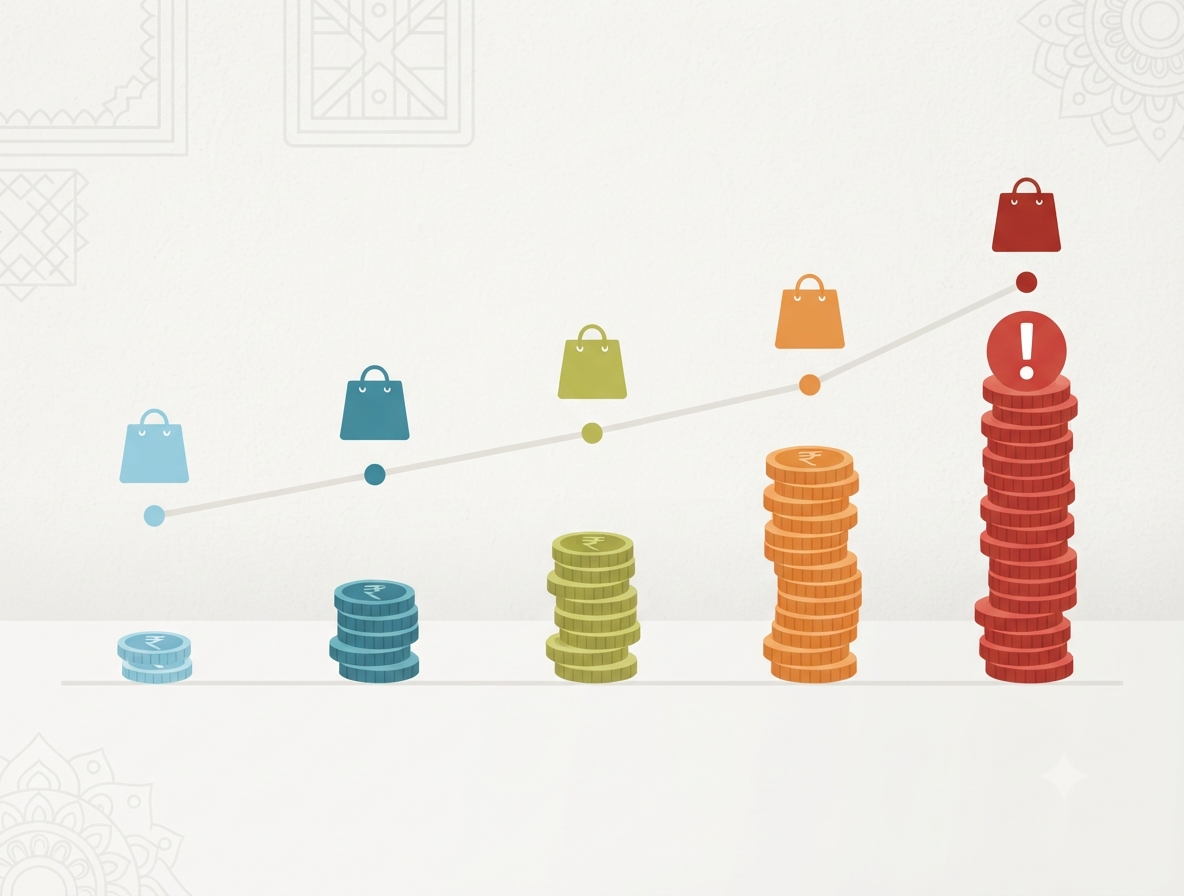
The BNPL debt trap follows a recognisable pattern. Understanding it helps you avoid it.
Month 1: one BNPL purchase of Rs 4,000 for something you wanted but did not strictly need. Repayment is due in 30 days.
Month 2: two more BNPL purchases Rs 2,500 and Rs 3,000. The first is still outstanding. Combined deferred BNPL outstanding: Rs 9,500.
Month 3: the salary arrives. Rent, EMIs, groceries, and utilities consume most of it. BNPL repayments are made partially. Late fees applied. One account charged retroactive interest.
Month 4: new BNPL purchases made because the account shows available credit and the purchases feel separate from the mounting outstanding. Total outstanding now exceeds Rs 15,000.
Month 5: stress. Missed deadlines. Multiple repayment demands arriving simultaneously. A CIBIL score that has dropped because of late payments. A mental load that feels disproportionate to what seemed like small, harmless purchases at the time.
How to avoid this pattern:
Limit active BNPL balances to one at a time. Before making a new BNPL purchase, ensure the previous one is fully repaid.
Set a total BNPL spending limit for the month treat it like a budget category, not open-ended credit.
Set auto-pay for every BNPL obligation on the same day it is created. Do not rely on remembering the due date weeks later.
Never use BNPL for consumable daily expenses. Reserve it for planned, durable purchases.
If you find yourself using BNPL because your income does not cover your expenses address the underlying income or expense problem, not the credit availability.
What to Do if BNPL Debt Has Become Unmanageable
If multiple BNPL outstanding amounts combined with credit card dues and loan EMIs have grown into a total that is consuming too much of your monthly income, the solution is not another BNPL purchase to bridge the gap. The solution is addressing the debt.
If the combined debt is manageable with one lower-interest loan: FREED's Debt Consolidation Program can combine multiple outstanding debts including BNPL balances alongside personal loans and credit card dues into one loan with a lower interest rate and one monthly payment.
If you have already missed multiple payments and the total outstanding cannot realistically be repaid: FREED's Debt Resolution Program negotiates with your creditors to settle for less than the full outstanding. On average, clients settle at 56% less.
Both programs include FREED Shield which handles all creditor and recovery agent communication on your behalf from the moment you enrol.
Are You in a Loan Trap? Quick Check
Move the slider to your total EMIs as a % of monthly salary. See your debt stress level instantly.
EMIs as % of Monthly Salary

Mohit Juneja
Mohit Juneja writes educational content at FREED on debt management, credit scores, loan repayment, and borrowing best practices. His content is shaped by expert insights and industry knowledge, helping readers better understand their financial options and make informed decisions.
mohit.juneja@freed.care

FREED is India's trusted loan management platform. Founded in 2020 and headquartered in Gurugram, FREED has counselled 20 lakh+ people on personal loans, credit cards, and app loans. FREED charges fees only on successful settlement, not upfront. FREED does not handle secured loans (home loans, car loans, gold loans).
Media Mentions