RBL Balance Transfer: Card and Loan Options to Reduce EMI Burden
RBL Balance Transfer lets eligible borrowers move outstanding credit-card dues or refinance an existing personal loan with RBL, potentially at different repayment terms or a lower rate. It works differently depending on what you're transferring: card dues convert to a fixed EMI, an approved personal-loan transfer can replace an existing loan with a new RBL loan. It doesn't clear your debt, it changes who you owe and on what terms.

Mohit Juneja
Reviewed by FREED India, Debt Resolution Specialists
 4.7/5
4.7/5 ₹3,200Cr+
 20,000+
 20,00,000+4.7/5₹3,200Cr+20,000+20,00,000+
KEY TAKEAWAYS

RBL balance transfer moves your other bank's card dues or personal loan onto RBL at a lower rate.
Credit card transfer: minimum ₹5,000, up to 80% of your RBL card's available limit.
Personal loan transfer: typically needs a stable income and a positive repayment history.
Tenure options run 3, 6, or 12 months for card transfers, with different rates for each.
It moves your debt, it doesn't reduce it, a repayment plan still matters after transfer.
What Is RBL Balance Transfer?
Move what you owe to a different lender, land a better rate, that's the basic shape of any balance transfer. RBL runs two genuinely separate facilities under this label, and the shared name is exactly why people mix them up.
Credit card balance transfer takes the outstanding on another bank's card and moves it onto your RBL card, where it turns into a fixed EMI at a rate nowhere near your old card's revolving interest. RBL calls this Transfer 'n' Pay on its own site. Card to card, nothing else.
Personal loan balance transfer is a different animal entirely. Your existing loan with another bank gets shut down completely, and RBL hands you a fresh loan in its place, ideally cheaper. The existing loan is replaced by a new RBL loan, subject to approval and the applicable terms.
Worth getting straight before anything else, since this is where most of the confusion lives: card dues stay card dues, just restructured into an EMI. A personal loan becomes an entirely different loan under a new lender. Either way, what you owe doesn't shrink, only who you owe it to and the terms attached change.
Why Do People Look for a Balance Transfer?
For the card path, it usually comes down to arithmetic. Credit card interest in India commonly sits at 36% to 42% a year, and once someone actually notices how much of their payment vanishes into interest instead of touching the principal, moving that balance somewhere cheaper stops being optional.
The loan path tends to start differently. Maybe someone's CIBIL score has climbed since they first took the loan, and they suspect they'd qualify for a meaningfully better rate now. Or a friend mentions a lower EMI on what sounds like a comparable loan, and the gap's enough to make checking worth the trouble.
This is someone who's largely current on their payments, trying to squeeze more value out of what they're already spending. If you've fallen behind recently, that changes what's worth considering, more on that further down.

See What You'd Actually Save First
Check your real score before comparing any transfer offer.
Check My Credit NowSigns an RBL Balance Transfer Might Help You
The fit looks different depending on which facility you're weighing.
Credit card transfer is worth considering if:
- Your outstanding on the other card sits at ₹5,000 or above, RBL's stated minimum.
- Nothing's been missed recently, RBL's own terms rule out any card overdue past 60 days.
- You've actually got a plan to clear it within the tenure you'd pick, 3, 6, or 12 months.
Personal loan transfer is worth considering if:
- Your income can comfortably support a fresh loan application and the assessment that comes with it.
- Your credit score and repayment history are in good shape, this shapes both approval and the rate offered.
- The gap between your current rate and what RBL might offer is wide enough to actually cover the processing fee and any foreclosure charge waiting on the old loan.
Neither path is likely to help if:
- Multiple loans or cards across different lenders may make a single balance transfer less effective because it addresses only one balance at a time. One transfer only ever touches one of them.
- Payments have slipped recently, which hits eligibility and pricing on both the card and loan routes alike.
That last point sounds familiar? There's a section further down built specifically for it.
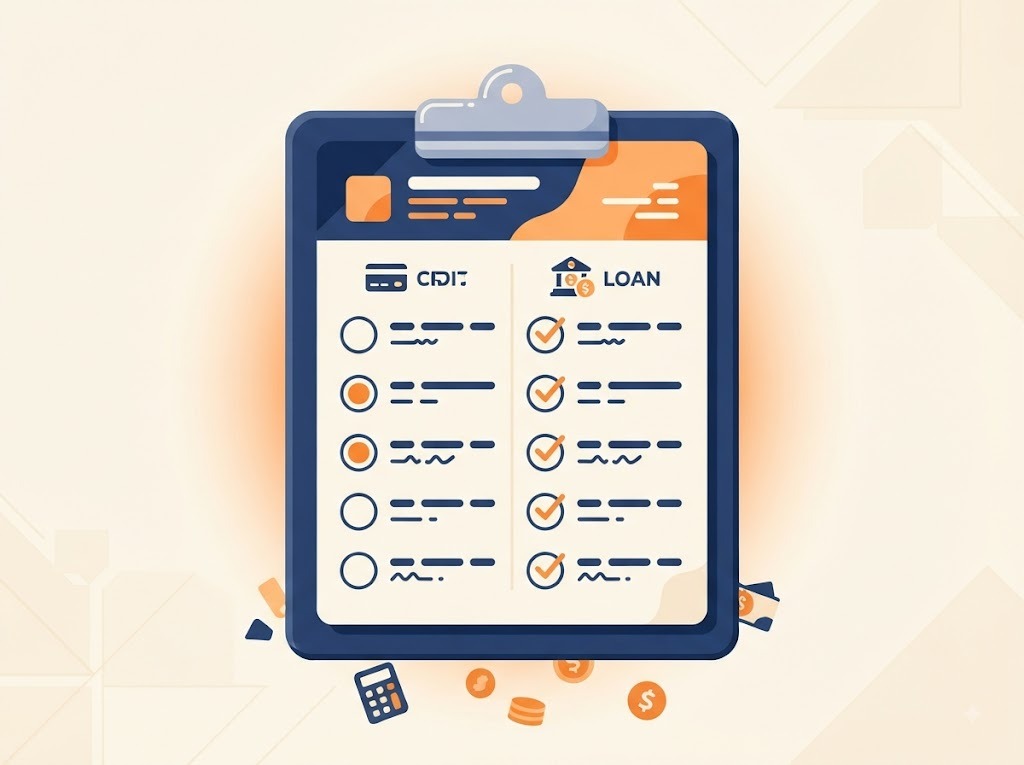
How Does RBL Credit Card Balance Transfer Work?
1. Check for a pre-approved offer, or apply directly. RBL extends this to select existing cardholders automatically, but you can also confirm eligibility through customer care if nothing's landed in your inbox.
2. Hand over the other card's details. Card number, issuing bank, and the amount you want moved.
3. RBL confirms tenure and rate. Pick from 3, 6, or 12 months, the applicable tenure, rate and fee are confirmed as part of the approved offer.
4. The amount converts to EMI. Once approved, it shows up as a fixed monthly instalment on your RBL card from that point on.
5. Keep paying the old card until the transfer actually reflects. The move isn't instant, so keep meeting the minimum due on your original card until you see the balance genuinely clear there.
Want the broader mechanics behind a card-to-card transfer, not just RBL's version? Our step-by-step guide to credit card balance transfers covers the general process in more depth.
How Does RBL Personal Loan Balance Transfer Work?
1. Compare your current rate against RBL's offer. This comparison is the whole point, if the gap doesn't cover the fees, the transfer probably isn't worth chasing.
2. Submit income proof and your existing loan statement. RBL needs to see both what you can repay and exactly what you're transferring.
3. RBL sanctions a new loan. Income, employment stability, credit history, all of it factors into the bank's own assessment.
4. The new loan pays off your old lender, subject to approval. The approved amount may be used to repay the existing lender, subject to RBL's process and the final loan terms. Once that's done, get written confirmation from your old lender that the account is actually closed, don't assume it automatically.
5. Repayment continues, now with RBL, on the new terms. From here it's just the new rate and tenure playing out. Not sure your profile even clears the bar for this kind of transfer? Our guide on personal loan balance transfer eligibility breaks down what lenders typically want to see.

What the Law Says
For applicable loan products, RBI's KFS framework requires lenders to provide prescribed cost information before the borrower enters into the loan.
Talk to FREED About Your OptionsRBL Balance Transfer: Fees, Interest and Limits
Real figures, cross-checked against RBL's own published terms, though bank policy on fees and rates has a habit of shifting quietly, so confirm before leaning on any of this.
Credit card transfer:
- Minimum amount: ₹5,000, maximum: up to 80% of your available RBL card limit.
- 3-month tenure: 0% interest, with a processing fee of ₹750 or 2.99% of the transferred amount, whichever's higher.
- 6-month tenure: roughly 12.42% effective annual rate, ₹499 processing fee.
- 12-month tenure: roughly 11.73% effective annual rate, ₹499 processing fee.
- Pre-closure charge: Pre-closure charge: 3% of the outstanding principal plus GST, if you clear the full balance before the tenure ends. (Confirm directly with RBL whether the same charge applies to a partial prepayment.)
Personal loan transfer:
- Lenders typically look at minimum income and work-experience criteria for a personal loan transfer, usually judged case by case rather than published as a fixed floor.
- Indicative rate depends heavily on your credit profile and the loan amount, confirm at application.
- Processing fee around 2% of the loan amount.
Freed Expert Tip
Ask RBL for the total cost in rupees, processing fee plus interest, not just the advertised monthly rate, before confirming either transfer.
Get a Free EMI AssessmentWhat Are Your Options Besides a Balance Transfer?
A balance transfer, either version, does its job well when you're dealing with one card or one loan and actually have a plan to pay it down. That's what it's built for, nothing more.
It runs out of road once you're juggling three or more loans or cards across different lenders. Moving one balance to RBL leaves the other two or three exactly where they were, each still pulling its own EMI on its own date. A single transfer barely dents your overall monthly burden in that scenario, no matter how attractive the new rate looks on that one account.
See If Consolidation Works Better for You
Free assessment, no pressure, no judgment.
Get a Free EMI AssessmentHow Does FREED Help If a Balance Transfer Isn't Enough?
Feature | Credit Card Balance Transfer | Personal Loan Balance Transfer |
Who it's for | RBL cardholders or new applicants transferring other card dues | Existing loan holders elsewhere wanting a lower RBL rate |
Minimum amount | ₹5,000 | Varies by lender's outstanding |
Tenure | 3, 6, or 12 months | 12 to 60 months typically |
Processing fee | ₹750 or 2.99% (3-month), ₹499 (6 or 12-month) | Around 2% of loan amount |
Documentation | Minimal for pre-approved customers | Income proof, ID, existing loan statement |
Rates and ranges shown are indicative. Final terms decided by the bank. FREED is not a Loan Provider. No outcome is guaranteed. Please verify directly with your bank.

Tips Before You Apply for an RBL Balance Transfer
- Total up the real cost, fee included, not just the headline rate. A 0% offer with a flat fee can end up costing more than a small ongoing rate with no fee, depending on your amount and tenure.
- Remember the tenure and rate lock in once confirmed. Little room to change course mid-transfer, so get the numbers right upfront.
- Hold onto proof the old account actually closed. That written confirmation protects you if there's ever a dispute over whether the balance genuinely moved.
- Don't miss an EMI while the transfer's in progress. Continue making the required payments until the transfer is confirmed, because a missed payment can negatively affect your credit profile.
Actually stuck comparing personal loan rates across several banks rather than settling on RBL specifically? Our roundup of personal loan balance transfer rates at various banks is worth a look first.

Sources
Claim in Blog | Source |
|---|---|
RBI's KFS framework requires lenders to provide prescribed cost/fee disclosure before the borrower enters into the loan | RBI/2024-25/18, DOR.STR.REC.13/13.03.00/2024-25, "Key Facts Statement (KFS) for Loans & Advances," April 15, 2024 rbi.org.in link |

Mohit Juneja
Mohit Juneja writes educational content at FREED on debt management, credit scores, loan repayment, and borrowing best practices. His content is shaped by expert insights and industry knowledge, helping readers better understand their financial options and make informed decisions.
mohit.juneja@freed.care

FREED is India's trusted loan management platform. Founded in 2020 and headquartered in Gurugram, FREED has counselled 20 lakh+ people on personal loans, credit cards, and app loans. FREED charges fees only on successful settlement, not upfront. FREED does not handle secured loans (home loans, car loans, gold loans).
Media Mentions