HDFC Balance Transfer: Credit Card and Personal Loan Options
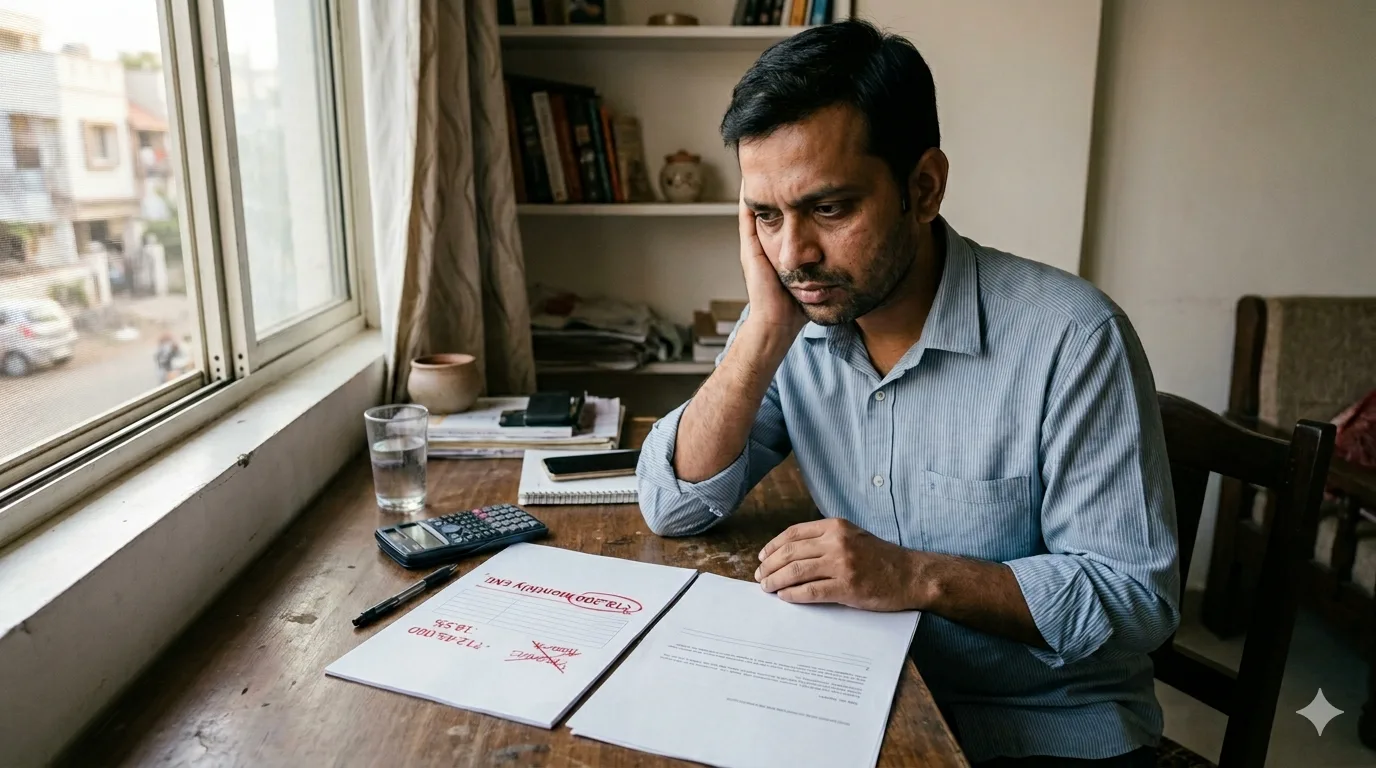
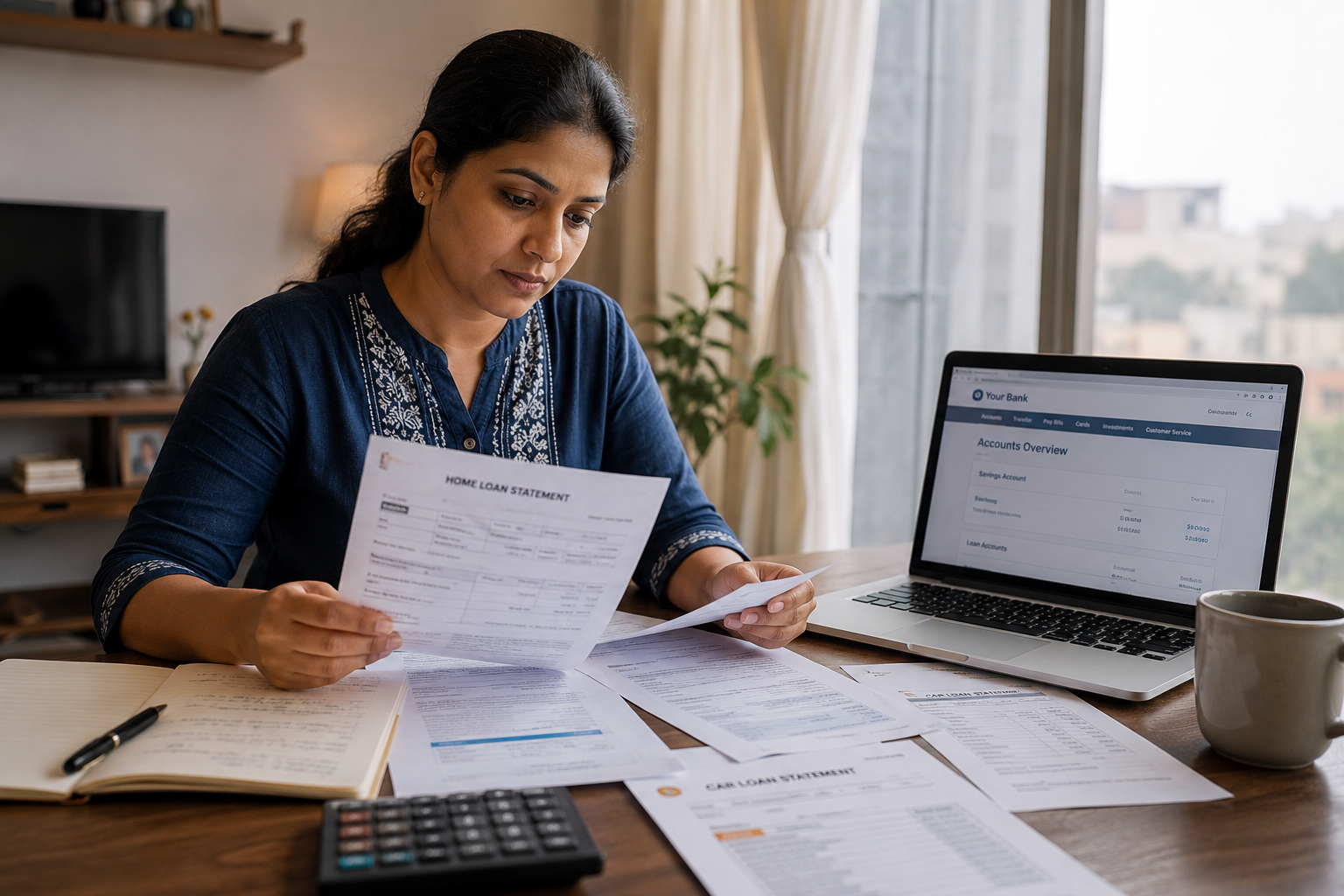
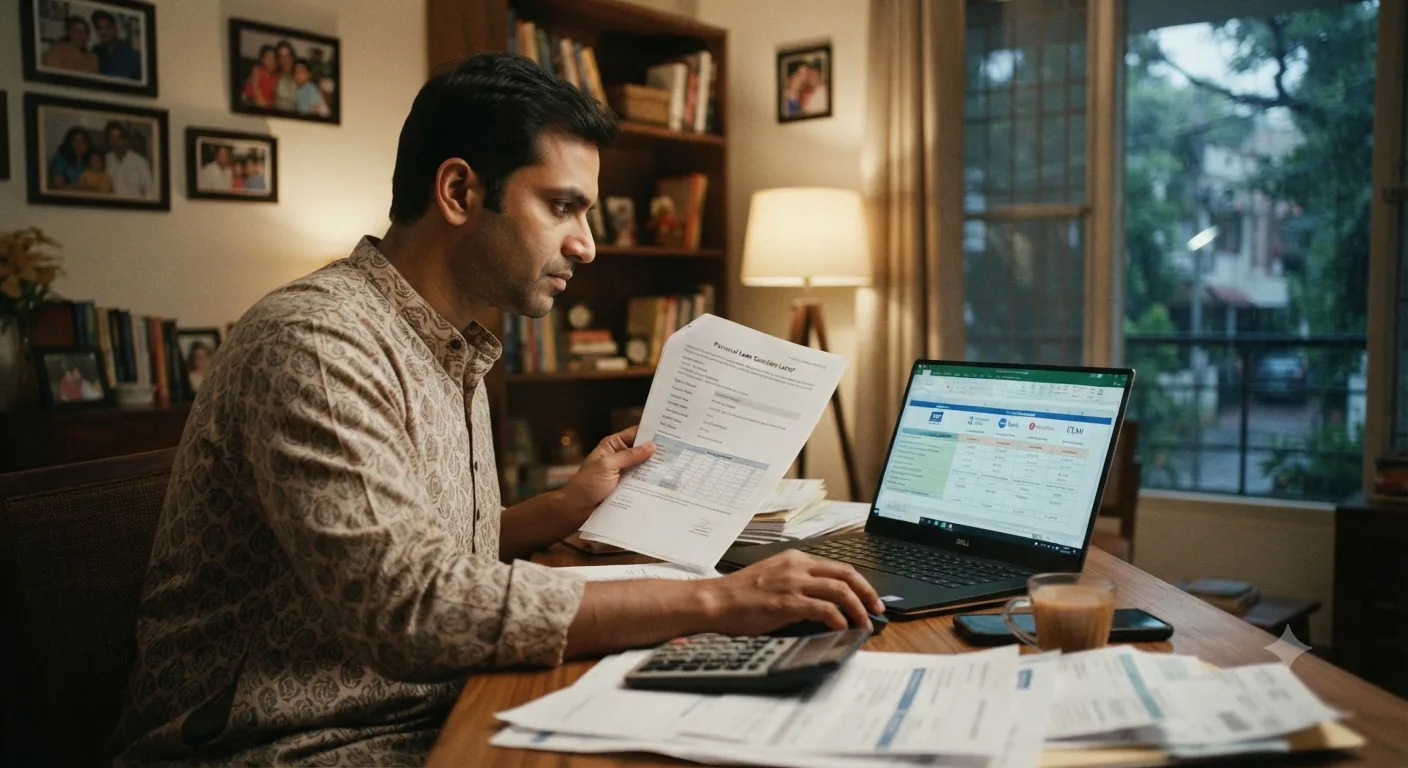
A balance transfer means moving what you owe, on a credit card or a personal loan, from one bank to another, usually to get a lower interest rate or better repayment terms. With HDFC, this can work either way: transferring an existing balance to HDFC, or moving an HDFC balance out to another lender. It doesn't reduce what you owe, it just changes who you owe it to and on what terms, and it's typically only available if your payments are still on track.

Mohit Juneja
Reviewed by FREED India, Debt Resolution Specialists
 4.7/5
4.7/5 ₹3,200Cr+
 20,000+
 20,00,000+4.7/5₹3,200Cr+20,000+20,00,000+
KEY TAKEAWAYS

HDFC balance transfer turns credit card dues into EMIs, sometimes as low as ₹27 per ₹10,000 outstanding.
Personal loan balance transfer to HDFC generally needs a CIBIL score of 720 or above.
Processing fee on credit card balance transfer runs about 1% of the amount, subject to a minimum charge.
Pre-closing an HDFC balance transfer loan early attracts a charge of around 3% of the outstanding principal.
A balance transfer only moves one loan at a time. Borrowers juggling several loans across different banks need a different fix
What Is HDFC Balance Transfer
HDFC balance transfer means moving an outstanding balance you owe elsewhere over to HDFC Bank, usually to get a better interest rate or an easier repayment plan. It works differently depending on what you are transferring. If it is a credit card outstanding, HDFC converts that dues amount into a fixed monthly EMI at a rate lower than your card's revolving interest. If it is a personal loan, HDFC sanctions a fresh loan in your name that pays off your existing loan with another bank, and you then repay HDFC instead, usually at a lower rate or better terms than before.
This is a bank facility, not a FREED product, and HDFC alone decides who qualifies and on what terms. On the credit card side, this offer is typically available only to select or pre-approved HDFC cardholders, so not every HDFC card user will see it on their account. On the personal loan side, it is open to external borrowers as well, as long as they meet HDFC's own income, employment, and credit score criteria. Either way, the decision on eligibility, rate, and tenure rests entirely with HDFC's internal policies, and these can change without much public notice.
Why Borrowers Look at an HDFC Balance Transfer
Most people considering a balance transfer are not in a crisis. They are current on every payment, but they have noticed something that bothers them, usually a friend or colleague mentioned getting a much better rate somewhere, or the EMI on one particular loan just feels heavier than it should for someone who pays on time every month.
A common trigger is the gap between credit card interest and personal loan interest. Credit card interest in India commonly runs between 36% and 42% per year, while HDFC's personal loan rates for a well-qualified borrower can start considerably lower. [writer to verify current rate band before publish] When someone realises they are paying premium interest on a card balance that could be repaid at a fraction of the rate through a personal loan or an EMI conversion, it naturally makes sense to look into moving it.
Another common trigger is simply noticing that one loan, among two or three, is costing far more than the others relative to its size. This reader is not behind on payments and is not in financial distress. They are simply looking to make their existing repayment more efficient, and a balance transfer is often the first, and sometimes the only, step they need.
Signs an HDFC Balance Transfer Makes Sense for You
A balance transfer works best for a specific kind of borrower. Before applying, check whether your situation actually fits.
It likely makes sense if:
- Your CIBIL score is 720 or above, since this is the range where most balance transfer approvals happen comfortably.
- You have only one or two active loans or cards, not a scattered mix of four or five.
- You have no missed EMIs in your recent repayment history.
- The rate gap between your current loan and HDFC's offered rate is at least 2 percentage points, since anything smaller may not cover the fees involved.
- Your remaining loan tenure is long enough that the interest you save over time clearly outweighs the processing and foreclosure charges you will pay upfront.
It likely does not make sense if:
- You are managing four or more loans or cards across different banks, since a single transfer only solves one piece of a larger problem.
- You have missed EMIs recently, which usually affects both your eligibility and the rate you are offered.
- Your remaining tenure on the old loan is very short, leaving little time for the interest savings to offset the transfer costs.
- Your CIBIL score sits well below the 720 mark HDFC typically looks for.
If most of the second list describes you, a balance transfer alone will not be enough, and it is worth reading the section further down on what else is available.
How HDFC Balance Transfer Works, Step by Step
Both flows follow the same broad shape, apply, get assessed, and have the old balance settled once approved, but the details differ for credit cards and personal loans.
Credit card balance transfer:
- Available only to existing HDFC cardholders with a pre-approved offer.
- Apply through net banking, the HDFC mobile app, or phone banking.
- No extra paperwork needed for most pre-approved customers.
- Outstanding balance typically reflects as a converted EMI plan within 2 to 4 hours of approval.
Personal loan balance transfer:
- Open to both existing HDFC customers and borrowers from other banks or NBFCs.
- Submit income proof, ID proof, and details of the existing loan to be transferred.
- HDFC assesses the application before sanctioning the new loan.
- Once sanctioned, HDFC disburses the amount, which is used to close the old loan with the previous bank.
- Tenure typically ranges from 12 to 72 months, depending on loan amount and profile.
The full numbered walkthrough for applying, comparing costs, and closing out the old loan follows right below.
How to Do an HDFC Balance Transfer, Step by Step
Step 1: Check Your Eligibility
See if HDFC has a pre-approved offer for you. Existing HDFC credit card holders can check through net banking, SMS, or phone banking, while personal loan applicants should first check their own CIBIL score and existing loan balance before applying, since this determines whether HDFC will even consider the transfer.
Step 2: Compare the Total Cost
Add up the processing fee, the foreclosure charge on your old loan, and applicable GST, then compare this total figure against what you are currently paying in interest. Comparing only the headline rate, without these added costs, can make a transfer look cheaper than it actually is.
Step 3: Submit the Balance Transfer Request
Provide your existing loan or card details online or through the HDFC app. Credit card transfers for pre-approved customers usually need no extra documents, while personal loan transfers require income proof and identity documents to be submitted along with the application.
Step 4: Confirm the Amount and Tenure
Review the eligible transfer amount, the tenure offered, and the resulting EMI carefully before confirming. Once the transfer is booked, the tenure and terms generally cannot be changed, so this is the point to double check everything.
Step 5: Track the Old Loan Closure
Collect a closure confirmation from your previous bank once the balance transfer goes through. This keeps your credit report accurate and prevents any confusion from duplicate billing on a loan that has technically already been paid off.

What the Law Says
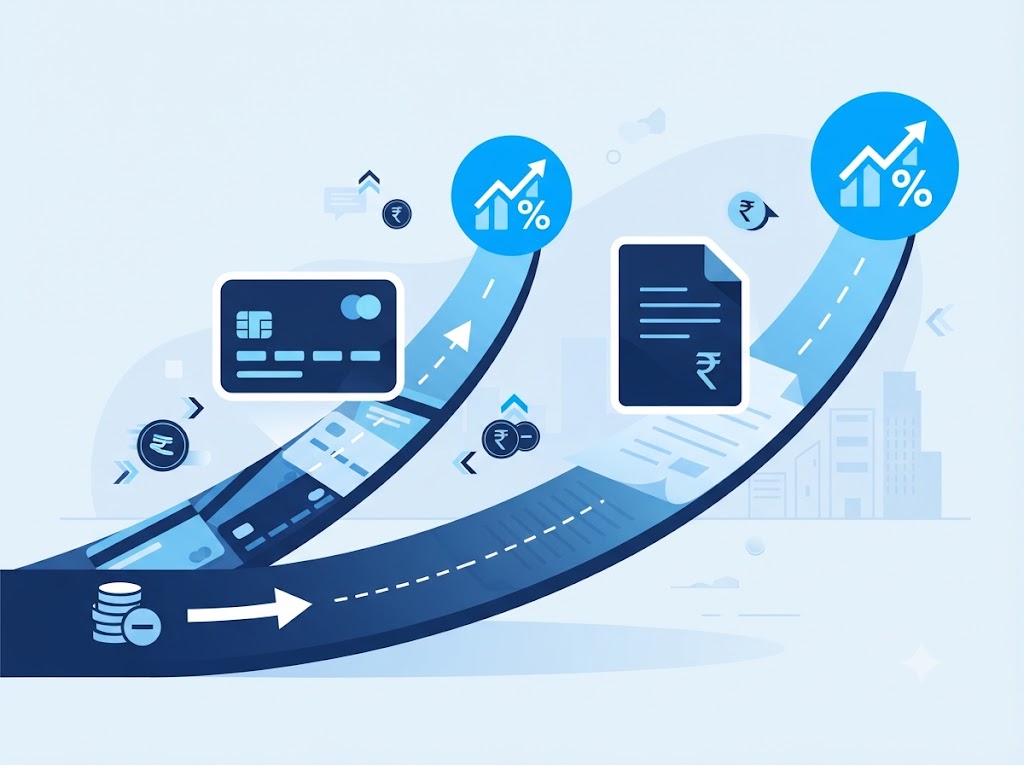
RBI's KFS (Key Fact Statement) requirement asks banks to share a clear, standardised summary of the true annual cost of a loan, including balance transfers, before the borrower signs.
See If Consolidation Fits You BetterHDFC Credit Card Balance Transfer vs Personal Loan Balance Transfer
Feature | Credit Card Balance Transfer | Personal Loan Balance Transfer |
Who it's for | Existing HDFC credit card holders | New or existing HDFC customers with an outstanding personal loan elsewhere |
Typical eligibility | Pre-approved or select customers | CIBIL 720 or above, existing loan of ₹50,000 or more [verify] |
Tenure | 9 to 48 months | 12 to 72 months |
Processing fee | Around 1% of transferred amount [verify current rate] | Flat fee, varies by profile [verify current rate] |
Pre-closure charge | Around 3% of outstanding principal [verify] | Varies, check current HDFC schedule |
Documentation | Usually none for pre-approved customers | Income proof, ID proof, bank statements |
Rates and ranges shown are indicative. Final terms decided by the bank. FREED is not a Loan Provider. No outcome is guaranteed. Please verify directly with your bank.
What Are Your Options if You Don't Qualify for HDFC Balance Transfer
A balance transfer is the right first step for someone with one loan and a decent credit profile. But it is not built to solve every situation, and it is worth knowing what comes next if it does not fit yours.
Each formal loan application creates a hard enquiry that future lenders may consider during credit assessments. The same applies if your debt is spread across three or more banks or NBFCs. A balance transfer only ever moves one loan at a time, so if you are juggling several EMIs on different due dates, moving just one of them barely changes your overall monthly burden.
This is exactly the situation debt consolidation is built for. FREED's Debt Consolidation Program may combine eligible unsecured debts into a single repayment, depending on the approved loan amount, tenure, and lender terms. FREED's Debt Consolidation Program exists specifically for borrowers in this position, still paying on time, but stretched thin across multiple accounts rather than one.
If you are unsure whether a balance transfer or consolidation fits your situation better, it is worth getting an assessment before applying anywhere, since a rejected application can affect your score more than a quick check would.


Not Sure if a Balance Transfer Is Enough?
Get a free assessment of your loans and options.
Start My Debt AssessmentHow FREED Helps If You Have Loans Spread Across Multiple Banks
If a single HDFC balance transfer will not cover your situation because you are managing loans or cards with three or more banks, FREED's Debt Consolidation Program is built to bring all of that down to one.
Here is what happens. You share your existing loans, credit card dues, and income details with FREED. FREED assesses your overall financial profile and matches you to a suitable bank or NBFC partner from its network, one capable of consolidating your specific mix of debts. That lending partner then disburses a single new loan, which instantly pays off all your existing eligible loans and credit card balances. From that point, you are left with one loan, one EMI, and one due date, instead of several scattered across different banks. Your CIBIL score is not damaged by this process, in fact it tends to improve over time as your accounts consolidate and your payments become regular on a single loan.
FREED charges a success-based fee, only once the consolidation is actually completed, so there is no upfront cost to explore whether you qualify.
Tips for a Smooth Balance Transfer

FREED Expert Tip
Always request HDFC's Key Fact Statement (KFS) before signing a balance transfer. It shows the true annual cost.
Read more on what a balance transfer loan means.Sources
Claim | Source |
RBI's Key Fact Statement (KFS) requirement for loan sanctions, including balance transfers | [LEGAL FLAG, reviewing team to verify and cite the specific RBI circular or Master Direction before publish; no working link confirmed at draft stage] |
Note: All HDFC-specific figures in this blog, credit card BT rate, processing fees, pre-closure charges, CIBIL 720 threshold, are current-affairs bank policy figures without a single codified regulatory source behind them, and each is marked [verify] in the body rather than listed here as sourced. Confirm every one of these against HDFC's live rate card before publishing.

Mohit Juneja
Mohit Juneja writes educational content at FREED on debt management, credit scores, loan repayment, and borrowing best practices. His content is shaped by expert insights and industry knowledge, helping readers better understand their financial options and make informed decisions.
mohit.juneja@freed.care

FREED is India's trusted loan management platform. Founded in 2020 and headquartered in Gurugram, FREED has counselled 20 lakh+ people on personal loans, credit cards, and app loans. FREED charges fees only on successful settlement, not upfront. FREED does not handle secured loans (home loans, car loans, gold loans).
Media Mentions