Low Credit Score Credit Cards: What Are Your Real Options?
Low-credit-score credit cards are secured, or FD-backed cards banks issue to people whose CIBIL score sits below 650, when regular unsecured cards get rejected. Instead of judging your credit history, the bank holds a fixed deposit as collateral. The card works like a normal credit card, and responsible use helps build your credit history over time.
Mohit Juneja
Reviewed by FREED India, Debt Resolution Specialists
 4.7/5
4.7/5 ₹3,200Cr+
 20,000+
 20,00,000+4.7/5₹3,200Cr+20,000+20,00,000+
KEY TAKEAWAYS

Low-credit-score credit cards (secured, FD-backed) work even below CIBIL 600.
Below 650 means rejection risk on regular cards. Below 600, a secured card is close to your only route.
Miss a card payment for 90+ days, and the loan is marked bad by the bank (NPA). The lender may begin its recovery process, and the account may affect your credit report.
A bounced cheque EMI can trigger Section 138 of the Negotiable Instruments Act, criminal complaint possible, up to 2 years jail or a fine of up to twice the cheque amount. NACH or ECS bounces take a different legal path, but the bank can still act.
What Counts as a Low Credit Score for a Credit Card?
Every bank looks at your score before deciding whether to trust you with a credit card. A score above 750 is considered good, and most banks approve regular cards without much friction. A score between 650 and 749 is fair. You may still get approved, but it depends on the bank's own rules and how they read the rest of your profile.
Below 650, things get harder. Most regular, unsecured credit cards start getting rejected at this point, because the bank sees more risk than it wants to carry. Below 600, your score is considered poor by most lenders, and a secured card, one backed by a fixed deposit (FD), becomes close to your only realistic route to getting a card at all.
Your CIBIL score is not the only number that matters. Equifax and Experian are the other two major credit bureaus active in India, and some banks check these instead of, or alongside, CIBIL. FREED works with both Equifax and Experian, so if you have ever wondered why two apps showed you two different scores, this is usually why.
None of this means your situation is fixed forever. A credit score is a snapshot of your past repayment behaviour, not a permanent label. It moves, in both directions, based on what you do next. That is exactly what the rest of this article will help you plan for.

Know Where Your Credit Score Really Stands
Score, what's hurting it, and what to fix, all in one check.
Check Your ScoreWhy Do Low Credit Scores Happen?
A low score rarely comes from one bad day. It usually builds up over a few months, sometimes without the person even noticing until they get rejected for something.
- Missed or late EMI and card payments. A few payments slipping over several months, even by a week or two, add up faster than most people expect. It is one of the most common reasons scores fall.
- High credit utilisation. Using more than 30% of your card limit regularly signals to lenders that you may be stretched. This drags the score down even when every bill eventually gets paid.
- Too many hard inquiries in a short span. Every time you apply for a new loan or card, the lender pulls your report. Several applications within a few months make you look like you are searching for credit you cannot get elsewhere.
- Thin or no credit history. If you have never taken a loan or held a card, there is simply no repayment history for the bureau to score you on. Banks read "no data" almost the same way they read "risky."
None of this is a character flaw. These are patterns, and patterns can be read, understood, and changed. The next step is figuring out where you actually stand right now, before you apply for anything new.
Signs Your Credit Score Needs Attention Before You Apply
Before applying for any card, run through this quick self-check. If two or more of these sound familiar, a regular unsecured card is likely to get rejected, and a secured card is the more realistic starting point
- You have applied for 2 or more cards recently and have been turned down each time.
- Your credit utilisation has stayed above 30% for several months in a row.
- You have missed at least one EMI or card payment in the last 12 months.
- You have no credit history at all, no past loans, no past cards.
One important distinction: if you are already 90 or more days overdue on an existing card, that is a different problem than simply having a low score. Applying for a new card will not fix an existing overdue balance, and it usually makes things worse. That situation is covered later in this article.
This list is a self-check, not a verdict. It just tells you which door to walk through first.
How to Get a Credit Card With a Low Credit Score
This is general, informational guidance. It applies whether or not you ever use FREED for anything else.
- 1
Check your score first.
Most banks and the CIBIL and Experian apps let you check your score for free. Knowing your exact number, not a guess, tells you which cards are realistic and saves you a wasted, rejected application.
- 2
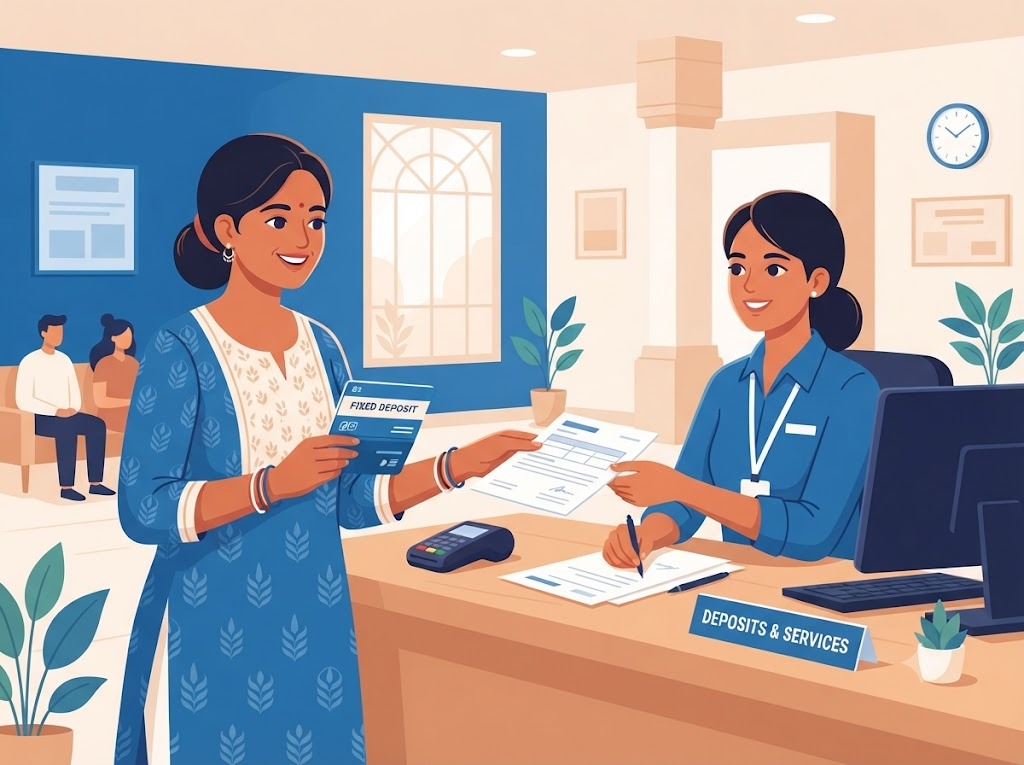
Pick a secured or FD-backed card as your most reliable route.
At a low score, this is the option with the highest approval chance, because the bank's risk is covered by your own deposit rather than your credit history.
- 3
Open a fixed deposit in a range you are comfortable locking away.
Most banks set your credit limit at 70% to 90% of your FD value. So a ₹50,000 FD could get you a card with a ₹35,000 to ₹45,000 limit, depending on the bank's own policy.
- 4
Look at alternate routes if a secured card is not workable for you.
An add-on card under a family member's account, or a student or salary-account card if you qualify, can also work without needing a fresh credit check on you specifically.
- 5
Use the card responsibly before applying for an unsecured card.
Responsible use and timely repayments help build your credit history over time. The pace at which this is reflected depends on your individual circumstances and lender reporting.
Secured Card vs Regular Card vs Add-On Card
Card Type | Collateral / Basis | Typical Limit | Builds Credit History |
Secured / FD-backed | Fixed deposit | 70% to 90% of the FD value | Yes |
Add-on card | Family member's account | Same as the primary card | Sometimes, depends on the bank |
Student card | College enrolment | ₹10,000 to ₹50,000 | Yes |
Salary-account card | Existing bank relationship | Based on salary | Yes |
No single option here is "the best." A secured card gives the most control and the most predictable approval odds, since your own deposit is the collateral. An add-on card needs no application of your own but depends entirely on someone else's account standing. Student and salary-account cards skip the credit check but usually offer smaller limits. Which one fits depends on what you have access to right now, not which sounds better on paper.
Know Where Your Credit Score Really Stands
Score, what's hurting it, and what to fix, all in one check.
Check your score nowWhat Are Your Options If a Low Score Is Already Due to Credit Card Debt?
There are actually two very different readers looking for this answer, and the right next step depends entirely on which one you are.
If your low score came from a rough patch, and your income is stable now, everything covered above applies to you. A secured card, used responsibly, is a reasonable way back to a healthier score and eventually an unsecured card again.
If your low score exists because your existing card debt has become too heavy, and your EMIs or minimum-due payments are already eating into your salary, a new card is the wrong tool here. It does not solve the underlying problem, and it usually adds a second debt on top of the first one, making the recovery harder, not easier.
In that second situation, the real question is not "which card can I get," it is "can I still repay what I owe?" If you are still managing your EMIs, even with real effort, that points toward debt consolidation, where eligible debts may be combined into a single repayment plan through a lending partner. The final EMI depends on the loan terms offered. If repaying in full has genuinely become difficult, no matter how you rearrange your budget, that points toward loan settlement instead.
One more thing worth being clear about: applying for a new card with an active default already on your existing card is not a viable fix, and most banks will reject it outright once they see the overdue account on your report. This is the point where it helps to look at your whole situation, not just the credit card in isolation, before deciding what to do next.

What the Law Says
A bounced cheque EMI can trigger Section 138 of the Negotiable Instruments Act, 1881, criminal complaint possible, up to 2 years jail or a fine of up to twice the cheque amount. NACH or ECS bounces take a different legal path, but the bank can still act on those separately.
Learn What Happens After an EMI BounceHow FREED Helps
Where FREED fits into this depends entirely on which situation from the section above matches you. These two paths are separate, and neither one is the right answer for both readers.
If you are working on building your score, with no active debt problem, FREED's Credit Insights subscription get a flat 50% off on subscription, or you can avail the subscription at flat 50% off and pull your report from Experian. It gives you your score, a clear read on the factors affecting your credit profile, and step-by-step recommendations you can act on immediately. It is available to everyone, whether or not you have ever used any other FREED product, and there is no minimum score or income needed to subscribe. If your goal right now is simply to understand your number and improve it before your next card application, this is the place to start.
If your card debt has become too heavy to manage on your own:
If you are still paying, but stretched thin across multiple cards and EMIs, FREED's Loan Consolidation Plan (also called the Debt Consolidation Program, or "Reduce My EMI") matches you to a lending partner from FREED's network. That partner disburses one new loan that pays off all your existing card dues and personal loans at once. You are left with one loan, one lender, one EMI, on one date, and one lender and one EMI. The final loan terms depend on the lending partner's assessment. The impact on your credit profile depends on your repayment behaviour and individual circumstances. Because you are moving to regular, on-time payments on a single account, your CIBIL score actually starts to improve after consolidation, not the other way around.
If repaying in full has genuinely become impossible, no matter how the numbers are rearranged, FREED's Loan Settlement Plan (also called the Debt Resolution Program, or "Settle My Loans") is the other path. Settlement is not something a borrower chooses out of preference. Banks and financial companies only consider it when you are in genuine financial difficulty and truly unable to repay the full amount. FREED assesses your full situation, builds a monthly savings plan around what you can realistically manage, and negotiates with your bank once that fund, called the SPA, has built up enough. FREED helps eligible borrowers settle unpaid or overdue loans at up to 50% less. Once a card or loan account is settled, the account is generally reported as "Settled" on your credit report, which may affect future borrowing decisions. That is a real trade-off, and it is one FREED explains clearly before you commit to anything.
These two paths are never the same choice for the same person. If you can still pay, consolidation is the fix. If you genuinely cannot, settlement is. FREED's counsellors can also assess your situation on a free call if you are unsure which one applies to you.
Rates and ranges shown are indicative. Final terms decided by the bank. FREED is not a Loan Provider. No outcome is guaranteed. Please verify directly with your bank.
Are You in a Loan Trap? Quick Check
Move the slider to your total EMIs as a % of monthly salary. See your debt stress level instantly.
EMIs as % of Monthly Salary
Tips to Build Your Score While Using Any Credit Card
- Pay the full amount, not just the minimum due. Paying only the minimum keeps interest piling up on the rest, and that rolling balance is one of the biggest drags on your score over time.
- Keep utilisation under 30% of your limit. If your limit is ₹50,000, try to keep your outstanding balance under ₹15,000 at any point in the billing cycle.
- Avoid applying to multiple banks in a short window. Each application creates a hard inquiry, and several inquiries close together can pull your score down even if every application would have been approved on its own.
- Set up auto-debit for at least the minimum due, so a payment never slips because of a busy week or a forgotten date.
- Check your score every few months, not just when you need a new card. This catches reporting errors early, before they cost you an approval.
None of this needs to happen overnight. A score that dropped over several months usually recovers over several months too, with steady, boring, consistent habits. That is genuinely all it takes.
Sources
Claim | Source |
Bounced cheque EMI can trigger Section 138 NI Act, up to 2 years jail or fine up to 2x cheque amount |
Note: Bank-specific figures (FD-to-limit ratio, minimum FD amounts, student card limits, score-band cutoffs, 3–6 month improvement window) are industry conventions, not tied to any RBI circular or bureau-published document, and are intentionally left out of this table. Their body wording is softened ("typically," "usually," "varies by bank"). The writer must verify current bank-specific figures with issuing banks before publishing.

Mohit Juneja
Mohit Juneja writes educational content at FREED on debt management, credit scores, loan repayment, and borrowing best practices. His content is shaped by expert insights and industry knowledge, helping readers better understand their financial options and make informed decisions.
mohit.juneja@freed.care

FREED is India's trusted loan management platform. Founded in 2020 and headquartered in Gurugram, FREED has counselled 20 lakh+ people on personal loans, credit cards, and app loans. FREED charges fees only on successful settlement, not upfront. FREED does not handle secured loans (home loans, car loans, gold loans).
Media Mentions