Loans for 650 Credit Score: Rates, Options, and Should You Wait
Loans for 650 credit score are personal, secured, or NBFC (non-banking finance company) loans available to borrowers in the fair score band. Borrowers with stronger credit profiles generally receive more competitive pricing, although rates vary by lender.

Mohit Juneja
Reviewed by FREED India, Debt Resolution Specialists
 4.7/5
4.7/5 ₹3,200Cr+
 20,000+
 20,00,000+4.7/5₹3,200Cr+20,000+20,00,000+
Key Takeaways

Loans for a 650 credit score are available from most NBFCs and some banks, though approval odds tend to be lower than at 700+, as indicative market practice that varies by lender and borrower profile.
A 650 score often means a higher interest rate than what a 750+ borrower pays, with the actual gap depending entirely on the individual lender's
Secured loans like gold, FD, or car loans are easier to get at 650, since collateral lowers the lender's risk.
Waiting 3 to 6 months to push the score past 700 can meaningfully lower the total interest you pay.
If multiple existing EMIs are what's holding the score at 650, consolidating them may help more than a new loan.
What does a 650 credit score mean for a loan?
A CIBIL score of 650 falls in what's commonly referred to as the fair band, generally somewhere between 640 and 699, though exact band definitions can vary by lender. As general market guidance rather than an official classification, it's typically seen as a step above the poor band, often below 600, and a step below the good band, often starting around 700.
At 650, you're not shut out of the lending market. Most NBFCs and a fair number of banks will still look at your application. What changes is the terms. Lenders read a fair score as moderate risk, not high risk, so they'll ask for more income proof, offer a smaller loan amount, or price the loan higher to cover their side of the risk.
This is different from being rejected outright, which is more common below 600. At 650, the door is open. It just doesn't open to the best room in the house. Think of it as walking in with a slightly higher cover charge rather than being turned away at the entrance.
Which loans are easiest to get at a 650 score?
Not every loan type treats a 650 score the same way, and the gap between secured and unsecured lending is the biggest factor here.
- 1
Secured loans are the easiest to get.
Secured loans are the easiest to get. A gold loan, an FD-backed loan, or a car loan gives the lender something to fall back on if you default, so your score matters less to their decision. Secured loans are often easier to obtain because collateral reduces the lender's risk, although approval timelines vary.
- 2
Unsecured loans
mainly personal loans and credit cards, sit at the other end. Since the lender has nothing to recover if you stop paying, your score carries more weight. At 650, you'll likely still get approved by an NBFC, but expect a smaller sanctioned amount, a shorter tenure, and a rate well above what a 750+ applicant sees.
- 3
Home loans
Home loans are a middle ground. Because the property itself acts as collateral and the loan amount is large enough that lenders run a more detailed check, a 650 score is often still workable, though you may be asked for a co-applicant or a slightly higher down payment.
What does a loan at 650 actually cost you?
This is where the score gap turns into a rupee gap, and it's larger than most borrowers expect.
At a 650 score, unsecured personal loan rates typically run 14% to 24%. At 750 and above, the same loan type usually comes in at 10% to 12%. That's a spread of anywhere from 2 to 14 percentage points, depending on the lender and your income profile.
Here's what that looks like in practice. On a ₹3,00,000 personal loan over 3 years, a rate of 12% works out to roughly ₹9,970 a month. The same loan at 20% pushes the EMI to around ₹11,150 a month. Over the full tenure, that difference adds up to close to ₹42,000 in extra interest, just for having a lower score at the time of applying.

FREED Expert Tip
If your need isn't urgent, run the numbers first. If the borrowing need is not urgent, improving your credit profile before applying may help you qualify for more competitive loan terms. The gap narrows on secured loans, since collateral already lowers the lender's risk regardless of score, but it never fully disappears. A 650 score still costs you something, even on a gold loan, it's just a smaller something.
Check what's holding your score backHow to apply for a loan with a 650 credit score
- 1
Check your full credit report for errors first.
An incorrect entry may affect how future lenders assess your credit profile. Pull your report and check every line before you apply anywhere.
- 2
Decide secured versus unsecured based on what you have.
If you own gold, hold a fixed deposit, or have a vehicle you can pledge, start there. It's faster to get approved and cheaper to repay than an unsecured loan at the same score.
- 3
Compare the total repayment cost, not just the EMI.
Two lenders can quote similar EMIs while charging very different processing fees or foreclosure charges. Ask for the total amount payable over the full tenure before you sign.
- 4
Consider a co-applicant with a stronger score, if one is available.
A co-applicant with a stronger credit profile may improve eligibility, subject to the lender's assessment.
- 5
Avoid applying to several lenders at once.
Each formal loan application creates a hard enquiry that future lenders may consider during credit assessments. Space out applications instead of firing off five in a week.
What the Law Says
Under RBI's Fair Practices Code, every lender must disclose the interest rate and all charges in writing before you sign a loan agreement.
Not sure if your loan offer is fully disclosed?Should you borrow now or wait to improve your score first?
There's no single right answer here, it depends on how urgent the need is.
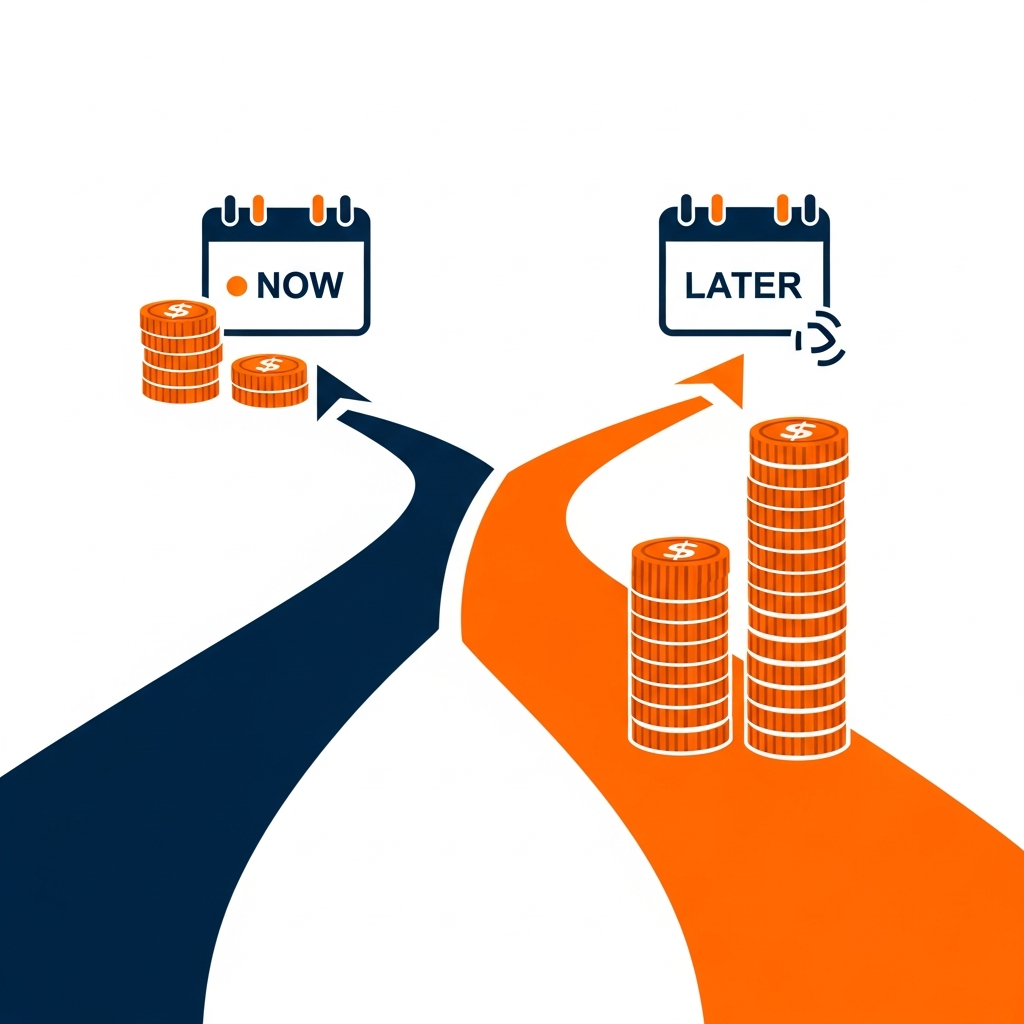
If the loan is for something that can't wait, medical treatment, a pending EMI on another loan, rent that's overdue, then borrowing now at 650 is a reasonable call. The higher rate is a real cost, but so is the cost of delaying something urgent.
If the need has some flexibility, even a month or two, the maths often favours waiting. As an illustrative example, moving from 650 to 700+ can involve several months of disciplined repayment and lower card usage, and lenders in that higher band often offer noticeably better rates than in the 650 range. On a mid-sized loan, that kind of shift can translate into a meaningful saving over the life of the loan, though the actual numbers depend entirely on your lender, loan type, and how your score moves.
The table below lays out what changes at each score band, so you can see roughly where you'd land either way.
Are You in a Loan Trap? Quick Check
Move the slider to your total EMIs as a % of monthly salary. See your debt stress level instantly.
EMIs as % of Monthly Salary
Comparison: what changes across credit score bands
Credit Score Band | Typical Personal Loan Rate | Approval Odds | Best Loan Type at This Band |
Below 600 | 24% to 36% | Low | Secured loans only, mostly |
600 to 649 | 18% to 26% | Moderate, stricter terms | Secured or NBFC unsecured |
650 to 699 | 14% to 24% | Reasonable with income proof | NBFC personal loans, gold, car |
700 to 749 | 11% to 16% | Good | Most bank personal loans |
750 and above | 10% to 12% | Best | Full range, best terms |
Read this as a rough map, not a quote. Your actual rate depends on income, existing EMIs, and the specific lender's internal policy, but the pattern holds: every jump of roughly 50 points tends to open up cheaper credit and more lenders willing to say yes.
Rates and ranges shown are indicative. Final terms decided by the bank. FREED is not a Loan Provider. No outcome is guaranteed. Please verify directly with your bank.
What if multiple loans are the reason your score is stuck at 650?
For a lot of borrowers sitting at 650, the score isn't stuck because of one bad decision. It's stuck because of several EMIs running at once, high card usage across two or three cards, and due dates that never quite line up.
A new loan doesn't fix this. Taking on additional borrowing increases your repayment obligations and may influence how future lenders assess your overall credit profile.
Consolidating the existing loans into one is usually the more useful move here. Debt Consolidation may combine eligible debts into a single repayment, depending on the approved loan terms.

Multiple EMIs Keeping Your Score at 650?
See if consolidation can lower your EMI and lift your score.
Check My Consolidation EligibilityHow FREED helps if multiple loans are keeping your score at 650
FREED's Debt Consolidation Program is built for exactly this situation, a borrower who's still paying every EMI on time but is managing too many of them at once.
FREED first looks at your full financial picture, your existing loans, your income, and your current EMI load. Based on that assessment, FREED matches you to a lending partner from its network. That partner disburses one new loan, which pays off your existing eligible loans and card dues instantly. Eligible debts may be consolidated into a single repayment, depending on the approved loan amount, tenure, and lender terms.
This is a preventative step, not a rescue step. It's built for borrowers who haven't defaulted, who are current on payments but stretched thin enough that one unexpected expense could tip things over. FREED charges a success-based fee, meaning you only pay once the consolidation goes through.
If your situation is different, if you've already missed several EMIs or genuinely can't repay what you owe, that's a separate conversation. FREED's team can assess your specific case and point you to the right option for that stage.

What helps before you take a loan at this score
A few habits, done before you apply, change the outcome more than most borrowers expect.
- Check your report for errors. A single incorrect entry may affect how lenders assess your credit profile without your knowledge. It costs nothing to check and can be corrected with the bureau directly.
- Calculate the total repayment cost, not just the EMI. Two loans with the same monthly payment can differ by tens of thousands of rupees over the full tenure once processing fees and charges are factored in.
- Keep your credit utilisation below 30% on every card before you apply for anything new. High utilisation on even one card can outweigh a good repayment history elsewhere.
- Be honest with yourself about urgency. If the need can genuinely wait a few months, the wait often pays for itself. If it can't, borrow at 650 with clear eyes on what it costs, and treat improving the score as the next project once the loan is in place.

Mohit Juneja
Mohit Juneja writes educational content at FREED on debt management, credit scores, loan repayment, and borrowing best practices. His content is shaped by expert insights and industry knowledge, helping readers better understand their financial options and make informed decisions.
mohit.juneja@freed.care

FREED is India's trusted loan management platform. Founded in 2020 and headquartered in Gurugram, FREED has counselled 20 lakh+ people on personal loans, credit cards, and app loans. FREED charges fees only on successful settlement, not upfront. FREED does not handle secured loans (home loans, car loans, gold loans).
Media Mentions