Loan Settlement Calculator: Estimating Your Waiver First
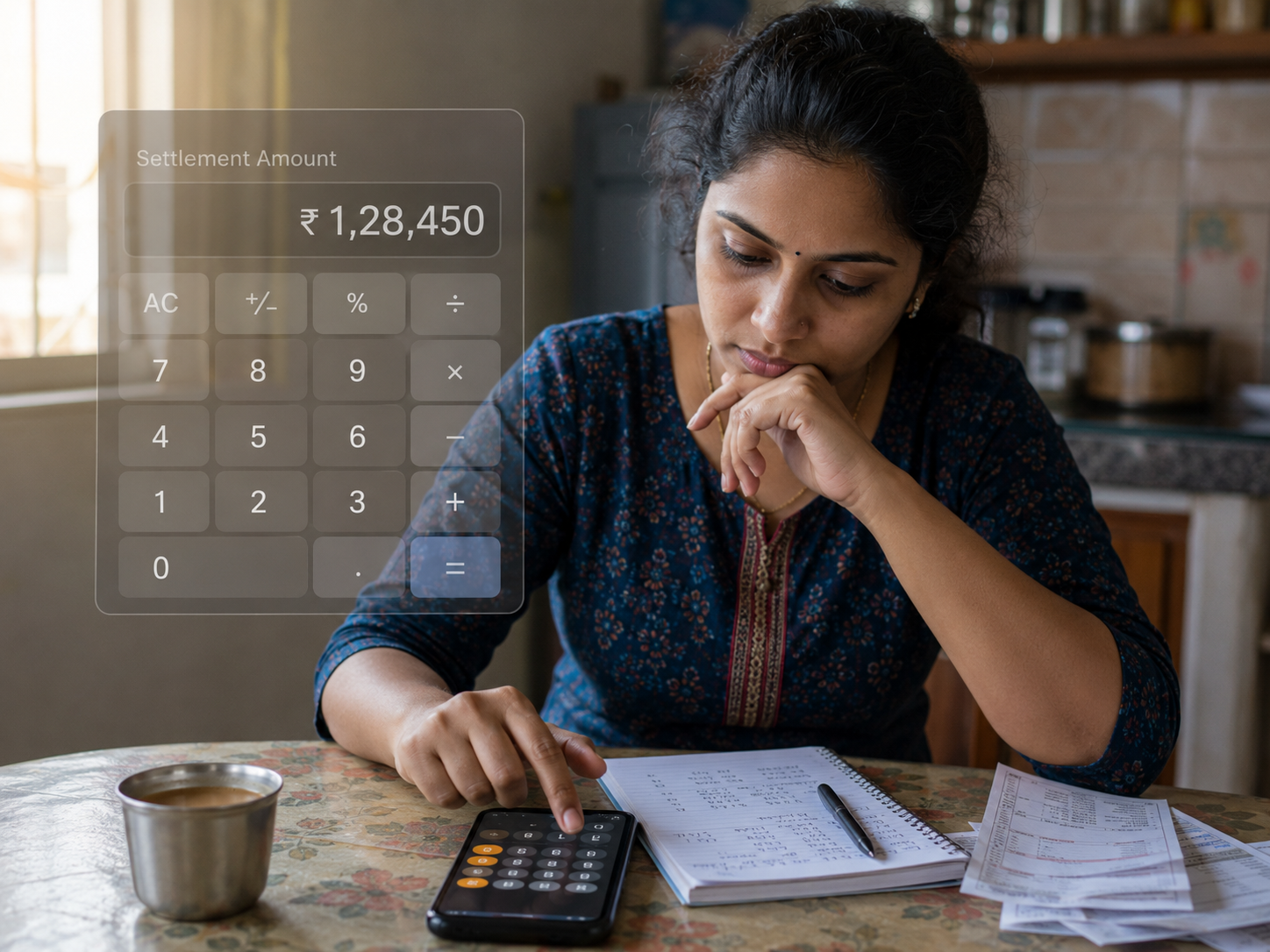
A loan settlement calculator gives a ballpark estimate of what you might pay to close an overdue loan through a one-time settlement, based on your outstanding balance, accrued interest, fees, and a typical waiver range. It's a starting point for negotiation, not a guaranteed offer, the bank decides the final figure.
Mohit Juneja
Reviewed by FREED India, Debt Resolution Specialists

 4.7/5
4.7/5 ₹3,200Cr+
 20,000+
 20,00,000+4.7/5₹3,200Cr+20,000+20,00,000+
KEY TAKEAWAYS

A loan settlement calculator estimates your likely payoff using outstanding principal, interest, fees, and an indicative waiver percentage.
FREED helps borrowers settle unpaid or overdue loans at up to 50% less*, the exact figure ultimately depends on the bank.
How long an account has been overdue is one of the biggest factors moving the estimate, longer default periods generally mean a larger possible waiver.
Documented genuine hardship (job loss, medical emergency) tends to support a stronger negotiating position than an undocumented request.
The "Settled" status stays on your CIBIL report for up to 7 years regardless of how favourable the waiver was.
What Does a Loan Settlement Calculator Actually Estimate?
A loan settlement calculator estimates what you might pay if a lender agrees to a one-time settlement (OTS) on an overdue loan. A calculator can use your outstanding balance and an assumed settlement percentage to illustrate what different settlement scenarios could look like.
Put those together and you get a ballpark figure, not a quote. That's an important distinction. The bank hasn't seen your account yet. It hasn't looked at how long you've been overdue, whether you have documented proof of hardship, or its own internal appetite for settling accounts like yours this quarter. All of that shapes the real number, and none of it fits inside a calculator.
Think of the estimate as a planning number. It tells you roughly what range to expect so a conversation with your bank doesn't start from zero. It doesn't tell you what your bank will actually agree to.
That gap between "estimate" and "actual offer" is where most of the confusion happens, and it's worth understanding properly before you rely on any number a calculator gives you. The next section walks through what genuinely moves that estimate, and by how much.

See Where You Stand
A quick, free look at your account before you run any numbers yourself.
Check My OptionsWhat Actually Moves Your Settlement Estimate Up or Down?
Factor | Tends to Support a Larger Waiver | Tends to Support a Smaller Waiver |
Time in default | Well past 90 days, further into NPA | Recently overdue, early-stage |
Documentation | Clear hardship proof (job loss, medical) | Undocumented or unclear reason |
Prior negotiation | First settlement request | Repeated requests or prior settlement on record |
These are general patterns, not guarantees. Settlement decisions are account-specific and subject to the lender's applicable policy and approval process.
See What This Could Mean for Your Account
A FREED counsellor can walk through your specific timeline and documentation, free of charge.
Talk to FREEDHow to Use the Estimate Without Over-Relying on It
Use the number to set your own expectations, not to walk into a negotiation with a fixed figure in mind. Knowing roughly what range is realistic helps you avoid two mistakes: expecting far more than any bank will offer, or accepting the first low number out of relief that someone's finally talking to you.
Don't quote your estimate to the bank as if it's a starting demand. Banks assess each account on its own, and a number pulled from a generic calculator carries no weight in that assessment. If anything, leading with a specific figure can make a conversation feel adversarial before it's even started.
The bank's actual offer may differ significantly from the estimate That's not a sign the calculator was wrong or that something went sideways in your case. It just means the bank weighed factors the calculator never had access to in the first place.

Freed Expert Tip
Treat the calculator result as your private planning estimate, not as a guaranteed negotiation benchmark. Use it privately to judge whether an offer sounds fair, and let your documentation and the bank's own process do the actual work. Compare it against FREED's other settlement calculator if you want a second reference point.
Talk to FREED's Team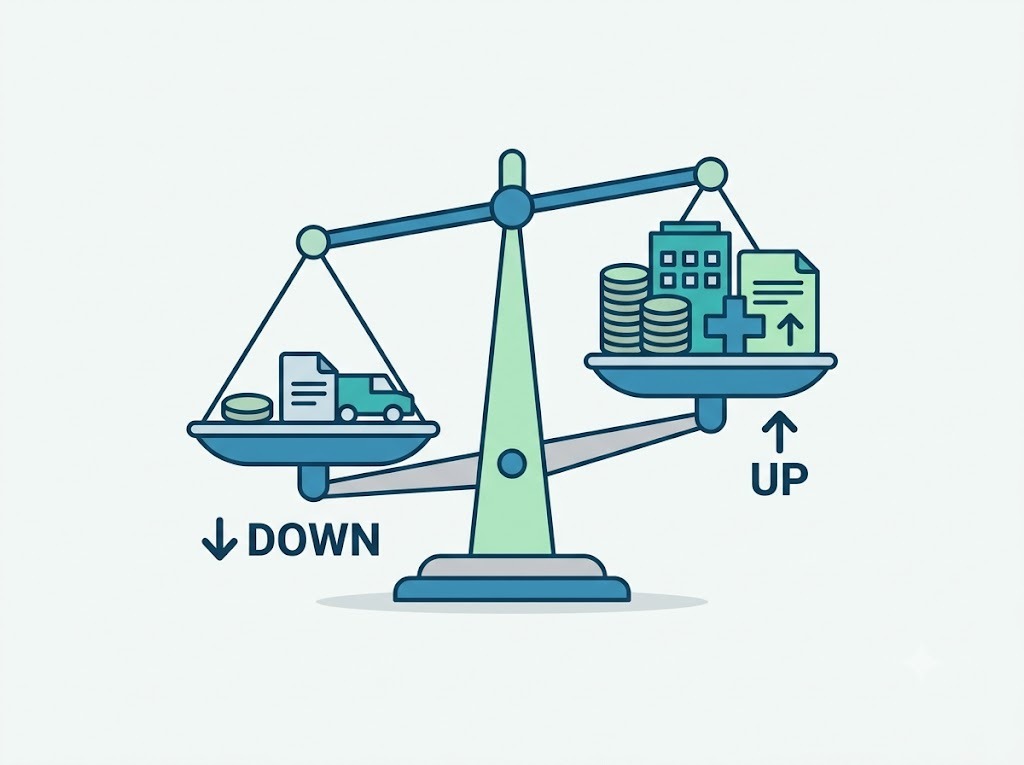
What Happens After the Estimate, Before You Get a Real Offer?
An estimate is the first step, not the process itself. Getting to an actual, written offer still takes real work: gathering your hardship documentation, a formal settlement request to the right team at your bank (not general customer care), rounds of back-and-forth negotiation, and finally the bank's own sign-off under its internal, board-approved settlement policy.
None of that happens automatically once you've run a calculator. A settlement can be reported as 'Settled' rather than 'Closed', and that status can negatively affect future access to credit. Credit information is retained by CIBIL for at least seven years under the applicable legal framework. The size of the waiver does not by itself change how the account is reported as settled.
This is why the estimate matters less than what you do with it. A good number on a calculator screen doesn't settle anything by itself. What actually closes the account is documentation, a formal request, and someone on the other end of the negotiation who knows what a credible case looks like.

How FREED Turns an Estimate Into an Actual Settlement
Settlement is not something a borrower chooses out of preference. A settlement is generally considered when full repayment is not realistically achievable and the lender's applicable policy allows a compromise settlement. FREED's Loan Settlement Plan, also called the Debt Resolution Program (DRP) or "Settle My Loans," starts from the same kind of estimate this calculator gives you, and then does the work of turning that ballpark figure into something real.
That work looks like this: FREED reviews your full financial picture and helps put together the hardship documentation a bank actually takes seriously. You build a settlement fund over time through a structured monthly savings routine, held in your own name in a Special Purpose Account, not paid to FREED directly. Once that fund is ready, FREED negotiates with your bank on your behalf, and every settlement is confirmed with you before any payment goes out.
FREED has counselled over 20,00,000 customers and separately managed more than ₹3,200 crore in debt two different measures, not the same figure restated. In debt through this and its other programs, helping accounts move from estimate to a signed settlement letter. The fee is success-based, charged only once a settlement is actually completed- nothing upfront.
The calculator gets you a starting number. Getting an actual offer in writing is the harder part, and that's the part FREED's counsellors handle.
Talk to a FREED Counsellor
Turn your estimate into a real offer. 15 minutes, no pressure.
Book My Free Call
Mohit Juneja
Mohit Juneja writes educational content at FREED on debt management, credit scores, loan repayment, and borrowing best practices. His content is shaped by expert insights and industry knowledge, helping readers better understand their financial options and make informed decisions.
mohit.juneja@freed.care

FREED is India's trusted loan management platform. Founded in 2020 and headquartered in Gurugram, FREED has counselled 20 lakh+ people on personal loans, credit cards, and app loans. FREED charges fees only on successful settlement, not upfront. FREED does not handle secured loans (home loans, car loans, gold loans).
Media Mentions