Why Does Your Credit Report Say 'Insufficient Number of Accounts'? (And How to Fix It)
A 23-year-old applies for her first credit card, gets rejected, and pulls her CIBIL report expecting to find something wrong. Instead, she finds "an insufficient number of accounts" sitting where a score should be. It's not a bad score; it's no score at all yet. Here's exactly what triggers this message and the real timeline to fix it.

Mohit Juneja
Reviewed by FREED India, Debt Resolution Specialists
 4.7/5
4.7/5 ₹3,200Cr+
 20,000+
 20,00,000+4.7/5₹3,200Cr+20,000+20,00,000+
KEY TAKEAWAYS

This message means CIBIL can't generate a score, not that your score is low. A thin file and a bad score are two different things entirely.
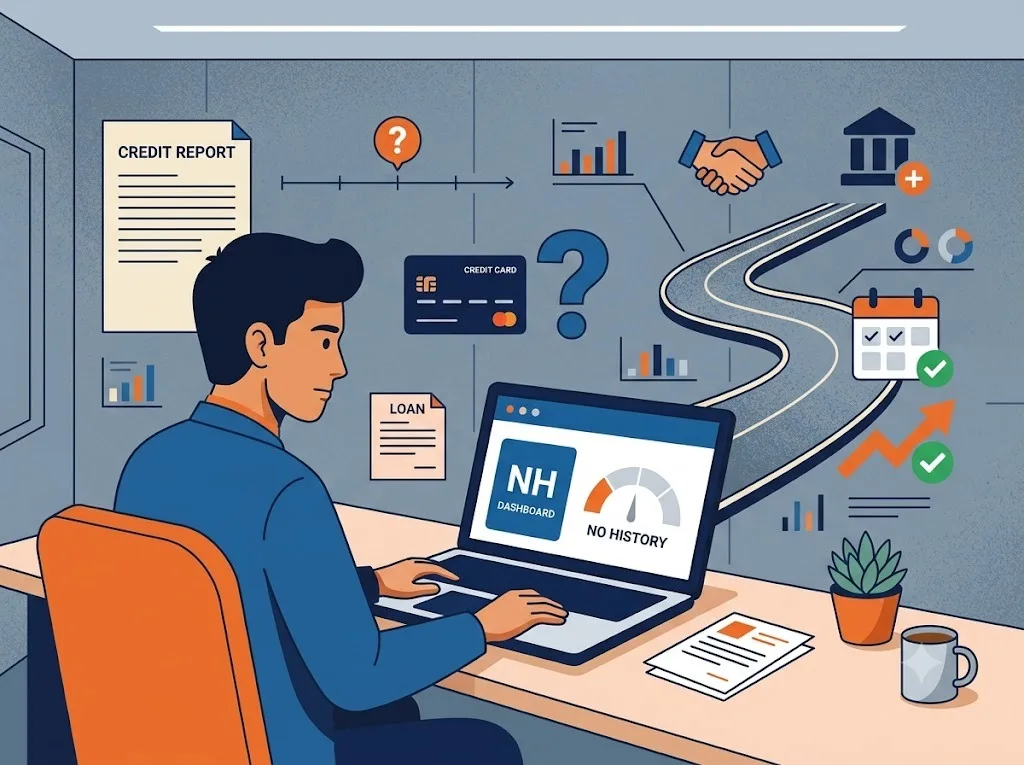
It may show as an NH/NA status when there isn't enough credit history to generate a regular score.
CIBIL may generate a score even with less than six months of credit history under its newer scoring model.
UPI transactions and debit card usage never count toward this; only actual credit products (loans, credit cards) get reported to bureaus at all.
What "Insufficient Number of Accounts" Actually Means
This is a specific reason code CIBIL uses to explain why no score could be generated, and it's genuinely distinct from a low score. A thin file means there's not enough data to work with. A low score means there's plenty of data, and that data shows negative behaviour, missed payments, high utilisation, or worse.
A few related statuses mean roughly the same underlying thing. "NH," No History, and a score of -1 both indicate the bureau has no credit activity to draw on at all, typically because no loan or card has ever existed in that person's name, or nothing has been active in the past 24 months. A score of 0 is slightly different; it means some credit activity exists, but it's under six months old, not quite enough yet to generate a full number. Understanding the minimum score thresholds banks actually apply is worth reading separately once a score does exist, since that's an entirely different conversation from the one this piece is having. Worth being direct here: this is not a red flag to a lender the way a low score is; it's a data gap, though it can still make approval harder in practice, simply because the lender has nothing concrete to assess either way. Why this specifically happens is worth understanding in more technical detail.

Freed Expert Tip
If you've been rejected for credit and see this message, don't read it as "my credit is bad"; read it as "there's no credit data yet." The fix is completely different.
Check My Credit ScoreWhy This Message Appears: The Technical Reason Codes
A handful of specific, named categories sit behind this message, not a single generic explanation. Not enough accounts reported means too few credit products, loans, or cards have ever been opened in your name at all. The length of time accounts have been established is too short means even one genuinely open account doesn't yet carry enough history for the model to work with, a card opened last month simply hasn't existed long enough to say anything reliable.
Not enough trade experience refers to insufficient variety or volume of credit activity to assess a real pattern; one account behaving well for two months tells a bureau very little compared to a mix of products managed over a longer stretch. Inactive accounts cover the reverse problem: an old account that's stopped being used doesn't contribute meaningfully to a current score, even though it technically still exists on paper. These reflect the kind of categories credit bureaus generally use internally to explain a missing score, not just informal shorthand invented for borrower-facing explanations, though the exact wording each bureau uses can vary. How this differs from a genuinely low score is worth spelling out plainly, since the two get confused constantly, often by people who assume any unfamiliar credit message must mean something bad.
Insufficient Accounts vs Low Score vs No Score: Key Differences
Insufficient accounts, NH, or -1 means no score gets generated at all, because there simply isn't enough data, not because of anything negative in the data that does exist. A score of 0 sits one step further along; the bureau has started tracking activity, but the record is still too thin, typically under six months old, to produce a reliable number.
A low score, generally below roughly 600, is an entirely different situation. Here, CIBIL has plenty of data, and that data shows missed payments, high utilisation, or other patterns lenders read as risk. The practical distinction matters more than the labels themselves: a thin file needs more credit history built over time; a low score needs actual behaviour to change. The fixes are not interchangeable, and applying the wrong one wastes months.

Not sure which of these applies to you?
A quick credit check shows exactly where you stand.
Check My Credit ScoreHow Long It Actually Takes to Fix This
CIBIL generally needs a minimum of about six months of active, reported credit activity before it can generate a score at all. This isn't an arbitrary waiting period; it's the minimum data window the scoring model genuinely requires to say anything meaningful.
Opening an account doesn't fix this instantly; it starts the clock. The account then needs to actually report activity, ideally consistent, on-time payments, across that entire window before anything changes. Set realistic expectations here: this is a matter of months, not something resolved by opening one account and checking the next morning again, expecting a number to have appeared overnight. What actually needs to happen during that window is worth being specific about.
What Actually Counts Toward Building Sufficient History
Only genuine credit products get reported to bureaus at all, credit cards and loans, whether personal, secured, or otherwise. UPI transactions, debit card usage, and savings account activity never contribute to this, no matter how frequently they're used; they simply aren't credit and were never reported to a bureau in the first place.
A secured credit card, backed by a fixed deposit, is one of the most accessible ways to start building a reportable history for someone with no prior credit. Several realistic card options exist specifically for this exact situation, designed around exactly this gap rather than treating it as an edge case. Becoming an authorised user on a family member's well-managed credit card can help too, though it's worth confirming with the issuer directly that authorised-user activity is actually reported; not every issuer does this consistently.
Building credit for the first time?
Talk to FREED about the right first step for your situation.
Talk to FREEDStep-by-Step: How to Fix "Insufficient Number of Accounts"
Open one genuine credit product. A secured credit card is usually the most accessible starting point for someone with zero prior history.
Use it lightly and consistently. Small, regular purchases work better than either total inactivity or running the card close to its limit every month.
Pay in full and on time every single cycle, for at least six months straight, since one missed payment early on can undo real progress.
Avoid applying for multiple credit products in this window. Each application generates a hard inquiry, which can work against a profile that's still forming rather than helping it along.
Recheck your report after roughly six months, not sooner, to see whether a score has actually been generated based on the activity built up so far.
Drag
What Are Your Options
If you're building credit for the first time and have no existing debt, the steps above are the direct, complete path; nothing here requires anything beyond what's already covered. Worth knowing too: Building on a personal loan specifically, without a score to lean on, covers this route in more detail if a loan rather than a card is the more relevant product for your situation.
If you're building credit while also managing separate existing unsecured debt, personal loans or cards from before, that's a genuinely different, parallel situation worth addressing on its own terms. For genuine, sustained inability to repay existing debt specifically, settlement is the separate, structured last resort. Settlement is not something a borrower chooses out of preference; banks only consider it when someone is genuinely unable to repay in full.
How FREED Can Help If You Also Have Existing Debt
This piece is mainly relevant to people with no or very little credit history, which usually means no existing debt problems either. If that's you, FREED's core programs likely aren't the relevant next step; the credit-building path above genuinely is, and a fuller step-by-step starting point covers the same ground in even more detail if you want it.
If you're building fresh credit while separately managing existing unsecured debt from before, FREED's Debt Consolidation Program can help simplify that separate situation. No specific score outcome or timeline is guaranteed as fact, since actual results depend on your own profile and how consistently the plan above is followed.
Tips for Building Sufficient Credit History
Start with one account, not several at once. Spreading applications out over time matters more than opening several quickly and hoping one sticks.
Automate payments so on-time history builds reliably without depending on memory during a busy month.
Keep the account open and active even once you've built enough history. Closing it early can quietly undo some of the progress it took months to build.
Check your report at the six-month mark specifically, not before, to see real, meaningful progress rather than a still-forming, incomplete picture.
Drag
Freed Expert Tip
Set a calendar reminder for exactly 6 months after opening your first credit product; that's genuinely when checking your score starts to mean something.
Check My Credit Score
Mohit Juneja
Mohit Juneja writes educational content at FREED on debt management, credit scores, loan repayment, and borrowing best practices. His content is shaped by expert insights and industry knowledge, helping readers better understand their financial options and make informed decisions.
mohit.juneja@freed.care

FREED is India's trusted loan management platform. Founded in 2020 and headquartered in Gurugram, FREED has counselled 20 lakh+ people on personal loans, credit cards, and app loans. FREED charges fees only on successful settlement, not upfront. FREED does not handle secured loans (home loans, car loans, gold loans).
Media Mentions