How Can I Improve My Credit Score? A Simple 12-Month Plan
To improve your credit score, pay every EMI and card bill on time, keep card balances low, avoid many loan applications close together, and fix wrong entries on your report. Results show over months, not days, and they vary from report to report.
Mohit Juneja
Reviewed by FREED India, Debt Resolution Specialists
 4.7/5
 ₹3,200Cr+
 20,000+
 20,00,000+4.7/5₹3,200Cr+20,000+20,00,000+
Key Summary

To improve your credit score, pay on time every month.
Check your report first. Errors can hold a score back.
Keep card balances low and avoid many applications close together.
Track one action a month. Results show over months.
How Can I Better My Credit Score? The Short Answer
To improve your credit score, pay every EMI and card bill on time, keep card use low, apply for credit rarely, and fix any errors on your report. Scores move over months, not days. So this page doesn’t hand you a list of tips and wish you luck. It gives you a plan with one action a month, a column to write down what you see, and a clear point where you should stop doing it alone.
Four actions do most of the work. Pay every EMI and card bill by its due date. Keep your card balances well below your limits. Apply for new loans and cards rarely. And fix any wrong entry on your report.
That’s the whole list, and you’ve probably heard it before. The hard part isn’t knowing it. It’s doing it every month for a year, when nothing seems to change. So we’ve turned it into a plan, and the plan below has a place to write down what you see each month.
A quick word on names. In India, “credit score” and “CIBIL score” mean the same thing for most people. But each bureau gives its own number. CIBIL is one bureau, and Experian, Equifax and CRIF High Mark are others. So if you check two apps and get two different numbers, that’s normal. It isn’t a sign that one of them is wrong.
To see how the number is built, read what a CIBIL score means and how it is made. You don’t need it to follow this plan, but it explains why each action below matters. Next, we’ll check whether your report needs fixing before you start.
Should You Fix Your Report Before Anything Else?
Yes, if the report itself is wrong. Good habits can’t remove an entry that shouldn’t be there. If an incorrect entry remains on your report, it may continue to affect your credit profile even when you make all future payments on time. Dispute the incorrect information rather than relying on good payment habits alone to correct it.
Check for these three signs first.
- A loan you never took. An account you don’t recognise, from a lender you’ve never dealt with.
- A closed loan still showing dues. You paid it off, but the report still shows a balance or an open status.
- A late mark for a month you paid. You have the receipt or the bank entry, but the report shows a delay.
If any of these apply, dispute first. Write down the account, the field that’s wrong and what it should say. Then raise it with the bureau and the lender, in writing, and keep every reference number. Our guide on how to fix wrong entries on your credit report walks you through it step by step.
Don’t expect it to be instant. A dispute takes weeks, and the plan doesn’t have to stop while you wait. Start the habits in the plan at the same time, because they work alongside the dispute, not after it.
If none of the three signs apply, move on to the plan. Most readers are in this group. Their report is fine, and the habits are what need work.

What Should You Do Each Month for 12 Months?
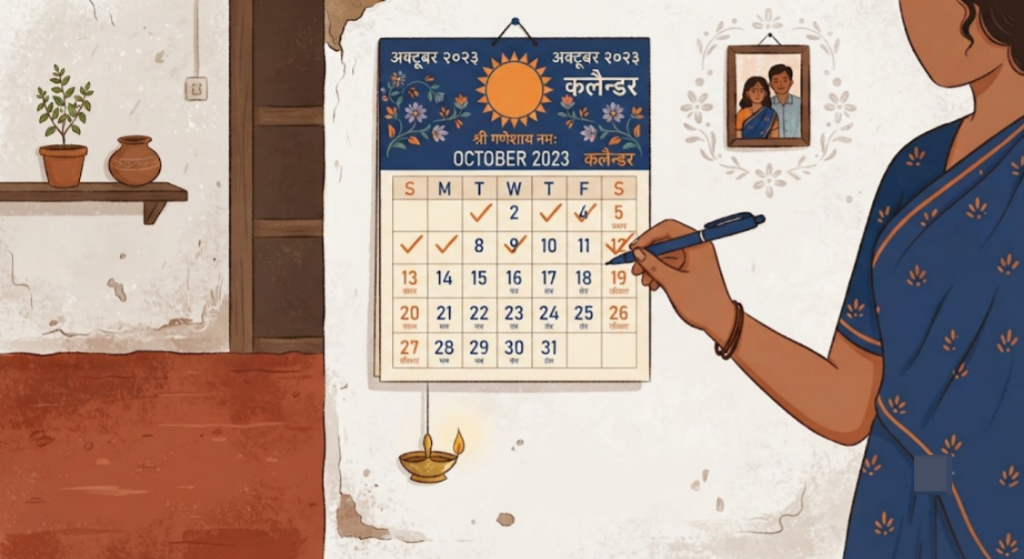
Do one thing a month, and write down what you see. Here’s a plan you can copy into a notebook or a sheet.
| Month | Action | What to record |
|---|---|---|
| 1 | Pull your report and list every account | Date checked, score shown, bureau |
| 2 | Set auto-pay for every EMI and card due | Which accounts are on auto-pay |
| 3 | Bring card balances down | Each card’s balance and limit |
| 4 | No new applications | Number of new enquiries on the report |
| 5 | No new applications. Pay on time. | Any change in a line item |
| 6 | Check your report again | Date, score, bureau, any change |
| 7 | Review each account’s status | Anything marked late or overdue |
| 8 | Add extra to your highest-interest card | Balance before and after |
| 9 | Keep old accounts open where it makes sense | Age of your oldest account |
| 10 | Check for errors again | Anything new you don’t recognise |
| 11 | Pay on time. Avoid new credit. | Date, score, bureau |
| 12 | Compare month 1 with now | Score then, score now, what changed |
Here’s why each stretch looks the way it does.
Months 1 and 2 set the base. You can’t improve what you haven’t seen, so month 1 is only about looking. Month 2 takes the biggest risk off the table. A missed due date because you forgot is the most avoidable way to lose ground, and auto-pay stops it.
Months 3 to 5 reduce the pressure. Lower card balances and fewer applications are the two habits you can change fastest. They also make the next check more useful, because you’re comparing a calmer report with the first one.
Month 6 is your halfway check. Look at the report again, write down the same four things, and compare. A small change is normal. No change is normal too, and it doesn’t mean the plan isn’t working.
Months 7 to 11 are about staying steady. Nothing dramatic happens here. You pay on time, you avoid new credit, and you catch any new error early. This is the part most people skip, and it’s where a record is built.
Month 12 is your review. Put the month 1 line next to today’s line. The gap, whatever it is, is your result.
Record the date, score, bureau and any changes in account information. Use the same bureau when comparing scores over time, because different bureaus may report different information and use different scoring models. We haven’t put point gains next to any month, and you shouldn’t expect them. Results vary by report, and no plan can promise a number.
If you want a printable version, copy the table into a sheet and add a column for ticks.
How Should You Read Your Report in Month 1?
Start with the accounts, not the score. The number is a summary. The report is the evidence behind it. Two people can have the same score for very different reasons, and only the report tells you which reason is yours.
Go through four things for each account.
- Account type and lender. Does it match a loan or card you took?
- Balance and limit. Do they match your latest statement?
- Payment history. Are the months you paid shown as paid?
- Status. Is it open, closed, settled or overdue?
Then write one line per account in your notebook. That list is your starting point, and you’ll compare against it in month 12. It also makes disputes easier, because you already know what each line should say.
Two quick checks help here. First, look for old accounts you forgot about. A card you stopped using years ago can still show a balance or a small due. Second, look at the “enquiries” section. A cluster of recent enquiries tells you which applications are pulling at your score, and it shows you what to avoid in months 4 and 5.
A last tip for this month. Don’t judge the number on day one. Just record it. If it’s lower than you hoped, that’s useful, because it gives you a clear before. And if it’s already decent, the plan keeps it that way.
What Can You Control and What Do You Have to Wait For?
You control your payments, your card use, your applications and your disputes. You can’t speed up old late marks, a Settled status or the age of your accounts. Knowing which is which saves you from chasing the wrong thing.
| In your hands | Only time fixes |
|---|---|
| Paying every EMI and card bill on time | Old late marks already on your report |
| Keeping card balances low | A Settled status, once it’s there |
| Applying for credit rarely | Account age |
| Disputing a wrong entry | How long a mark stays visible |
Look at the left column first. Every item there is a decision you make this month. A payment made on time today becomes part of a record that gets stronger with each month.
Now the right column. Nothing in it responds to effort. You can’t pay extra to make a late mark disappear, and a Settled status doesn’t clear because you asked nicely. A Settled status stays visible to lenders. How long it stays depends on bureau rules, so check with the bureau instead of trusting a number from a blog.
The same goes for account age. Your oldest account helps you simply by getting older. That’s why closing it without a reason is a mistake, and we come back to it below.
So spend your effort on the left column. That’s where one month of work shows up, and where the plan lives.

FREED Expert Tip
Set auto-pay for at least the minimum due on every card, then pay the rest by hand. One missed due date can undo months of progress.
Check My Credit InsightsHow Long Does It Take to See a Change?
Months, not days. The change you see depends on when your lender reports to the bureau and when the bureau updates your record.
RBI’s Credit Information Companies Directions, 2025 prescribe more frequent credit-information reporting by credit institutions. The applicable reporting dates and implementation requirements should be checked against the latest RBI directions before publication. The reporting schedule does not mean that every payment will appear on a credit report immediately. So a payment you make today can reach the bureau within weeks, not on the same day.
That’s the schedule, not a promise about your report. Your lender may report faster, and a bureau may take time to match records. Allow time for the lender to report the updated information and for the bureau to process it. Check your report after the applicable reporting cycle, and follow up with the lender if the change does not appear. And if you pay a card down, remember that the balance reported is the balance on the reporting date, not the one you wish it showed.
This is also why we ask you to wait a full month between checks. Checking daily only tells you that nothing has changed yet. One check a month, with the date written down, tells you what the schedule has actually delivered.

What the Law Says
You can dispute a wrong entry with the lender or the credit bureau. If it isn't fixed within 30 days of your complaint, you may get ₹100 for each day of delay. Disputes about how the score is calculated aren't covered.
Check My Credit InsightsWhat Mistakes Slow Your Score Down?
Most of them are small, and most are easy to stop. Watch for these five.
- Paying only the minimum due for months. It avoids a late mark, but your balance stays high, and interest keeps adding to it.
- Many loan app enquiries. Each application adds an enquiry, and several close together can add up.
- Closing your oldest card for no reason. It can shorten your credit history and cut your total limit.
- Missing one EMI to pay another. That swaps one problem for a bigger one, and it leaves a late mark.
- Paying “score repair” agents who promise quick fixes. They can’t remove entries that are correct.
The last one deserves a second look. If someone promises a jump in your score for a fee, ask what exactly they’ll change. A wrong entry can be disputed by you, directly, at no cost to you from the bureau’s side. A correct entry can’t be removed by anyone.
For the full list, read our guide on common mistakes that can harm your credit score. And before you pay anyone, see what to check about a score repair agency.

Not Sure Which Option Fits You?
If your EMIs feel heavy or your score keeps slipping, see which debt solution fits your situation on FREED.
See My Options on FREEDHow Does Card Use Affect Your Score?
Lower is better. Card use means how much of your limit you’re using. A card that’s always near its limit tells a lender you may be stretched, even if you pay the minimum on time.
Here’s an example with made-up numbers. Say your limit is ₹1,00,000 and your balance is ₹70,000. That’s 70% of your limit. Pay down ₹30,000 and the balance is ₹40,000, which is 40%. Pay down ₹50,000 and it’s ₹20,000, which is 20%.
The score doesn’t move by a fixed number when you do that, and we won’t pretend it does. But the direction is clear, and it’s one of the quickest habits to change. A few small steps help.
- Pay before the statement date where you can. A lower balance is then what gets reported.
- Spread spending across cards only if each stays low. One card at 90% looks worse than two at 45%.
- Don’t treat the limit as spending money. The limit is a ceiling, not a target.
Don’t close a card to look “cleaner”. Closing it cuts your total limit, so the same balance now looks like a higher share of what’s left. Keep it open, use it lightly, and pay it off. If a card has an annual fee you don’t want to pay, ask the bank about a no-fee version before you close it.
How Do New Applications and Enquiries Affect Your Score?
Each time you apply for a loan or card, the lender checks your report. That’s called a hard enquiry, and it can have a small, temporary effect on your score. One or two over a year isn’t a problem. Several in a few weeks can look like you’re short of money.
That’s why months 4 and 5 of the plan say no new applications. It gives the report time to settle. It also stops you from collecting enquiries that stay visible for a while.
Checking your own score is different. A self-check is a soft enquiry, and it doesn’t lower your score. So you can look at your report as often as you like without harm. The plan asks for a monthly check because that’s useful, not because more would hurt.
A few habits keep enquiries down.
- Compare offers without applying. Many lenders show rates before you submit a full application.
- Apply to one lender at a time. Wait for the answer before trying another.
- Skip instant loan apps you don’t need. Each tap on “check eligibility” can turn into an enquiry.
If you do need credit, apply where you have a real chance. Check your report first, fix any errors, and then apply. That order matters, because a lender reads the report as it is on the day.
How Do You Know the Plan Is Working?
You’ll know from three things: your payment record, your card balances and your report, not just from the number. The score can move slowly, and the other three tell you sooner.
Check these at month 6 and month 12.
- Payments. Every EMI and card due since month 1 shows as paid on time.
- Balances. Your cards are lower than they were in month 1.
- Accounts and enquiries. No new errors, and no new enquiries you didn’t make.
If all three are better, the plan is working, even if the score hasn’t jumped. A record built on time takes months to show fully. If one of the three is worse, that’s your next fix.
Here’s what a flat score can mean. Your report may have an error you haven’t spotted. Or an old late mark may still be doing its damage, and only time clears that. Or you may have a debt problem that habits can’t solve, which is the next section.
Be fair with yourself too. A plan done at 80% for a year beats a perfect plan abandoned in month three. Miss a tick, note it, and carry on.
When Is a Low Score a Debt Problem, Not a Habit Problem?
When the score is low because your EMIs are too heavy, no habit will fix it. You can pay on time, keep cards low and avoid applications, and still struggle if too much of your pay goes to loans.
Look for these signs.
- Your EMIs take more than half your take-home pay.
- You borrow to pay EMIs.
- You’ve missed payments you can’t catch up on.
Here’s a quick check you can do now. Add up your monthly EMIs and card minimums. Divide by your monthly take-home pay. Say take-home is ₹50,000 and EMIs are ₹26,000. That’s 52%, which is more than half. As a common guide, past half is where pressure builds. This is an illustration, not a score prediction, and your numbers will differ.
If you are maintaining your repayments but finding multiple EMIs difficult to manage, you may explore whether loan consolidation is suitable. FREED’s Loan Consolidation Plan is intended for borrowers who are still making their repayments, subject to eligibility and the lending partner’s assessment. A consolidation loan may reduce the monthly EMI, depending on the interest rate, tenure, fees and lender terms.
If you can’t pay in full, settlement is not something a borrower chooses out of preference. If you genuinely cannot repay your loans, FREED negotiates with your lenders to settle them for less than 50%* of your outstanding dues. A settled account shows as “Settled” on your report, and lenders can see it. Read about the Debt Resolution Program.
Rates and ranges shown are indicative. Final terms decided by the bank/lender. FREED is not a Loan Provider. No outcome is guaranteed. Please verify directly with your bank.
Outcomes vary by lender and borrower profile. Settlement terms are decided by the lender. No percentage is guaranteed.
If you’re not sure which group you’re in, start with your report. It shows whether you have missed payments, and that decides which option is even open to you.
Not Sure What Is Holding Your Score Back?
See your Experian report with FREED Credit Insights.
Check My Credit InsightsHow Does FREED Help You Track Your Score?
FREED Credit Insights shows your credit report and score, and points to what’s holding the score back. It reads your Experian report, so the number can differ from your CIBIL score. Each bureau uses its own model, so a gap between two numbers is normal.
Over 30,000 borrowers trust Credit Insights, and over 20 lakh people trust FREED. FREED isn’t a loan provider. Credit Insights explains your report, and it doesn’t remove entries that are correct. If something on your report is wrong, you still raise the dispute with the bureau and the lender.
Here’s how it fits the plan. Use it in month 1 for your starting picture. Use it again in month 6 and month 12 to compare. A second view of the same report helps you spot a line you missed, and it gives you a view on a different bureau than the one you usually check.
You don’t need a paid tool to follow this plan. A free yearly report from each bureau is enough. Credit Insights is there if you want the report explained line by line. Start with Credit Insights.

Not Sure Which Option Fits You?
Open the FREED app, add your details and see which plan fits you.
See My Options on FREED
Mohit Juneja
Mohit Juneja is FREED’s Content & Communication Lead with 12+ years of experience across content, media, advertising and digital communications. He holds a postgraduate diploma in Communications from Xavier Institute of Communications, Mumbai, and has worked with organisations including NDTV, The Indian Express, McCann Worldgroup and NABARD.
At FREED, he leads content and communication across loan management, debt resolution, debt consolidation and financial well-being. His work combines research, storytelling and consumer-focused communication to make complex financial topics easier to understand and act on. He has also scripted and produced 11 documentaries on rural development and agriculture for NABARD, with film's selected for the Mumbai International Film Festival.
mohit.juneja@freed.care

FREED is India's trusted loan management platform. We help India settle their loans, consolidate their EMIs, improve their credit score, and manage their loans better. Over 20 lakh people trust FREED. We have managed more than ₹3,500 crore in loans and saved our users over ₹450 crore.
Media Mentions