What Is Meant by CIBIL Score? A Simple Explanation
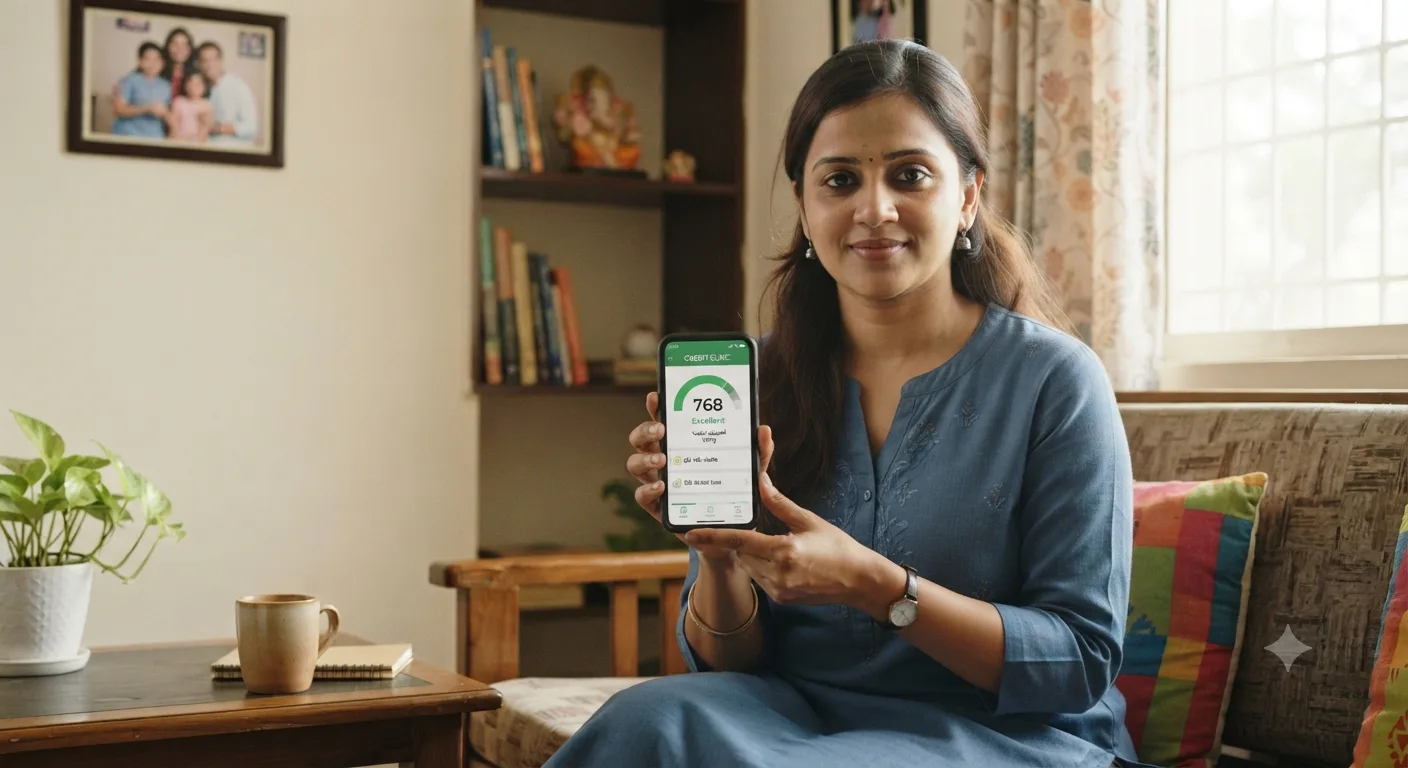
A CIBIL score is a 3-digit number between 300 and 900 that shows how you have handled credit in the past. It comes from TransUnion CIBIL, using your loan and credit card repayment history. A higher number means banks see you as more reliable. Every EMI you pay, on time or late, feeds into this number.

Mohit Juneja
Reviewed by FREED India, Debt Resolution Specialists
 4.7/5
4.7/5 ₹3,200Cr+
 20,000+
 20,00,000+4.7/5₹3,200Cr+20,000+20,00,000+
KEY TAKEAWAYS

What is meant by CIBIL score: a 300–900 credit history number banks check before approving a loan.
Payment history carries the biggest weight in how the score is calculated.
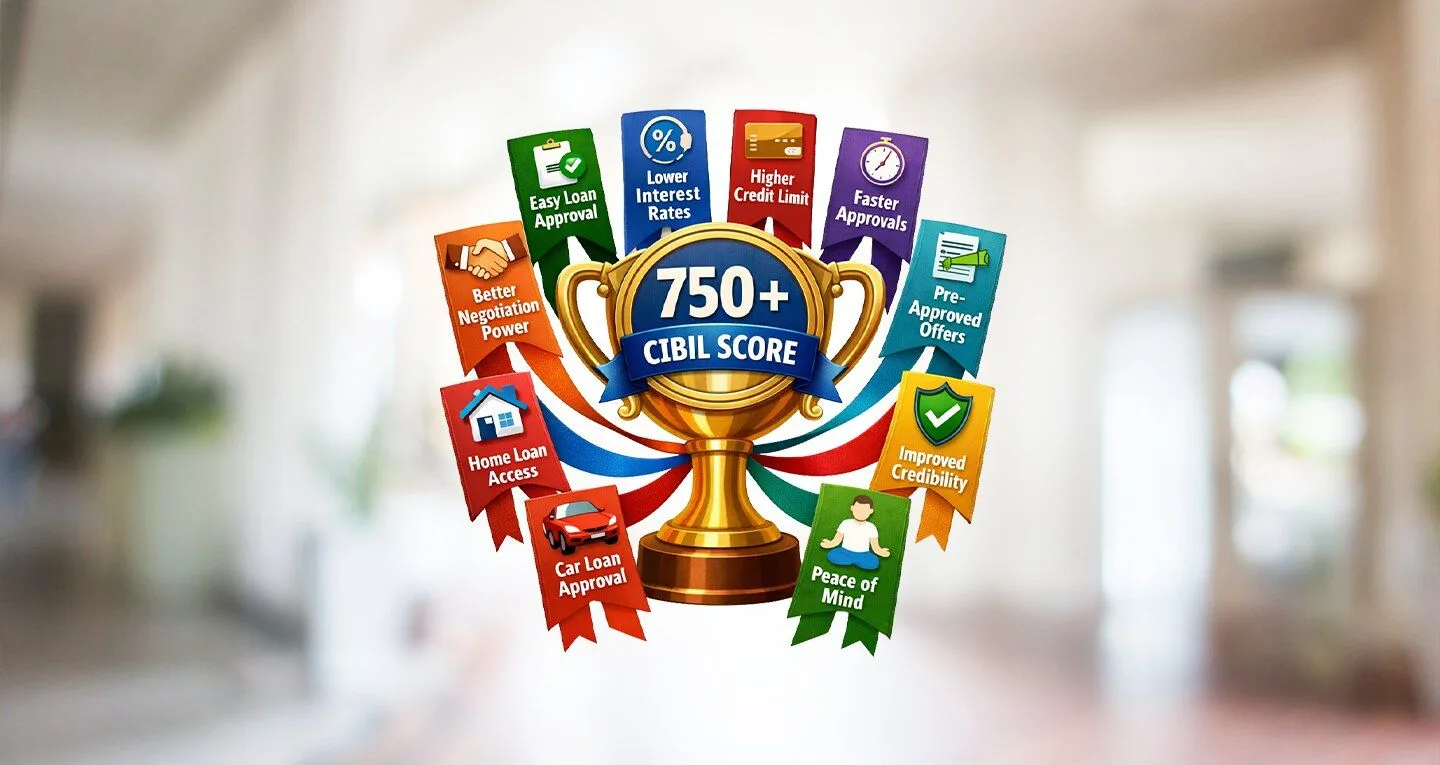
A score of 750 and above is generally treated as good to excellent by most banks.
A score of 750 and above is generally treated as good to excellent by most banks.
Credit bureaus now update this number roughly every week, so it changes faster than most people realise.
What Is Meant by CIBIL Score?
A CIBIL score is not a fixed label stamped on your name. It is a moving number, recalculated as your credit behaviour changes month to month. It comes from TransUnion CIBIL, one of four credit bureaus licensed by the Reserve Bank of India (RBI) to track how people repay loans and credit cards.
TransUnion CIBIL is a company, not a government office. That surprises a lot of people. Many assume "CIBIL" is some kind of official government score, but it is a private credit information company that RBI has licensed and regulates. The score itself is pulled from your CIBIL report, a detailed record listing every loan and credit card account you have ever held, how much you owe, and how regularly you have paid.
Two numbers matter here. First, the range: 300 to 900. Second, the full form: Credit Information Bureau (India) Limited. India has four RBI-licensed bureaus doing this job, TransUnion CIBIL, Experian, Equifax, and CRIF High Mark, but CIBIL is the name most Indians hear first, since it was the first bureau to operate in the country.
So the number itself is simple. What is not always obvious is why a bank cares about it at all, and that's worth walking through next.
Why Does the CIBIL Score Matter for Loans?
A bank cannot sit across the table with every applicant and study years of their financial behaviour. The CIBIL score does that job in seconds. It gives the bank a quick, standard way to judge how risky it is to lend you money, based on how you have handled credit before.
A higher score changes three things in practice:
- Faster approval. Banks spend less time verifying a strong applicant, so the loan or card moves through underwriting quicker.
- Access to larger amounts. A healthy score signals lower risk, which often opens the door to bigger loan amounts than a borrower with a weak score would be offered.
- Lower interest rates. Banks price risk into the interest rate. A strong score usually means a better rate on the same loan, subject to the lender's eligibility criteria and lending policy.
A low score does not always mean an automatic rejection. It usually means the bank asks for more: a smaller loan amount, a higher interest rate, or a guarantor to back the application. Some banks may decline outright, others may still work with you on tighter terms.
If you're simply curious about where you stand and not in any kind of financial trouble, this is really the core of it: your score is the shortcut a bank uses to size up how safe you are to lend to. Once you know what counts as a strong number, the rest becomes much easier to plan around.
What Is a Good CIBIL Score Range?
Score Range | What It Means | Loan Approval Chances |
300–599 | Poor, usually reflects missed payments or defaults | Very difficult |
600–649 | Weak, high credit utilisation or irregular payments | Low, may need a guarantor |
650–749 | Fair to good, satisfactory credit behaviour | Reasonable, terms vary by lender |
750–900 | Excellent, strong repayment discipline | Best rates and fastest approvals |
Note: Ranges are commonly used industry classifications. Each bank sets its own exact cutoff, so treat this as a general guide, not a fixed rule.
Reading this table in plain terms: below 600 is a red flag for most lenders and usually means either rejection or very restrictive terms. The 600–649 band is workable but weak, banks tend to want extra reassurance here. From 650 to 749, most borrowers get approved, though the specific rate or amount can vary a fair bit between banks. Above 750 is where the best terms show up, faster processing, bigger amounts, and lower rates.
One thing worth knowing before you assume your own number falls somewhere on this table: different banks set their own cutoffs. A score that clears the bar at one bank may fall short at another, especially for larger loan amounts. There's also a separate case worth knowing about. If you have never taken a loan or held a credit card, you won't have a score at all. It shows as NA or NH (No Activity or No History) on your report, and that is not the same as a bad score. It simply means the bureau has nothing to calculate from yet.
What Factors Decide Your CIBIL Score?
- Payment history. This is the single biggest factor. On-time EMIs and credit card bill payments matter more than anything else on this list. A single missed payment rarely wrecks a score on its own, but a pattern of slipped payments over several months pulls the number down steadily.
- Credit utilisation. This is how much of your available credit limit you are actually using at any given time. If your card limit is ₹1,00,000 and you regularly carry a balance of ₹80,000, that high utilisation signals to lenders that you may be stretched thin, even if you eventually pay it off in full.
- Length of credit history. Older accounts in good standing help your score. A five-year-old credit card with a clean record carries more weight than one you opened last month.
- Credit mix. Lenders view a balance of secured loans (home loan, car loan) and unsecured credit (personal loan, credit card) positively. It shows you can manage different kinds of repayment obligations.
- New credit enquiries. Applying for several loans or cards in a short window looks like financial stress to a lender, even if each application is unrelated to the others.
No single factor decides your score on its own. They work together, and a weakness in one area can often be offset by strength in another over time.
Note: Bureaus don't publish an exact weightage for each factor. Payment history and credit utilisation are widely understood to matter most, with the remaining factors making up a smaller share between them.

Freed Expert Tip
Check your CIBIL report every 3 months, not just before applying for a loan. Catching an error early saves you from a rejection later.
Check How to Correct Your CIBIL ScoreHow Is the CIBIL Score Different From a Credit Score?
"Credit score" is the umbrella term. "CIBIL score" is one specific bureau's version of it. That distinction gets lost in everyday conversation, but it matters if you're comparing numbers from different apps.
India has four RBI-licensed credit bureaus: TransUnion CIBIL, Experian, Equifax, and CRIF High Mark. Each one calculates its own score using its own data and its own formula. That means you can have four slightly different scores at the same time, all technically correct, all based on the same underlying loan and repayment history, just processed differently.
In everyday Indian conversation, "CIBIL score" gets used the way a brand name becomes generic, the way people say "Xerox" for any photocopy. Most people mean "my credit score" when they say "my CIBIL score," even if the number a bank actually pulls comes from Experian or Equifax instead.
What actually matters when you apply for a loan isn't which bureau's number you're staring at on your phone. It's whether that number, whichever bureau it came from, is healthy enough for what you're applying for. For a closer look at how these two terms differ, see our dedicated comparison of CIBIL score vs credit score.
How Can You Check Your CIBIL Score?
Checking your score is simpler than most people expect, and it costs nothing once a year.
- Visit the official CIBIL website. Under an RBI rule, every credit bureau must give you one free full credit report every calendar year. This includes your score, not just a summary.
- Use it within the calendar year. The free report resets each January, so if you already used yours this year, your next free check comes around on January 1 of the following year.
- Pay for additional checks. If you want to check more than once a year, most bureaus offer a paid subscription plan, or you can use a bank or app's free-check partnership, where available.
One caution worth keeping in mind: the score shown on different apps can vary slightly, even for the same person, on the same day. This happens because different apps pull from different bureaus, or sometimes show a cached number that hasn't refreshed yet. The number that actually counts is whichever one the bank pulls at the time you apply, not whatever a random app shows you that morning.
This is also where a product like Credit Insights fits naturally. Rather than showing you a plain number and leaving you to guess what to do next, it pulls your report from Experian and lays out what's actually pulling your score down, along with what's helping it, and gives you specific, step-by-step recommendations to improve it. Get flat 50% off on subscription whether or not you're enrolled in any FREED program.
Are You in a Loan Trap? Quick Check
Move the slider to your total EMIs as a % of monthly salary. See your debt stress level instantly.
EMIs as % of Monthly Salary
What Are Simple Ways to Improve Your CIBIL Score?
- Pay EMIs and card bills on time, every month. This is the single biggest lever you have, since payment history carries the most weight in how your score is calculated.
- Keep credit utilisation under roughly 30% of your limit. Many financial experts recommend keeping utilisation below about 30% where possible. If your card limit is ₹1,00,000, try to keep your running balance under ₹30,000 wherever possible. Lower utilisation signals that you're managing credit comfortably, not stretching to cover it.
- Avoid closing your oldest credit account. Length of credit history helps your score, and closing an old account, even one you barely use, can shorten your average history and pull the number down slightly.
- Don't apply for multiple loans or cards in a short window. Each application triggers a hard enquiry, and several enquiries close together can look like financial stress, even if you're simply comparing offers.
- Check your report periodically for errors. A wrongly reported missed payment or an account that isn't actually yours can drag your score down for no real reason. You can raise a dispute directly with the bureau, and it never costs anything to fix.
Building a better score takes months of consistent behaviour, not a single grand gesture. Anyone promising an overnight jump from 600 to 750 isn't being straight with you.
Here's something that actually works in your favour now: credit bureaus used to update your data roughly once a month, sometimes taking 30 to 45 days to reflect a change. Under RBI's revised reporting rules, lenders now report your data to the bureaus about once a week. So if you clear a card balance or catch up on a missed EMI, the improvement shows up on your report noticeably faster than it used to.

What the Law Says
RBI rules give you one free CIBIL report every calendar year, and correcting a genuine error on it never costs you a fee.
Learn How to Check and Correct Your CIBIL Score
How FREED Helps You Understand and Track Your CIBIL Score
If you just want to understand your credit health and don't know where to start, Credit Insights is built for exactly that. It's available to everyone, not just people enrolled in a FREED program, so whether you've never worked with FREED before or you're already a customer, you can use it.
Credit Insights pulls your credit report from Experian, shows you your score, and lays out exactly what's pulling it down or holding it up. Then it goes a step further with actionable, step-by-step recommendations, not just a number sitting on a screen with no explanation. That's really the gap most free score-checker apps leave open: they'll show you a number, but not what to actually do about it.
Get flat 50% off on subscription. If understanding and improving your credit health is what you're after, this is the most direct way to get there.

Sources
Claim in Article | Source |
|---|---|
CIBIL score is 300–900, from TransUnion CIBIL | creditmantri.com/credit-bureaus-in-india |
CIBIL is private company, RBI-licensed, not govt body | bankbazaar.com/equifax/equifax-cibil-experian-highmark.html |
4 RBI-licensed bureaus: CIBIL, Experian, Equifax, CRIF High Mark | poonawallafincorp.com/blogs/credit-score/credit-information-companies-in-india |
CIBIL full form = Credit Information Bureau (India) Limited | paisabazaar.com/credit-score/credit-information-companies-india |
Score band guidance (750+ good/excellent, sub-600 difficult) | tallysolutions.com/business-guides/credit-bureaus-india-business-guide |
One free full credit report per year, per bureau, RBI-mandated | RBI official notification RBI/2016-17/58, DBR.CID.BC.No.11/20.16.042/2016-17 — rbi.org.in/commonman/english/scripts/Notification.aspx?Id=1884 |
Old reporting cycle was 30–45 days | paisabazaar.com/credit-score/rbi-credit-score-guidelines |
Lenders now report to bureaus ~weekly | business-standard.com/amp/finance/news/rbi-extends-credit-information-reporting-norms-july-1-2026 (RBI amended directions, effective July 1, 2026 — deferred from earlier April 1, 2026 date) |
Soft enquiry (self-check) doesn't affect score | Uncontested industry-wide fact, consistent across all bureau sources checked |
NA/NH status for first-time borrowers | Standard bureau terminology, no single primary source pulled |

Mohit Juneja
Mohit Juneja writes educational content at FREED on debt management, credit scores, loan repayment, and borrowing best practices. His content is shaped by expert insights and industry knowledge, helping readers better understand their financial options and make informed decisions.
mohit.juneja@freed.care

FREED is India's trusted loan management platform. Founded in 2020 and headquartered in Gurugram, FREED has counselled 20 lakh+ people on personal loans, credit cards, and app loans. FREED charges fees only on successful settlement, not upfront. FREED does not handle secured loans (home loans, car loans, gold loans).
Media Mentions