Government Loan Consolidation: Is There a Scheme?
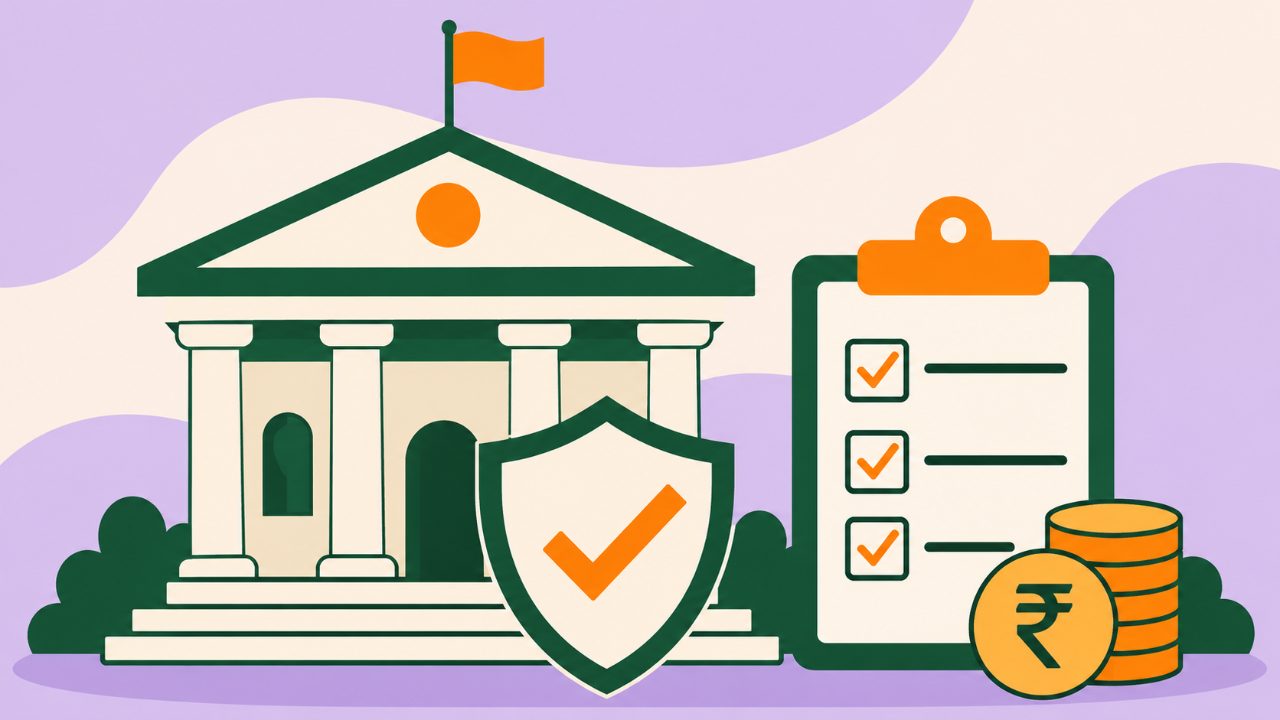
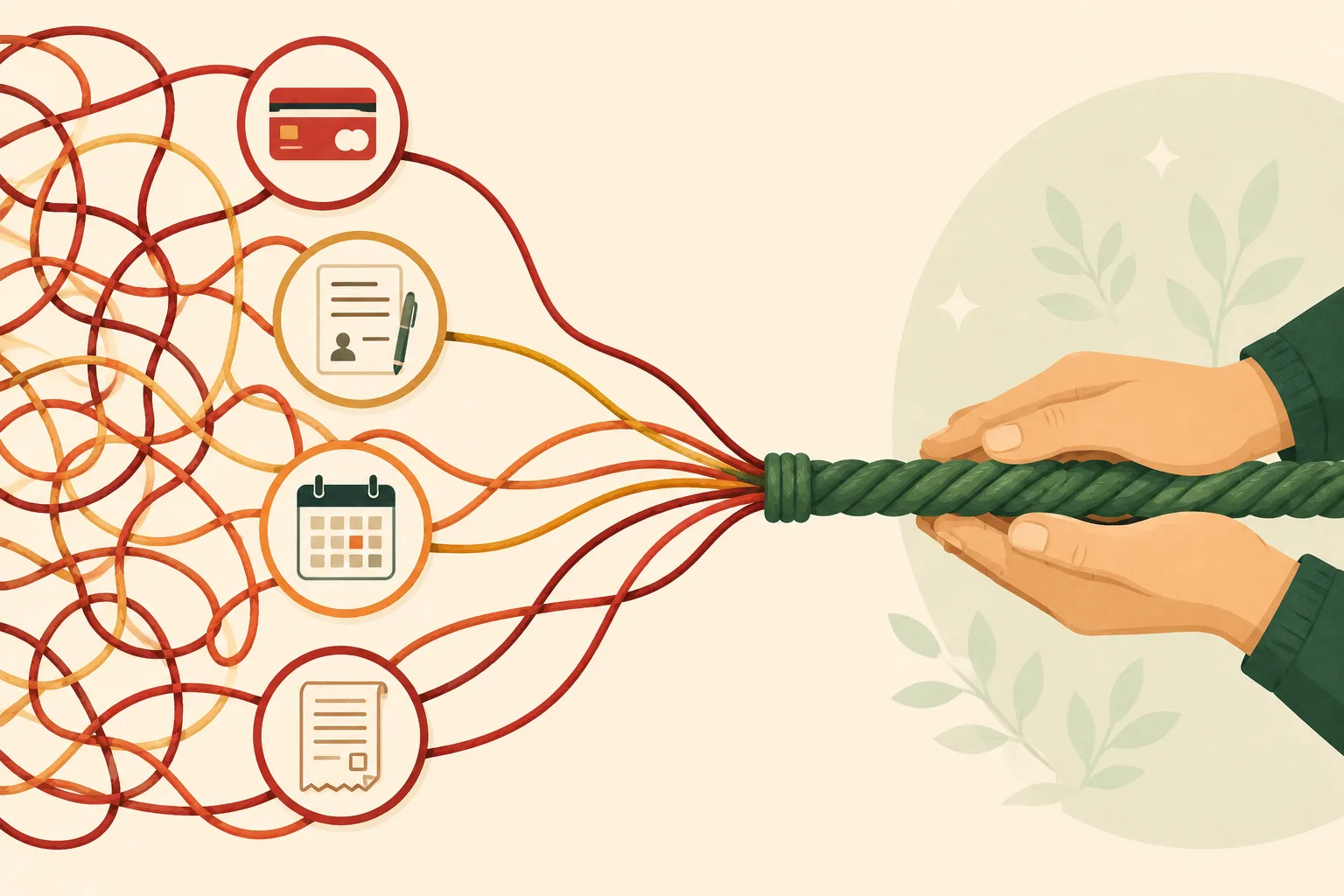
Government loan consolidation isn't a scheme we could find for personal loans or credit card dues in India. The government loan schemes we found are built for business or livelihood needs, such as MUDRA, PMEGP and PM SVANidhi. If you want to combine several EMIs into one, you'd usually do it through a bank, an NBFC or a managed plan, not a government scheme.
Mohit Juneja
Reviewed by FREED India, Debt Resolution Specialists
 4.7/5
 ₹3,200Cr+
 20,000+
 20,00,000+4.7/5₹3,200Cr+20,000+20,00,000+
Key Summary

We couldn't find a government scheme that consolidates personal loans or credit card debt in India.
Government loan schemes we found, like MUDRA, PMEGP, PM SVANidhi and Stand-Up India, are for business or livelihood needs.
Check each scheme's own rules before you assume it can repay an old loan.
Be careful with anyone offering a government-approved consolidation or a guaranteed approval.
You can still combine EMIs through a bank, an NBFC or a managed plan.
If you're already behind on payments, speak to an expert before taking on new debt.
Is There a Government Loan Consolidation Scheme in India?
Government loan consolidation isn't a scheme we could find for personal loans or credit card dues in India. The government loan schemes we found are built for business or livelihood needs, such as MUDRA, PMEGP and PM SVANidhi. If you want to combine several EMIs into one, you'd usually do it through a bank, an NBFC or a managed plan, not a government scheme.
We checked, and we couldn't find a central government scheme made to consolidate personal loans or credit card dues. The loans the government backs are mostly for business and livelihood, not for paying off personal debts.
That doesn't mean you have no options. It means the route runs through banks, NBFCs or managed plans, not a state scheme.
If you read or hear about a government loan consolidation scheme, ask for its name, the department behind it and the official page. If the person can't give you those, step back.
What Government Loan Schemes Exist in India?
The schemes we found, as described on a lender's guide page, are these:
Scheme | What it's for |
|---|---|
PM MUDRA Yojana | Loans for micro and small non-farm businesses |
PMEGP | Setting up new enterprises, with a subsidy |
PM SVANidhi | Small loans for registered street vendors |
Stand-Up India | Loans for SC/ST and women entrepreneurs setting up new ventures |
Jan Samarth Portal | A single portal for several schemes across education, agriculture, livelihood and MSME loans |
None of these is described as a way to consolidate existing personal loans. Each one has its own eligibility rules, and the rules change. Check the official scheme page before you apply.

Not Sure Which Option Fits You?
Open the FREED app, add your details and see which plan fits you.
See My Options on FREEDCan a Government Scheme Repay Your Personal Loan or Credit Card?
We couldn't find a scheme that allows it for personal loans or cards. Schemes like MUDRA are for business needs. Using one to pay off personal debt could go against the scheme's purpose, and the lender may not allow it.
If you run a small business and have a business loan alongside personal loans, the bank that holds your loan is the right place to ask. Ask in writing what the loan can be used for.
Don't take a scheme loan and use it for something else without checking. That can cause problems later.
What Does "Government-Approved" Debt Consolidation Really Mean?
You'll see this phrase in ads. Be careful with it. A lender can be regulated by the RBI. That's not the same as a government scheme, and it doesn't mean the government backs your loan.
Before you trust any "government-approved" claim, ask:
Which scheme or department? Ask for its name.
Where's the official page? Open it yourself.
Is anyone asking for money before the loan is sanctioned?
Is approval being promised regardless of your record?
A yes to the last two is a warning sign.
What Can You Do Instead of Government Loan Consolidation?
You still have routes that work for personal loans and cards:
A personal loan from a bank or NBFC used to pay off your old loans.
A top-up on a home loan, if you have one, weighing the risk to the home.
A card balance transfer for card dues.
A managed plan, where an expert helps you compare and apply.
Start with one sheet listing your loans, rates, EMIs and months left. Then compare total cost.
See Your Credit Report First
Check your credit report with FREED Credit Insights.
Check My Credit Insights
How Do You Spot a Fake Government Loan Consolidation Offer?
Scammers use the word "government" because it makes people relax. Watch for these signs:
A call, message or ad from someone you didn't contact.
A fee asked before any loan is sanctioned.
A promise of approval, whatever your record.
No official page you can open yourself.
A request for your OTP, card number or password.
Never share an OTP. And don't pay a "processing fee" to a person you can't verify.
If you've been cheated, report it quickly. India's cybercrime reporting portal and helpline exist for this.
Are There Government Schemes for People in Debt Trouble?
We couldn't find a central scheme for people who are struggling with personal loans or credit card dues. State governments sometimes run their own programs, and we haven't checked all of them. Look at your own state's official portal.
What does exist is a complaint route. If a bank or NBFC has treated you unfairly, you can complain to the lender first, and then to RBI's Integrated Ombudsman Scheme at cms.rbi.org.in, or by calling 14448. Filing is free.
Good to Know
The government loan schemes we found, as described on one lender's guide page, are for business or livelihood needs: PM MUDRA Yojana, PMEGP, PM SVANidhi, Stand-Up India and the Jan Samarth Portal.
None was described as a way to consolidate personal loans or card dues.
Each scheme has its own eligibility rules, so check the official page before applying.
How Can You Check Whether a Lender Is Regulated?
RBI publishes lists of the banks and NBFCs it regulates on its website. Search for the lender's name there. If you can't find it, ask the lender for its RBI registration details in writing. Regulated lenders can share their registration details on request.”A regulated lender isn't the same as a government scheme. It simply means the RBI has a say over how that lender behaves.
Not Sure What Applies to You?
Add your details in the FREED app and see your options in minutes.
See My Options on FREEDWhat Is the Safest Way to Combine Your EMIs?
The steps are the same for most people:
Write your loans on one sheet: lender, amount left, rate, EMI, months left.
Add up the EMIs and divide by your take-home pay.
Get written offers from regulated lenders.
Compare total cost: interest plus fees.
Choose the shortest tenure you can comfortably afford.
Make sure the lender pays your old lenders directly.
Get a no-dues letter from each old lender.
It's less exciting than a scheme. It's also real.
What If You Can't Pay Your EMIs at All?
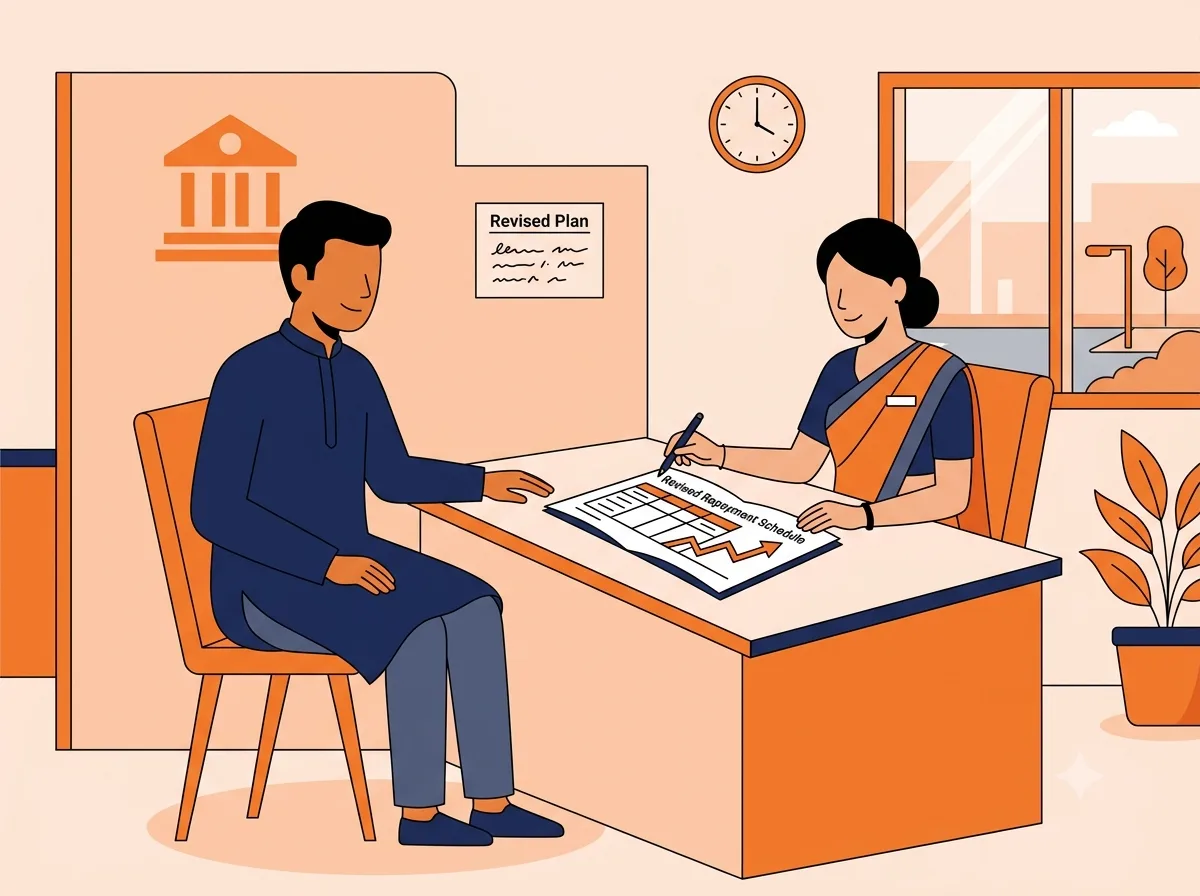
If you're missing payments, a new loan may not be the right step. A better first move is to talk to the lender. RBI's 2025 directions let a bank restructure a loan when a borrower is in financial difficulty, but it's the bank's decision, and the bank follows its own policy.
Write to the bank. Explain what changed. Ask what it can offer, in writing. Our guide on restructured loans explains what that means in plain words.

FREED Expert Tip
If anyone offers you a government-approved plan, ask for the scheme's name, the department behind it and a link to its official page, then open that page yourself rather than the link they give you.
Check My EMI ScoreYour Checklist Before You Trust Any Government Loan Consolidation Offer
Ask for the scheme's name and the department behind it.
Open the official page yourself.
Never pay a fee before a loan is sanctioned.
Never share an OTP, card number or password.
Ask for written terms.
Check that the lender is regulated.
Take a day to think.
Walk away from guarantees.
This list is our planning aid.
Tips for Combining Your EMIs Safely
List your loans first. Lender, amount, rate, EMI, months left.
Work with regulated lenders. Ask for registration details.
Get written offers. Compare total cost.
Choose the shortest tenure you can afford.
Ask who pays your old lenders.
Keep every paper. Ask for no-dues letters.
Ask for help early. A short call can clear up a lot.
Not Sure Where to Start?
See your options in the FREED app. Clear answers, no guesswork.
See My Options on FREEDHow Does FREED Help if You're Looking for Government Loan Consolidation?
FREED isn't a government scheme, and it isn't a loan provider. It's a platform that helps you understand your credit and manage your loans. Over 20 lakh people trust FREED.
With FREED's Loan Consolidation Plan, FREED looks at your financial profile, matches you with a lending partner, and that partner disburses one new loan that pays off your existing loans. You're left with one EMI. FREED's fee applies only when consolidation is completed. Final terms are the lender's decision, and no outcome is guaranteed.
It's for people who are still paying. If you've already missed EMIs or you're getting recovery calls, consolidation may not be the right route, and a call with a FREED expert is a better first step.
Credit Insights reads your Experian report and shows your accounts, enquiries and payment history in one place. Over 30,000 borrowers have used it.
What If Several EMIs Are Hard to Manage?
If most of your salary goes towards paying multiple EMIs, FREED's Loan Consolidation Plan helps you combine multiple loans into a single monthly EMI. This can reduce your monthly EMI burden by up to 50%.* It's only for people who are still paying. Read more about the Loan Consolidation Plan.
Rates and ranges shown are indicative. Final terms decided by the bank/lender. FREED is not a Loan Provider. No outcome is guaranteed. Please verify directly with your bank.
If you're unsure whether you qualify, a FREED expert can look at your situation on a call and tell you which options are open to you.
See Your Credit Report First
Check your credit report with FREED Credit Insights.
Check My Credit Insights
Mohit Juneja
Mohit Juneja is FREED’s Content & Communication Lead with 12+ years of experience across content, media, advertising and digital communications. He holds a postgraduate diploma in Communications from Xavier Institute of Communications, Mumbai, and has worked with organisations including NDTV, The Indian Express, McCann Worldgroup and NABARD.
At FREED, he leads content and communication across loan management, debt resolution, debt consolidation and financial well-being. His work combines research, storytelling and consumer-focused communication to make complex financial topics easier to understand and act on. He has also scripted and produced 11 documentaries on rural development and agriculture for NABARD, with film's selected for the Mumbai International Film Festival.
mohit.juneja@freed.care

FREED is India's trusted loan management platform. We help India settle their loans, consolidate their EMIs, improve their credit score, and manage their loans better. Over 20 lakh people trust FREED. We have managed more than ₹3,500 crore in loans and saved our users over ₹450 crore.
Media Mentions