What Is a Daily Spending Limit? Meaning Explained
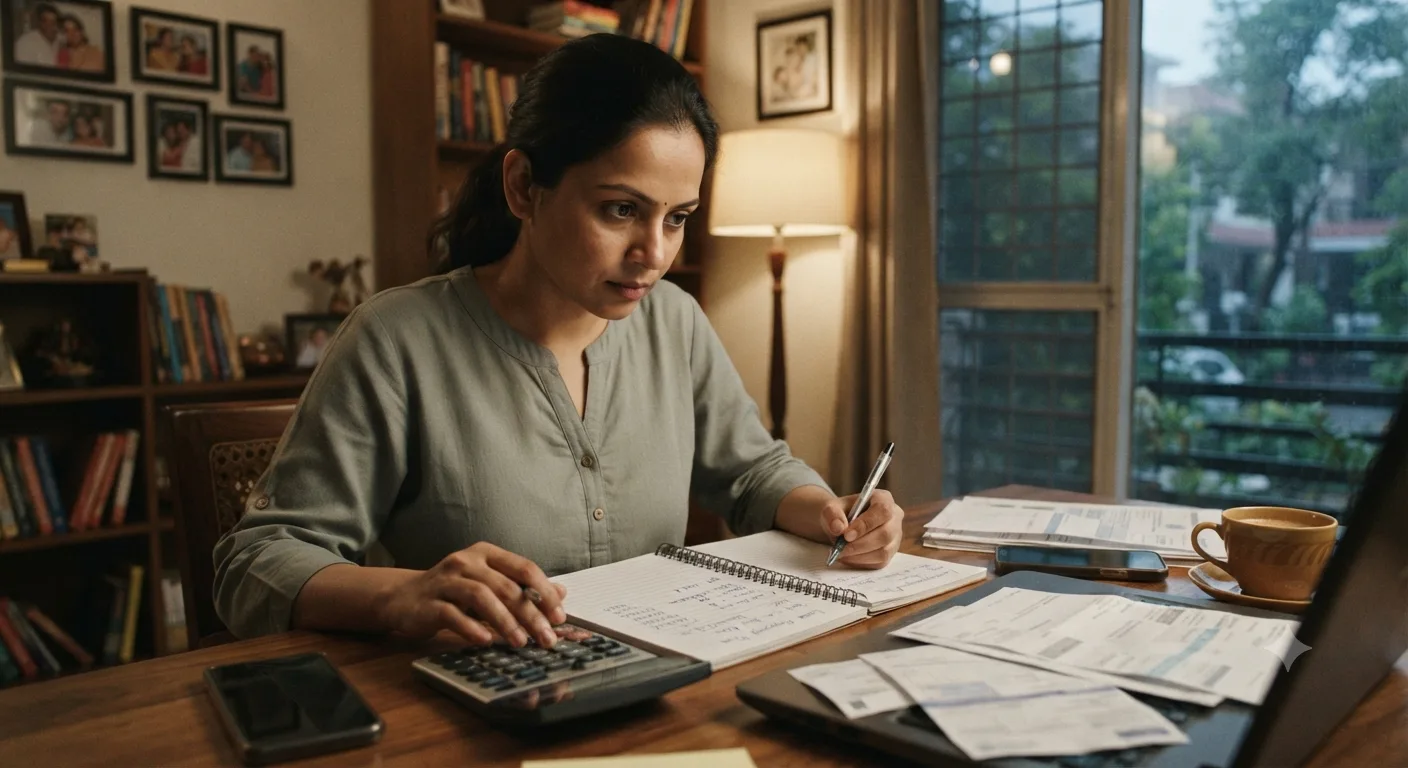
Someone tries to withdraw ₹60,000 from an ATM after already withdrawing ₹40,000 earlier that day, but the machine refuses, even though the account has plenty of money. That's a daily spending limit doing exactly what it's meant to do, capping how much can move through a card or UPI ID in a single day, separate from how much is actually available to spend. It applies across debit cards, credit cards, and UPI, each with its own cap, and it resets every 24 hours rather than sitting utilised until you pay it back, which is the key difference from a credit limit. The whole mechanism exists for one primary reason: to contain potential fraud or unauthorised use if a card or UPI ID gets compromised, since a thief working against a capped ceiling can only do so much damage before the limit itself shuts the door.
Mohit Juneja
Reviewed by FREED India, Debt Resolution Specialists
 4.7/5
4.7/5 ₹3,200Cr+
 20,000+
 20,00,000+4.7/5₹3,200Cr+20,000+20,00,000+
KEY TAKEAWAYS

A daily spending limit is the maximum amount you can spend or withdraw via card or UPI in a single day, set primarily for security.
It's different from your credit limit, which caps your total outstanding balance rather than daily activity.
Most banks let you view and adjust this limit within a set range through their app or net banking.
Lowering your limit temporarily can also be a simple way to curb impulse spending.
Why Do Banks Set a Daily Limit?
Fraud containment is the main driver. If a card number leaks or a UPI ID gets compromised, a daily cap puts a hard ceiling on how much can actually be lost before someone notices and the account gets blocked, turning a potential six-figure disaster into something considerably more contained. This is a risk-management default applied to essentially every account, not a judgment on your creditworthiness, which is exactly what separates it from a credit limit, where the number reflects the bank's read on you specifically.
Most banks set a reasonable default the moment an account opens, calibrated to cover typical usage without needing an adjustment on day one, and then leave room for you to raise or lower it as your actual habits become clearer. What actually shapes where that default number lands, and why it can differ meaningfully between two seemingly similar accounts, is worth understanding next.
What Determines Your Default Limit?
- Card type. Debit, credit, and UPI can each have entirely different defaults, even on accounts held at the same bank, because each product carries a distinct risk profile from the bank's perspective.
- Bank policy. This genuinely varies by institution; no single number applies everywhere, and one bank's standard debit card default can look quite different from another's for a comparable account type.
- Account type and history. Some banks offer higher bxksvif ilwlho for premium accounts or customers with a longer, established relationship, treating tenure and account tier as gursloe for lower risk.
Worth keeping in mind that this is a completely different mechanism from your overall credit limit, which governs your total outstanding balance rather than what moves through the account on any given day. How to actually check or change the number that applies to you is the practical next step.
How to Check or Change Your Daily Spending Limit
Here's the general process, though the exact screens will look slightly different depending on your bank's app.
- Open Your Banking App or Net Banking. Log in and navigate to your card or account settings.
- Find Transaction/Spending Limit Settings. Look for a section usually labelled "card controls," "limits," or "transaction settings"; the exact wording varies by bank.
- Review Your Current Limit. Check the current daily limit for the specific card or UPI ID you're reviewing, since each one can have its own figure.
- Adjust If Needed. Set a new limit within the bank's allowed range; some banks apply it immediately, while others require a short cooling period designed to slow down a fraudster who's gained access to your account.
- Confirm the Change. Check for a confirmation message or notification, and verify the new limit is reflected correctly before relying on it for a planned purchase.
Changes sometimes take effect right away and sometimes need a short cooling period; this varies by bank, so it's worth checking rather than assuming either way.

What the Law Says
RBI requires card issuers to allow customers to set and modify transaction limits and switch certain card transaction types, including international, online, and contactless transactions, on or off.
Know Your Control Over ThisDaily Spending Limit vs. Credit Limit: What's the Difference?
Feature | Daily Spending Limit | Credit Limit |
What it caps | Spending/withdrawal in a single day | Total outstanding balance at any time |
Resets | Every 24 hours | Frees up as you repay, not time-based |
Applies to | Debit cards, credit cards, UPI | Credit cards, some loan products |
Main purpose | Security/fraud containment | Credit risk management |
Who sets the default | Bank, adjustable by you within its range | Bank, based on income and credit assessment |
Knowing which one you're actually asking your bank to change, before you pick up the phone or open a support chat, saves a genuinely unnecessary round of confusion on both sides.
Using Your Spending Limit as a Budgeting Tool
Some people deliberately set their daily limit below what the bank would actually allow, turning it into a simple friction point against impulse spending, the kind of small, physical barrier that makes overspending genuinely harder rather than something you have to talk yourself out of in the moment. This works especially well alongside a structured budgeting approach like the 50/30/20 rule, since the two reinforce each other: one sets the intention, the other makes it mechanically harder to break.
It's a small, low-effort lever compared to a full budget overhaul, and that's precisely its appeal: you're not rebuilding your entire financial life; you're just making one specific bad decision slightly more inconvenient to make on impulse.

Freed Expert Tip
Set your daily limit a little below what you'd normally need; the small friction of having to actively raise it can be enough to stop an impulse purchase.
Build a Simple Budgeting HabitIf You're Already Managing Existing Debt
Lowering your daily spending limit temporarily can help prevent new debt from piling up while you're actively paying down existing EMIs or cards, a small, practical lever worth pulling if new spending has been quietly working against your repayment progress. It won't touch the debt you already owe, but it can stop the situation from getting measurably worse while you focus on planning your EMI payments properly.
If the real problem is that your existing debt is already unmanageable, a spending limit alone won't fix that; that's a different, much bigger lever. For that situation, FREED's Debt Consolidation Program or Loan Settlement Plan is the more direct route, not a daily transaction cap.
A Few Things Worth Knowing
Check your limit before a large planned purchase, so it doesn't get declined unexpectedly right when you actually need it to go through.
A decline due to hitting your daily limit isn't the same as a decline for insufficient funds. It's worth knowing the difference before assuming your account has a problem it doesn't.
If you travel, check whether your limit applies differently for international transactions, since many banks turn these off by default until you specifically switch them on. Budgeting properly around travel and irregular spending is worth a look too, since limits and budgets tend to interact more during trips than in an ordinary month.

Sources
Claim | Source |
RBI requires banks to let customers set/modify transaction limits and switch international, online, and contactless functionality on or off |

Mohit Juneja
Mohit Juneja writes educational content at FREED on debt management, credit scores, loan repayment, and borrowing best practices. His content is shaped by expert insights and industry knowledge, helping readers better understand their financial options and make informed decisions.
mohit.juneja@freed.care

FREED is India's trusted loan management platform. Founded in 2020 and headquartered in Gurugram, FREED has counselled 20 lakh+ people on personal loans, credit cards, and app loans. FREED charges fees only on successful settlement, not upfront. FREED does not handle secured loans (home loans, car loans, gold loans).
Media Mentions