Creditworthiness Meaning: What It Is and How to Improve It
Creditworthiness means how likely you are, in a bank or NBFC's eyes, to repay borrowed money on time and in full. It's broader than your credit score. Income, existing debt, repayment history, and job stability all factor in. Stronger creditworthiness can improve your chances of approval and may help you qualify for more favourable borrowing terms. Low creditworthiness gets you rejections or expensive credit.
Mohit Juneja
Reviewed by Shweta, FREED India's Debt Resolution Specialists team

 4.7/5
4.7/5 ₹3,200Cr+
 20,000+
 20,00,000+4.7/5₹3,200Cr+20,000+20,00,000+
Key Summary

Creditworthiness is a bank or NBFC's complete assessment of repayment reliability, not a single number.
Your credit score is part of it, but income, FOIR (fixed obligation to income ratio), and banking behaviour matter just as much.
Payment history (~35%) and credit utilisation (~30%) drive most of the score component of creditworthiness.
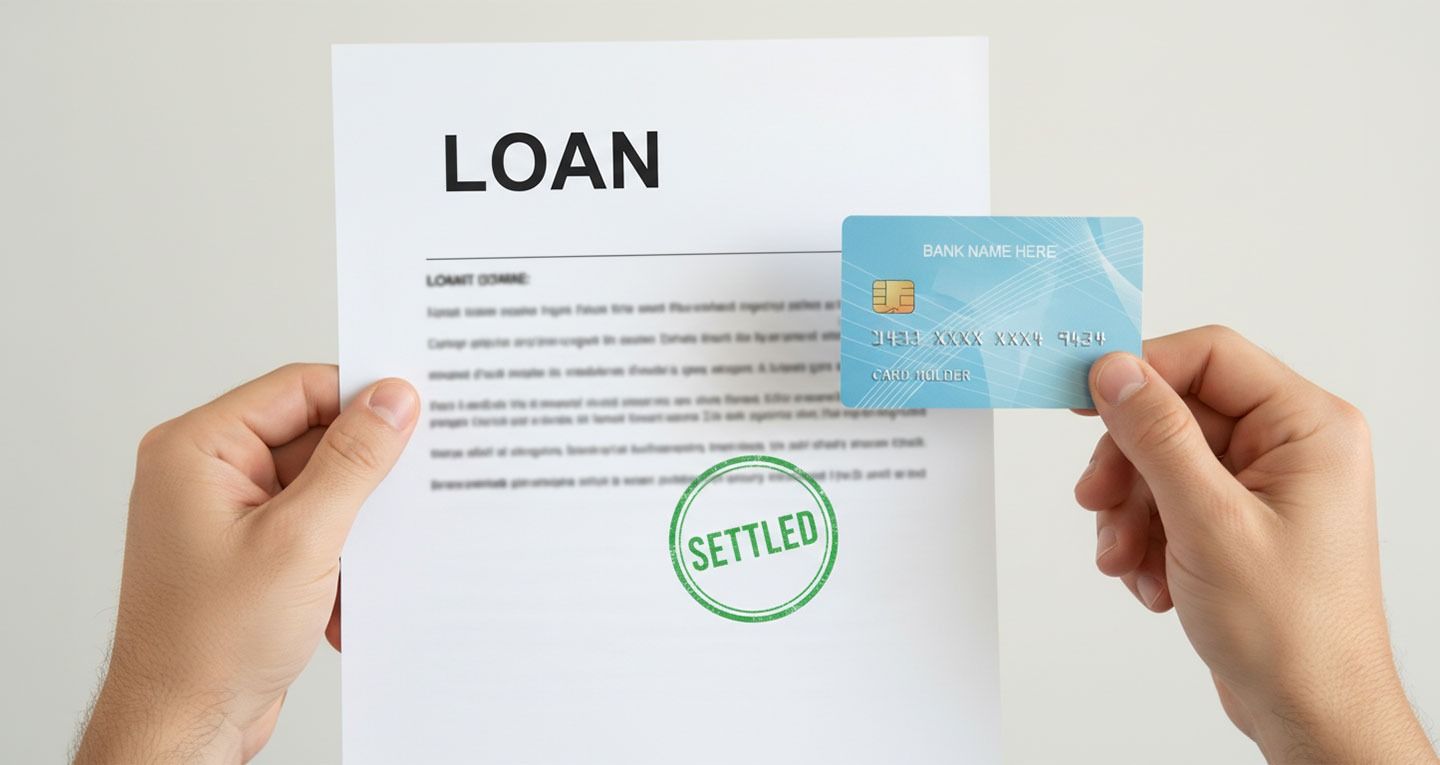
A settled loan may be reported with a ‘Settled’ status on your credit report, which can affect how lenders assess future credit applications.
Under the Credit Information Companies Regulation Act 2005, you're entitled to one free credit report per bureau every year, and the right to dispute errors.
What Is Creditworthiness?
Break the word down and it explains itself. Credit means borrowed money. Worthiness means deserving of trust. Put together, creditworthiness is a bank or NBFC's answer to one question: does this person deserve to be trusted with borrowed money right now?
It isn't a single document, and it isn't a single number either. A bank builds this picture from several pieces at once, your income, your existing debt, how you've repaid in the past, and how stable your financial situation looks going forward. Two people with the identical credit score can look completely different to a bank once income and existing obligations enter the picture, which is exactly why creditworthiness and credit score aren't interchangeable terms, even though people use them that way constantly.
This picture also isn't fixed. It moves with your financial behaviour, month by month, in either direction. A stretch of on-time payments and steady income improves it. A missed EMI or a sudden spike in credit card usage drags it down, sometimes faster than people expect. Nobody carries a permanent creditworthiness score the way a school report card gets filed away. It's closer to a running assessment, updated every time new information reaches a bureau or a bank pulls your file.
Understanding this distinction matters because a lot of financial advice online treats "improve your credit score" and "improve your creditworthiness" as the same task. They overlap heavily, but they aren't identical, and knowing where they diverge is often the difference between an application that clears and one that doesn't. Here's exactly what banks and NBFCs look at to build that fuller picture.

Know What's Actually in Your File
Free Experian based credit check, one place to see your score and what's shaping it.
Check My ScoreIs Creditworthiness the Same as Credit Score?
No. Your credit score is one input into your creditworthiness, not the whole picture, and this is exactly where most explainers stop short. You can carry a genuinely decent score and still walk away rejected, because the rest of your profile doesn't hold up the way the score alone suggests it should.
The clearest example is FOIR, your fixed obligation to income ratio. A bank looks at how much of your monthly income is already committed to EMIs and fixed obligations before it approves anything new. For example, a borrower with a high credit score but a high FOIR may still be declined, while another borrower with a somewhat lower score and a more manageable debt burden may qualify. Actual decisions depend on each lender's criteria. The score told only part of the story.
Beyond FOIR, banks and NBFCs weigh several other inputs together with your score. Income verification, through salary slips, Form 16, or bank statements, confirms what you actually earn rather than what you claim. Employment or business stability signals whether that income is likely to continue. Depending on the lender and product, bank statements and other financial records may also be reviewed to verify income and assess repayment capacity. For secured loans specifically, the quality of the collateral itself factors into the final call.
None of these inputs override your credit score entirely. They sit alongside it, and a strong score with a weak profile elsewhere still produces a weaker overall picture than the number alone suggests. The score itself, meanwhile, breaks down into five weighted factors worth understanding individually, since each one responds to a different kind of financial habit. How to get a 750 credit score in India walks through the score side of this in more depth if that's the piece you want to focus on first.
Talk Through Your Own Profile
Free counsellor call, understand what's actually being assessed in your case.
Talk to FREED TeamWhat Are the Five Factors That Determine Your Credit Score?
Factor | Approximate Weight | What It Measures |
Payment History | ~35% | On-time repayment track record |
Credit Utilisation | ~30% | How much of your available credit you're using |
Length of Credit History | ~15% | How long your accounts have been active |
Credit Mix | ~10% | Variety of credit types you manage |
New Credit Enquiries | ~10% | Frequency of new credit applications |
Why Does Creditworthiness Actually Matter?
This isn't an abstract concept banks track for their own records. It shows up in real rupee figures at moments that matter.
Take a home loan. Even a small difference in the interest rate can materially change the total interest paid over a long home-loan tenure. That's not a rounding error. It's the difference creditworthiness makes on the single largest loan most people ever take.
Emergency personal loans expose the gap even more sharply. Strong creditworthiness means fast, affordable access exactly when it's needed most, a medical bill, a sudden repair, a gap between jobs. Weak creditworthiness may result in rejection or less favourable borrowing terms. The timing is what makes this factor sting more than a routine loan application would.
Negotiating power is the quieter benefit. High creditworthiness means banks and NBFCs compete for your business rather than the other way around, translating into lower processing fees, better terms, and faster turnaround on paperwork that would otherwise take weeks. Building this kind of standing is worth the effort for reasons well beyond a single loan application. Just as important as building it is knowing what quietly damages it, often without the borrower even realising.
See What's Shaping Your Terms Right Now
Free assessment, understand where you actually stand before your next application.
Talk to FREED TeamWhat Commonly Hurts Your Creditworthiness?
- Missing or delaying an EMI payment, even once. Late or missed payments may be reported to credit bureaus and can negatively affect your credit profile.
- Maxing out credit cards. Using 60-70% or more of your available limit drags your utilisation ratio down even if you pay the full bill every month, since the balance at the billing-cycle snapshot is what actually gets reported, not your final payment.
- Applying for multiple loans or cards in a short window. Each application triggers a hard enquiry, and several enquiries clustered together read as financial stress to the next bank reviewing your file.
- Settling a loan for less than owed. This records as "Settled" on your credit report and stays visible for up to 7 years, though the score's actual drag fades over time as positive history accumulates elsewhere. It's a factual credit-report outcome, not a character judgment on the borrower.
- Defaulting on any loan. This is one of the single most damaging events a credit file can carry, and recovery from it takes considerably longer than recovery from a missed payment or two.
- Closing old accounts. This removes positive history and shortens your average account age, both of which work against you even though closing a card can feel like a responsible move.
- Guaranteeing someone else's loan carelessly. If you guarantee a loan, you may become responsible for the debt if the borrower defaults, and the account's repayment history may affect your credit profile.
- Having no credit history at all. This one surprises people. No data to assess isn't the same as a clean record. A limited credit history can make it harder for lenders to assess your repayment behaviour and may affect approval or loan terms.
If a settlement or default is already sitting on your file, can you use a credit card after debt settlement covers exactly what changes and what doesn't once that mark is in place.

What the Law Says
RBI requires credit information companies to provide eligible consumers access to a free full credit report at least once a year, subject to the applicable rules.
Talk to FREED TeamHow to Improve Your Creditworthiness, Step by Step
Improving creditworthiness takes consistency, not a single dramatic action. Every input feeding into it, your score, your FOIR, your banking behaviour, responds to sustained habits over months, not a one-time fix applied right before an application. The steps below work together rather than in isolation, and skipping one tends to slow down the others.
Step 1: Know Exactly Where You Stand
Pull your credit report and read it fully. Flag any errors: a loan you never took, a payment marked missed that wasn't. Errors are more common than most people expect.
Step 2: Pay Every Bill on Time, No Exceptions
Set up auto-pay for every EMI and card bill. One missed payment costs months of recovery effort, far more than the few minutes auto-pay takes to configure.
Step 3: Bring Utilisation Below 30%
Reduce outstanding card balances where possible. A higher credit limit may also reduce your utilisation ratio, but only consider requesting one if it won't encourage additional borrowing. Both lower the ratio that matters most after payment history itself.
Step 4: Keep Old Accounts Open
Don't close your oldest credit accounts. Use them occasionally for a small purchase, then pay it off immediately, just enough to keep the account active.
Step 5: Space Out New Credit Applications
Apply only when genuinely needed. Avoid applying for multiple loans or cards within a short period unless genuinely necessary.
Step 6: Clear Overdue Amounts First
Prioritise anything currently overdue above everything else. Prioritise overdue accounts. Bringing payments up to date stops further delinquency from accumulating, although improvements to your credit profile may take time to appear.
Step 7: Check Your Report Every Few Months
Catch errors before they compound. A wrongly reported missed payment can sit unnoticed for months if nobody's checking.
If several overlapping EMIs are what's making Step 3 or Step 6 feel out of reach, how loan consolidation works addresses that underlying load directly rather than asking you to out-pay it through habits alone.
Check What's Actually Affecting Your Score
Free Experian based report, see the specific factors dragging your number down.
Check My ScoreHow Long Does It Take to Build or Rebuild Creditworthiness?
Starting Point | Approximate Timeline |
No credit history | 6-12 months to establish a usable profile |
Poor score from missed payments | 12-24 months of consistent on-time behaviour |
Default or settlement on record | 2-4 years of steady improvement (meaningful score movement can begin within 18-24 months) |
Good score aiming for excellent | 12-18 months of focused effort |
How FREED Helps When the Real Issue Is Debt Load, Not Just Habits
The step-by-step habits above work when the underlying debt is genuinely manageable. But if your FOIR is high because of several overlapping EMIs, or if a default or settlement is already sitting on your report, habits alone won't move the needle fast enough to matter within a realistic timeframe.
If you're still repaying but your FOIR is uncomfortably high across multiple loans, FREED's Debt Consolidation Program, known to customers as Reduce My EMI, assesses your full profile and matches you to a lending partner from its network. A lending partner may provide a new loan that is used to repay eligible existing unsecured debts, subject to approval and the applicable process. Where approved on suitable terms, consolidation can combine eligible unsecured debts into a single loan and may reduce the monthly EMI. A lower EMI can reduce your FOIR, while consistent repayment of the new facility may support your credit profile over time. FREED charges its success-based fee only once consolidation actually completes.
If repayment has genuinely become impossible, FREED's Debt Resolution Program, known as Settle My Loans, is a separate path built for that specific situation, not a shortcut for someone who can still manage their existing debt. Settlement is not something a borrower chooses out of preference. In some cases, FREED may negotiate a settlement for less than the outstanding amount. Actual outcomes vary by lender, account and borrower circumstances, and no specific reduction is guaranteed.
These two programs stay separate for a reason, since applying the wrong one to your situation wastes time you don't have to lose. What consolidation actually involves and how settlement works step by step are both worth reading in full before deciding which fits.
Source
Claim | Source |
One free credit report per bureau per year, plus right to dispute errors | Credit Information Companies Regulation Act 2005 and RBI directive (https://www.rbi.org.in/commonman/english/scripts/Notification.aspx?Id=1884) |
Payment history ~35%, utilisation ~30%, credit history length ~15%, credit mix ~10%, new enquiries ~10% | Industry consensus, major credit bureaus publish this general range |
Settlement waiver "up to 50%*" | FREED's product standard, bank-negotiated outcomes vary |
"Settled" mark visible for up to 7 years, score recovery can begin within 18-24 months | Credit bureau standard (Credit Information Reporting Directions); score recovery timeline is FREED's observed guidance, not a bureau-published figure |

Mohit Juneja
Mohit Juneja writes educational content at FREED on debt management, credit scores, loan repayment, and borrowing best practices. His content is shaped by expert insights and industry knowledge, helping readers better understand their financial options and make informed decisions.
mohit.juneja@freed.care

FREED is India's trusted loan management platform. Founded in 2020 and headquartered in Gurugram, FREED has counselled 20 lakh+ people on personal loans, credit cards, and app loans. FREED charges fees only on successful settlement, not upfront. FREED does not handle secured loans (home loans, car loans, gold loans).
Media Mentions