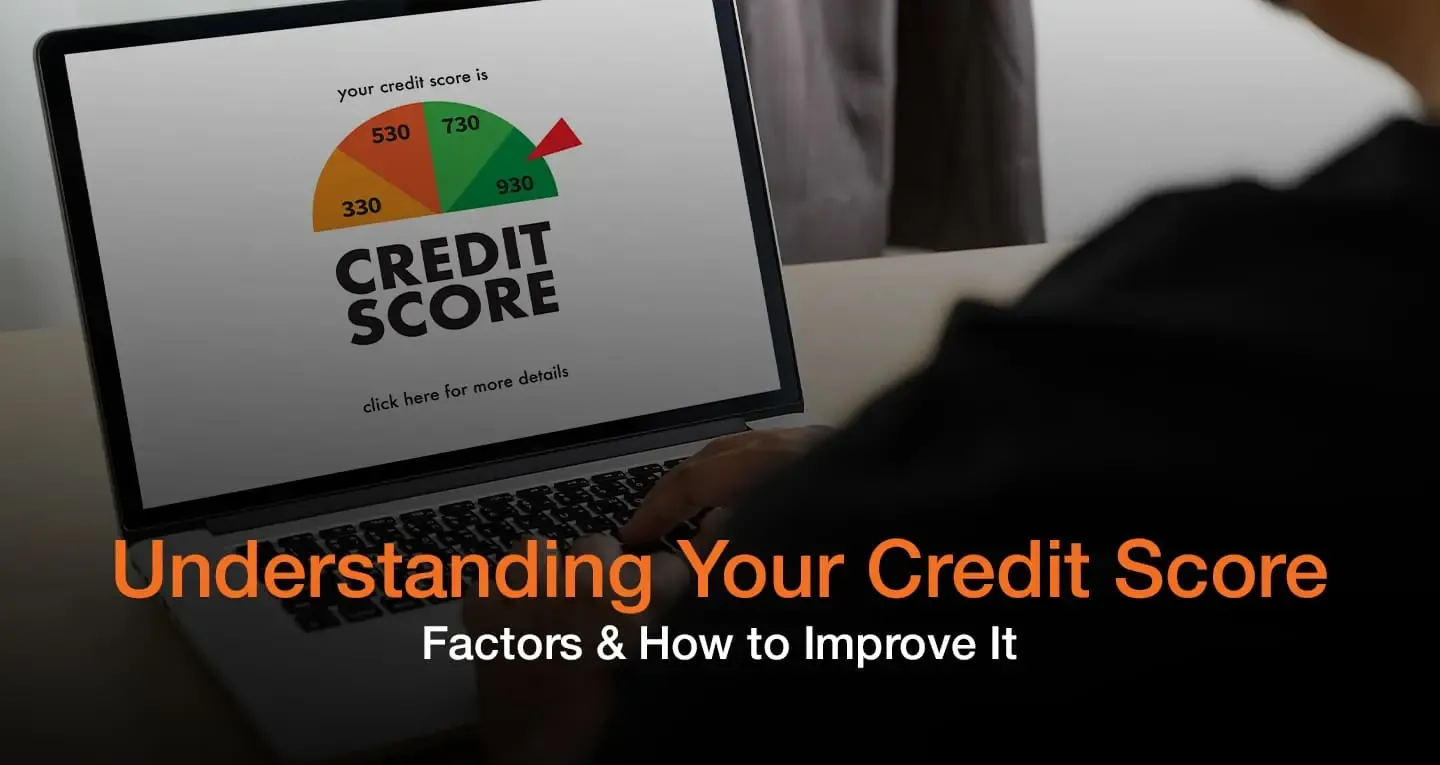
What Is a Revolving Credit Facility and How Does It Work?
A revolving credit facility is a credit arrangement where a lender sets a maximum limit, and you can draw funds, repay, and draw again without reapplying each time. Interest is charged only on the amount actually used, not the full limit. A credit card is the most common example for individuals.
Mohit Juneja
Reviewed by FREED India, Debt Resolution Specialists
 4.7/5
4.7/5 ₹3,200Cr+
 20,000+
 20,00,000+4.7/5₹3,200Cr+20,000+20,00,000+
Key Takeaways

A revolving credit facility lets you borrow, repay, and reborrow repeatedly up to a set limit, unlike a term loan's one-time lump sum.
Credit cards are the everyday example of revolving credit for individuals in India, businesses use it as a working capital line.
Interest applies only to the amount used, but carrying a balance month to month means interest keeps compounding on the unpaid part.
Paying only the minimum due keeps the account technically current while the outstanding balance and interest quietly grow.
Consistently carrying a revolving balance can make credit card debt grow quickly because interest continues to accrue on the unpaid balance.
What is a revolving credit facility?
A revolving credit facility works on a completely different logic from most loans you're used to dealing with. A term loan, like a personal loan or a car loan, hands you one lump sum on day one. From that point, you're locked into a fixed repayment schedule, usually a set EMI every month for a set number of years, until the loan is fully closed. A revolving credit facility doesn't work that way at all.
Instead, the lender agrees to a maximum limit, say ₹1,00,000, and leaves it to you how you use it. You can draw ₹20,000 this month, repay it next month, draw ₹35,000 the month after, repay part of it, and keep going. There's no fresh loan application every time you want to use the facility again. It simply sits there, ready, as long as you stay within your sanctioned limit.
For individuals in India, the credit card is the clearest and most common example. Every purchase draws down from your available limit. Every payment you make restores it by that same amount. Swipe ₹8,000, and your available limit drops by ₹8,000. Pay off that ₹8,000, and the full limit is back, immediately, with no paperwork in between.
For businesses, the same structure shows up as a working capital line or an overdraft account against a current account. A small trader might draw ₹2,00,000 to buy stock ahead of a festive season, repay it once the stock sells, then draw again for the next cycle. This is built specifically for expenses that repeat and fluctuate, unlike a term loan, which is built for one defined, one-time need such as buying equipment or expanding a shop.
The constant across both cases, individual or business, is this: you only pay interest on the portion of the limit you've actually used and are still carrying, never on the full sanctioned amount sitting unused.
How does a revolving credit facility work?
Take a concrete example. Suppose your credit card has a ₹50,000 limit. In a given billing cycle, you spend ₹15,000. Your available limit immediately drops to ₹35,000, even though your sanctioned limit is still ₹50,000. If you pay off the full ₹15,000 by your due date, your available limit goes straight back up to ₹50,000, ready to be used again from the next cycle.
Here's the part that catches a lot of cardholders off guard. Most credit cards in India offer an interest-free grace period, typically 20 to 50 days, measured from the date of your purchase to your payment due date, though the exact window varies by card issuer and isn't guaranteed across all cards. During this window, you can use the card and repay later without paying a single rupee in interest, provided you clear the entire statement amount, not just part of it, by the due date. Subject to your card issuer's terms and conditions.
The moment you pay less than the full amount, even by ₹500 on a ₹15,000 bill, the grace period disappears for that balance. Subject to your card issuer's terms and conditions.
Most cards also come with a minimum due amount, usually a small percentage of your outstanding balance, often just enough to keep the account marked as current with the bank. Paying only this minimum avoids a late payment flag, but it does very little to bring down what you actually owe, since a large share of that payment goes toward interest rather than principal. Every rupee you do repay, whether it's the minimum or the full amount, refills your available limit by that exact sum, which is what makes the facility "revolving" in the first place: use it, repay it, and it's available again, on repeat, for as long as the account stays open.

What the Law Says
Under RBI guidelines, banks must clearly disclose the interest rate, minimum due calculation, and all charges on revolving credit statements.
Check what your credit card statement is really showing you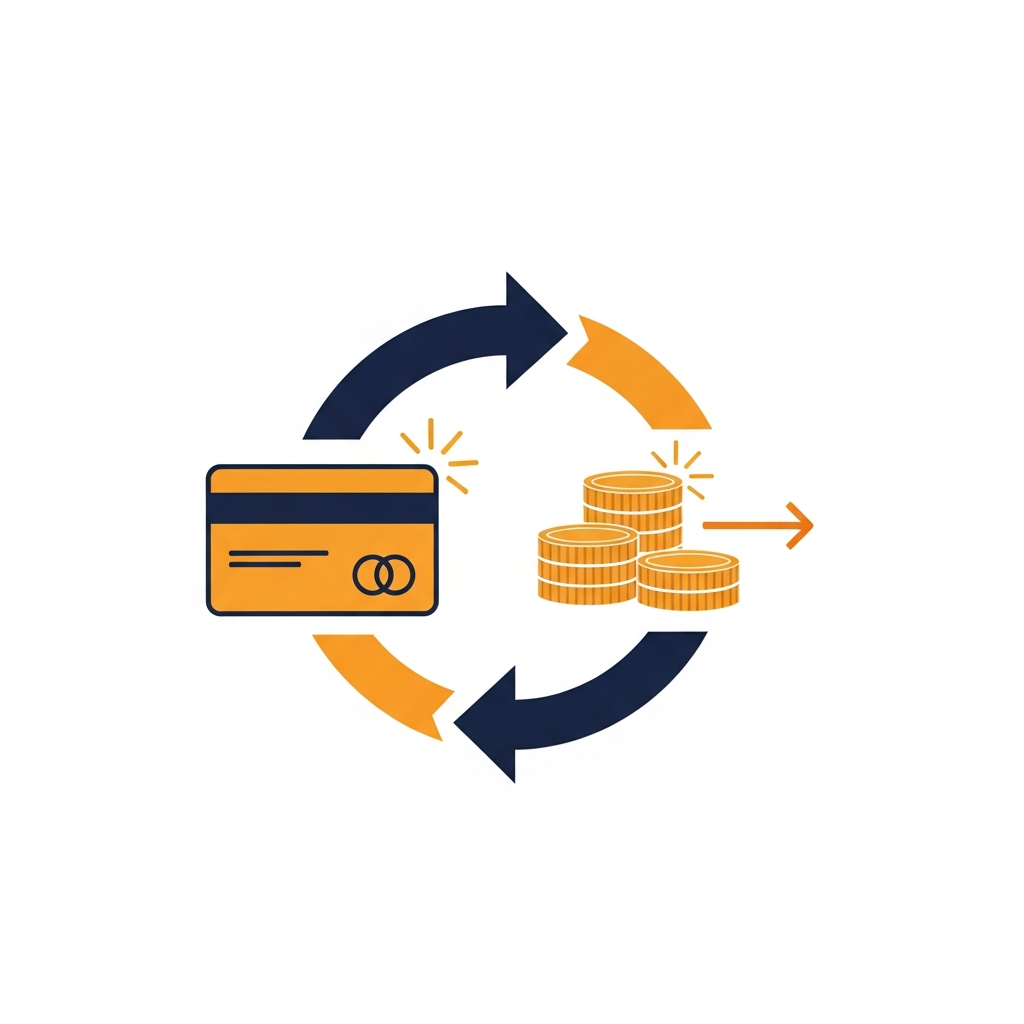
Revolving credit vs term loan, what's the difference?
The two credit types run on opposite logic, and understanding which one fits your actual situation matters more than most borrowers realise before they sign up for either.
Feature | Revolving Credit | Term Loan |
How funds are given | Reusable limit, draw and repay repeatedly | One lump sum, given once |
Repayment | Flexible, minimum due or full balance | Fixed EMI over a set tenure |
Interest charged on | Only the amount used and carried forward | The full loan amount, reducing over time |
Common example | Credit card, overdraft, business credit line | Personal loan, car loan, home loan |
Best suited for | Ongoing or unpredictable expenses | A defined one-time need |
The table captures the mechanics, but the practical difference comes down to predictability versus flexibility. A term loan gives you certainty: you know the EMI amount, you know the exact date the loan ends, and the total interest is calculated upfront. That predictability makes term loans a natural fit for a single, defined expense, a wedding, a medical procedure, buying a vehicle, where you know the amount you need and want a clear finish line.
Where is revolving credit used in India?
- Credit cards are the most widely used form of revolving credit for individuals, issued by nearly every major bank and a growing number of NBFCs. Your limit is typically set based on your income, existing obligations, and credit history, and it can be revised upward or downward over time based on how you use the card.
- Overdraft accounts let salaried employees or fixed deposit holders draw beyond their available account balance, up to a pre-approved limit tied either to their salary account or to a fixed deposit they hold with the bank. As money comes back into the account, whether from salary credit or repayment, the overdrawn amount reduces and the limit refills.
- Business working capital lines give small and medium businesses a running credit facility specifically to manage inventory purchases, payroll, and the short-term cash gaps that happen between when a business pays its suppliers and when it collects from its customers. Many working capital facilities are reviewed or renewed periodically, depending on the lender's policies.
- Many fintech lenders offer faster digital approvals, subject to eligibility checks. These are increasingly used for everyday spending rather than large, planned purchases, which makes the discipline of tracking usage even more important.
Each of these follows the exact same underlying mechanic, draw, repay, draw again, just scaled and packaged differently depending on who's using it and for what purpose.
What are the real risks of revolving credit?
Used with discipline, revolving credit is genuinely one of the more useful tools available to a borrower. Used carelessly, it's also one of the easiest ways to end up carrying debt you didn't consciously decide to take on.
The first risk is compounding. Interest on a revolving balance doesn't apply once and stop, it keeps accruing on whatever amount you're still carrying, every single day, until that balance is cleared in full. Carry ₹20,000 for three months at a typical card rate of around 3% per month, and you're looking at close to ₹1,800 in interest alone, on top of whatever new spending you add during those same three months.
The second risk is the minimum due illusion. Paying the minimum keeps your account in good standing on paper and avoids a late payment mark, but it does almost nothing to reduce your actual debt. If your minimum due is 5% of a ₹20,000 balance, that's ₹1,000, and a large chunk of that ₹1,000 goes toward interest rather than principal, meaning your real outstanding barely moves month to month even though you're technically paying on time.
The third risk is how easy reborrowing makes overuse. There's no fresh application, no cooling-off period, no moment where you're forced to reconsider. The limit simply sits there, ready to use again the instant you repay any part of it. That frictionless access is exactly what makes it simple to lose track of how much you're really carrying across a card, or across two or three cards at once.

FREED Expert Tip
Paying only the minimum due feels manageable, but the interest on the rest keeps adding up. Check your statement's "total amount due" every month, not just the minimum.
See what your real balance is costing youHow the minimum due trap builds up on revolving credit
This is where a manageable-looking balance quietly turns into a real problem, and it's worth walking through slowly, because at no single step does it look dangerous.
- Month one: you're carrying a ₹20,000 balance from last cycle and add ₹5,000 in new spending, taking your outstanding to ₹25,000. You pay the minimum due of ₹1,250. The card stays active, no red flags anywhere, nothing on your statement screams warning. But interest has already started accruing on the ₹23,750 you didn't pay off.
- Month two: you add another ₹5,000 in spending on top of the carried balance, and pay the minimum again. Now interest is compounding on a larger base than before, because last month's unpaid interest has itself joined the balance being charged interest this month.
- Repeat this for six to eight months, and the outstanding balance has grown steadily even though every single payment was made strictly on time, no missed due dates, no default flags, nothing that would show up as a problem on a quick glance at your account status. A borrower who started at ₹20,000 can easily find themselves carrying ₹35,000 to ₹40,000 by month eight, purely from the gap between minimum due and actual accruing interest.
This is exactly the point where the ladder of options starts to matter. If you're still able to make payments but the balance keeps climbing regardless of how disciplined you are, consolidating the revolving debt into one fixed, lower EMI is usually the more effective move. It converts an open-ended, compounding balance into a defined loan with a fixed end date, which stops the compounding entirely.
If the balance has grown well past what your income can realistically clear, even with consistent effort, that points to a different situation, and settlement becomes the option worth exploring, framed clearly as a last resort for genuine inability to repay, not a first response to a growing card bill.

Credit Card Balance Growing Every Month?
See if consolidation can bring it down to one lower EMI.
Check My Consolidation EligibilityAre You in a Loan Trap? Quick Check
Move the slider to your total EMIs as a % of monthly salary. See your debt stress level instantly.
EMIs as % of Monthly Salary
How FREED helps when revolving credit card debt gets out of hand
Where the right answer lands depends entirely on which side of the ladder you're currently standing on, still paying but stretched, or genuinely unable to keep up.
For borrowers who are still current on every payment but stretched thin, juggling one or two credit cards alongside a personal loan or two, FREED's Debt Consolidation Program assesses the full financial picture, all existing loans, card dues, and income, and matches the borrower to a lending partner from its network. That partner disburses a single new loan that pays off the existing card dues and other eligible unsecured debt instantly, leaving the borrower with one loan, one lender, one EMI, and one due date, at a lower total EMI than what they were juggling before. Debt Consolidation may combine eligible unsecured debts into a single repayment, depending on the approved loan terms. The score tends to improve afterward rather than worsen, since utilisation drops sharply once multiple accounts are paid off and settled into one.
For borrowers who've genuinely fallen behind, missed payments piling up, interest outpacing what income can realistically cover, month after month, FREED's Debt Resolution Program works differently. It runs through the SPA (Special Purpose Account) mechanism, a dedicated savings account held in the customer's own name by an independent trustee, not by FREED. FREED helps borrowers settle their unpaid/overdue loans at up to 50% less.* The customer deposits a fixed monthly amount into this account instead of making card payments, and once the corpus builds to a sufficient level, FREED negotiates with the bank to settle the debt for a reduced lump sum, marked as "Settled" on the credit report.
Both programs run on a success-based fee, meaning nothing is charged unless the process actually completes, whether that's a consolidated loan getting disbursed or a settlement getting finalised with the bank.
What helps you use revolving credit without getting stuck
- 1
Pay the full statement amount when you can
Pay the full statement amount when you can, not just the minimum due. Clearing the entire balance every single cycle is, by a wide margin, the single biggest factor in avoiding accumulated interest, more impactful than any card feature, cashback offer, or reward point programme attached to the account.
- 2
Keep utilisation
Keep utilisation below 30% of your total available limit, added up across every card you hold, not just one. Even with a perfect on-time payment record, consistently high utilisation is generally considered poor credit practice, and it can affect your score independently of whether you're actually missing payments.
- 3
Treat the credit limit as a safety net, not as spending power.
Treat the credit limit as a safety net, not as spending power. The available limit isn't extra income sitting there for you to use, it's borrowed money that comes with a real cost the moment it's carried past the due date. A useful habit is to mentally treat your card limit the way you'd treat an emergency fund, there for
- 4
Review the statement every single cycle
Review the statement every single cycle, not just the amount due at the top of the page. Look specifically at the total outstanding balance, the interest charged that cycle, and how much of your last payment actually went toward reducing the principal versus simply covering interest that had already accrued.

Mohit Juneja
Mohit Juneja writes educational content at FREED on debt management, credit scores, loan repayment, and borrowing best practices. His content is shaped by expert insights and industry knowledge, helping readers better understand their financial options and make informed decisions.
mohit.juneja@freed.care

FREED is India's trusted loan management platform. Founded in 2020 and headquartered in Gurugram, FREED has counselled 20 lakh+ people on personal loans, credit cards, and app loans. FREED charges fees only on successful settlement, not upfront. FREED does not handle secured loans (home loans, car loans, gold loans).
Media Mentions