Minimum CIBIL Score Explained: What Banks Actually Look For
A minimum CIBIL score is the lowest score a bank or NBFC (non-banking financial company, a lender that isn't a traditional bank) will accept before approving a loan or credit card. Most banks want 700 or higher for credit cards, and somewhere between 650 and 750 for personal loans. There is no single official cutoff. Each bank sets its own bar, based on the product and your full profile.

Mohit Juneja
Reviewed by FREED India, Debt Resolution Specialists
 4.7/5
4.7/5 ₹3,200Cr+
 20,000+
 20,00,000+4.7/5₹3,200Cr+20,000+20,00,000+
Key Takeaways

No fixed minimum CIBIL score exists in India for every product. Most banks want 700 or higher for credit cards.
CIBIL score runs from 300 to 900. Below 650 is weak. Above 750 is strong.
A score under 700 can still get approved sometimes, but usually at a higher interest rate and a lower limit.
Every loan or credit card application creates a hard enquiry that future lenders may consider during credit assessment.
Settled or written-off accounts remain part of your credit history and may be considered by future lenders.
What Is the Minimum CIBIL Score for a Loan or Credit Card?
There's no official number written down anywhere that every bank in India follows. What exists instead is a rough consensus, built up product by product, that most lenders quietly work around.
For a credit card, most banks look for a score of 700 to 750. Below that range, approval gets harder, and the cards you do get approved for usually come with a smaller limit. For a personal loan, the range is a little wider, typically 650 to 750, because personal loans are unsecured (no property or asset backs the loan, so the bank is taking on more risk with a lower score). Home loans sit at 700 and above in most cases, but because the loan is secured against the property itself, some banks show more flexibility here than they would for a credit card or personal loan.
The CIBIL score itself runs on a scale of 300 to 900. The higher end of that scale, generally above 750, is where you start unlocking the best interest rates and the highest loan amounts. Anything below 650 puts you in a difficult zone where approvals slow down and rejections become more common.
It helps to remember that this number is not a pass or fail gate on its own. A bank looks at your score alongside your income, your existing EMIs, and your overall repayment behaviour. Two people with the same 680 score can get very different offers, because the rest of their profile isn't identical.

See If Consolidation Fixes Your EMI Load
One lower EMI, one date, better score over time.
Start My Free EMI CheckWhy Do Banks Set a Minimum CIBIL Score?
Banks aren't judging your character when they check this number. They're reading it as a risk signal, nothing more. A CIBIL score is built from your repayment history, how much of your available credit you're using, and how many new loans or cards you've applied for recently. To a bank, a lower score simply means a higher chance that repayments could slip.
This confuses a lot of people who are paying on time every month but still get rejected or offered a smaller limit than expected. If you're new to credit, or you have what's called a thin file (very little credit history for the bureau to score you on), your score can sit lower even though you've never missed a payment. The score reflects available data, not effort or intent.
This is also why unsecured products, credit cards and personal loans, tend to carry a higher minimum than secured products like home loans. With a secured loan, the bank has the property to fall back on if things go wrong. With an unsecured loan, all the bank has is your promise to repay and your credit history. Naturally, the bar sits a little higher.
None of this means the system is against you. It means the bank is pricing risk the same way an insurance company would, using the data available to it at the time of your application.
What Is a Good CIBIL Score vs a Low One?
CIBIL scores fall into broad bands, and knowing which one you're in tells you roughly what to expect from a bank.
- 300 to 549, Poor: Approvals are rare at this level. Most banks will decline outright, and the few offers available usually come with high interest and low limits.
- 550 to 649, Fair: Some lenders will consider you, but expect stricter terms, smaller amounts, and higher interest than someone with a stronger score.
- 650 to 749, Good: This is where most mainstream approvals start to open up. Personal loans and many credit cards become realistic options.
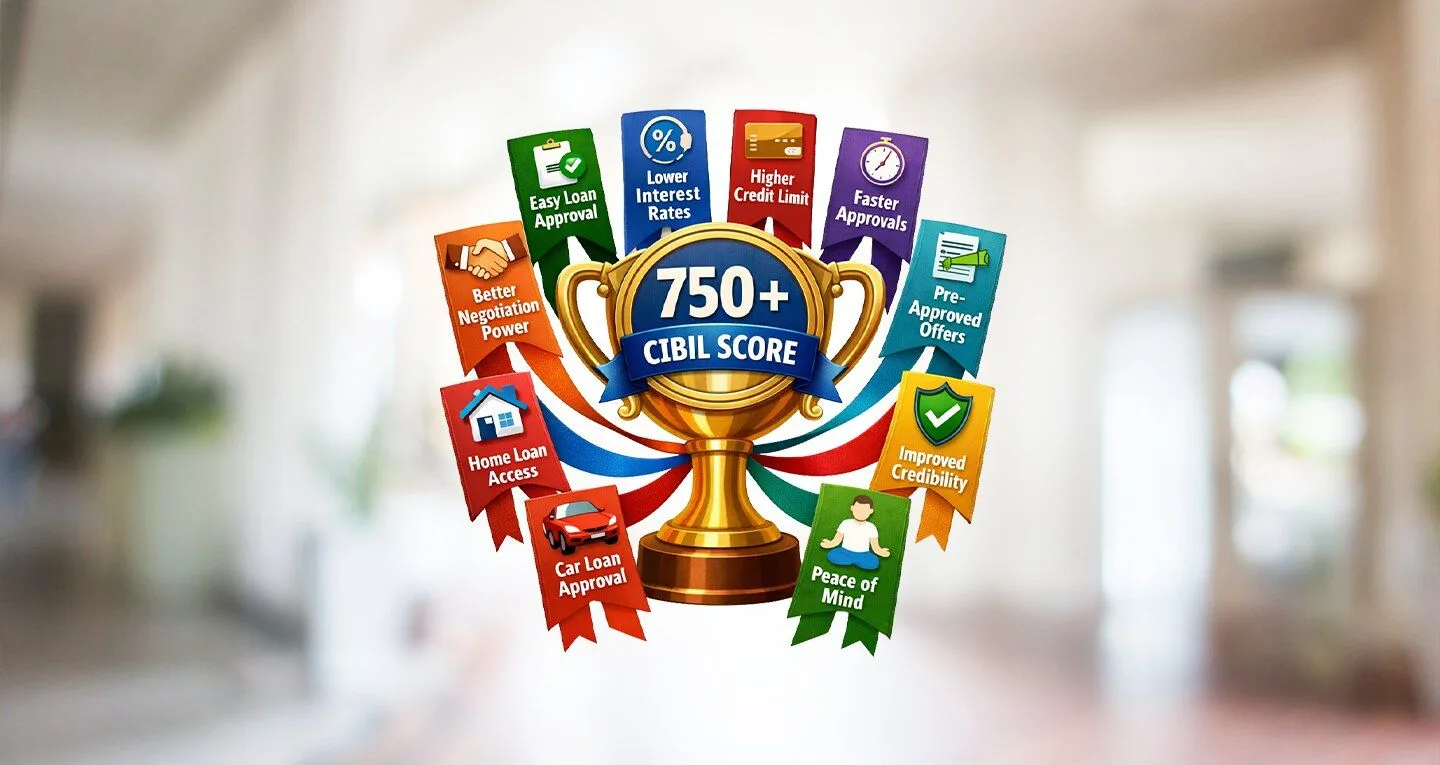
- 750 to 900, Excellent: This band unlocks the best interest rates, higher loan amounts, and faster approvals across nearly every product.

FREED Expert Tip
Checking your own CIBIL score is called a soft enquiry. It never lowers your score, unlike a bank's hard enquiry during a loan or card application.
Check your credit healthHow Banks Check Your CIBIL Score During Approval
Minimum CIBIL Score by Product Type
Product | Typical Minimum Score | Notes |
Credit Card | ~700 to 750 | Varies by issuer and card type |
Personal Loan | ~650 to 750 | Unsecured, so the bar sits higher |
Home Loan | ~700 and above | Secured against property, some flexibility |
Secured Credit Card | No minimum score needed | Backed by a fixed deposit instead |
The pattern across this table is simple. The less security a bank has behind a product, the more it leans on your CIBIL score to judge risk. A credit card and a personal loan carry no collateral, so the score does more of the work. A home loan has the property itself as backup, which is why some banks show more room to work with even at a slightly lower score. A secured credit card flips the entire equation. Since your own fixed deposit backs the card, the bank isn't taking on real credit risk, so it can approve you without checking a minimum score at all.
Rates and ranges shown are indicative. Final terms decided by the bank. FREED is not a Loan Provider. No outcome is guaranteed. Please verify directly with your bank.
What Are Your Options If Your Score Is Below the Minimum?
1. Check your report for errors first. This costs nothing and can be done directly with CIBIL or through Credit Insights. A wrong entry, a loan marked active that you already closed, or a payment marked late that you made on time, can work against you for no real reason. Disputing and correcting this is generally considered the fastest, most direct fix available.
2. Work on utilisation and on-time payments. Credit utilisation (how much of your card limit you're actually using) plays a big role. Keeping it under 30% of your limit, and paying every EMI and card bill on time, moves your score up steadily over a few months.
3. If multiple EMIs are pulling your score down, look at consolidation. FREED's Debt Consolidation Program may combine eligible unsecured debts into a single repayment, depending on the approved loan amount, tenure, and lender terms. Fewer open accounts and one clean repayment record is one of the things that helps a score recover over time
Get your free annual report
RBI (Reserve Bank of India) gives you one free full credit report every year from each bureau. No bank can charge you for this.
Get your free annual reportHow FREED Helps You Fix a Low CIBIL Score
If multiple loans and EMIs are the reason your score is stuck below where you need it, FREED's Loan Consolidation Plan (LCP) is built for exactly this situation. FREED first looks at your full profile, your existing loans, your income, and your repayment pattern, then matches you to a suitable lending partner from its network. That lending partner disburses one new loan that pays off your existing eligible debts instantly. From there, you're left with one loan, one EMI, one due date, instead of juggling several.
To qualify for the Loan Consolidation Plan, a CIBIL score of 700 or above is generally required, along with a steady income. There is no fee charged to the customer for the plan itself, and FREED charges you no fee for this service; any processing or foreclosure cost involved sits with the lending partner, not with FREED. This move is generally viewed as responsible repayment management, since you shift from several scattered payments to one on-time payment, which is reflected favourably in future lender assessments as your reporting stabilises.
See If Consolidation Fixes Your EMI Load
One lower EMI, one date, better score over time.
Start My Free EMI CheckTips to Cross the Minimum CIBIL Score Faster

Mohit Juneja
Mohit Juneja writes educational content at FREED on debt management, credit scores, loan repayment, and borrowing best practices. His content is shaped by expert insights and industry knowledge, helping readers better understand their financial options and make informed decisions.
mohit.juneja@freed.care

FREED is India's trusted loan management platform. Founded in 2020 and headquartered in Gurugram, FREED has counselled 20 lakh+ people on personal loans, credit cards, and app loans. FREED charges fees only on successful settlement, not upfront. FREED does not handle secured loans (home loans, car loans, gold loans).
Media Mentions