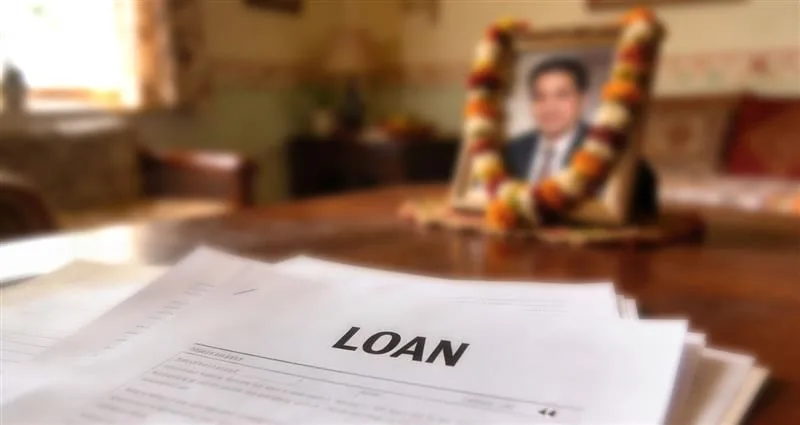
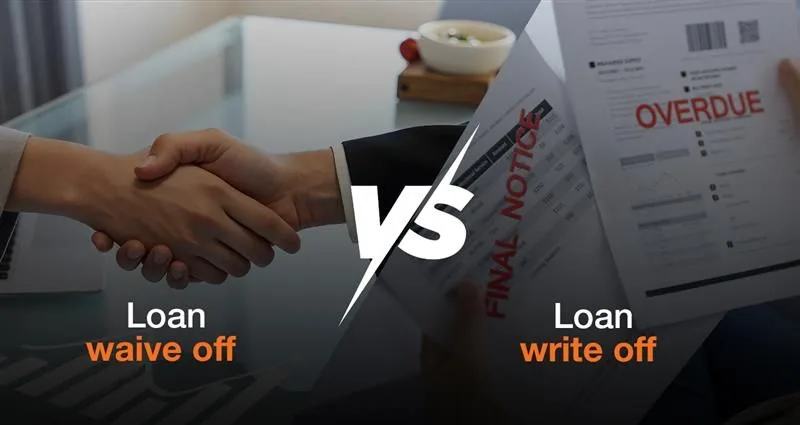
Recovery of loan after death of principal borrower: what the law says
Recovery of loan after death of principal borrower happens when a bank pursues repayment from the deceased person's estate, and from any co-borrower or guarantor, after the original borrower passes away. Legal heirs are generally liable only to the extent of the assets they inherit from the deceased, unless they separately signed as co-borrowers or guarantors.
Mohit Juneja
Reviewed by FREED India, Debt Resolution Specialists
 4.7/5
4.7/5 ₹3,200Cr+
 20,000+
 20,00,000+4.7/5₹3,200Cr+20,000+20,00,000+
KEY TAKEAWAYS

Recovery of loan after death of principal borrower is limited to the deceased's estate, not the heir's personal income.
Co-borrowers and guarantors remain fully liable and banks can pursue them directly.
Banks generally have around 3 years from the loan's due date, or the last written acknowledgment of the debt, to file a recovery suit.
If the estate can't cover dues, banks go through a civil suit or the DRT, naming legal heirs as parties, without making them pay from their own pocket.
Recovery agents can't pressure family members who aren't co-borrowers or guarantors. That goes against RBI's Fair Practices Code.
What does recovery of loan after death of principal borrower mean?
When someone dies with a loan or credit card bill still outstanding, the account doesn't just close. The bank still has a job to do, and it has a fixed legal path for doing it. "Recovery" here is the bank's process for collecting what's owed. It isn't an automatic handover of debt to the family, and that gap between the two is where most of the fear comes from.
The bank looks first at the deceased person's estate, their bank balance, fixed deposits, property, whatever they left behind. If there was a co-borrower or guarantor on the loan, the bank can go to them directly too, and their liability doesn't shift at all because of the death. What almost never happens is a personal debt landing on someone who wasn't part of the loan to begin with.
Hold onto that distinction before reacting to a call or a letter. Estate-based recovery means the bank can only claim from what the deceased actually left behind. Personal liability means someone signed up to repay the loan themselves, as a co-borrower, and that was always theirs regardless of what happens to anyone else. A death doesn't create new liability. It triggers the process to recover from what already exists and from whoever was already bound by contract.
If the deceased had loan insurance, check it first. A credit-life or loan protection policy can clear the balance directly with the insurer, sometimes before the estate or any family member is even brought into it.

Not sure if you're liable for a family member's loan?
Get your actual legal position checked before you respond to any notice.
Get My Legal Position CheckedWhy do banks pursue recovery even after the borrower has died?
A loan account doesn't shut down the moment someone dies. Banks generally attempt recovery before classifying a loan as a write-off. Writing off a loan is the bank's last resort, not the first, because every write-off is money the bank loses outright.
Unsecured loans get treated differently from secured ones. With a home loan or car loan, the bank has the collateral to fall back on. With a personal loan or credit card, there's nothing attached to it, so the options narrow down to insurance, the estate, a co-borrower, or a guarantor. Unsecured personal loans made up 25.3% of scheduled commercial banks' total credit as of March 2024, per RBI's own Report on Trend and Progress of Banking in India, which is exactly why families run into this recovery process so often."
The order banks usually follow: check insurance, check the estate, check for a co-borrower or guarantor. If none of that covers the amount, the account gets marked for write-off, but only after the bank has documented that it actually tried. None of this is the bank being aggressive. It's just what a lender is required to do before it can call a loan unrecoverable.
Signs your family could be contacted for loan recovery after a death
A few conditions tend to make this contact more likely. Knowing them ahead of time takes the edge off when the call or letter actually arrives.
The borrower had an active EMI or credit card running at the time of death. If it was still open, it stays in the bank's system with a balance that needs resolving one way or another.
The borrower had co-signed or guaranteed someone else's loan. This one gets missed a lot. A person can end up contacted about a loan they never personally took, simply because they'd agreed to back a friend or relative on it.
No nominee or insurance was declared. Without either, the bank has no quick route to close the account, so estate-based recovery becomes the default.
Property, fixed deposits, or savings sit in the deceased's name. Anything registered solely to them counts as part of the estate, and the bank can claim against it before it's ever distributed to the heirs.
If none of these situations apply, the family's legal exposure may be more limited, although each case depends on the loan documents and circumstances.

What the Law Says
Under RBI's Fair Practices Code, recovery agents cannot use coercive or abusive methods against family members who are not legally liable for the deceased's loan.
Talk to a Confidential CounsellorHow does the recovery process work after a borrower's death?
The sequence tends to stay the same regardless of which bank is involved.
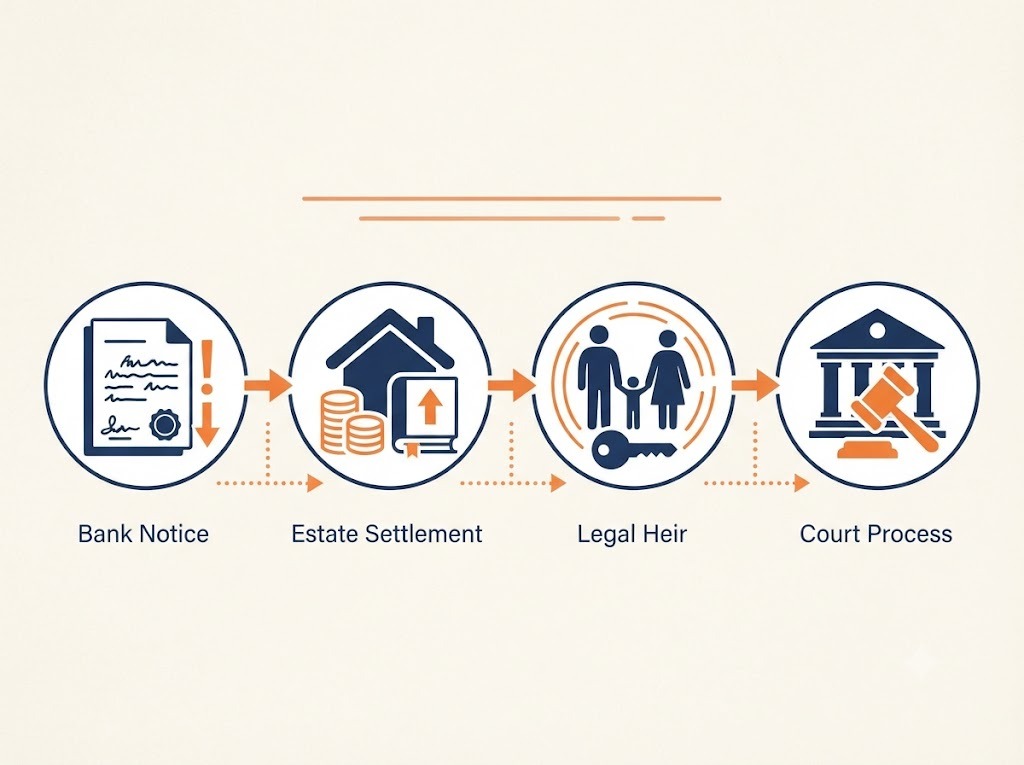
The bank marks the account. Banks generally update the account after receiving the death certificate and may modify their recovery process accordingly.
It checks for insurance. If there's a linked credit-life or loan protection policy, the bank waits on that claim first. A payout can close the matter here, without ever touching the estate.
It checks the estate, co-borrower, or guarantor. No insurance, or the payout falls short, and the bank moves to what the deceased left behind, plus anyone else who was contractually on the hook.
It sends a legal notice to the heirs. The wording and purpose of the notice may vary depending on the lender and the stage of recovery. Heirs are within their rights to clarify their actual status before answering it.
It files a civil suit or DRT application if nothing gets resolved. Past a certain threshold, or when there's no cooperation, the bank can move to the Debt Recovery Tribunal or file a civil suit naming the legal heirs.
A court decree and execution follow if it gets that far. A favourable ruling for the bank is still capped at the value of what the heirs inherited. Going after an heir's personal assets, someone who was never a co-borrower or guarantor, isn't how this is meant to work.
Banks generally have around 3 years from the loan's due date, or from the last written acknowledgment of the debt, to bring a suit under the Limitation Act. This is one of the more useful protections a family has, since a bank reviving a claim on an account that's been dormant for years may no longer have a valid window to sue at all.
Who can a bank legally recover from: legal heir, guarantor, or co-borrower?
Most articles on this stop at "heirs aren't personally liable" and leave it there. The part they skip, guarantor liability, is actually the trickier and more misunderstood piece.
A legal heir who had nothing to do with the loan is liable only up to what they inherit. Nothing more. A co-borrower is a different case entirely: they signed the loan alongside the deceased, and that liability stays exactly as it was, unaffected by the death. The bank will approach them directly, same as before.
A guarantor sits in between, and it's the position families get wrong most often. A guarantor's liability doesn't end when the primary borrower dies. Under the Indian Contract Act, a guarantee gets revoked only for future transactions after death, not for what was already outstanding at the time. So if the estate and any co-borrower can't cover it, the bank can go after the guarantor for the full amount, on the same terms they originally signed up for.
Who pays what after the borrower's death
Role | Personally liable? | What they owe |
Nominee | No | Only receives and distributes assets, not liable |
Legal heir (not co-borrower) | Only up to inherited assets | Estate value only, never personal funds |
Co-borrower | Yes, fully | Full outstanding loan, same terms as before |
Guarantor | Yes, if estate or co-borrower falls short | Full outstanding loan if other sources fail |
A family member could be a nominee on one account, completely safe there, and a guarantor on a totally different loan the deceased took out for someone else, fully liable on that one. The two roles don't cancel each other out. It's worth going through every document the deceased signed, not just the obvious loan agreement, before assuming anything.
FREED is not a Loan Provider. Individual bank policies may vary. Please verify your specific liability with a legal advisor or your bank.

FREED Expert Tip
Before responding to any recovery notice, get the loan agreement and check whether you're listed as a co-borrower or a guarantor. It changes everything about what you actually owe
Learn About FREED ShieldWhat are your options if the bank is pursuing recovery from your family?
Start by figuring out your actual legal status, before anything else. Are you an heir only, with no liability beyond the estate? A co-borrower, with full ongoing liability? A guarantor, who could be pursued if the estate falls short? The answer changes every option below it.
Check whether the deceased had loan insurance. A credit-life or loan protection policy can settle the outstanding balance directly with the bank, sometimes without the estate or any family member's finances coming into it at all.
If you're a co-borrower or guarantor, and the debt has genuinely become unaffordable, loan settlement becomes relevant, but only at this point, and only for someone who's actually liable. Settlement isn't something a borrower chooses out of preference. Banks and financial companies only consider it when repayment has become genuinely difficult and full repayment is no longer realistic. If you're heir-only, none of this applies. There's no personal debt of yours to settle.
This matters because families in this spot often just want it to go away, and the instinct is to pay something and move on. Confirming liability first is what stops a non-liable family member from handing over money they never owed.
Are You in a Loan Trap? Quick Check
Move the slider to your total EMIs as a % of monthly salary. See your debt stress level instantly.
EMIs as % of Monthly Salary
How FREED helps when a family faces loan recovery after a death
There are two parts to FREED's role here, and they apply to two different people within the same family.
The first is simply helping a family work out who's actually liable. FREED's counsellors can go through the loan documents with you, explain whether you're an heir, a co-borrower, or a guarantor, and help you draft a clear, factual response to the bank. This alone resolves most of the anxiety, since most of the fear comes from not knowing where you stand.
Settlement is always the last resort, only worth considering once restructuring or consolidation genuinely can't work. The second scenario applies specifically to co-borrowers or guarantors who are genuinely liable and can't repay in full. FREED helps borrowers settle their unpaid/overdue loans at up to 50% less*. For this group, FREED's Loan Settlement Plan, also called the Debt Resolution Program, can help. The customer builds a settlement fund over time through the SPA, a savings account held independently by a trusteeship firm, and once there's enough in it, FREED negotiates with the bank on the customer's behalf for a reduced settlement. Every settlement needs the customer's authorisation before any money moves. FREED's fee is success-based, charged only once the settlement is done.
None of this applies to someone who's heir-only and not personally liable. There's no debt of theirs to settle. FREED's role there stops at helping them understand and respond to the bank correctly, and nothing more needs pushing on them.

Facing recovery pressure after a death in the family?
Talk to FREED's team, free and confidential.
Book My Free CallWhat helps families handle loan recovery after a death
Inform the bank early, with the death certificate. This one step pauses routine collection activity and gets the bank's formal process started properly instead of leaving the account in limbo.
Check for loan insurance before assuming anything. A credit-life or loan protection policy, if one exists, can clear the balance directly with the insurer, often before the estate or any family member needs to get involved.
Keep records of every bank communication. Save the letters, the emails, the call logs. If it ever comes down to what was said or promised, written records are what protect the family.
Don't pay out of pressure before confirming your status. A recovery call can feel urgent in the moment, but paying before you know whether you're actually liable can mean handing over money you never owed. Confirm first, then decide.
Sources
Claim | Source |
Guarantor's liability continues after death under Section 131 of the Indian Contract Act, enforceable against the guarantor's estate | Supreme Court and High Court rulings applying Section 131, Indian Contract Act, 1872 (see H. Basavaraj vs. Canara Bank, (2010) 12 SCC 48) |
Recovery agents can't use coercive or abusive methods against family members who aren't legally liable | RBI Fair Practices Code for lenders (rbi.org.in) |
Note: the limitation period for civil suit or DRT recovery is 3 years, per Article 137 of the Limitation Act, 1963. The unsecured-lending share of India's credit mix is 25.3% of scheduled commercial banks' total credit as of March 2024, per RBI's Report on Trend and Progress of Banking in India, 2023-24. Both figures are now sourced to primary references
Sources, both primary:
Limitation Act, 1963, Schedule Part I, Article 137 → https://upload.indiacode.nic.in/schedulefile?aid=AC_CEN_3_20_00005_196336_1517807319297&rid=33
RBI, Report on Trend and Progress of Banking in India 2023-24 (25.3% figure cited via RIS) → https://ris.org.in/en/node/4091

Mohit Juneja
Mohit Juneja writes educational content at FREED on debt management, credit scores, loan repayment, and borrowing best practices. His content is shaped by expert insights and industry knowledge, helping readers better understand their financial options and make informed decisions.
mohit.juneja@freed.care

FREED is India's trusted loan management platform. Founded in 2020 and headquartered in Gurugram, FREED has counselled 20 lakh+ people on personal loans, credit cards, and app loans. FREED charges fees only on successful settlement, not upfront. FREED does not handle secured loans (home loans, car loans, gold loans).
Media Mentions