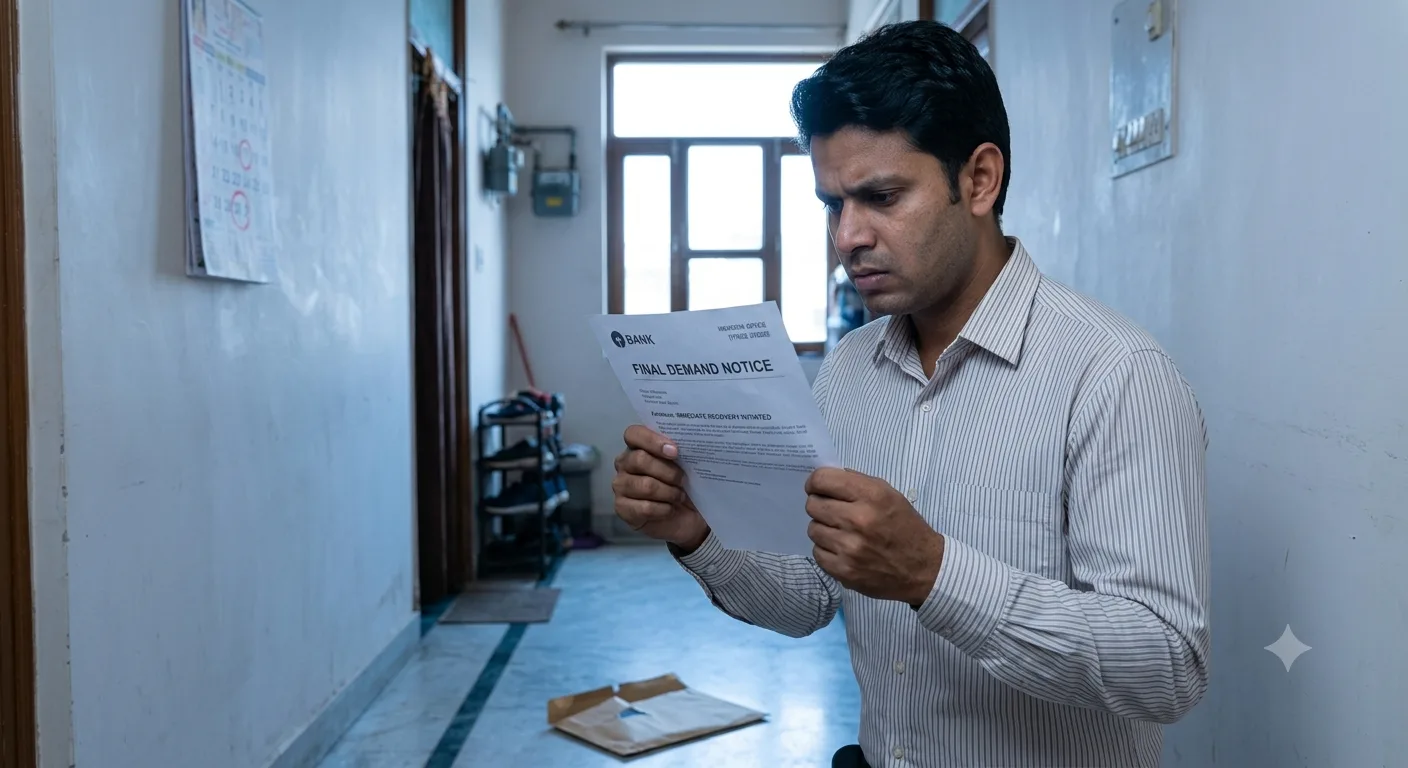
Debt Recovery Process in India: From Default to Legal Action
The debt recovery process in India follows two separate legal tracks depending on the loan type. Secured loans can move through the SARFAESI Act for direct asset enforcement, while unsecured loans like personal loans and credit cards can only be pursued through civil courts or the Debt Recovery Tribunal, never through asset seizure.
Mohit Juneja
Reviewed by FREED India, Debt Resolution Specialists
 4.7/5
4.7/5 ₹3,200Cr+
 20,000+
 20,00,000+4.7/5₹3,200Cr+20,000+20,00,000+
Key Takeaways

The debt recovery process splits into two tracks: SARFAESI for secured loans and civil suit or DRT for unsecured loans. They are not interchangeable.
SARFAESI applies only to secured loans and starts with a mandatory notice period before any enforcement action can begin.
The Debt Recovery Tribunal generally handles claims of ₹20 lakh or more; smaller unsecured claims go to civil court.
Borrowers have a formal right to appeal at every stage of both tracks, on a fixed timeline that starts running from the date of the notice.
Recovery through the Insolvency and Bankruptcy Code has historically shown a higher recovery rate than DRT and SARFAESI, though exact figures shift year to year.
What is the debt recovery process in India?
Ask most people how a bank recovers an unpaid loan, and you'll get one vague answer: the bank sues you, or the bank takes your stuff. Neither is quite right, and which one applies depends on something most borrowers never think about at the time they sign the loan agreement, whether the loan was secured or not.
Take a home loan, a car loan, or anything backed by gold or property. The bank holds a legal claim over that asset from day one. That claim is what lets it use the SARFAESI Act, a law written specifically so banks can enforce security interest and take possession of the pledged asset without first dragging the matter through a full civil suit. It's fast because the bank already owns a piece of paper saying it has a claim on something real.
Personal loans, credit cards, BNPL, and instant loan apps, none of these have nothing backing them. So SARFAESI is off the table entirely, no matter how large the balance grows. The bank's only path is a civil suit, or, for bigger claims, the Debt Recovery Tribunal. Both are slower. Neither comes with the power to just walk in and take something.
Knowing which track you're on changes everything about what happens next, and honestly, a lot of the fear around "recovery" comes from not knowing this split even exists.
Track one: How secured loan recovery works (SARFAESI)
The clock starts once a secured loan gets classified as an NPA, a non-performing asset, which usually happens after 90 days of non-payment. From there, the bank issues a notice under Section 13(2) of the Act. That notice gives you 60 days to clear the dues in full before anything else can happen.
Sixty days pass with no repayment, and the bank can move to take possession of the asset, then sell it to recover what's owed. Any surplus after the sale is legally required to go back to the borrower. This is the part everyone dreads, but it isn't a light switch. There are procedural steps at every point, and the bank can't simply show up the day the window closes and start seizing property.
Here's the part fewer people know about. The law also builds in a formal right to push back. Section 17 of the SARFAESI Act lets a borrower who disagrees with the bank's action, the NPA classification, the asset valuation, or the enforcement itself, file an appeal before the Debt Recovery Tribunal. You get 45 days from the date you receive a possession notice to do this. It's not a favour the bank is doing you. It's written into the statute.

What the Law Says
Under the SARFAESI Act, a bank must issue a 60-day notice before any enforcement action, and borrowers can appeal to the DRT within 45 days of a possession notice.
Understand your rights before responding to a noticeTrack two: How unsecured loan recovery works
No collateral, no SARFAESI. That's the whole rule, and it surprises people who assume every kind of loan gives the bank the same seizure power once things go bad. A ₹5 lakh credit card balance and a ₹5 lakh home loan behave completely differently in default, because only one of them has an asset attached.
Below roughly ₹20 lakh, the bank's only option is a civil suit through the regular court system. That means the full grind of civil procedure, written statements, evidence, arguments, and a judgment, before the bank can even start enforcing anything. This routinely takes years, not months. And every step of it, the borrower gets the same procedural protections as any civil defendant would.
Above ₹20 lakh, the bank can go to the Debt Recovery Tribunal instead, a forum built specifically to move institutional claims faster than a regular court. Even there, though, nobody's seizing your assets on the spot. The tribunal can issue a recovery certificate once it rules for the bank, but turning that certificate into actual money still takes further legal steps. And the borrower can still contest the claim throughout.
What happens at the Debt Recovery Tribunal?
- 1
The bank files an Original Application (OA).
This document kicks off the case. It lays out the loan details, the amount claimed, and the grounds for recovery, filed with whichever tribunal has jurisdiction over the matter.
- 2
The tribunal issues a summons.
Once the OA is admitted, the tribunal formally notifies you of the case. You get roughly 30 days to file a written statement in response.
- 3
You get to respond and object.
This is your chance to dispute the amount, question the calculation, or raise a procedural problem with how the loan was handled. Miss this window and your position weakens considerably down the line.
- 4
Hearings run on a simplified procedure.
DRTs skip the full Code of Civil Procedure and lean on natural justice principles instead, which is part of why they were built to move faster than regular courts. The original intent was resolution within 180 days. Real timelines vary a lot depending on the case load.
- 5
The tribunal can issue a recovery certificate.
A ruling in the bank's favour leads to a certificate authorising further recovery, but that's still a few legal steps short of money actually changing hands.
What are your rights as a borrower during this process?
You have more protection built into this process than most people assume going in.
Notice comes first. Whether it's a SARFAESI notice or a DRT summons, the bank has to tell you formally before taking any action, in writing. You shouldn't ever be blindsided.
You get to respond. A written statement before the DRT, an objection to a SARFAESI classification, either way, there's a formal window to put your side on record.
Appeal rights run through the whole process, not just one stage. Forty-five days to appeal a SARFAESI notice to the DRT, then further appeal to the DRAT if it comes to that. This was never designed as a single, irreversible decision point.
If a secured asset does get sold, the auction has to follow a prescribed valuation process, and whatever's left after the bank recovers its dues is legally yours.
And recovery agents don't get a free pass either. RBI's Fair Practices Code requires them to maintain integrity, confidentiality, and reasonable conduct. That's an enforceable standard, not just good manners.

FREED Expert Tip
If you receive a recovery notice, respond in writing within the stated deadline. Silence is often read as non-response, not agreement.
Understand your options before responding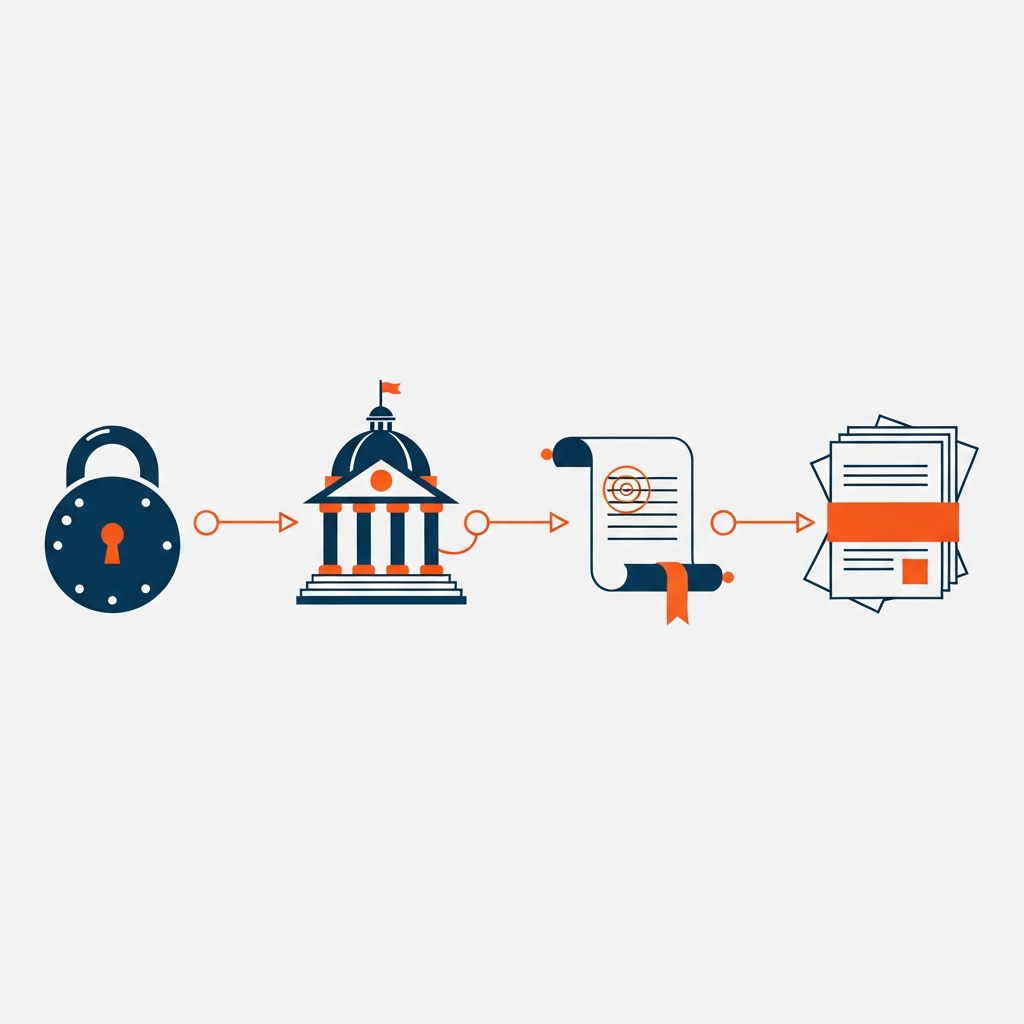
How do the different recovery routes compare?
Route | Applies To | Claim Threshold | Typical Recovery Rate |
SARFAESI Act | Secured loans only | No minimum, applies once classified NPA | Historically, around 17% |
Debt Recovery Tribunal | Secured or unsecured, bank/NBFC claims | ₹20 lakh and above | Historically, around 5% |
Civil Court | Unsecured loans below the DRT threshold | Below ₹20 lakh | Slow, case-dependent |
Insolvency and Bankruptcy Code | Larger corporate or structured debt | Case dependent | Historically, the highest among routes |
Lok Adalat | Smaller, mutually agreeable disputes | Case dependent | Historically, around 6% |
Treat those recovery-rate numbers as a general shape, not gospel. They come from past RBI Trend and Progress data, and the mix of cases resolved shifts enough year to year that a single fixed percentage would be misleading either way. What holds up consistently: the faster, more specialised routes, IBC and SARFAESI, tend to outperform the slower general-purpose ones. That's more or less why Indian law kept building new specialised forums instead of routing everything through ordinary courts.
FREED is not a Loan Provider and does not represent parties in DRT, SARFAESI, or civil court proceedings. This information is for general awareness only.
What can you do before recovery action reaches court?
This is the part most debt-recovery content skips entirely, what you can actually do before anything legal gets filed, while there's still room to change the outcome.
Still paying, but only just? Multiple loans running at once, card utilisation creeping up, every due date a scramble? That's your window. Debt consolidation may help eligible borrowers combine unsecured debts into a single repayment plan through a lending partner. The final EMI depends on the loan terms offered.
Already missed payments, and full repayment genuinely isn't realistic given your income? Waiting for the notice to show up is rarely the better move. Banks negotiate more easily before a matter is formally filed than after, mostly because litigation costs them time and money, too. If repaying the full amount is no longer realistic, exploring settlement early may help you understand your available options before legal proceedings begin.
Different situations, same underlying truth: act before the process formally starts, and you keep more options than you would otherwise.
Are You in a Loan Trap? Quick Check
Move the slider to your total EMIs as a % of monthly salary. See your debt stress level instantly.
EMIs as % of Monthly Salary

How FREED helps before recovery turns legal
FREED sits specifically in this pre-litigation window, before anything reaches DRT or civil court. Which program fits depends on where you are.
Still paying, but stretched across too many unsecured loans and cards? The Debt Consolidation Program looks at your full financial picture and matches you to a lending partner who disburses one new loan, paying off the existing eligible debts and leaving you with a single repayment plan. The final EMI depends on the lending partner's assessment. Preventative, by design, aimed at avoiding default before it starts.
Already facing genuine financial difficulty with missed payments or recovery communication, and an early warning notice? The Debt Resolution Program works differently, through the SPA (Special Purpose Account) mechanism, a dedicated savings account held by an independent trustee, helping eligible borrowers explore settlement through a structured process, subject to the lender's willingness to negotiate.
Both run on a success-based fee, with charges applicable only after the service is completed. One boundary worth stating plainly: FREED doesn't touch secured loans or SARFAESI matters. Home loans, car loans, gold loans, and loan-against-property none of that falls under what these programs do. A SARFAESI notice needs its own lawyer, not FREED.

Already Received a Recovery Notice?
Talk to FREED to understand your options before legal proceedings begin.
Book My Free CallWhat helps if you've already received a recovery notice
Start with the dates. Whatever the notice is, SARFAESI, DRT summons, or civil filing, the specific deadlines on that page matter more than anything else written on it. Mark them the day you get it.
Don't go silent, even if you can't pay right away. Silence usually gets read as non-response, not as tacit agreement, and missing a response window can quietly close doors that would've stayed open.
A written reply, even a short one acknowledging you're reviewing the matter and will respond fully by the deadline, beats no reply at all.
Keep everything. The notice, your reply, and any further back-and-forth. If a dispute comes up later about what was said or agreed, this record is what settles it.
And for SARFAESI or DRT specifically, get a lawyer who actually works these forums. General awareness only goes so far here; the procedural rules are their own thing.

Mohit Juneja
Mohit Juneja writes educational content at FREED on debt management, credit scores, loan repayment, and borrowing best practices. His content is shaped by expert insights and industry knowledge, helping readers better understand their financial options and make informed decisions.
mohit.juneja@freed.care

FREED is India's trusted loan management platform. Founded in 2020 and headquartered in Gurugram, FREED has counselled 20 lakh+ people on personal loans, credit cards, and app loans. FREED charges fees only on successful settlement, not upfront. FREED does not handle secured loans (home loans, car loans, gold loans).
Media Mentions