Legal Advice for Credit Card Debt: Your Options
Legal advice for credit card debt starts with one fact: unpaid card dues are mostly a civil matter in India. The bank can send notices and file a recovery case. A criminal case is possible only in specific situations, such as a bounced cheque or proven cheating. This page is general information, not legal advice.
Mohit Juneja
Reviewed by FREED India, Debt Resolution Specialists
 4.7/5
 ₹3,200Cr+
 20,000+
 20,00,000+4.7/5₹3,200Cr+20,000+20,00,000+
Key Summary

For legal advice for credit card debt, start here: unpaid card dues are a debt. The usual legal route for a bank is a civil one, such as a summary suit under Order XXXVII of the Code of Civil Procedure.
An iPleaders article says a criminal case for cheating needs bad intent to be shown, which is hard to prove, so it isn't common. A bounced cheque can bring a case under section 138 of the Negotiable Instruments Act.
On 20 December 2024 the Supreme Court set aside the consumer commission's 30% cap on credit card interest in HSBC v. Awaz. It said interest rates are within RBI's area.
A general three-year limitation period applies to money claims where no specific rule fits. It can restart if you acknowledge the debt in writing or make a part payment. Get legal advice before you pay anything on an old debt.
RBI's 2025 directions encourage banks to use Lok Adalats for personal loans, credit card loans and housing loans under ₹10 lakh.
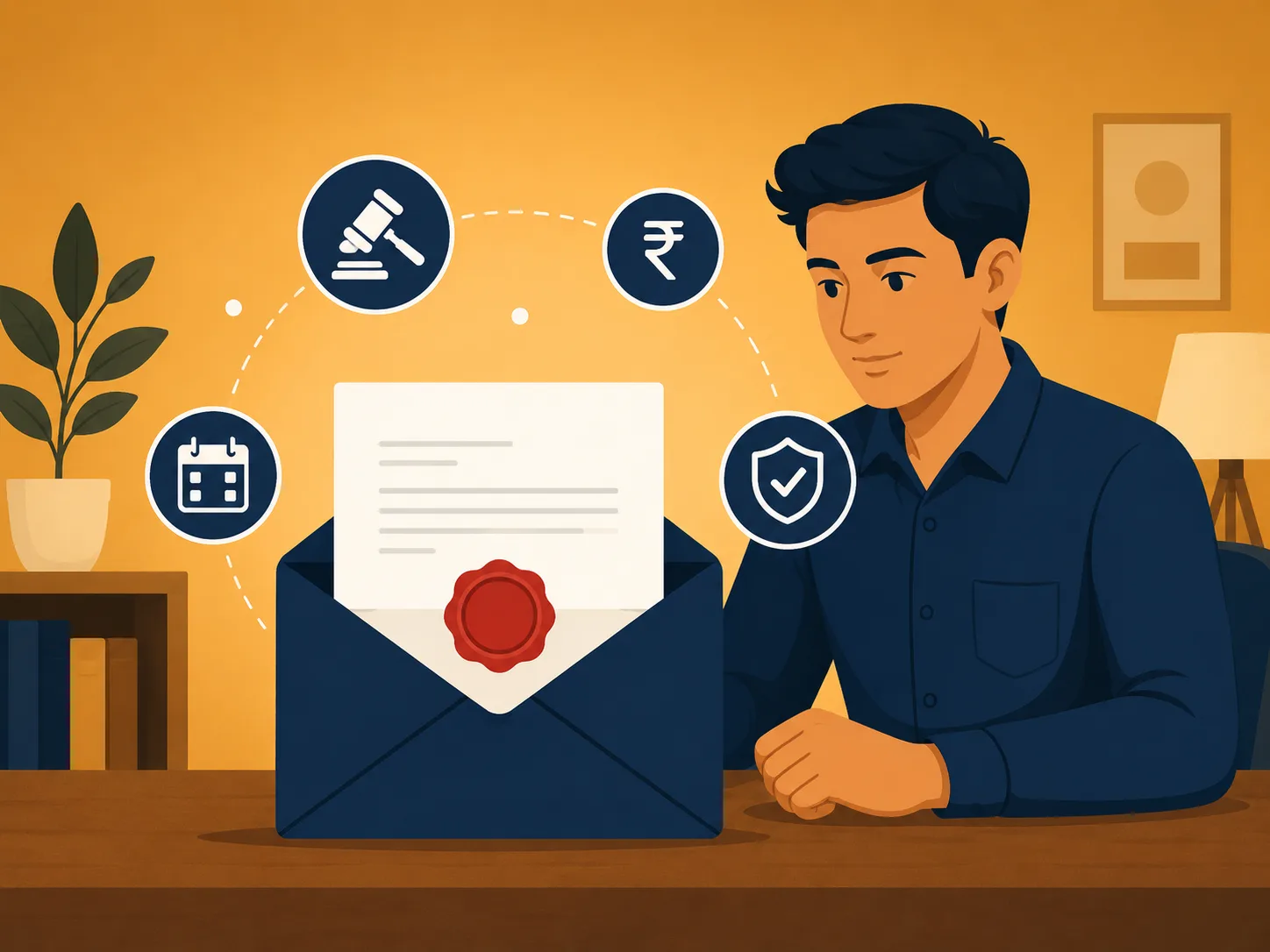
Don't ignore a legal notice. Read it, note the dates and reply on time.
Is Credit Card Debt a Civil or Criminal Matter in India?
Legal advice for credit card debt starts with one fact: unpaid card dues are mostly a civil matter in India. The bank can send notices and file a recovery case. A criminal case is possible only in specific situations, such as a bounced cheque or proven cheating. This page is general information, not legal advice.
Mostly civil. A civil matter is a money dispute where the bank asks a court to order you to pay. A criminal matter is where the state punishes a crime.
When you sign for a card, you agree to its terms. If you can't pay, the bank's main claim is for the money owed, plus the interest and fees in those terms. That's a civil claim.
A criminal case needs more. Cheating, for example, needs a bad intention from the start. A bounced cheque is a separate matter under section 138 of the Negotiable Instruments Act. We cover both below.
What Can a Bank Legally Do if You Miss Credit Card Payments?
The bank's options usually build up in steps.
Reminders and calls. These are allowed, within RBI's rules for calling hours and conduct.
Charges and interest. The card terms you agreed to decide these.
Credit report entry. Banks report missed payments to credit bureaus. CIBIL says a missed payment stays visible for 36 months.
A legal notice. A lawyer's letter demanding payment within a stated time.
A recovery case. The Madras High Court held in a 2014 case, Praveenkumar v. HSBC, that a summary suit was maintainable on a credit card default.
Lok Adalat. A forum where a settlement can be agreed with a judge's help and no long trial.
A bank can't take your house or salary on its own for card dues. It needs a court order first. That's our plain reading of how unsecured debt works, so check it with a lawyer.
Can You Go to Jail for Credit Card Debt?
Not for the debt itself. Unpaid card dues alone are not a crime in India.
Two situations can bring a criminal case. One is a bounced cheque. If you gave the bank a cheque and it bounced, section 138 of the Negotiable Instruments Act can apply. The notice must come within thirty days of the bounce, and the cheque must have been presented within six months, per the iPleaders article.
The other is cheating. The iPleaders article says this needs bad intent to be shown and that it isn't common. Section 420 of the old Indian Penal Code was the cheating section; the new criminal code replaced it.
If you get a criminal notice, talk to a lawyer the same day.

Not Sure Where You Stand?
Open the FREED app, add your details and see which plan fits you.
See My Options on FREEDWhat Should You Do When You Get a Legal Notice for Credit Card Debt?
A legal notice is a warning, not a court order. It still needs your attention.
Read every line. Note the amount, the date, who sent it and the deadline.
Check the amount. Ask the bank for a full statement. Compare what you borrowed with the interest and fees added.
Reply in writing before the deadline. A short, calm reply is enough. Say what you can do.
Keep proof. Keep the notice, the envelope and your reply.
Talk to a lawyer if a case is filed. A court summons has its own deadline.
FREED's in-house legal team helps with pre-litigation support: checking whether a notice is genuine and helping draft a suitable reply. We cover that below.
Is There a Time Limit on Credit Card Debt?
Generally yes. For money claims with no specific rule, the Limitation Act gives three years from when the right to sue starts (Article 113), per a Maheshwari & Co. article of August 2026. The article doesn't say that a credit card claim falls under that Article, so ask a lawyer.
There's a catch. The same article says that if you acknowledge a debt in writing, or make a part payment, the clock can restart. So don't sign or pay on an old debt before you know where you stand.
A time-barred debt doesn't disappear from the bank's books. It may still call you. It just may not be able to win a case.
See Your Credit Report First
Check your credit report with FREED Credit Insights.
Check My Credit Insights
Can a Court Cap Credit Card Interest?
Not on its own, according to the Supreme Court. In 2008, the National Consumer Disputes Redressal Commission capped credit card interest at 30% a year. On 20 December 2024, the Supreme Court set that order aside in Hongkong and Shanghai Banking Corp. Ltd. v. Awaz (2024 LiveLaw (SC) 1034).
The bench of Justices Bela M. Trivedi and Satish Chandra Sharma said interest rate policy and banks' trade practices fall within RBI's area. It said the commission couldn't write a new contract for the parties, because the cardholders had been told the terms in advance.
What this means for you: a very high rate on your card isn't automatically illegal. Read your card terms. If the charges look wrong against what you signed, raise it with the bank first and then with RBI's complaint scheme.
What Is a Lok Adalat and Can It Help With Credit Card Debt?
A Lok Adalat is a forum where a dispute can be settled by agreement, with a judge's help, without a long trial. RBI's 2025 directions encourage banks to use Lok Adalats for recovery of personal loans, credit card loans and housing loans under ₹10 lakh.
For you, a Lok Adalat can be a place to agree a payment plan or a lower payoff. Whatever is agreed is recorded as an order, so read what you're signing, including the amount, the dates and what happens if you miss one.
You don't have to accept the first figure. Take your statement and your income details with you.

What the Law Says
Card dues are usually a civil matter, so a bank recovers them through a civil suit. A bounced cheque can lead to a case under section 138. Most money claims have a three-year limit, which part payment can restart.
Check My EMI ScoreDo Recovery Agents Have Legal Rights Over You?
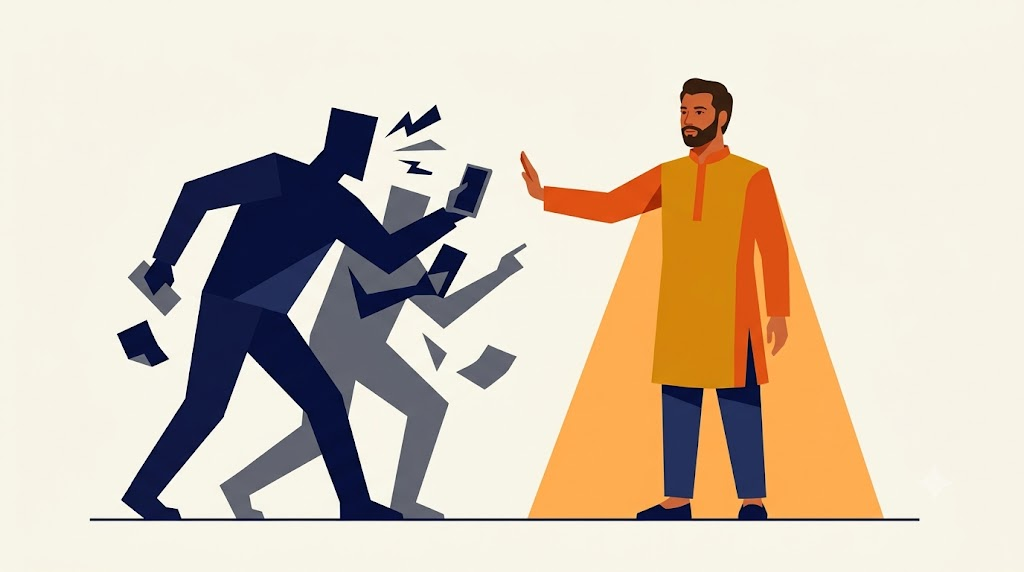
No. A recovery agent can ask for payment and talk about a plan. They can't arrest you, seize your things or enter your home without your permission. Only a court can order recovery against your assets.
RBI's rules also limit how they behave. Calls aren't allowed before 8 am or after 7 pm. From 1 January 2027, RBI's text lists "false or misleading representations, especially about the debt amount or consequences of non-payment" among harsh practices. A threat like "you will be arrested tomorrow" for unpaid card dues fits that description.
If an agent says this, ask them to put it in writing. A real legal step comes on paper.
How to Talk to the Bank About Credit Card Debt Before It Reaches Court
A talk with the bank can happen at any time, and it's cheaper than a case. Here's how to do it.
Ask for a full statement. Write down what you spent, the interest added, and the fees added, in three separate numbers. This is your starting point.
Say what you can pay. Give a monthly figure you can keep. A figure you can keep is worth more than a bigger one you can't.
Ask in writing. Email the card's customer care and the grievance officer. Ask if the bank can waive late fees or give a payment plan.
Get any offer in writing before you pay. A phone promise isn't proof.
Keep every reply.
If you're still paying but struggling, ask about an EMI plan on the card balance. If repaying has become genuinely impossible, the bank may talk about a settlement, which we explain below.

FREED Expert Tip
Before you reply to a legal notice, compare the amount in it with your own statement line by line. Wrong figures are common, and a short written objection costs nothing.
Check My EMI ScoreWhich Papers Should You Keep for Credit Card Debt?
The card agreement and terms, if you have them.
Every statement from the last year.
Every legal notice, with the envelope.
Your replies, with proof of sending.
A log of recovery calls.
Proof of any payment, especially part payments, with dates.
Any offer from the bank, in writing.
The dates on part payments matter. As noted above, a part payment can restart the limitation clock, so a lawyer will want to see them.
Where Can You Get Legal Advice for Credit Card Debt?
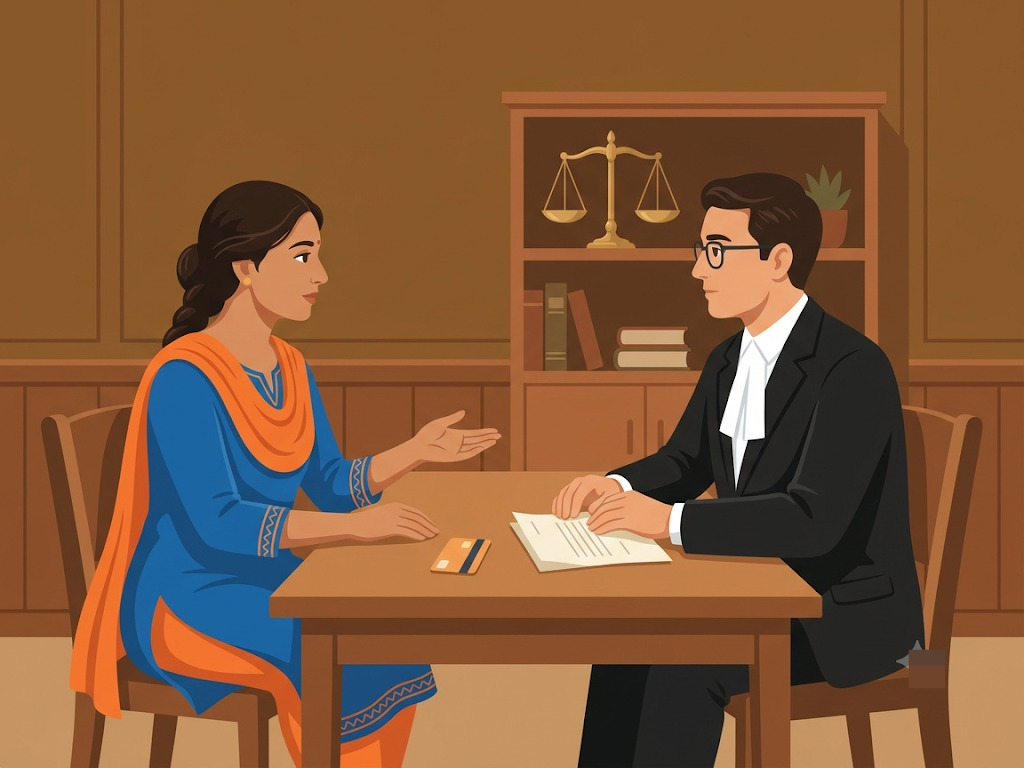
A lawyer who handles banking or recovery cases is the right person. Bring your folder. Ask three things: what the bank can do next, what the deadline is, and what happens if you do nothing.
If cost is the worry, District Legal Services Authorities offer free legal aid to people who qualify. Many courts also have Lok Adalat days.
Be careful with anyone who promises to make your debt disappear or says you'll never be called again. No one can promise that.
Your Options for Credit Card Debt at a Glance
Option | Fits when | What to know |
|---|---|---|
Pay in full | You can clear the dues | Ask for a no-dues letter in writing |
Payment plan with the bank | You're struggling but can pay each month | Get the new terms on paper before paying |
Lok Adalat | The bank has started recovery steps | A settlement there is recorded as an order |
Settlement | Repaying in full has become genuinely impossible | The bank decides; it leaves a settled status on your report |
Defend a case | The bank's claim is wrong or late | Get a lawyer before the first hearing |
The table is our summary, not a legal opinion. The right option depends on your income, your dues and your papers.
Not Sure Where to Start?
Add your details in the FREED app and see your options in minutes.
See My Options on FREEDYour Checklist for Legal Advice for Credit Card Debt
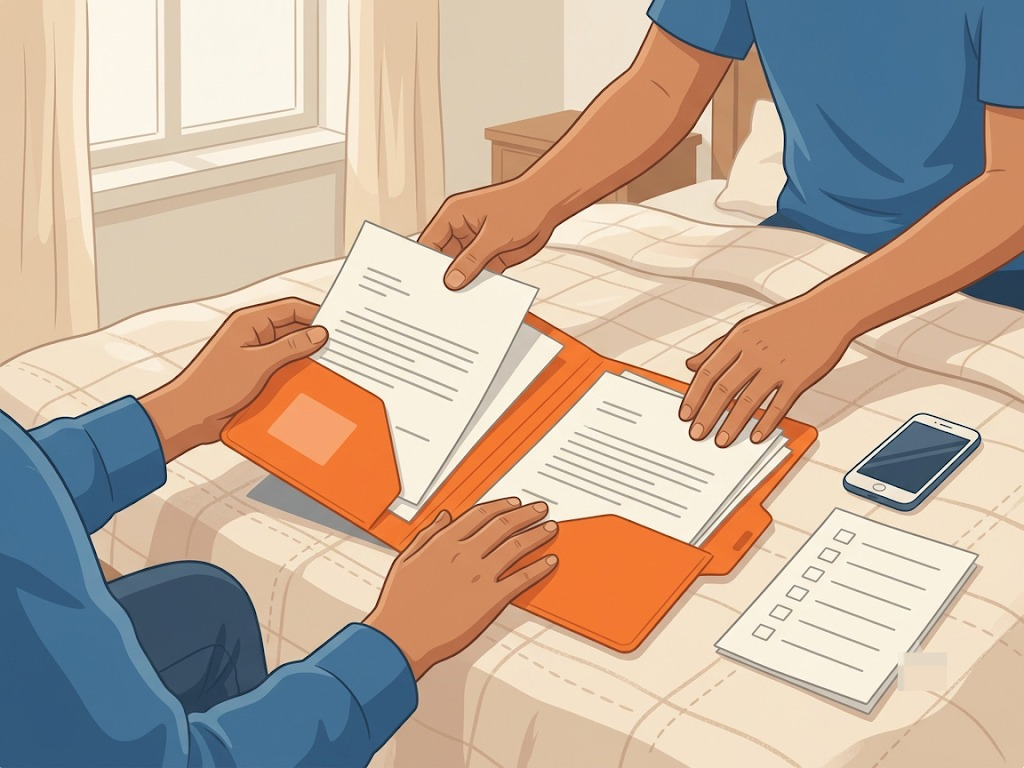
Put every statement and notice in one folder.
Write down the date each notice arrived and its deadline.
Check the amount against your own statement.
Make a list of every payment you've made, with dates.
Don't sign or pay on an old debt until you've had advice.
Reply to every legal notice in writing before the deadline.
Book a lawyer if you get a court summons.
Tips for Handling Credit Card Debt Legally
Read before you sign. A settlement letter or a Lok Adalat order is binding, so check the amount, dates and conditions.
Keep replies short and factual. Emotion belongs in a call with a friend, not in a reply to a bank.
Don't ignore a summons. Missing a court date can mean an order is passed without you.
Ask about the interest and fees. Check them against your card terms.
Keep payments within your means. A repayment plan you cannot maintain may create further financial difficulties.
Avoid anyone who guarantees a result. No one can promise a case outcome.
Ask for everything in writing. It's your proof.
How Does FREED Help If You Get a Legal Notice for Credit Card Debt?
FREED isn't a loan provider. It's a platform that helps you understand your credit and manage your loans. Over 20 lakh people trust FREED.
If you are facing recovery agent harassment, FREED helps you understand your legal rights as a borrower, report inappropriate recovery practices, and raise complaints with your lender. Where harassment is frequent, our experts speak to recovery agents on your behalf. And if you receive a legal notice about your loan, FREED helps you understand your options and draft a suitable reply.
For a legal notice, FREED's in-house legal team checks whether the notice is genuine, helps you understand your options and helps draft a suitable reply if one is needed. This is pre-litigation support only. FREED doesn't provide legal representation in court.
Credit Insights reads your Experian report and shows your accounts, enquiries and payment history in one place. Over 30,000 borrowers have used it. Our guides on legal notices for loan recovery and getting rid of credit card debt go further.
What If Several Card EMIs Are Behind the Debt?
If most of your salary goes towards paying multiple EMIs, FREED's Loan Consolidation Plan helps you combine multiple loans into a single monthly EMI. This can reduce your monthly EMI burden by up to 50%.* It's only for people who are still paying. Read more about the Loan Consolidation Plan.
Rates and ranges shown are indicative. Final terms are decided by the bank/lender. FREED is not a Loan Provider. No outcome is guaranteed. Please verify directly with your bank.
Settlement is not something a borrower chooses out of preference. If you genuinely cannot repay your loans, FREED negotiates with your lenders to settle them for less than 50%* of your outstanding dues. Read more about the settlement programme.
Outcomes vary by lender and borrower profile. Settlement terms are decided by the lender. No percentage is guaranteed.
Settlement leaves a settled status on your report, which CIBIL says will affect your access to credit in the future. Weigh that before you choose it.
See Your Credit Report First
Check your credit report with FREED Credit Insights.
Check My Credit Insights
Mohit Juneja
Mohit Juneja is FREED’s Content & Communication Lead with 12+ years of experience across content, media, advertising and digital communications. He holds a postgraduate diploma in Communications from Xavier Institute of Communications, Mumbai, and has worked with organisations including NDTV, The Indian Express, McCann Worldgroup and NABARD.
At FREED, he leads content and communication across loan management, debt resolution, debt consolidation and financial well-being. His work combines research, storytelling and consumer-focused communication to make complex financial topics easier to understand and act on. He has also scripted and produced 11 documentaries on rural development and agriculture for NABARD, with film's selected for the Mumbai International Film Festival.
mohit.juneja@freed.care

FREED is India's trusted loan management platform. We help India settle their loans, consolidate their EMIs, improve their credit score, and manage their loans better. Over 20 lakh people trust FREED. We have managed more than ₹3,500 crore in loans and saved our users over ₹450 crore.
Media Mentions