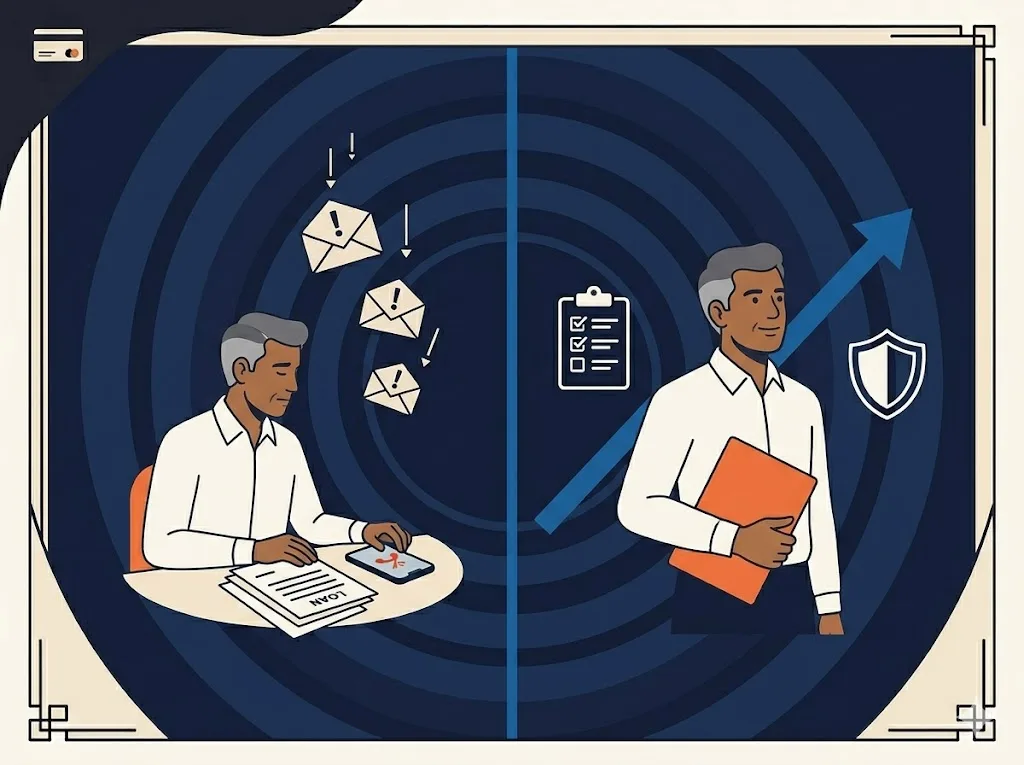
What Is a Debt Manager (IOU Tracker)? Meaning and How It Works
An IOU debt manager is a tool, app, spreadsheet, or even a notebook for tracking informal money owed between people. It logs who borrowed what from whom, when, and whether it's been paid back split bills, small loans between friends, or one roommate covering another's share. It's completely separate from formal debt like bank loans or credit cards, and it doesn't touch your credit score either way.

Mohit Juneja
Reviewed by FREED India, Debt Resolution Specialists
 4.7/5
4.7/5 ₹3,200Cr+
 20,000+
 20,00,000+4.7/5₹3,200Cr+20,000+20,00,000+
KEY TAKEAWAYS

An IOU debt manager is a tool, app, spreadsheet, or notebook for tracking informal money owed between people, friends, family, roommates, not bank loans or EMIs.
These tools typically log who owes whom, how much, and whether it's been repaid, often for split bills, small personal loans, or shared expenses.
Informal IOUs and formal debt (bank loans, credit cards) are legally and practically very different, and an IOU tracker won't show up on your credit report either way.
If your IOU tracker shows a pattern of borrowing from friends or family specifically to cover EMIs or bills, that's a signal worth paying attention to, separate from the tracking itself.
What Is an IOU Debt Manager?
An IOU debt manager is a tool for keeping track of informal debts, money lent or borrowed between individuals, not through a bank or any financial institution.
These take a few common forms. A dedicated app is one, but a shared spreadsheet or even a simple notebook works just as well. The concept behind it matters far more than the specific format you happen to use. What all of them are built for is the same handful of everyday situations: splitting a dinner bill among friends, one roommate covering the rent for the month and being paid back later, or a small personal loan passed between friends or family without any paperwork attached.
Some people track this in their head for years without a problem, one or two people, occasional amounts, nothing complicated enough to need a system. The tools this piece covers become relevant once that stops being true, more people, more entries, or amounts large enough that a wrong memory would actually matter.
The reason people bother tracking any of this at all, rather than just relying on memory, is worth understanding before looking at how these tools actually work.
Why People Use These Tools
Memory alone is genuinely unreliable for informal debt, especially once more than a couple of people or a few months are involved. That unreliability is the core reason these tools exist in the first place, not because informal debt is inherently complicated, but because human memory is a poor ledger for anything spread across time and multiple people.
They also remove a specific kind of social awkwardness: having to directly ask "Did you pay me back yet?" is uncomfortable for most people, and a neutral, shared record does that asking for you instead. Nobody has to be the one bringing it up; the tracker simply shows what's outstanding, and that framing alone defuses a conversation that would otherwise feel accusatory.
For shared living or group situations, roommates splitting monthly bills, or a group trip with shared expenses, a tracker prevents the exact same conversation from repeating every single time a new expense comes up. Instead of relitigating who paid for what last time, everyone can just check the running total.
Common Features of IOU and Debt Manager Tools
Across this category of tools, a handful of features show up again and again, regardless of which specific one someone ends up using.
A contact-based list, showing who you've lent to or borrowed from, organised by person rather than by transaction.

An amount and date for each entry, so every record is specific and checkable later, not just a running vague total.
Support for partial repayments, rather than only tracking all-or-nothing settlements, since most informal debts get paid back in pieces.
Reminders or notifications for outstanding amounts, nudging both sides gently rather than requiring an awkward direct ask.
Bill-splitting calculations for group situations automatically divide a shared expense rather than everyone doing the math manually.
More full-featured versions may also sync across devices or let you export a simple record for your own reference, useful if a dispute ever needs settling with something more concrete than someone's recollection. It's worth being clear from here, though, that none of this functions the same way as formal debt.

Freed Expert Tip
Whatever tool you use, note the date and reason for each entry, not just the amount. Six months later, "₹2,000, why?" is a much harder conversation than a dated, specific record. Keeping Things Simple?
Talk to FREED's TeamIOU Tracking vs Formal Debt: An Important Distinction
Informal IOUs, money owed to or from another person, are generally not reported to credit bureaus and don't affect your CIBIL score in the way formal loans or credit cards do. They also don't automatically come with the standardised interest, repayment and recovery processes associated with formal lending, although an informal debt may still create a legally enforceable obligation depending on the arrangement and available evidence.

Formal debt personal loans, credit cards and EMIs works completely differently.It gets reported to bureaus, directly affects your credit score, and carries real legal recovery mechanisms if it goes unpaid. What actually shows up on a formal credit report gives a useful contrast if you want to see exactly how different formal debt tracking looks from an IOU list, and what actually counts as "debt service" on the formal side, EMIs and minimum dues specifically, makes the line between the two even clearer.
There's one place these two worlds genuinely connect, worth naming honestly rather than glossing over. Some people cover a formal EMI or bill by borrowing informally from a friend or family member. If your IOU tracker shows this happening repeatedly, that's less about the tracking tool itself and more a real sign that the formal debt underneath needs a closer look.
Freed Expert Tip
If you're regularly borrowing from friends or family to cover an EMI or bill, track that specifically, separately from ordinary shared expenses; it's a different kind of entry worth noticing on its own. Covering an EMI This Way?
Book My Free CallWhen Informal IOUs Signal a Bigger Problem
Occasional small informal borrowing between friends and family is completely normal, worth saying plainly before anything else here. The signs below are specifically about a repeating pattern tied to formal debt strain, not about ordinary bill-splitting or the occasional small loan.
- You're borrowing informally from more than one person to cover the same recurring bill or EMI, month after month, rather than as a one-off.
- The amounts you're borrowing informally are growing over time, rather than staying occasional and small, as they started out.
- You're avoiding telling the person you're borrowing from what it's actually for, which is itself often a quiet sign that something feels off about the pattern.
- Informal borrowing has become a regular part of managing a formal debt you're otherwise genuinely struggling with.
None of these on their own means something is seriously wrong, but two or three together, especially if they've been true for a few months running, are worth being honest with yourself about. Left unaddressed, this pattern tends to point toward the same territory a missed formal payment eventually leads to, worth reading if any of this feels familiar.
Choosing the Right Tool for Your Situation
For a handful of occasional IOUs, a simple notes app or a notebook is genuinely enough; no dedicated tool is needed at that scale, and adding one would just be extra overhead for something already easy to remember.
For regular shared living or group expenses, a shared spreadsheet works well and stays fully visible to everyone involved, which avoids most disputes before they start, since nobody has to take anyone else's word for what's owed. For someone juggling several ongoing informal debts across multiple people at once, a dedicated tracking app's reminders and partial-payment support become genuinely useful rather than overkill, particularly once the number of people involved makes a shared spreadsheet start to feel unwieldy to maintain.
Freed Expert Tip
Whatever you choose, make sure the other person can see the same record you do; shared visibility prevents more disputes than any feature the tool itself offers. Also Tracking Formal Debt?
Check My CreditTips for Managing IOUs and Informal Debt Responsibly
A few habits make informal tracking work well, regardless of which tool you land on.
- Settle small IOUs promptly rather than letting them accumulate. That's what actually prevents awkwardness, not the tracking tool itself.
- Be specific about amounts and dates when you record an entry. Vague records cause more disputes than no record at all.
- If you're lending informally on a recurring basis to the same person, have a direct conversation about it, rather than letting the tracker quietly grow in the background.
- Keep informal and formal debt mentally and practically separate. Don't let one quietly become a way of managing the other.
- Revisit your tracker periodically, not just when someone asks, to catch a pattern early rather than after it's already grown into something harder to unwind.

Mohit Juneja
Mohit Juneja writes educational content at FREED on debt management, credit scores, loan repayment, and borrowing best practices. His content is shaped by expert insights and industry knowledge, helping readers better understand their financial options and make informed decisions.
mohit.juneja@freed.care

FREED is India's trusted loan management platform. Founded in 2020 and headquartered in Gurugram, FREED has counselled 20 lakh+ people on personal loans, credit cards, and app loans. FREED charges fees only on successful settlement, not upfront. FREED does not handle secured loans (home loans, car loans, gold loans).
Media Mentions