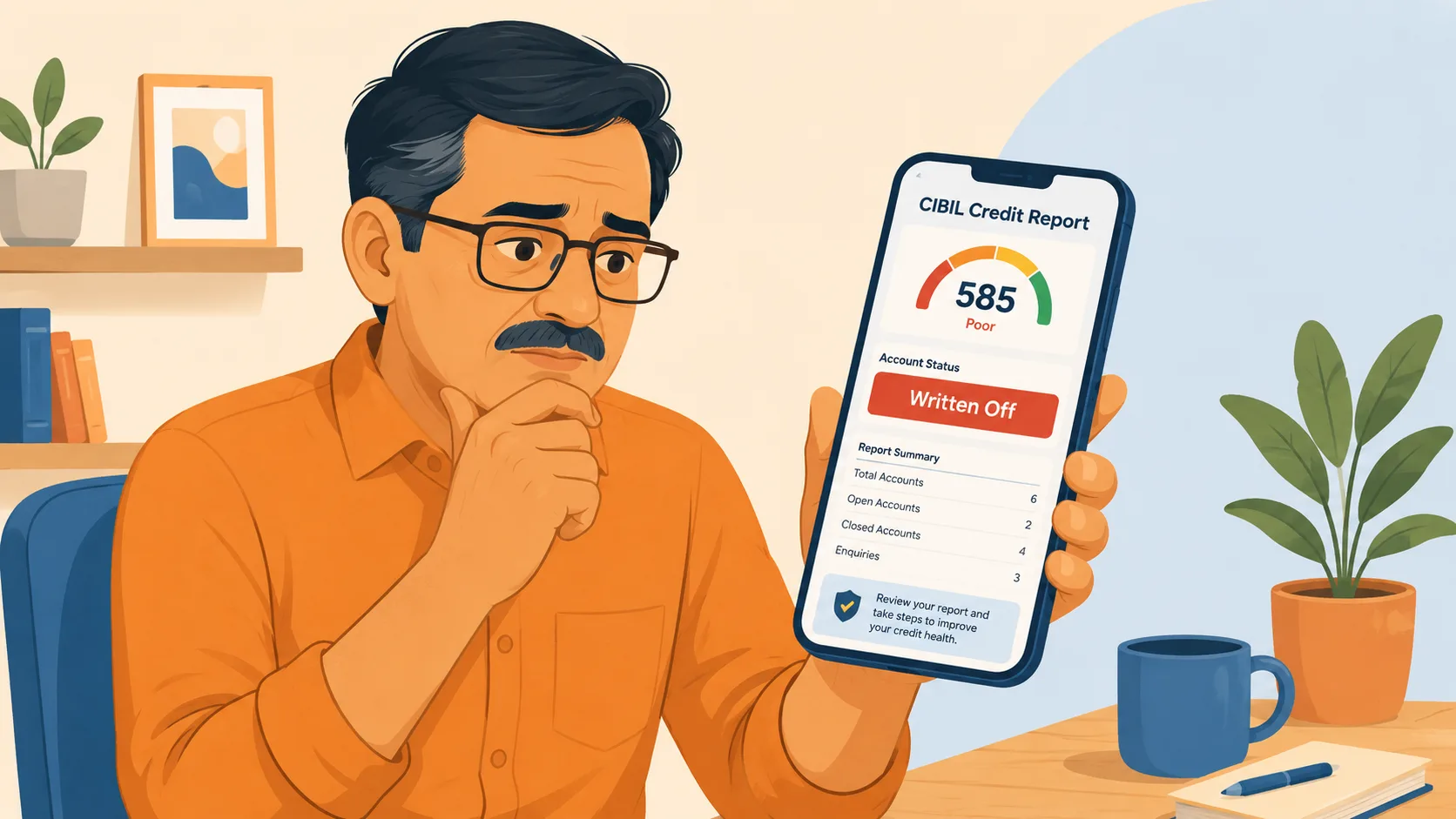
How to Clear CIBIL Score Issues: Find Your Exact Fix
"Clearing" a CIBIL score issue means different things depending on what's actually on your report. A wrong entry needs a dispute. A settled or written-off account needs a different process entirely. Step one is knowing exactly which issue you have, since the wrong fix wastes time and can make things worse.

Mohit Juneja
Reviewed by FREED India, Debt Resolution Specialists
 4.7/5
4.7/5 ₹3,200Cr+
 20,000+
 20,00,000+4.7/5₹3,200Cr+20,000+20,00,000+
KEY TAKEAWAYS

Not every CIBIL score issue has the same fix. Errors, settlements, and defaults each need a different process.
Genuine reporting errors get corrected through a free CIBIL dispute, resolved in around 30 days.
Tags like Settled, Written Off, Suit Filed, or SUB reflect real account history. They can't be disputed away.
These tags stay on your report for up to 7 years, but their weight on your score fades over time with responsible behaviour.
Trying to "clear" a genuine negative tag through a dispute, instead of resolving the debt behind it, usually fails and burns the 60-day dispute window for nothing.
First, Figure Out What Kind of CIBIL Issue You Actually Have
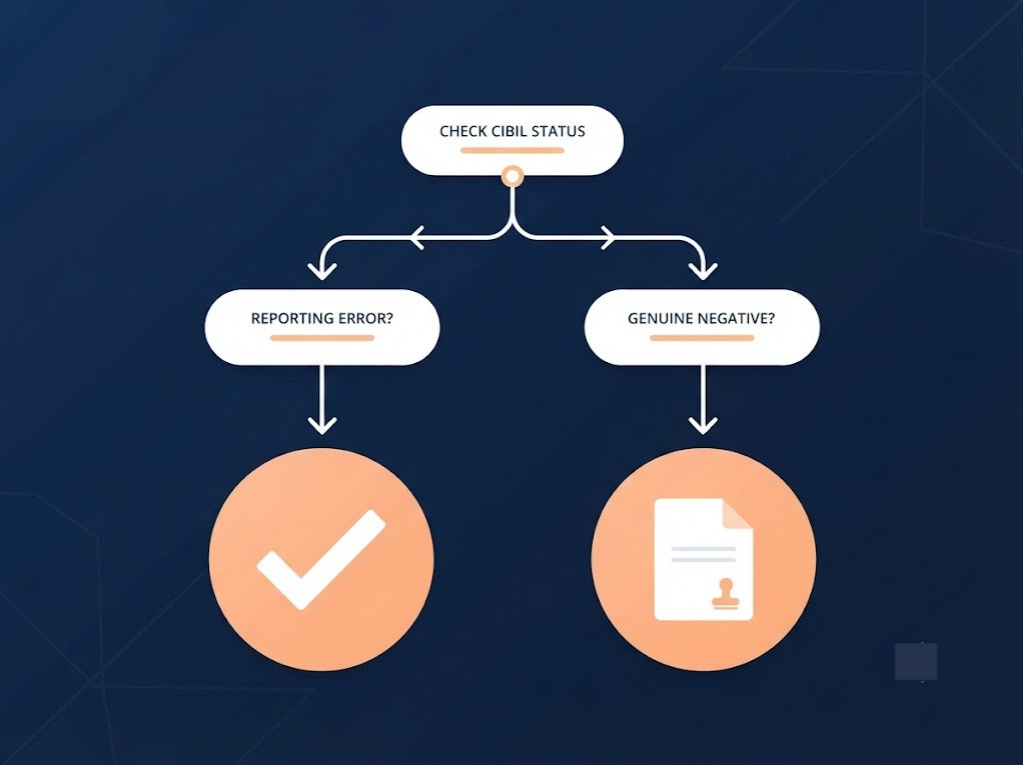
Almost everyone who searches for how to "clear" a CIBIL issue is actually asking two very different questions without realising it. Sorting out which one you're really asking is the single most important step in this whole process, because the two paths don't overlap at all.
Bucket one is reporting errors. This covers wrong personal details, like a misspelled name or an incorrect date of birth, a duplicate account showing the same loan twice under slightly different numbers, a closed loan that still shows as active because the lender never sent the closure update, or a DPD (days past due) figure that simply doesn't match what your bank statement shows. Every one of these has something in common. Something on the report doesn't match reality, and reality is provable with a document.
Bucket two is a genuine negative history. This covers tags like Settled, Written Off, Suit Filed, Wilful Default, SUB, DBT, and LSS. Every one of these exists because something real happened on that account, a settlement was agreed, a debt was written off the bank's books, legal action was initiated, or a classification escalated because payments stopped for a long enough stretch. You'll generally recognise these from your own history, even when you don't want to.
Here's why this classification matters so much. The dispute process, the one everyone reaches for first, only works on bucket one. It exists specifically to fix factual mismatches. If you file a dispute against a bucket-two tag, hoping the bureau will simply remove it because you asked, the lender reviewing your dispute will confirm the tag is accurate, and your dispute gets rejected. You've now spent 30 days and one of your dispute attempts on something that was never going to work, when that same time could have gone toward actually resolving the debt behind a genuine tag.
Working out which bucket you're in takes about ten minutes with your full report open in front of you, reading through each account rather than just glancing at the score at the top. It is, without question, worth doing before you take any other step on this page.

FREED Expert Tip
Filing a dispute against a genuine Settled or Written Off tag won't remove it, since it's not a reporting error. Disputes only work for factual mistakes.
Check My ReportIf It's a Reporting Error
If what you found on your report is a wrong balance, a loan or card that isn't actually yours, a payment marked late when your bank statement proves otherwise, or the same account listed twice, you're dealing with a genuine reporting error, and this is the more straightforward of the two paths.
The dispute process is entirely free and runs through CIBIL's own online portal. Once filed with the right supporting evidence, most disputes resolve within roughly 30-45 days, split between the lender's review window and the bureau's own processing time. The general shape of it looks like this: pull your latest report, pin down exactly which account and which field is wrong, gather proof that matches the specific error type (a bank statement for a payment dispute, a closure certificate for an account status dispute, ID proof for a personal-details mismatch), file the dispute with that evidence attached, and track it using the dispute ID CIBIL gives you.
That's the outline. The full walkthrough, including exactly which document works best for each specific error type, how to word your dispute so it moves faster, and what to do if it gets rejected the first time, lives on FREED's dedicated dispute guide. If this is genuinely where you've landed, that page is worth reading start to finish before you file anything.
If It's a "Settled" Tag
Settled means you and your lender formally agreed you'd pay less than the full amount you owed, and the account was closed on those revised terms. It's a real event, it's accurately reported, and no dispute process will make it disappear, because there's nothing factually incorrect about the entry itself.
What genuinely changes over time is not the tag, but its weight. A settled account remains part of your credit history. Future lenders may consider both the settled status and your subsequent repayment behaviour. A Settled account from three years ago, sitting alongside two years of spotless repayment on other accounts, reads very differently to a lender than the same tag sitting in isolation right after it happened.
FREED's deep dive on how CIBIL updates after settlement covers exactly what that recovery curve tends to look like, roughly how long it typically takes, and what specific habits speed it along. That page goes into a level of detail on the recovery timeline that doesn't belong repeated here.
If It's a "Written Off" Tag
Written Off sits a step beyond Settled, and the distinction matters more than most borrowers realise at first glance. It means your bank has formally taken the account off its own active books for accounting purposes, but you still legally owe the underlying debt in full. The bank has essentially stopped counting on collecting it through its usual channels, which is a very different, and generally heavier, signal to a future lender than a Settled tag.
A 'Written Off' status is generally viewed more seriously by future lenders than a 'Settled' status. FREED's full breakdown of written-off accounts goes into the specific score impact range and what your realistic options actually look like once an account has reached this stage, in more depth than fits naturally on this overview page.

What the Law Says
Under RBI's framework on credit information reporting, Closed, Settled, or Written Off accounts can be retained on your report for up to 7 years from the date of closure, settlement, or write-off, whichever applies.
Learn MoreIf It's "Suit Filed," "Wilful Default," "SUB," "DBT," or "LSS"
These five tags sit at the more serious end of the spectrum, and while it's tempting to group them together as "the bad ones," they actually represent quite different stages and situations under RBI's asset classification norms, so it's worth understanding roughly what separates them.
SUB and DBT are classification stages that track how long an account has sat overdue without payment, essentially markers of escalating severity as time passes without resolution. LSS sits further along that same escalation. Suit Filed is a different kind of signal entirely, it means the lender has already initiated formal legal proceedings to recover the debt, which is a meaningfully more urgent situation than a classification stage alone. Wilful Default is the most serious of the group, a formal finding by the lender that you had the capacity to repay but chose not to, which carries consequences well beyond your CIBIL score alone.
Given how different these five actually are in terms of urgency and what they mean for your next steps, condensing all five into a couple of paragraphs here would genuinely do you a disservice. FREED's detailed guide covering all five in depth breaks down what specifically triggers each one and what a realistic path forward looks like for each. If SUB specifically is the tag you're seeing, there's also a dedicated explainer focused just on that one, since it's one of the most commonly misunderstood entries on an Indian credit report.
What NOT to Do When Trying to Clear a CIBIL Issue
Don't file a dispute against a genuine negative tag, hoping it gets removed anyway. It won't, and it's worth understanding why this doesn't work rather than just taking it on faith. The dispute process exists specifically to correct factual errors. A lender asked to verify a real Settled or Written Off entry will simply confirm it's accurate, and your dispute gets closed without any change to your report, while the clock on that attempt has still run out.
Don't pay any "CIBIL score fixer" agency that claims it can erase accurate records. This is worth stating plainly, since it's one of the more common scams borrowers encounter while searching for a fix. No legitimate company, FREED included, has the ability to delete a genuine, accurately reported entry from your CIBIL file. Anyone selling this service is either misrepresenting what they can actually do, or running something closer to fraud than financial help.
Don't ignore the issue and hope it quietly disappears after some fixed number of months. Genuine tags follow their own defined retention timeline set by the bureau's own rules, and that timeline doesn't shrink just because you've stopped checking your report. Every month spent ignoring a genuine tag is a month not spent actually resolving the debt behind it, which is the only thing that meaningfully changes your situation going forward.

How FREED Helps You Identify and Resolve the Right Issue
If you're genuinely unsure which of these two buckets your issue belongs to, that uncertainty itself is exactly what FREED's Credit Insights is designed to resolve first, before anything else. Get a flat 50% off on subscription or avail yourself of the subscription at flat 50% off; it pulls your full Experian-based credit report and lays out not just your score, but a clear breakdown of what's actually driving it, tag by tag, account by account.
From there, FREED routes you toward whichever path genuinely fits your report. If what's showing up is a reporting error, that means practical help understanding the dispute process and organising the right supporting evidence for your specific error type. FREED helps borrowers settle their unpaid/overdue loans at up to 50% less*.
The underlying goal of starting here isn't to sell you into a FREED program regardless of fit. It's to stop you from spending 30 or 60 days chasing a fix that was never going to work in the first place, which remains the single most common and most avoidable mistake people make when trying to deal with a CIBIL issue entirely on their own, without first confirming which category they're actually dealing with.

Steps: Find and Fix Your Exact CIBIL Issue
- 1
Pull Your Full CIBIL Report.
Get the complete report, not just the headline score, directly from cibil.com. The score alone tells you almost nothing about which category your specific issue falls into, and you need the full account-by-account detail to classify it correctly.
- 2
Identify the Exact Tag or Error.
Go through the report line by line and look for specific wording: Settled, Written Off, SUB, DBT, LSS, Suit Filed, or a plain factual mismatch against what you know to be true from your own bank statements and records.
- 3
Match It to the Right Fix.
An error gets a dispute. A genuine tag gets debt resolution instead, whether that's settlement, consolidation, or something else entirely. Mixing these two up is the single biggest time-waster in this entire process, and it's worth double-checking your classification before moving to the next step.
- 4
Take the Correct Action.
File the dispute through CIBIL's portal for genuine errors, with the right evidence attached. For genuine, unresolved debt, start the conversation about settlement or consolidation with your lender or with FREED, rather than attempting a dispute that was never going to work.
- 5
Track and Recheck.
Come back to your report after 30 to 45 days and confirm the correct update actually appears. For disputes, this means checking the specific field has been corrected. For genuine debt resolution, this means confirming the account now reflects the new status accurately.
Comparison Table: Reporting Errors vs Genuine Negative Tags
Reporting Errors | Genuine Negative Tags | |
Examples | Wrong balance, duplicate account, closed loan shown active, wrong DPD | Settled, Written Off, Suit Filed, Wilful Default, SUB, DBT, LSS |
Right fix | Free CIBIL dispute | Debt resolution (settlement, consolidation, or repayment) |
Typical timeline | Around 30 days | 18 to 36 months of responsible behaviour for score recovery |
Can it be removed? | Yes, once verified as a genuine mistake | No, the tag itself stays, but its weight on your score fades over time |
Note: This table stays factual and process-focused. Outcomes depend on your specific report, lender, and repayment history.
Sources
Legal Claim | Source Link |
Reporting errors are corrected through a free CIBIL dispute, typically resolved within ~30 days | |
SUB, DBT, and similar classification stages track escalating overdue status under RBI's asset classification norms (SMA → NPA progression) | RBI Master Circular on IRACP Norms (RBI/2023-24/06), rbi.org.in |
Wilful Default is a formal classification requiring a specific finding by the lender | |
Closed, Settled, or Written Off accounts can be retained on the report for up to 7 years | No confirmed rbi.org.in source found. This is FREED's existing standing figure. One secondary legal-research source suggested 3 years for settled accounts specifically, conflicting with the brief's 7-year claim. Left as in the piece, unlinked. |

Mohit Juneja
Mohit Juneja writes educational content at FREED on debt management, credit scores, loan repayment, and borrowing best practices. His content is shaped by expert insights and industry knowledge, helping readers better understand their financial options and make informed decisions.
mohit.juneja@freed.care

FREED is India's trusted loan management platform. Founded in 2020 and headquartered in Gurugram, FREED has counselled 20 lakh+ people on personal loans, credit cards, and app loans. FREED charges fees only on successful settlement, not upfront. FREED does not handle secured loans (home loans, car loans, gold loans).
Media Mentions