How Debt Relief Works in India: Who Does What, and When
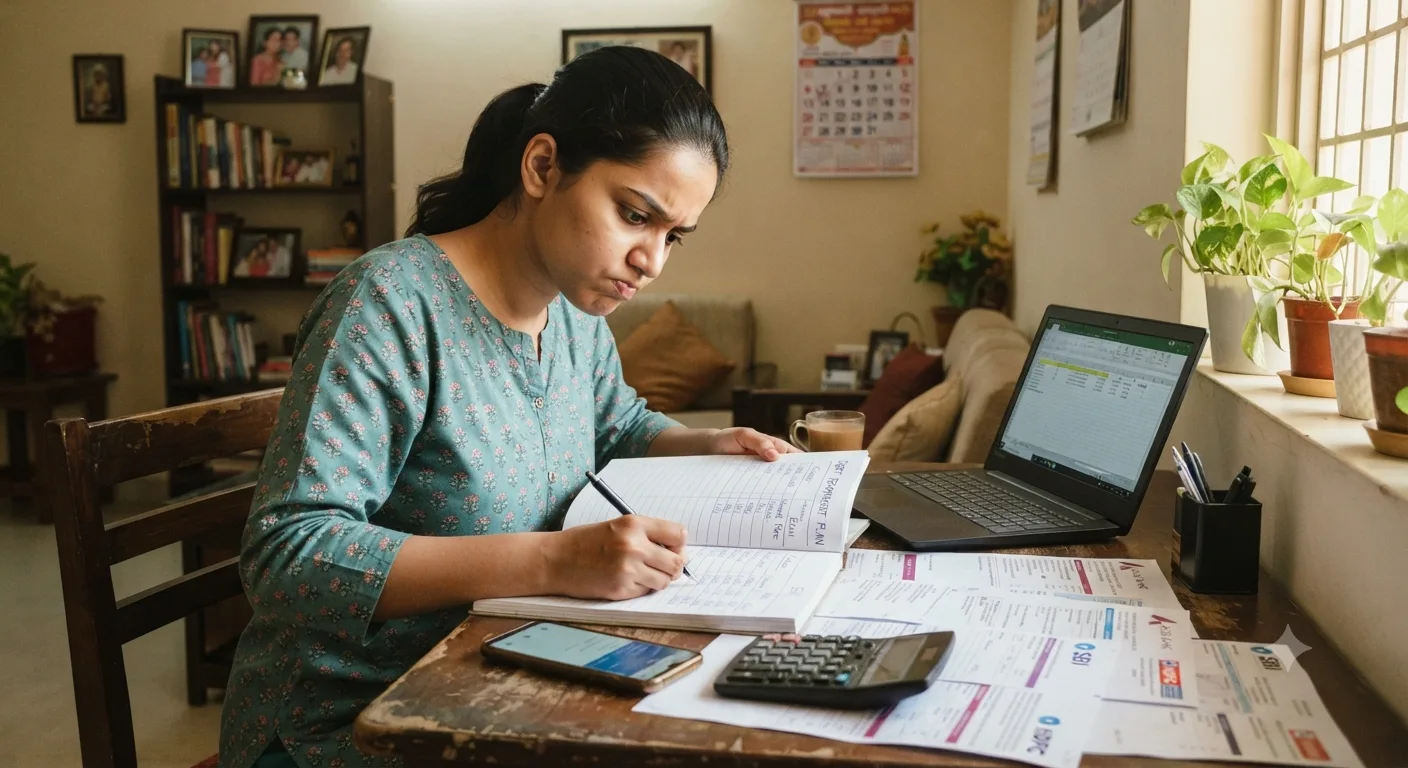
How debt relief works: In India, debt relief means changing how much, how often, or how long you repay, through an agreement with your bank or NBFC. If you can still pay, that’s usually restructuring or consolidation. If you genuinely can’t, it’s settlement. Each route has a different effect on your credit score.
Mohit Juneja
Reviewed by FREED India, Debt Resolution Specialists
 4.7/5
 ₹3,200Cr+
 20,000+
 20,00,000+4.7/5₹3,200Cr+20,000+20,00,000+
Key Summary

How debt relief works in India: you reach an agreement with your lender; nothing is erased automatically.
Still paying? Restructuring or consolidation, which doesn’t lower your score.
Can’t pay? Settlement, with a “Settled” mark on your report for up to 7 years.
RBI rules bar recovery calls before 8 am or after 7 pm, and any intimidation.
With FREED’s Loan Settlement Plan, your savings sit in an account in your own name.

Not Sure Which Route Fits You?
Your EMI Score shows how stretched your income really is.
Check My EMI ScoreHow Does Debt Relief Work in India?
Here’s how debt relief works in India, in one line: you change your repayment terms through an agreement with your bank or NBFC (non-banking financial company). Nothing is wiped out automatically. No app, agent, or company can make a loan disappear without the lender agreeing to it.
That’s different from what many search results describe. Most of them are written for the US, where consumer bankruptcy is a common route out of debt. In India, bankruptcy isn’t a practical route for most individual borrowers. So here, debt relief almost always happens through an agreement with the lenders you owe.
There are three main routes, and which one fits depends on where you are:
Restructuring (changing the loan plan). Your bank adjusts your EMI or stretches the repayment time, so the monthly amount is easier to manage.
Consolidation. One new loan pays off your other loans at once, leaving you with one EMI instead of several.
Settlement. The bank accepts a reduced lump sum as full and final payment, but only when you genuinely can’t repay in full.
The first two are for people who are stretched but still paying. The third is for people who’ve reached the point where full repayment isn’t possible anymore. If you’d like every option covered in depth, start with our complete guide to debt relief.
FREED offers a route for each of the last two: the Loan Consolidation Plan for people still paying, and the Loan Settlement Plan for people who can’t. Both are explained further down.
First, though, it helps to meet everyone involved.
Who Is Involved in Debt Relief, and What Does Each One Do?
Debt relief isn’t something one person does alone. Several parties play a part, and knowing who does what is a big part of understanding how debt relief works.
Who | What they do | What they can’t do |
|---|---|---|
You | Share your full financial picture, keep paying or saving as agreed, and approve every deal | Skip the paperwork, or hand over decisions entirely |
Your bank or NBFC | Decides whether to change your terms or accept a settlement, under its own board-approved policy | Harass you or break RBI’s recovery rules |
Credit bureaus | Record what lenders report: overdue, settled, closed | Change an entry without checking with the lender |
RBI | Sets the rules on settlements, recovery conduct, and credit reporting | Negotiate on your behalf |
A debt relief company (like FREED) | Assesses your situation, then matches you to a lending partner (consolidation) or negotiates with banks (settlement) | Guarantees a figure, or stops legitimate recovery |
An independent trustee (settlement only) | Holds your Special Purpose Account, a savings account in your own name | Release your money without your approval |
The most important line in that table is the bank’s. The bank always makes the final decision. Under RBI’s 2023 framework, every bank and NBFC decides settlements under its own board-approved policy. A debt relief company can do the work for you, preparing documents, handling the back-and-forth, and following up. But it can’t force a bank’s hand.
That’s why honest debt relief companies never promise a fixed result. If someone guarantees “70% off” before they’ve seen your loans, they’re promising something only your bank can decide.
It’s also worth knowing what your lenders are reporting about you right now. FREED’s Credit Insights shows every account on your Experian report, including which ones are already overdue.
Here’s how it works when you can still pay.
See What Your Lenders Are Reporting About You
Your credit report, in plain words, with what to fix first.
Check My Credit InsightsHow Does Debt Relief Work If You Can Still Pay Your EMIs?
If you’re still paying every EMI but it’s getting harder each month, here’s how debt relief works for you. There are two routes, and the money moves differently in each.
Restructuring
You ask your bank for help before your EMIs start slipping.
The bank may stretch your repayment time or adjust the EMI amount.
You keep paying the new, lower amount every month.
The trade-off is simple. Your monthly EMI comes down, but you usually pay more interest over the life of the loan, because you’re paying for longer. Here’s how loan restructuring works in more detail.
Consolidation
Your profile is assessed: your loans, income, and repayment history.
A lender approves one new loan, sized to cover your existing unsecured loans and card dues.
That new loan pays off your old loans and card dues directly, all at once.
You’re left with one EMI, on one date, to one lender. Your old accounts show as paid off on your credit report. Loan consolidation may initially affect your credit score due to the lender’s credit enquiry and the opening of a new loan account. However, making timely repayments and reducing outstanding credit card balances may help improve your score over time. Here’s more on what loan consolidation is.
Say you pay 4 EMIs on 4 different dates: two personal loans, a card, and an app loan. With consolidation, those 4 dates become 1. That alone cuts the chance of missing a payment.
This route is for people who are stretched but still paying. FREED’s Loan Consolidation Plan handles it end to end, from assessing your profile to matching you with a lending partner.
How Does Debt Relief Work If You Can’t Repay?
Settlement is not something a borrower chooses out of preference. Banks consider it only when repaying in full has become genuinely impossible. If that’s where you are, here’s how debt relief works on the bank’s side, and on yours.
When EMIs stay unpaid for some months, the bank usually classes the loan as an NPA (non-performing asset, a loan marked as bad), commonly after 90 days of missed payments. Here’s more on what NPA means. At that point, the bank starts looking at how to recover what it can. Each bank decides whether to accept a settlement under its own board-approved policy.
On your side, the money moves like this:
You set aside a fixed monthly amount. This replaces the EMIs you can no longer pay.
When there’s enough, an offer is negotiated with the bank. The bank looks at your situation and decides what it will accept.
You approve the offer. Nothing is paid without your yes.
The agreed amount goes to the bank, and the bank issues a settlement letter. That letter is your proof the account is fully and finally settled.
The result has a cost. The account shows “Settled” on your credit report for up to 7 years. “Settled” is different from “Closed”, which means a loan repaid in full. Lenders read the two differently, so new credit will be harder to get for a while.
With FREED, that monthly amount goes into a Special Purpose Account (SPA) in your own name, held by an independent trustee, not by FREED. Here’s the full personal loan settlement process, step by step.

What the Law Says
Under RBI’s 2023 framework, every bank and NBFC must decide settlements under its own board-approved policy.
Settle My LoansWhat Happens Month by Month During Debt Relief?
Most people want to know how debt relief works over time, not just in theory. Here’s what each route typically looks like, stage by stage:
Stage | Consolidation (still paying) | Settlement (can’t pay) |
|---|---|---|
Start | Your profile is assessed, and your debts are listed | Your full situation is assessed: loans, income, essential expenses; a personalised plan is made |
Next | A lending partner reviews and approves the new loan | You save a fixed monthly amount into the SPA instead of paying EMIs |
Turning point | The new loan pays off your old loans at once | The first settlement typically happens within about 4 months, once enough is saved |
After | One EMI on one date; your score tends to improve with on-time payments | Further accounts are settled one by one as savings build, and you approve each one |
End | The loan is repaid on schedule | The full programme typically takes around 1.5 years, with a settlement letter for each account |
Timelines are typical, not guaranteed. They depend on your loans, your savings, and each bank’s decision.
Now the honest part. In settlement, the months while you’re saving are hard. You’ve stopped paying EMIs, so your accounts stay overdue, and recovery calls can continue. Many people expect the calls to stop on day one. They don’t, and it’s better to know that going in.
That’s exactly why knowing your rights matters, which is the next section.
Want to Know What This Looks Like for You?
See your report today, so you know which stage you’re starting from.
Check My Credit InsightsWhat Happens to Recovery Calls and Your Credit Report During Debt Relief?
Two questions come up more than any other when people learn how debt relief works. What happens to the calls, and what happens to my CIBIL?
Recovery calls
Let’s be honest first. Debt relief doesn’t stop legitimate recovery calls. They can continue until an account is settled or repaid. But recovery agents have to follow RBI’s 2022 rules, and those rules are clear. Agents must not:
Call you before 8 am or after 7 pm
Intimidate or harass you, verbally or physically
Make threatening or anonymous calls
Send you inappropriate messages
Call you persistently
If calls cross that line, FREED Shield is available to everyone, whether or not you’ve joined a FREED programme. If you are facing recovery agent harassment, FREED helps you understand your legal rights as a borrower, report inappropriate recovery practices, and raise complaints with your lender. Where harassment is frequent, our experts speak to recovery agents on your behalf. And if you receive a legal notice about your loan, FREED helps you understand your options and draft a suitable reply.
Here’s the RBI complaint process for recovery agent harassment, and what to do if you get a legal notice for loan recovery.
Your credit report, stage by stage
Consolidation: one new enquiry when the new loan is approved. Your old accounts show as paid off, and one new loan appears.
Settlement, during the saving period: your accounts show as overdue because EMIs have stopped.
After settlement: each settled account shows “Settled” for up to 7 years.
Here’s more on how debt relief affects your credit score.
What the Law Says
RBI rules bar recovery agents from calling before 8 am or after 7 pm, and from any intimidation or harassment.
Get FREED Shield SupportWhat Can’t Debt Relief Do?
Knowing how debt relief works also means knowing where it stops. Here are 5 honest limits:
It can’t erase debt without a lender agreement. Every route depends on your bank or NBFC saying yes.
It doesn’t cover secured loans. Home, car, gold, and education loans sit with your bank. FREED handles unsecured loans only, like personal loans, credit cards, BNPL, and app loans.
It can’t stop legitimate recovery calls. Harassment is a different matter, and that’s where your RBI rights come in.
It can’t guarantee a settlement figure or an EMI saving. The bank decides, case by case.
It can’t undo a “Settled” mark. Once an account is settled, the mark stays on your report for up to 7 years.
And watch for these 4 red flags of fake “debt relief”:
Promises of a fixed “70% off” before anyone has looked at your loans
Requests to pay into an agent’s personal account
Big upfront fees before any work is done
Pressure to stop paying “right now”, before any assessment
Here’s how to tell if debt relief is a scam. If none of the routes here fits you, our guide to the five debt relief options also covers budgeting and counselling. And if you’re not sure you need debt relief at all, here’s how to tell if you need debt relief.
Check Where You Stand Before You Decide
EMI Score reads your income, savings, and current loans.
Check My EMI ScoreHow FREED Makes Debt Relief Work for You
FREED is India’s trusted loan management platform, and over 20 lakh people trust it. Its founding team brings 50+ years of debt-resolution experience from the US. Here’s how debt relief works with FREED, one plan at a time.
Loan Consolidation Plan (If You Can Still Repay)
If most of your salary goes towards paying multiple EMIs, FREED’s Loan Consolidation Plan helps you combine multiple loans into a single monthly EMI. This can reduce your monthly EMI burden by up to 50%.*
FREED assesses your profile, matches you to a lending partner from its network, and handles the process end to end. One new loan pays off your existing unsecured loans and card dues at once. Your score doesn’t drop because of consolidation. The fee is success-based, charged only when the consolidation is done. FREED has helped consolidate over ₹320 crore in loans so far.
Not sure if you qualify? Talk to FREED’s team. They’ll assess your situation and let you know if you’re eligible.
Loan Settlement Plan (If You Genuinely Can’t Repay)
If you genuinely cannot repay your loans, FREED negotiates with your lenders to settle them for less than 50%* of your outstanding dues.
Your monthly savings go into a Special Purpose Account in your own name, held by an independent trustee. FREED can’t use that money without your approval, and you authorise every settlement before any bank is paid. Each account ends with a settlement letter from the bank. So far, FREED has settled 33,000+ accounts, worth more than ₹500 crore. Here’s how to choose the right debt relief programme if you’re weighing options.
On fees, FREED charges a success-based fee only when a settlement is done, and the evaluation fee is non-refundable.
And whichever plan fits, FREED Shield is available to everyone facing recovery harassment, as covered above.
*Rates and ranges shown are indicative. Final terms decided by the bank. FREED is not a Loan Provider. No outcome is guaranteed. Please verify directly with your bank.
See Which Debt Relief Route Fits You
Get a free score from 0 to 100 based on your income, savings and current loans. No effect on your credit score.
Check My EMI Score
Mohit Juneja
Mohit Juneja is FREED’s Content & Communication Lead with 12+ years of experience across content, media, advertising and digital communications. He holds a postgraduate diploma in Communications from Xavier Institute of Communications, Mumbai, and has worked with organisations including NDTV, The Indian Express, McCann Worldgroup and NABARD.
At FREED, he leads content and communication across loan management, debt resolution, debt consolidation and financial well-being. His work combines research, storytelling and consumer-focused communication to make complex financial topics easier to understand and act on. He has also scripted and produced 11 documentaries on rural development and agriculture for NABARD, with film's selected for the Mumbai International Film Festival.
mohit.juneja@freed.care

FREED is India's trusted loan management platform. Founded in 2020 and headquartered in Gurugram, FREED has counselled 20 lakh+ people on personal loans, credit cards, and app loans. FREED charges fees only on successful settlement, not upfront. FREED does not handle secured loans (home loans, car loans, gold loans).
Media Mentions