How Banks Calculate Your EMI, Step by Step
For a standard fixed-rate loan with equal monthly instalments, every bank uses the same underlying formula: EMI = P × r × (1+r)^n ÷ [(1+r)^n − 1]. Some lenders structure products differently, flat-rate pricing, variable rates, or irregular instalments, so this formula applies specifically to standard reducing-balance loans. The amount stays the same each month, but what it actually pays off, interest versus principal, changes every single month.

Mohit Juneja
Reviewed by FREED India, Debt Resolution Specialists
 4.7/5
4.7/5 ₹3,200Cr+
 20,000+
 20,00,000+4.7/5₹3,200Cr+20,000+20,00,000+
KEY TAKEAWAYS

To calculate EMI, use EMI = P × r × (1+r)^n ÷ [(1+r)^n − 1], the same formula every bank uses.
Early EMIs contain a larger interest component; as the outstanding principal falls, more of each EMI goes toward principal.
A 10% flat rate can have a substantially higher effective/reducing-balance equivalent. The exact equivalent depends on the loan tenure and repayment structure, so don't compare a flat rate directly with a reducing-balance rate.
A longer tenure lowers your EMI but increases the total interest you'll pay over the loan's life.
A commonly used budgeting guideline is to keep your total monthly debt payments at a manageable share of take-home income. A 50% threshold is sometimes used as a rough warning point, but it is not a universal rule and lender criteria vary.
What Is an EMI, and What Is It Made Of?
EMI (Equated Monthly Installment) is the fixed monthly payment that clears a loan completely by the end of its agreed tenure. It's the same amount every single month, whether it's your first payment or your last.
Every EMI is made of two parts. Interest is the cost of borrowing, what the bank charges for lending you the money. Principal is the actual amount you originally borrowed, being repaid bit by bit. Here's the part that trips people up: this split between interest and principal isn't fixed. It shifts every single month, even though the total EMI amount you pay never changes.
The same reducing-balance formula can be used for many standard home, car and personal loans when the loan has equal monthly instalments and a fixed periodic rate. The formula behind an EMI doesn't change based on what you're borrowing for, it's the same calculation whether you're financing an apartment or a two-wheeler, only the numbers you plug in differ.
Understanding exactly how that number gets calculated, and why it stays flat while the interest-principal split underneath it doesn't, starts with the formula itself.

The EMI Formula Banks Actually Use
Every bank and NBFC (Non-Banking Financial Company) in India uses the same formula to calculate EMI:
EMI = P × r × (1+r)^n ÷ [(1+r)^n − 1]
Each letter stands for something specific. P is the principal, the actual loan amount you're borrowing. r is the monthly interest rate, calculated by taking your annual interest rate, dividing it by 12, and then dividing by 100 to convert it into a decimal. n is the total number of monthly installments, your loan tenure in years multiplied by 12.
This method is called the reducing balance method, and that name matters. Under a reducing-balance structure, interest for each period is calculated on the outstanding principal. That distinction is the whole reason your EMI's interest-to-principal split changes over time, and it gets its own dedicated section further down, since it's also the source of one of the most common ways borrowers get quoted a worse deal than they realise.
This exact formula is what every EMI calculator you'll ever use, whether it's on a bank's website or a third-party finance app, is running behind the scenes. Nothing more sophisticated is happening under the hood.
How to Calculate Your EMI, Step by Step
Here's the formula in action, with a full worked example using real numbers.
Step 1: Convert the annual rate to a monthly decimal rate.
Take a loan of ₹5,00,000 at 12% annual interest. Divide 12 by 12, then by 100: 12 ÷ 12 ÷ 100 = 0.01. This is your r.
Step 2: Convert the tenure to months.
A 3-year loan tenure becomes 3 × 12 = 36 months. This is your n.
Step 3: Plug the numbers into the formula.
P = 5,00,000, r = 0.01, n = 36:
EMI = 5,00,000 × 0.01 × (1.01)^36 ÷ [(1.01)^36 − 1]
Step 4: The result.
This works out to an EMI of approximately ₹16,607 a month.
From here, the two numbers most people want next follow naturally. Total repayment over the loan is EMI × 36, which comes to roughly ₹5,97,858. Total interest paid is that figure minus the original principal, roughly ₹97,858 over the full 3 years, on a ₹5,00,000 loan.
Every EMI calculator online is running this exact same arithmetic. Understanding the steps behind it means you can spot-check any figure a lender quotes you, rather than taking their number on faith.

FREED Expert Tip
Run your own numbers through an online EMI calculator to double-check any figure a lender quotes you verbally. It takes 30 seconds and confirms you're being quoted correctly.
Reduce My EMIWhy Your EMI Stays the Same, But What It Covers Changes Every Month
This is often the single most confusing part of how loans actually work, so it's worth walking through with real numbers rather than just describing it.
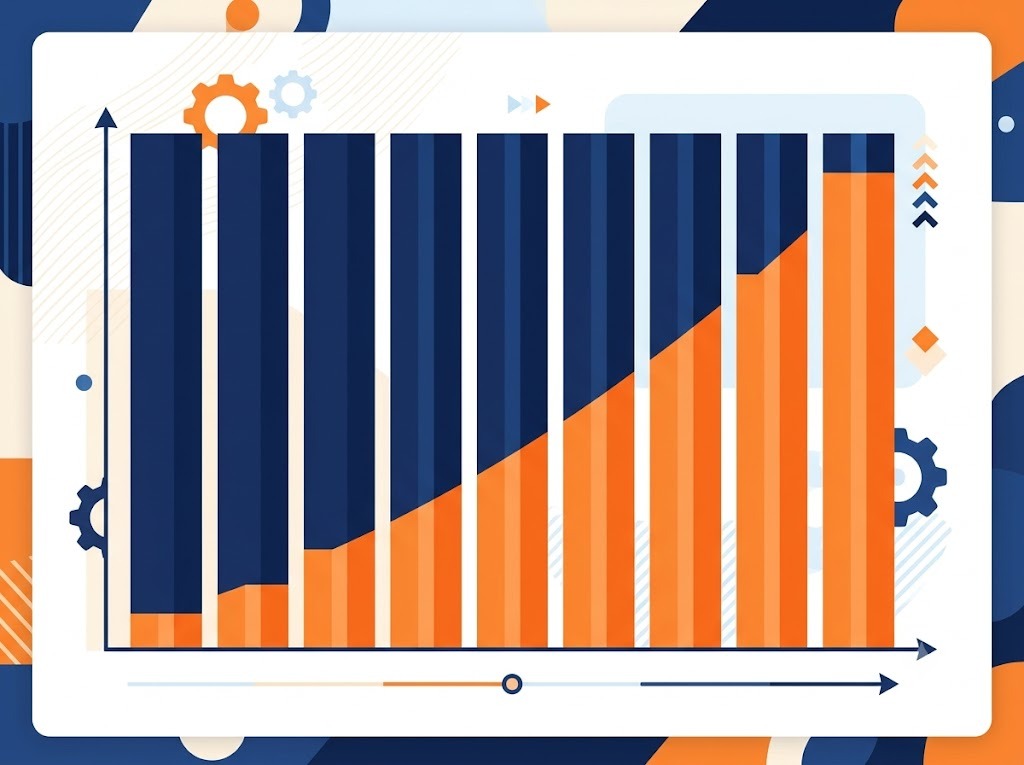
Take the same ₹5,00,000 loan at 12% for 36 months, EMI ₹16,607. In month 1, interest alone accounts for ₹5,000 of that payment, since it's calculated on the full ₹5,00,000 you still owe. Only around ₹11,607 actually reduces your principal that month. Fast forward to month 30. Your outstanding balance has shrunk considerably by then, so interest for that month drops to roughly ₹1,117, while about ₹15,490 of the same ₹16,607 EMI now goes straight toward paying down principal.
This is the mechanical reason it works this way. Because the reducing balance method calculates interest fresh each month on whatever balance is left, a larger balance early on means a larger interest charge, and a smaller balance later on means a smaller one, even while the fixed EMI amount handles the difference by shifting more toward principal as the months go by.
Here's why this matters practically. A borrower a year into a 3-year loan might be surprised at how much principal is still outstanding, feeling like they've been paying diligently without making much visible dent. That's expected, not a sign anything's gone wrong, it's simply how amortization works on any reducing-balance loan. If you're managing more than one loan and want the full worked-through breakdown on how to plan your EMI payments better, FREED covers that in more depth elsewhere.
Flat Rate vs Reducing Balance, Why This Difference Costs You Real Money
This is a genuine consumer-protection point worth understanding before you sign anything, not just a technical footnote.
Some lenders, particularly certain personal loan apps and NBFCs, quote what's called a "flat rate," where interest is calculated on the full original principal for the entire tenure, regardless of how much you've already repaid. This looks cheaper on paper next to a reducing-balance rate, but it costs meaningfully more in practice for the same quoted percentage, because you're paying interest on money you've technically already returned.
Run the actual numbers and the gap becomes clear. A flat rate of 10% a year, on a typical 1 to 5 year tenure, works out to a reducing-balance equivalent somewhere around 17% to 18% annually, depending on the exact tenure. That can be substantially higher than the headline 10% suggests.
The practical instruction here is simple: always ask a lender explicitly whether a quoted rate is flat or reducing balance, and if it's flat, convert it before comparing against any other offer on the table. Understanding this distinction is exactly the kind of thing worth untangling when reviewing a debt picture that includes app loans or NBFC products alongside more conventional bank loans.

What the Law Says
Under RBI's KFS framework, applicable lenders must provide a standardised Key Facts Statement for covered retail and MSME term loans, including the APR and applicable charges, before execution of the loan contract. Credit-card facilities are outside this particular KFS requirement.
Talk to a FREED CounsellorWhat Changes Your EMI: Principal, Rate, and Tenure
Three levers determine what your EMI actually comes out to, and each one is worth understanding individually rather than as a vague blur.
Principal. A higher loan amount directly increases your EMI, roughly proportionally. Borrow twice as much at the same rate and tenure, and your EMI roughly doubles too.
Interest rate. A higher rate increases both your EMI and your total interest paid over the loan's life. Even a difference of 1 to 2 percentage points matters meaningfully on a long loan, since that gap compounds across every single month of the tenure, not just once.
Tenure. A longer tenure lowers your monthly EMI, since the same repayment gets spread across more months. But it increases the total interest you pay over the loan's life, since interest keeps accruing on the outstanding balance for a longer stretch of time. Going back to the earlier worked example, stretching that same ₹5,00,000 loan from 3 years to 5 years lowers the EMI, but the total interest paid climbs meaningfully higher over the longer period.
The practical trade-off worth remembering is this: a lower monthly EMI and a higher total cost usually move together. There's rarely a free lunch buried in a longer tenure, it's a genuine trade, not a discount.
What's a Safe EMI for Your Income?
Once you understand how EMI gets calculated, the more useful next question is whether your total EMI load actually fits your budget.
A commonly used guideline is to keep total EMIs, across every loan and credit card combined, under roughly 50% of your take-home income. Going meaningfully above this line, especially when it's spread across several loans rather than just one, is generally where repayment starts to feel genuinely stretched rather than just a little tight month to month.
This is a general guideline, not a hard rule etched anywhere in regulation, individual circumstances vary depending on other fixed costs, dependents, and how stable your income actually is month to month. But it's a useful checkpoint to run for yourself: add up every EMI you're currently paying, divide by your take-home salary, and see where you land.
If that number is already past 50%, or getting close to it, that's worth addressing before it tightens further rather than after.
How FREED Helps If Your EMI Is Already Too High
For most people reading a piece about how EMI gets calculated, the goal is understanding or double-checking a number, not solving an active crisis, and FREED's role here stays appropriately light for that.
FREED's Debt Consolidation Program reviews eligible borrowers' multiple loans and cards and may help simplify repayment into a more manageable monthly arrangement. The effect on your credit profile depends on the individual's circumstances, application and subsequent repayment behaviour. It's built for borrowers who are still able to pay but finding the math genuinely tight, exactly the situation the 50% guideline above is meant to flag early.
If repayment in full has already stopped being realistic entirely, that's a different, more serious conversation, FREED's Loan Settlement Plan, "Settle My Loans." Settlement is not something a borrower chooses out of preference, and it's not the takeaway this particular article is recommending as a default next step, most readers here just want to understand or verify their own numbers, not restructure their entire debt.
What Helps You Use This Going Forward
- Always confirm whether a quoted rate is flat or reducing balance before comparing loan offers. As covered above, the gap between the two can be nearly double, and this single question prevents the most common comparison mistake.
- Recalculate your EMI whenever a bank offers a rate change. Don't assume the new number is correct without checking it yourself, run it through the same formula and confirm the figure matches what you're being quoted.
- If your income grows, consider increasing your EMI slightly rather than only extending tenure. Even a modest increase can meaningfully cut total interest on a long loan, since it reduces the outstanding balance faster than the original schedule would have.
- Keep your combined EMI load in view as a share of income, not just a monthly figure in isolation. A single EMI can look manageable on its own while still contributing to a combined load that's genuinely stretched once every loan and card is added together.
None of this requires becoming a finance expert. A basic understanding of the formula, and the habit of checking your own numbers rather than taking a verbal quote at face value, covers most of what actually matters here. If you've got existing debt to manage alongside a new loan decision, FREED's key strategies for managing debt is worth reading alongside this piece. FREED's free assessment is available anytime you want a second look at your full EMI picture.
Sources
Claim | Source |
Lenders must disclose the APR and full cost breakdown of retail and MSME term loans upfront, in a standardised Key Fact Statement, from October 1, 2024 | RBI/2024-25/18, DOR.STR.REC.13/13.03.00/2024-25, Reserve Bank of India, April 15, 2024 |
Worked example: ₹5,00,000 at 12% annual interest over 36 months produces an EMI of ₹16,607, total interest ₹97,858 | Calculated directly from the standard reducing-balance EMI formula for this piece |
A 10% flat rate converts to approximately 17-18% on a reducing-balance basis, depending on tenure | Calculated directly for this piece across 1 to 5 year tenures; varies by tenure, figure kept as an illustrative range rather than a fixed multiplier |

Mohit Juneja
Mohit Juneja writes educational content at FREED on debt management, credit scores, loan repayment, and borrowing best practices. His content is shaped by expert insights and industry knowledge, helping readers better understand their financial options and make informed decisions.
mohit.juneja@freed.care

FREED is India's trusted loan management platform. Founded in 2020 and headquartered in Gurugram, FREED has counselled 20 lakh+ people on personal loans, credit cards, and app loans. FREED charges fees only on successful settlement, not upfront. FREED does not handle secured loans (home loans, car loans, gold loans).
Media Mentions