Debt Payoff Planner: Build Your Own Debt Payoff Order
A debt payoff planner is a simple plan that lists every debt you owe and sets the order to pay them off in. It tells you which debt gets your extra money first, while you keep paying the minimum on everything else, until each one is cleared.
Mohit Juneja
Reviewed by FREED India, Debt Resolution Specialists

 4.7/5
4.7/5 ₹3,200Cr+
 20,000+
 20,00,000+4.7/5₹3,200Cr+20,000+20,00,000+
Key Summary

A debt payoff planner works with any mix of credit cards, personal loans, and BNPL (Buy Now Pay Later) dues, not just one type.
There are two proven ways to order your debts, by interest rate or by balance, and each suits a different kind of person.
Credit card interest rates in India can be substantially higher than typical personal-loan rates, with many cards quoting annualised rates in the 30%–40%+ range.
The order you pick changes your total interest paid, not just how it feels to pay it off.
If your total EMIs already cross 50% of your take-home salary, a payoff order alone may not be enough, and it's worth knowing when to look further.
What a Debt Payoff Planner Actually Does?
A debt payoff planner isn't a loan product, and it isn't settlement, it's a personal repayment order you build yourself and follow, using debts exactly as they already stand. Nothing new gets borrowed, and nothing gets negotiated with a lender, this is entirely about the sequence you choose to attack what you already owe.
It works whether your debt sits in two accounts or six. A single credit card and a personal loan follow the same basic logic as five credit cards, two personal loans, and a BNPL balance spread across different apps, the planner just scales up to hold more entries on the same list.
The two building blocks stay constant no matter how many debts you're tracking. First, list every single debt, exactly what you owe, at what rate, and what the minimum payment is. Second, decide which order to attack them in, since that decision is what actually determines how much interest you end up paying and how long the whole process takes.
That second building block, the order, is where most people genuinely get stuck, because it's not obvious at first glance which approach actually serves you best. Two established methods exist for making this call, and they lead to noticeably different outcomes depending on which one you choose.

See Your Debt Payoff Timeline
A free tool shows your debt-free date and interest saved.
Try the Debt CalculatorThe Two Ways to Order Your Debts, Interest Rate or Balance
Two established approaches exist here, and it's worth understanding both properly rather than guessing which one sounds more appealing.
Ordering by interest rate, sometimes called the avalanche method, means attacking the highest-rate debt first with every extra rupee you can spare, while paying only the minimum on everything else. This approach saves the most money over time, mathematically, since it targets whichever debt is accruing interest fastest and shuts that down first.
Ordering by balance, sometimes called the snowball method, means attacking the smallest balance first, regardless of what rate it's charging. This can help you clear a smaller account sooner, creating an early sense of progress and momentum.
When the same extra payment is applied consistently, paying the highest-interest debt first generally minimises total interest paid. Balance order tends to keep people consistent for longer, since visible progress matters more to most people's follow-through than an optimal spreadsheet calculation.
A worked example makes this concrete. Say you're carrying three debts: a credit card at ₹80,000 with 36% annual interest, a personal loan at ₹2,00,000 with 14% annual interest, and a second card at ₹25,000 with 40% annual interest. Ordering by interest rate, you'd attack the ₹25,000 card first, since its 40% rate is the most expensive, even though it's also the smallest balance here, a case where both methods happen to agree. Ordering purely by balance, you'd still land on that same ₹25,000 card first, since it's the smallest. But swap the numbers slightly, say the ₹80,000 card carries 42% and the ₹25,000 card carries 30%, and the two methods now point in different directions entirely, interest-rate order says attack the ₹80,000 balance first despite its size, balance order says attack the ₹25,000 balance first despite its lower rate. Neither method is objectively wrong here, they're simply optimising for different things, total cost versus early momentum.
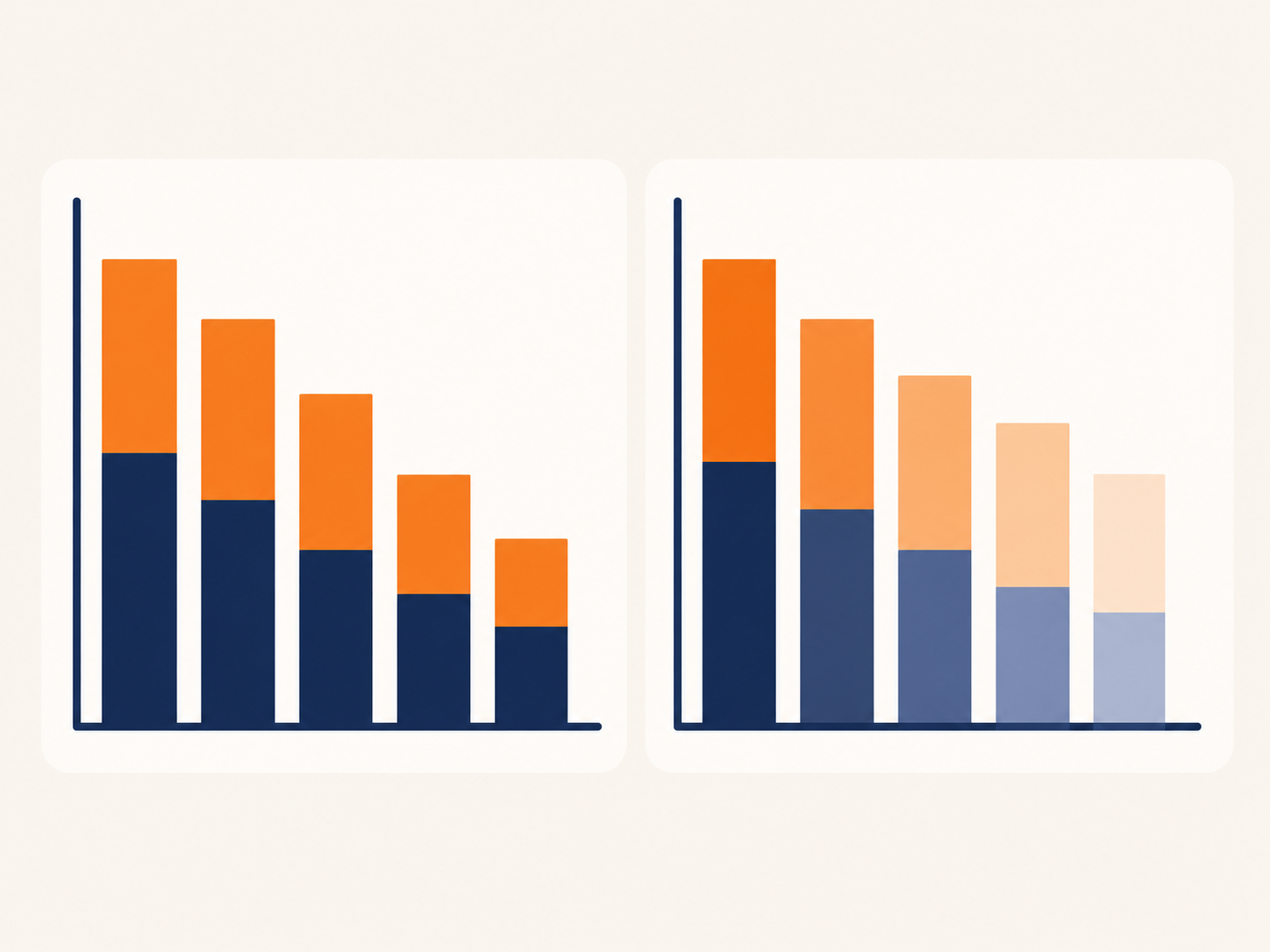
Comparison Table: Ordering by Interest Rate vs Ordering by Balance
Approach | What You Pay First | Best For | Trade-off |
By Interest Rate | Highest-rate debt, regardless of size | Saving the most money overall | Can take longer to see a debt fully cleared |
By Balance | Smallest debt, regardless of rate | Staying motivated with quick wins | Can cost more in total interest when the debt rates differ. |
How to Build Your Own Debt Payoff Planner, Step by Step
Step 1: List every debt you owe.
Write down the lender, the outstanding balance, the interest rate, and the minimum monthly payment for each one. This single list is the foundation everything else in this process builds on.
Step 2: Add up your total minimum payments.
This tells you the floor, the amount you must pay every month no matter what, before any extra rupee goes toward speeding anything up.
Step 3: Work out how much extra you can realistically pay.
Keep enough aside for essential irregular expenses and a basic emergency buffer before committing the remainder to accelerated debt repayment. Even a small extra amount, ₹1,000 or ₹2,000, changes the payoff timeline meaningfully once applied consistently, month after month.
Step 4: Choose your order, interest rate or balance.
Pick whichever approach you're more likely to stick with for months at a stretch. The best method here is genuinely the one you'll actually follow through on, not the one that looks best on paper.
Step 5: Put every extra rupee toward the top debt on your list.
Whichever method you choose, keep making at least the required minimum payment on every account. The extra payment goes only toward your priority debt. Once the top debt clears completely, roll its entire payment amount into the next debt on your list, and repeat.
Step 6: Review your planner every few months.
Update balances, confirm you're still genuinely on track, and adjust the extra amount if your income or expenses shift meaningfully in either direction.

When a Payoff Order Alone Isn't Enough
It's worth being honest about the limits of this whole approach, since that honesty matters more here than a piece that pretends a payoff order can solve every situation.
A payoff order works well when the monthly minimums across all your debts are still genuinely manageable, and there's real extra capacity left over each month to apply on top of them. When your EMIs consume a very large share of your take-home income, there may be too little money left for an accelerated payoff strategy. FREED uses around 50% as an internal warning benchmark, but the right threshold depends on your income, essential expenses and overall debt burden.
If your minimum payments leave little or no room for accelerated repayment, a payoff order may not be enough. It may be worth exploring broader options such as consolidation, restructuring or financial counselling. If you continue making payments on time, that repayment behaviour can support your credit profile over time. However, the impact on your CIBIL score depends on how the underlying accounts are handled and reported. This is genuinely a different tool for a different problem, not a more aggressive version of the same planner covered above.

What the Law Says
RBI's current credit-reporting framework requires lenders to submit credit information to bureaus more frequently than under the earlier monthly cycle. However, the date when a payment appears in your credit report can still depend on the lender's reporting process and the bureau's update cycle.
Check your optionsHow FREED Helps While You Follow Your Payoff Planner
FREED's role here is supportive infrastructure, not a replacement for the planner you build yourself, since this whole process is fundamentally something you do, not something FREED does for you.
FREED's free Debt Calculator lets you run both the interest-rate order and the balance order against your actual numbers before committing to either one, so you're comparing your real debts rather than a generic example. FREED's Credit Insights tool tracks your score as your planner progresses over the following months, and checking it is a soft inquiry, genuinely safe to do as often as you'd like without any impact on the number itself.
If your planner reveals that you're structurally over-leveraged rather than just working through a manageable sequence, that's covered in the section above, and it's worth revisiting rather than repeating in depth here. This blog is fundamentally a DIY tool for building your own order, not a page built to steer you toward a product, and it's worth keeping that framing honest throughout.

Are You in a Loan Trap? Quick Check
Move the slider to your total EMIs as a % of monthly salary. See your debt stress level instantly.
EMIs as % of Monthly Salary
Sources
Claim | Source |
Banks and NBFCs report credit information to credit bureaus on four fixed reference dates each month, the 9th, 16th, 23rd, and last day, rather than monthly, under the Reserve Bank of India (Credit Information Companies) Amendment Directions, 2025, effective July 1, 2026. | RBI (Credit Information Companies) Amendment Directions, 2025, effective July 1, 2026, Reserve Bank of India |
Interest rate ranges for credit cards (36% to 42%) and personal loans (12% to 24%) are market conventions, not RBI-codified figures, and are framed as "commonly" or "typically" throughout the body text rather than treated as fixed rates.

Mohit Juneja
Mohit Juneja writes educational content at FREED on debt management, credit scores, loan repayment, and borrowing best practices. His content is shaped by expert insights and industry knowledge, helping readers better understand their financial options and make informed decisions.
mohit.juneja@freed.care

FREED is India's trusted loan management platform. Founded in 2020 and headquartered in Gurugram, FREED has counselled 20 lakh+ people on personal loans, credit cards, and app loans. FREED charges fees only on successful settlement, not upfront. FREED does not handle secured loans (home loans, car loans, gold loans).
Media Mentions