Debt Relief Solutions: A Complete Guide to Managing Your Debt
Debt relief solutions are structured ways to reduce or reorganise debt that has become hard to manage. In India, this mainly means two paths: debt consolidation, combining multiple debts into one lower EMI if you can still repay, and debt settlement, negotiating a reduced payoff if you genuinely cannot repay in full. Which one fits depends on your ability to repay, not preference.

Mohit Juneja
Reviewed by FREED India, Debt Resolution Specialists
 4.7/5
4.7/5 ₹3,200Cr+
 20,000+
 20,00,000+4.7/5₹3,200Cr+20,000+20,00,000+
KEY TAKEAWAYS

Debt relief solutions in India mainly fall into two categories: consolidation, for borrowers who can still repay but are stretched thin, and settlement, for borrowers who genuinely cannot repay in full.
Consolidation combines your debts into one EMI with one lender. It's a repayment change for eligible unsecured debt, not a promise about your future credit score.
Settlement can negatively affect your credit profile because the account may be reported as “Settled” rather than showing the full amount as paid. The impact and reporting period should be confirmed with the lender and credit bureau.
A bounced cheque EMI can trigger Section 138 of the Negotiable Instruments Act: a criminal complaint becomes possible, with a jail term of up to 2 years or a fine of up to 2 times the cheque amount. NACH or ECS bounces follow a different legal path, but banks can still take action.
If recovery calls turn abusive or threatening, that's a separate issue from consolidation or settlement. FREED Shield helps with that specifically.
What Are Debt Relief Solutions?
Debt relief solutions are the structured ways to deal with debt that has become hard to manage. It is not one single product. In India, this mainly means two paths.
The first is debt consolidation. This is for borrowers who are still able to repay their loans but are juggling too many of them at once. A new loan replaces the old ones, and the borrower is left with one debt instead of several.
The second is debt settlement. This is for borrowers who genuinely cannot repay their loans in full. The bank agrees to accept a smaller, final amount instead of the full outstanding balance.
There is also a related but separate kind of support: recovery harassment help, like FREED Shield. This does not change how much you owe. It deals with how collection calls and visits are conducted, not the debt amount itself.
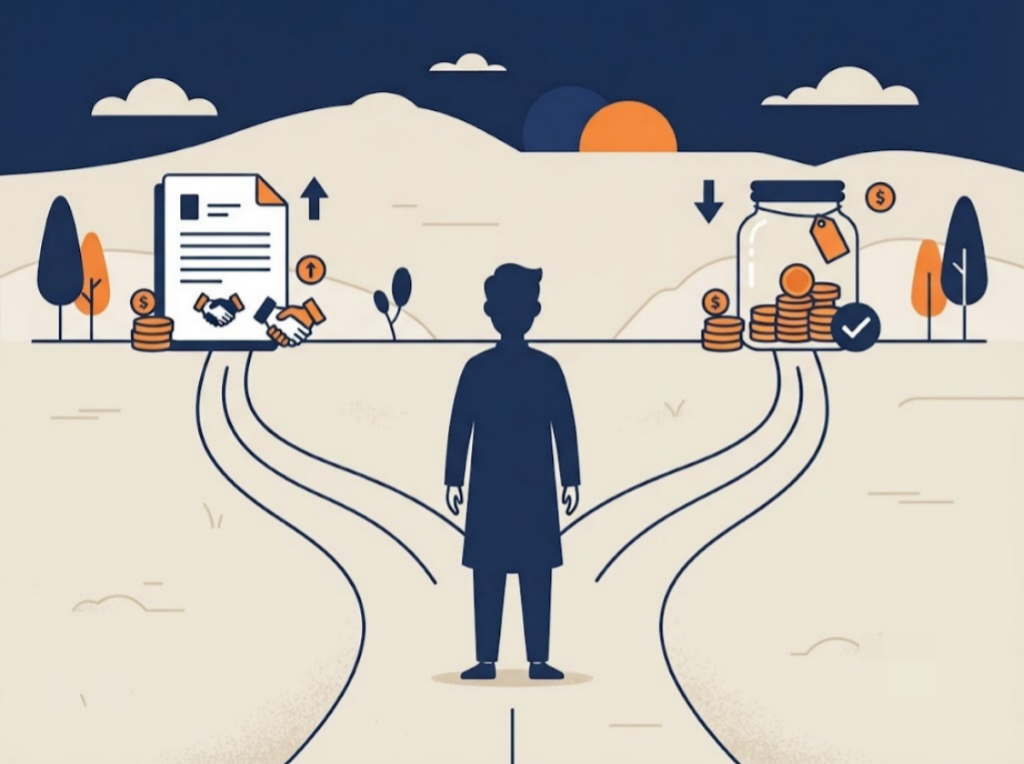
These two main paths, consolidation and settlement, are not interchangeable. They are not a menu you pick from based on preference. Each one fits a specific financial situation, and using the wrong one can leave you worse off. A borrower who is still managing their EMIs doesn't need settlement. A borrower who has genuinely lost the ability to pay isn't helped by a new consolidated loan they still can't afford.
Before deciding which path fits, it helps to know exactly what you owe. Check every loan currently active in your name and add it up across every lender. Many people underestimate this number until they see it all in one place.
Once you know the full picture, understanding why debt reaches this point in the first place makes the decision easier. That's where a clearer answer starts.

Not Sure Where to Start?
Get a free, confidential assessment of your debt situation from FREED's team.
Talk to FREED's TeamWhy People Look for Debt Relief
People don't end up needing debt relief because they were careless. Two very different situations usually lead someone here, and it helps to know which one describes you.
The first is the borrower who is still paying every EMI on time, but it's a stretch. Multiple loans, multiple due dates, and a growing share of the salary going out before it even arrives. Nothing has been missed yet, but the margin keeps shrinking. This is the consolidation scenario.
The second is the borrower who has genuinely lost the ability to repay. This usually comes from something specific: a job loss, a medical emergency, or a debt spiral where high interest on a credit card or loan app kept adding faster than it could be paid down. This is the settlement scenario.
These are two different financial realities, not two points on the same scale. One does not lead naturally into the other. Struggling to juggle EMIs is not automatically a sign that settlement is coming. And settlement isn't reserved for people whose situation has become "serious enough." It's reserved for people who genuinely cannot pay, whatever led them there.
Knowing which of these actually describes your situation right now is the real decision point. The next section walks through how to tell.
Signs You Need Debt Relief, and Which Kind
It helps to be specific rather than going by a general feeling of stress. Here's how to tell which situation you're actually in.
Signs consolidation fits:
You're current on every payment. Nothing is overdue, even if it's tight every month.
Your combined EMI is eating a large share of your income, but you're still managing it without missing a due date.
Your credit profile is reasonably healthy, which means you could likely qualify for a lower-rate loan that replaces your existing debts.
Signs settlement fits:
You've missed multiple payments in a row, and there's no realistic way to catch up given your current income.
Your income has genuinely dropped or stopped, not just felt tighter than usual.
You're already dealing with recovery calls or notices from your bank.
Neither list is about how you feel about your debt. It's about what your bank statement and your calendar actually show over the last two or three months. These two groups are meant to stay separate. If you find yourself somewhere between them, don't guess. A quick way to check where you stand is to look at your EMI score, which shows how much of your income is realistically going toward debt and how much room you actually have left.
This guide covers every type of debt relief available in India in more detail below, starting with the full landscape of options before going deep into the two that matter most.
The Types of Debt Relief Solutions Available in India
Before going deep into the two main options, it helps to see the full landscape. Debt relief in India isn't limited to consolidation or settlement alone, even though those two cover most situations.
Debt consolidation replaces multiple debts with one new loan. One EMI, one lender, one due date, instead of juggling several.
Debt settlement is when the bank agrees to accept a reduced lump-sum payoff as the final word on a loan you can no longer manage.
Balance transfer is narrower than full consolidation. It moves just your credit card debt to a different card with a lower interest rate, rather than combining everything you owe. It works well if the only problem is one expensive card, but it doesn't help if you're juggling several loans and cards at once. Debt consolidation works differently, and covers more ground than a single card transfer.
Credit counselling is general financial guidance. A counsellor helps you understand your situation and options, without necessarily restructuring any of your actual debt.
None of these four options is better than the others in the abstract. Each fits a different situation, and using the wrong one can waste months you don't have to spare. A balance transfer won't help someone with five different loans. A full settlement isn't necessary for someone who only has one stretched credit card.
The two most substantial options for most borrowers, consolidation and settlement, deserve a full explanation each. Consolidation comes first, since it's the option for borrowers who can still repay.
Debt Consolidation: For Borrowers Who Can Still Repay
Debt consolidation is for borrowers who are current on their payments but are managing multiple EMIs across different cards and loans. If that's your situation right now, this is the option built for you.
Here's what happens. A new loan replaces your existing eligible debts: personal loans, credit card dues, BNPL balances, and similar unsecured credit. Once that new loan comes through, you're left with one EMI, one lender, and one due date, instead of tracking several different payments across different banks every month.
Debt consolidation does not automatically have the same credit-reporting consequences as settlement. However, applying for new credit may result in a lender enquiry, and your credit profile can also be affected by how existing accounts are closed or reported and how consistently you repay the new loan. What happens to your credit profile afterward depends on how consistently you pay the new EMI and how your lender reports it, not on the act of consolidating itself.
Here's a rough sense of why this can still help. Credit card interest in India typically runs 30% to 40% a year. A consolidated personal loan from a leading bank usually comes in far lower, often somewhere around 10% to 11%. On a ₹2 lakh credit card balance, that gap alone can mean paying several thousand rupees less in interest over a year, money that goes toward the actual balance instead of disappearing into interest.
Consolidation may be easier to access before significant payment problems arise because lenders assess the borrower's current eligibility and repayment capacity. It's a preventative step for someone who's stretched but still current, not a fix for someone who has already missed several payments. FREED's Debt Consolidation Program looks at your full financial picture and matches you to a lending partner that can issue the new loan, with one EMI and one lender replacing everything else.
Consolidation only works if repayment is still realistic. Here's what applies once it genuinely isn't.
Debt Settlement: For Borrowers Who Genuinely Cannot Repay
Settlement is not something a borrower chooses out of preference. Banks and financial companies only consider it when someone is in genuine financial difficulty and truly unable to repay the full amount.
If your repayment has become genuinely impossible, not just uncomfortable, this is the option built for that situation. It isn't a shortcut, and it isn't meant for someone who's simply tired of paying.
Here's how it works. Instead of paying EMIs, you save a fixed amount every month into a Special Purpose Account, or SPA (a dedicated savings account held in your name by an independent trustee firm, separate from FREED). As this account builds up, FREED negotiates with each of your banks one at a time. The order isn't fixed to smallest-first or largest-first. It depends on your situation and priorities.
This does affect your CIBIL score. Once a loan is settled, it's marked "Settled" on your credit report, and that mark stays for up to 7 years. This is the real trade-off of settlement, and it's worth understanding clearly before choosing this path over consolidation.

The waiver, how much less than the full amount you end up paying, can go up to 50%*, though the exact figure ultimately depends on your bank. Every settlement also needs your sign-off first. FREED states that settlement payments require customer approval before payment is made. Confirm the exact approval process and terms before publication.
FREED's Debt Resolution Program follows this exact process: a full assessment, structured savings, bank-by-bank negotiation, and your approval at every step. One more thing worth being clear on: the SPA is your own money, held by a trustee, not FREED collecting your savings directly.
For readers dealing specifically with collection calls rather than the debt amount itself, that's a related but separate issue, covered next.

What the Law Says
A bounced cheque EMI can trigger Section 138 of the Negotiable Instruments Act: a criminal complaint becomes possible, with a jail term of up to 2 years or a fine of up to 2 times the cheque amount. NACH or ECS bounces follow a different legal path, but banks can still take action.
Know your rightsDebt Consolidation vs. Debt Settlement
Read this table as a starting point, not a final answer. Most borrowers already know, deep down, which side they're on. If you're not sure, the honest test is simple: are you managing your current EMIs, even with effort, or have you genuinely stopped being able to? That answer decides the row that applies to you.
Feature | Debt Consolidation | Debt Settlement |
Who it's for | Still repaying, stretched thin | Genuinely cannot repay |
What happens | A new loan replaces existing debts | Bank accepts a reduced lump-sum payoff |
CIBIL impact | No drop from consolidation itself; outcome depends on repayment | Drops, "Settled" status stays up to 7 years |
Timeline | Relatively quick, days to weeks | Longer, savings build first, then negotiation |
Fee structure | Success-based, charged on completion | Success-based, charged on completion |
Which path fits depends entirely on your ability to repay. Talk to FREED's team for a personal assessment.
What About Recovery Harassment?
Debt relief searches sometimes come from a different place entirely: not the debt itself, but how a bank or agent is going about collecting it.
If that's your situation, it helps to know this is a separate issue from choosing between consolidation and settlement.
When recovery conversations cross the line into abusive, threatening, or harassing behaviour, FREED provides an added layer of support through FREED Shield, a dedicated borrower-support service. FREED Shield helps you understand your rights as a borrower and can assist you in preparing and submitting a complaint through the appropriate channels where necessary.
This is available to everyone, not just people already enrolled in a FREED program. You don't need to be a customer to use it if a recovery call has genuinely crossed a line.
How FREED Helps
For Consolidation
If you're still paying but stretched across multiple loans, FREED's Loan Consolidation Plan starts by reviewing your full debt picture: every loan, every card, every due date. Based on that, FREED matches you to a lending partner from its network. That partner disburses one new loan that pays off your eligible existing debts right away, and you're left with one EMI instead of several.
FREED charges a fee only when the consolidation is successfully completed, so there's nothing to pay if it doesn't go through.
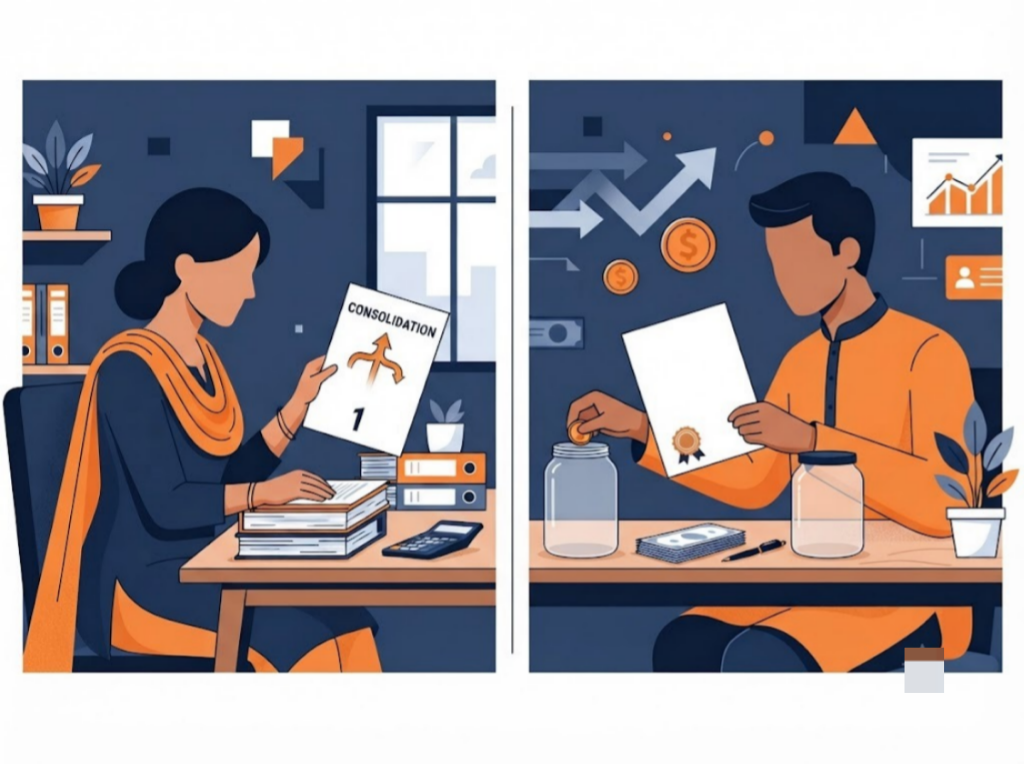
For Settlement
If repaying in full has become genuinely impossible, FREED's Loan Settlement Plan assesses your complete financial situation and builds a structured monthly savings plan around it. Once enough has built up in your SPA, FREED negotiates with each bank as sufficient funds become available.
The fee here is success-based too. If a bank refuses to settle, FREED doesn't charge the fee, and even refunds the initial evaluation fee. That's a real commitment, not a marketing line.
Still Repaying? Simplify It
Get matched to a lender and combine your debts into one EMI.
Check My Consolidation OptionsTips for Choosing the Right Debt Relief Path
Be honest about whether you can genuinely keep up with your payments right now, not whether you'd prefer to avoid the CIBIL hit that comes with settlement. The honest answer decides the right path, not what feels easier to hear.
If you're genuinely unsure which category you fall into, talk to a counsellor for an actual assessment instead of guessing. It's a short conversation that can save you months of picking the wrong option.
Whichever path fits, act sooner rather than later. Consolidation works best before you default, while you still have room to qualify for a new loan. Settlement works once repaying in full is already genuinely impossible. Waiting rarely improves either option, and in some cases it narrows your choices further.
There's no perfect time to deal with debt, only a better and a worse one.Acting early can give you more options to assess, particularly before payment problems become more severe.

Mohit Juneja
Mohit Juneja writes educational content at FREED on debt management, credit scores, loan repayment, and borrowing best practices. His content is shaped by expert insights and industry knowledge, helping readers better understand their financial options and make informed decisions.
mohit.juneja@freed.care

FREED is India's trusted loan management platform. Founded in 2020 and headquartered in Gurugram, FREED has counselled 20 lakh+ people on personal loans, credit cards, and app loans. FREED charges fees only on successful settlement, not upfront. FREED does not handle secured loans (home loans, car loans, gold loans).
Media Mentions