Debt Management Plan vs Debt Settlement: What's the Difference?
Confused between a debt management plan and debt settlement? These two sound similar but they are very different. This guide explains both in plain language — so you can pick the right one for your situation.
FREED India
Reviewed by FREED India, Debt Resolution Specialists
 4.7/5
4.7/5 ₹3,200Cr+
 20,000+
 20,00,000+4.7/5₹3,200Cr+20,000+20,00,000+
Key Takeaways

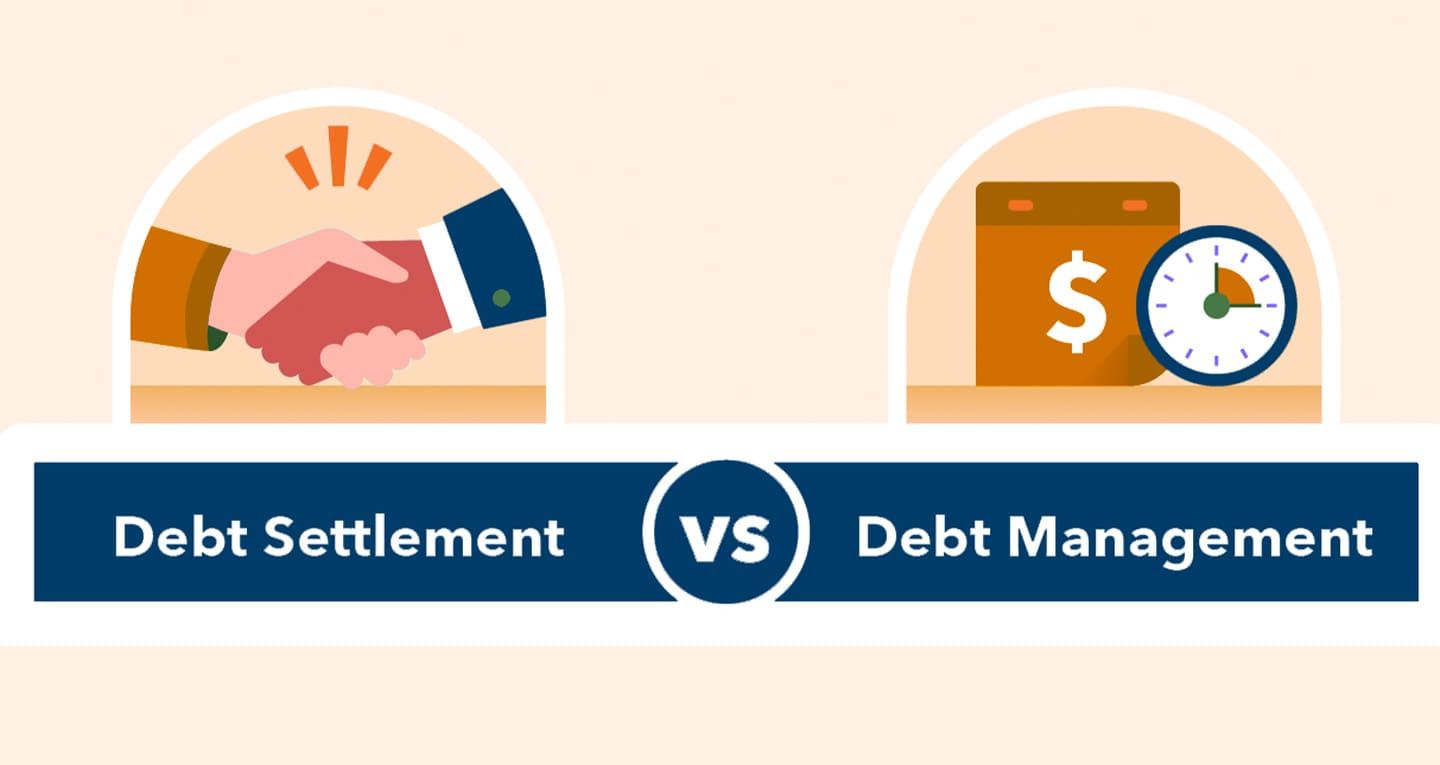
A Debt Management Plan (DMP) means you repay the full amount you owe but in a more organised, structured way that you can manage.
Debt Settlement means you negotiate with the bank to pay less than what you owe and the remaining amount is waived off.
A DMP works best when you can still repay but need a better plan. Settlement works best when you genuinely cannot repay the full amount.
Both options affect your CIBIL score differently; a DMP done well can actually improve your score, while settlement causes a temporary dip.
FREED offers both pathways and helps you figure out which one is right for your specific situation in one free call.
First: Why Do These Terms Get Confusing?
When you're in debt, you hear a lot of terms being thrown around. Debt management. Debt settlement. Debt consolidation. Debt resolution.
They all sound similar. But they mean very different things. And picking the wrong one for your situation can make things worse, not better.
Let's clear this up once and for all. In simple language.
What is a Debt Management Plan (DMP)?
A Debt Management Plan is exactly what the name says a plan to manage your debt.
You still pay back the full amount you borrowed. You are not asking the bank for any reduction. What changes is how you pay it back in a more organised, structured, and manageable way.
Here's how a DMP typically works:
You take stock of everything you owe. All your loans, all your credit cards, all your lenders written down clearly. Total outstanding. Interest rates. Monthly EMIs.
You prioritise which debt to pay first. Either you pay off the smallest debt first (Snowball Method) or you pay off the highest interest debt first (Avalanche Method). Both are valid strategies.
You stick to a monthly budget. A DMP requires discipline. You create a monthly budget, cut unnecessary expenses, and put every extra rupee towards debt repayment.
You repay in full but faster and smarter. The goal is to clear all your debt without missing payments, without defaults, and without damaging your CIBIL score.
A DMP is a self-managed or counsellor-guided process. It doesn't require going to the bank and negotiating a deal. It's about making the most of what you earn to repay what you owe.
The Two Most Popular Methods Inside a DMP
The Snowball Method Clear the smallest debt first
List all your debts from smallest to largest outstanding amount. Put all extra money towards clearing the smallest one first. Pay minimum dues on all others.
Once the smallest is cleared, redirect that EMI amount to the next smallest. Like a snowball rolling downhill it picks up speed as you go.
This method gives you quick wins. Seeing one account fully cleared feels motivating. It keeps you going.
Best for: People who feel overwhelmed and need regular wins to stay motivated.
What is Debt Settlement?
Debt settlement is a different situation entirely.
Here you are not repaying the full amount. You go to the bank and negotiate. You say: "I cannot pay back everything I owe. But I can pay this amount right now." The bank reviews your situation. If they believe you genuinely cannot pay in full they agree to accept the reduced amount and close the account.
The remaining balance is waived off. The debt is closed.
Example: You owe ₹1,50,000 on a personal loan. You've lost your job. You haven't paid for 4 months. You approach the bank and offer ₹80,000 as a one-time settlement. The bank agrees. You pay ₹80,000. The remaining ₹70,000 is written off. The account is closed.
This is debt settlement. You pay less. The bank waives the rest.
Settlement is not a shortcut or a trick. It is a formal, written legal agreement between you and the bank and both sides must honour it completely.
Pros and Cons of Each Option
Debt Management Plan- Pros:
- No negative impact on CIBIL score consistent payments improve it
- No need to approach the bank for special approval
- Full control over your finances you decide the strategy
- Teaches long-term financial discipline
Debt Management Plan- Cons:
- Requires strong willpower and consistency
- Takes longer if total debt is large
- Does not reduce the amount you owe only organises how you repay it
- Won't work if income is genuinely too low to cover repayments
Debt Settlement- Pros:
- You pay less than what you owe real financial relief
- Faster resolution especially with FREED negotiating on your behalf
- Stops collection harassment permanently once settled
- Avoids the much more damaging outcome of an unresolved default
Debt Settlement- Cons:
- CIBIL score takes a hit report shows "Settled" for 7 years
- Bank must agree they are not obligated to settle
- Requires genuine, documented financial hardship
- Getting new loans becomes harder for 2–3 years after settlement
Which One is Right for You?
Choose a Debt Management Plan if:
- You are still making payments even if it's tight
- Your CIBIL score is still relatively good
- You want to repay in full and avoid any negative mark
- You have a stable income even if modest
- You are willing to cut expenses and follow a budget strictly
Choose Debt Settlement if:
- You have already missed multiple payments (90+ days)
- You genuinely cannot repay the full outstanding amount
- Your income has dropped significantly job loss, medical emergency
- Collection agents have started calling
- You want to close the debt as soon as possible and start fresh
If you're not sure, talk to FREED. Our counsellors assess your situation honestly in one free call. We tell you which option actually fits, not which one sounds better.
How FREED Helps: With Both Options
For Debt Management: FREED's counsellors help you understand your full debt picture which accounts are costing you the most, which to prioritise, and how to build a realistic monthly budget. We help you identify how your loans and credit card bills are affecting your financial health so you know exactly where to focus.
For Debt Settlement: FREED's Debt Resolution Program manages the entire settlement process for you. You save in a Special Purpose Account. We negotiate with each lender for the best possible reduction. On average, FREED clients settle at 56% less than what they originally owed. You approve every step. We handle the rest.
In both cases — FREED Shield protects you from recovery harassment throughout the process.
Are You in a Loan Trap? Quick Check
Move the slider to your total EMIs as a % of monthly salary. See your debt stress level instantly.
EMIs as % of Monthly Salary
About FREED
FREED is India's first and leading Debt Relief Platform. We help people who are struggling with credit card bills, personal loans, and EMIs find a legal, stress-free path forward.
We offer Debt Resolution (settle for less when you can't repay in full) and Debt Consolidation (combine all loans into one lower EMI). Our certified counsellors also guide you through debt management strategies helping you understand how your debts are affecting you and what to prioritise.
We protect you from recovery harassment through FREED Shield trusted by over 15,00,000 Indians.
Over 10,000 Indians have used FREED to become debt-free. And our first consultation is always free.
No complicated language. No hidden charges. No judgement. Just real help.
Call us: 0124-6663555 (Mon–Sat, 10AM–7PM) www.freed.care | 🛡️ FREED Shield

India's leading debt resolution platform
FREED is India's leading platform for debt settlement and financial wellness. We have helped over 60,000 Indians reduce, manage, and get completely out of debt the right and legal way.
Media Mentions













