Credit Card Options for Bad Credit Scores
Credit cards designed for applicants with weaker credit profiles are generally intended for borrowers who may not qualify for standard unsecured cards. Eligibility varies by issuer. These are mainly secured cards, backed by a fixed deposit, made specifically to give you access to credit while you rebuild your score.

Mohit Juneja
Reviewed by FREED India, Debt Resolution Specialists
 4.7/5
4.7/5 ₹3,200Cr+
 20,000+
 20,00,000+4.7/5₹3,200Cr+20,000+20,00,000+
KEY TAKEAWAYS

Many issuers generally reserve standard unsecured credit cards for applicants with stronger credit profiles.
Secured credit cards are backed by a fixed deposit, with the credit limit typically set at 70% to 100% of the deposit amount.
Using a secured card responsibly over time may help establish a stronger repayment history, subject to the issuer's review.
An existing salary or savings account relationship with a bank can sometimes get you a pre-approved card even with a lower score.
Correcting inaccurate credit-report information helps ensure lenders assess accurate credit information.
Can You Get a Credit Card With a Bad Credit Score?
Yes, you generally can, though what you get access to changes quite a bit. As a general market practice rather than any official classification, lenders tend to read CIBIL scores in bands: lower scores are usually treated as weak, mid-range scores sit in what most lenders consider fair-to-good territory, and higher scores are generally read as strong. Where each lender draws those lines varies, since every bank applies its own criteria. Where you land in this range decides not whether you can get a card at all, but which kind of card is realistically within reach.
With a weak score, the reward-heavy unsecured cards, the ones with airline miles, cashback tiers, and high credit limits, are largely off the table for now. What opens up instead is a smaller set of options built specifically for this situation: secured cards backed by a fixed deposit, credit-builder cards, and a few entry-level unsecured products with relaxed eligibility.
This isn't a dead end, it's a detour. A secured card works exactly like a normal credit card for spending, billing, and repayment. The difference is only in how the bank protects itself against risk. Used well for a stretch of months, it becomes the most direct route back to qualifying for a standard unsecured card later. The rest of this blog walks through exactly which options are available and how to use them to get there.

Not sure what's dragging your score down?
See your score and what's affecting it in one report.
Check My CreditSecured Credit Cards, the Main Option for a Bad Score
A secured credit card is backed by a fixed deposit (FD) you place with the bank, usually starting from a few thousand rupees. Instead of assessing your income and credit history the way it would for a regular card, the bank simply holds your deposit as security. If you don't pay your bill, the bank has your FD to fall back on. This is exactly why secured cards are so much easier to get approved for even with a weak score: the bank isn't taking on real risk, your own money is covering it.
Your credit limit is typically set at 70% to 100% of whatever you deposit. So if you place ₹50,000 as an FD, you might get a card with a limit anywhere from ₹35,000 to ₹50,000, depending on the bank's specific policy. Minimum FD amounts vary quite widely from bank to bank, some start as low as ₹10,000 to ₹15,000, so it's worth checking a few options rather than assuming you need a large sum locked away.
Most banks don't ask for income proof for a secured card, since the deposit itself is the qualifying factor. This makes it one of the few card options where a weak CIBIL score, or even a thin credit file, doesn't stand in your way at all. The trade-off is that your deposit stays locked in as long as the card is active, and you'll usually pay a small annual fee on top, same as with most cards.

Freed Expert Tip
Apply to only one bank at a time. Each formal application creates a hard enquiry that future lenders may consider during credit assessments.
Check My CreditOther Options Beyond Secured Cards
Secured cards aren't the only route, even though they're the most reliable one. A few other categories are worth knowing about, especially if locking away a fixed deposit right now isn't practical for you.
Credit-builder cards are a newer category designed specifically for people rebuilding a damaged score or starting fresh. These often come with a very low starting limit and simplified eligibility criteria, and some are structured to automatically graduate you to a standard card after a set period of on-time payments.
Retail and co-branded store cards, the kind tied to a specific retailer or brand rather than issued broadly by a bank, sometimes carry more relaxed criteria than a general-purpose bank card. Because the retailer benefits from you spending at their stores, they're often willing to work with a slightly lower score than a bank would accept for its own card.
RuPay UPI credit cards are a genuinely useful newer entry point. These link a small credit line directly to your UPI ID, letting you make everyday payments through apps you likely already use, often with a lower approval bar than a traditional credit card since the spending pattern itself becomes part of what the issuer evaluates.
Add-on or supplementary cards are another practical option if a family member, a spouse or parent, has an existing card in good standing. You get a card linked to their account, and your usage builds your own credit activity over time, even though the primary responsibility for repayment sits with the main cardholder.
Why Your Own Bank Might Approve You Even With a Low Score
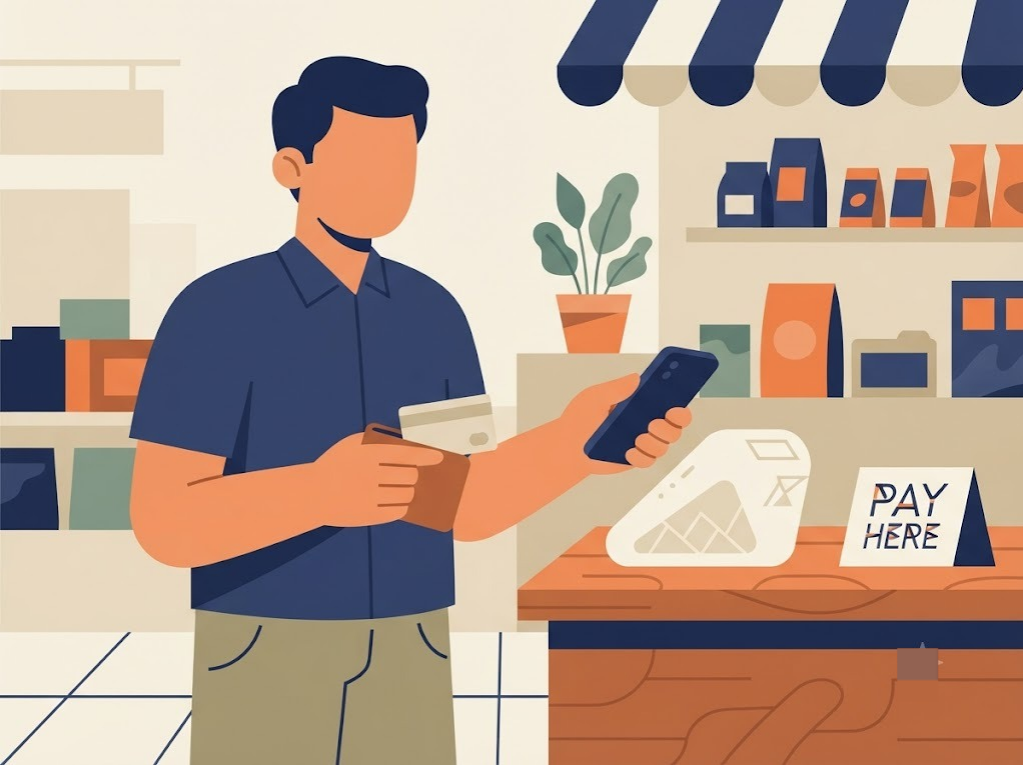
If you've held a salary account or a savings account with a bank for six months or more, that relationship can sometimes work in your favour more than your CIBIL score does on its own. The bank already sees your monthly salary credits, your average balance, and your general spending pattern, information that gives them a fuller picture than a credit report alone provides.
This is why pre-approved card offers sometimes show up from your own salary-account bank even when your score wouldn't clear the bar for a fresh application elsewhere. The bank is essentially underwriting you on cash flow it can already see, rather than starting from scratch with a stranger's application. It's always worth checking your own bank's app or net banking portal for a pre-approved offer before applying anywhere new, since this route often comes with fewer conditions attached.
Check Your Credit Report Before You Apply
A low score doesn't always mean you've genuinely missed payments or carried high balances. Sometimes it traces back to a reporting error that's sitting quietly on your file: an old loan that was actually settled or closed still showing as active, a payment marked late that was actually made on time, or an account that isn't even yours mixed into your report due to a data-matching mistake.
This matters more than it might seem, because applying for a new card without checking first means you could be adding a fresh rejection on top of an error that was never yours to begin with. Incorrect reporting may affect how future lenders assess your credit profile. Correcting inaccuracies helps ensure lenders assess accurate credit information. Every rejected application shows up as a hard inquiry on your file, which itself drags the score down a little further.
Pull your credit report and go through it line by line before you apply anywhere. Look specifically for accounts you don't recognise, loans marked active that you know you've closed, and payment histories that don't match your own records. If you find something wrong, raising a dispute with the bureau to correct it can occasionally recover somewhere in the range of 30 to 50 points on its own, simply by removing an error that was dragging the number down for no real reason. FREED's Credit Insights subscription pulls your Experian report and lays out exactly what's affecting your score, so you're not guessing at what to look for.

What the Law Says
RBI requires every credit information company, including CIBIL, to provide you one free full credit report every calendar year. And per the bureaus' own scoring practice, checking your own report counts as a soft inquiry, which does not affect your score. You can, and should, check it before applying anywhere. Source: RBI circular on Free Annual Full Credit Report to Individuals
Check your optionsCredit Card Options by Score Range
Score Range | Realistic Options |
750 and above | Full access, unsecured cards with rewards and lower rates |
700 to 749 | Most standard unsecured cards, good approval odds |
650 to 699 | Entry-level unsecured cards possible, secured cards a safer bet |
Below 650 | Secured, FD-backed cards, credit-builder cards, RuPay UPI credit cards |
Thresholds vary by lender and change over time. Rates and eligibility shown are indicative. Final terms are decided by the bank. FREED is not a Loan Provider. No outcome is guaranteed. Please verify directly with your bank.
The table makes the pattern clear: the further your score sits below 650, the more the realistic options shift toward secured or alternative-eligibility cards rather than disappearing altogether. Nobody in this range is actually locked out of getting a card, the type of card just narrows.
How to Move From a Secured Card to a Regular Card
A secured card isn't meant to be permanent, it's a stepping stone. Three habits, kept consistently, are what move you toward a standard unsecured card.
Pay your bill in full and on time, every single cycle. Even one missed or partial payment resets the clock on the clean history a bank is looking for before it upgrades you. Consistency matters more than the size of your limit or how often you use the card.
As a general best practice, keeping your utilisation, how much of your limit you actually use, on the lower side is widely recommended, with around 30% often cited as a reference point rather than a universal benchmark. So if your secured card has a ₹30,000 limit, keeping your outstanding balance well below the limit through the billing cycle works in your favour. High utilisation can signal to the bank that you might be financially stretched, even if you're paying on time.
Upgrade timelines vary by issuer and depend on factors such as repayment history and internal review policies, so there's no fixed waiting period that applies everywhere. Many banks review this internally once a card has a track record, and asking directly often gets the process moving faster than waiting for the bank to reach out first. This route is usually better than closing the secured card outright and starting over, since closing it shortens your credit history, something lenders weigh when assessing your file.
How FREED Helps If You're Also Rebuilding After Existing Debt
Getting a new card and managing old debt are two different problems, but they often show up together. If you're trying to rebuild your score while also carrying an old personal loan or a separate credit card balance from before, it helps to treat these as connected rather than entirely separate tracks.
FREED's Credit Insights subscription is a useful tool here regardless of your situation, since it tracks your score over time and shows exactly what's helping or hurting it as you work through your new card application and any existing repayments in parallel.
If it turns out you're juggling more than one existing loan or card balance alongside trying to get approved for something new, and the combined EMIs are starting to feel like a lot to manage every month, FREED's Debt Consolidation Program is worth exploring separately. Debt Consolidation may combine eligible unsecured debts into a single EMI, depending on the approved loan terms. This is a separate consideration from the card application itself, not something to solve in the same step, but worth knowing about if it applies to you.
Carrying more than one loan while rebuilding your score?
See if consolidation can simplify it.
Reduce My EMISources
Claim in Blog | Source |
Checking your own credit report does not affect your score, and you're entitled to a free full report | RBI Notification RBI/2016-17/58, "Free Annual Credit Report to Individuals," mandating credit information companies to provide one free full credit report per year on request — rbi.org.in |
Lenders are required to report credit data, including repayment history, to credit bureaus | Master Direction – Reserve Bank of India (Credit Information Reporting) Directions, 2025, issued under Section 11 CICRA 2005 — rbidocs.rbi.org.in |
All other figures (score bands, upgrade timelines, point recovery from error correction) remain industry convention, not regulator-sourced, and are worded with hedged language in the body.

Mohit Juneja
Mohit Juneja writes educational content at FREED on debt management, credit scores, loan repayment, and borrowing best practices. His content is shaped by expert insights and industry knowledge, helping readers better understand their financial options and make informed decisions.
mohit.juneja@freed.care

FREED is India's trusted loan management platform. Founded in 2020 and headquartered in Gurugram, FREED has counselled 20 lakh+ people on personal loans, credit cards, and app loans. FREED charges fees only on successful settlement, not upfront. FREED does not handle secured loans (home loans, car loans, gold loans).
Media Mentions