How Does CIBIL Score Affect Credit Card Approval?
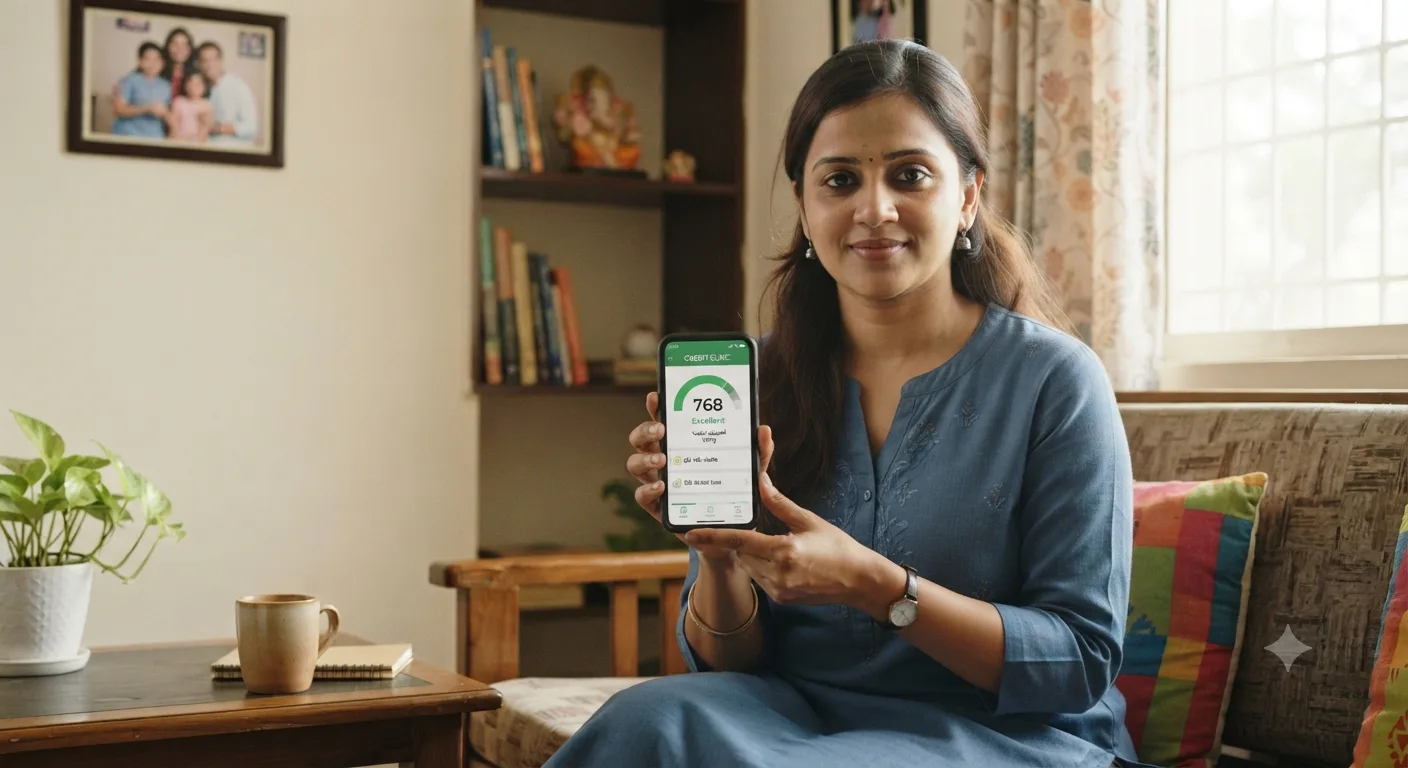
Your credit card CIBIL score decides two things at once: whether the bank says yes, and what you get if it does. Most banks look for 750 or above for a standard unsecured card. A score between 700 and 749 can still get approved, usually with a bit more scrutiny on income and job stability. Below 650, unsecured approval gets hard, but a secured card stays on the table almost regardless of score.

Mohit Juneja
Reviewed by FREED India, Debt Resolution Specialists
 4.7/5
4.7/5 ₹3,200Cr+
 20,000+
 20,00,000+4.7/5₹3,200Cr+20,000+20,00,000+
KEY TAKEAWAYS

Most banks want a CIBIL score of 750 or above for standard unsecured credit cards.
A score of 700 to 749 can still work, especially if you already hold a salary account with that bank.
A score of 700 to 749 can still work, especially if you already hold a salary account with that bank.
Every formal credit card application creates a hard enquiry that future lenders may consider during credit assessment.
Your score doesn't just decide approval. It shapes your credit limit, your interest rate, and which card tier you're offered.
What CIBIL Score Do You Need for a Credit Card?
There's no single number written into any rulebook that guarantees a credit card approval. What exists instead are rough bands that most banks use, even though each one sets its own internal threshold on top of that.
A score of 750 and above puts you in the range most banks consider low risk, which usually means faster approval, a better starting limit, and access to cards further up the product ladder. Between 700 and 749, approval is still likely, though the bank may lean more on your income proof or existing relationship with them before saying yes. From 650 to 699, things tighten. You might still get approved, but often for an entry-level card with a modest limit, or you may be steered toward a secured option instead. Below 650, a standard unsecured card becomes genuinely hard to get through most banks.
What trips people up is assuming 750 is some kind of official cutoff. It isn't. One bank might approve a standard card at 720. Another might hold the line at 750 for the exact same product. Income, existing debt, and how long you've held any account with that bank all factor in alongside the score, sometimes enough to tip a borderline case either way.
CIBIL Score Bands for Credit Card Approval
Score Range | Category | Card Access |
750–900 | Excellent | Premium unsecured cards, high limits, typically better rates as per market practice |
700–749 | Good | Standard unsecured cards common; approval likely but not guaranteed |
650–699 | Fair | Entry-level or secured cards, limited options |
Below 650 | Needs Attention | Secured FD-backed cards, add-on cards |
Rates and ranges shown are indicative. Final terms are decided by the bank. FREED is not a Loan Provider. No outcome is guaranteed. Please verify directly with your bank.
Why Do Banks Care So Much About Your Score for Credit Cards?
A credit card is unsecured. There's no fixed deposit, no property, no gold sitting behind it that the bank can recover if you stop paying. Compare that to a car loan or a home loan, where the bank can repossess the asset if repayment stops. With a credit card, the bank's only real protection is your track record.
That's why credit card underwriting tends to lean harder on the score than some secured products do. The bank isn't looking at what you're putting up as collateral, because there isn't any. It's looking almost entirely at how you've handled credit before, which is exactly what the CIBIL score summarises in one number.
This is also why utilisation and repayment history carry so much weight specifically for card applications. A missed EMI on a secured loan still worries a lender, but they have the asset as a backstop. A missed credit card payment carries no such backstop, so it tends to weigh more heavily when a new, unsecured card application comes in.
What Happens When You Apply for a Credit Card?
The moment you submit a credit card application, the bank pulls your credit report. This is a hard inquiry, and it's recorded on your file whether the application gets approved or not.
From that report, the bank checks a few things together: your current utilisation across existing cards, how many active accounts you're carrying, and your payment history, specifically your DPD (Days Past Due) record across every account reporting to the bureau.
This is different from checking your own score, which has no impact at all. The hard inquiry only happens when a bank or NBFC pulls your file as part of an actual application they're deciding on.

Freed Expert Tip
Space out credit card applications by a few months. Each application creates a hard enquiry, so spacing out applications helps avoid multiple recent enquiries on your credit report. Each one triggers a hard inquiry, and several close together can nudge your score down right when you need it steady.
Check your score before your next applicationWhat Else Affects Your Credit Card Application Besides Score?
Income sits alongside the score as one of the first things checked. A higher, stable income widens what limit you can be offered, even at the same score two applicants might have.
Employment stability matters almost as much. Someone salaried for two years at the same company generally reads as lower risk than someone recently self-employed, purely because the income is easier for the bank to verify and predict.
Existing debt load gets weighed too, not just the score reflecting it. A bank looking at your application will factor in how much you're already committed to paying each month across other loans and cards, since that shapes how much new credit they're comfortable extending.
Your existing relationship with the bank can genuinely tip a borderline case. A salary account holder or an existing customer with a clean track record sometimes gets approved where a first-time applicant with the same score would not.

What the Law Says
RBI's Fair Practices Code requires banks and NBFCs to convey the main reason for rejecting a loan or credit card application in writing, not just over a phone call. This applies across all loan and credit categories, not only large-value ones.
See what's on your report before you reapplyCan You Get a Credit Card With a Low CIBIL Score?
Yes, and this is worth knowing before you assume a low score shuts the door entirely.
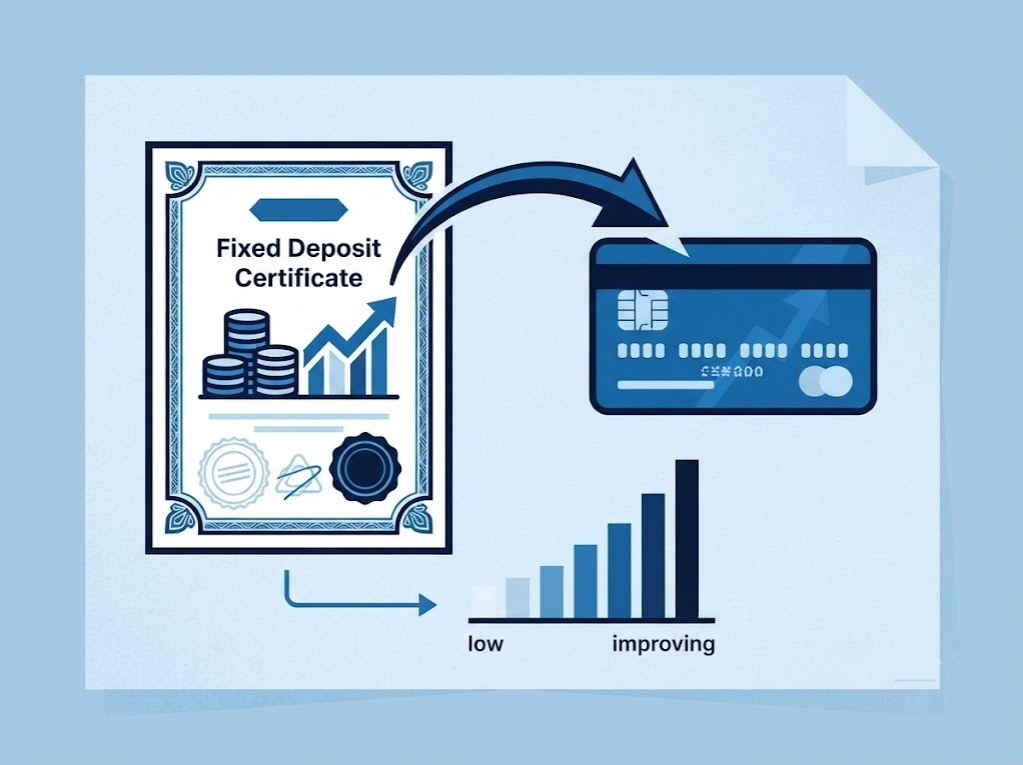
A secured credit card, backed by a fixed deposit, is the most reliable route. You open an FD, typically starting anywhere from ₹10,000 to ₹20,000, and the bank issues a card against it, usually with a limit set at somewhere between 60% and 90% of the deposit amount. A ₹15,000 FD, for instance, might get you a card with a ₹9,000 to ₹13,500 limit. Because your own money is backing the card, most banks don't apply a minimum CIBIL score requirement here at all. This is also the standard route for someone with no credit history yet, not just a damaged one.
Add-on cards are another path. If a family member holds a card in good standing, you can be added as a secondary user, which builds your own credit activity over time without your score being the deciding factor for approval.
Salary-account-linked cards can work too, particularly if your employer already has a relationship with the bank. Some banks offer a starter card to salary account holders with fewer credit checks than a fully open-market application would involve.
None of these are consolation prizes. A secured card used responsibly, paid in full, kept at low utilisation, builds exactly the kind of history that gets you approved for an unsecured card down the line.
How Does Your Score Affect the Card You Get, Not Just Approval?
Even once you clear the approval bar, the score keeps working in the background. It shapes the credit limit you're offered, the interest rate that applies if you ever carry a balance, and which tier of card you're eligible for.
Someone at 780 might get offered a premium card with a substantial limit and a lower interest rate than someone at 710 applying for the exact same product line. The 710 applicant might still get approved, just for a more basic card, a smaller limit, or a higher rate if a balance is carried month to month. This is why two people can both hear "approved" and walk away with genuinely different offers.
How Can You Improve Your Score Before Applying?
A few habits, kept consistently, support responsible repayment behaviour more than any single quick fix.
- 1
Pay every due on time.
Recent payment behaviour weighs more than older history, so a clean run over the next few months matters more than you'd expect.
- 2
Keep utilisation under 30% of your limit.
A ₹1,00,000 limit with a running balance under ₹30,000 reads far better than the same limit pushed close to its cap, even if you clear it in full every month.
- 3
Avoid applying to multiple cards at once.
Each application is a hard inquiry, and a cluster of them close together reads as risk-seeking behaviour to a bank, even when every application had a legitimate reason behind it.
- 4
Check your report for errors before you apply.
Check your report for errors before you apply. A wrongly reported account, or a closed loan still showing as active, can quietly work against how your credit profile gets assessed for no real reason on your part, and getting it corrected is part of maintaining accurate credit information, sometimes without you changing a single habit.

How FREED Helps You Understand Your Credit Card Readiness
Before you apply anywhere, it helps to know exactly where you stand, not guess. FREED's Credit Insights, the "Check My Credit" subscription, is available to everyone, whether or not you're enrolled in any FREED program.
Credit Insights pulls your report from Experian, one of the bureaus banks and NBFCs draw from when they assess a credit application. Get flat 50% off on subscription or you avail the subscription at flat 50% off, you get your score, a plain breakdown of a breakdown of the factors reflected in your credit report and practical recommendations to help you better understand and manage your credit profile.
Since the same habits that hurt an Experian-based score, missed payments, high utilisation, a run of recent hard inquiries, are the same ones a CIBIL check would flag, Credit Insights gives you a genuinely useful working picture before you walk into a card application. No income threshold applies, and no existing FREED enrollment is required to subscribe.
Are You in a Loan Trap? Quick Check
Move the slider to your total EMIs as a % of monthly salary. See your debt stress level instantly.
EMIs as % of Monthly Salary
Too Many Loans Making Your Score Harder to Manage?
If your score feels stuck no matter what you do, and the real issue is that you're juggling several loans or cards at once, that's a different problem than a single application getting rejected. It's a sign your overall EMI load might be working against you.
FREED's Debt Consolidation Program may combine eligible unsecured debts into a single repayment, depending on the approved loan amount, tenure, and lender terms. If you're not sure whether that's your situation, FREED's team can walk through it with you on a free call, no pressure either way.


Mohit Juneja
Mohit Juneja writes educational content at FREED on debt management, credit scores, loan repayment, and borrowing best practices. His content is shaped by expert insights and industry knowledge, helping readers better understand their financial options and make informed decisions.
mohit.juneja@freed.care

FREED is India's trusted loan management platform. Founded in 2020 and headquartered in Gurugram, FREED has counselled 20 lakh+ people on personal loans, credit cards, and app loans. FREED charges fees only on successful settlement, not upfront. FREED does not handle secured loans (home loans, car loans, gold loans).
Media Mentions