Credit and Debt Counseling: How It Works and What You Can Expect
Credit and debt counseling is a structured conversation with a trained counsellor who reviews your income, expenses, and debts, then helps you build a realistic plan. It does not erase what you owe. It may help you decide whether budgeting, restructuring, consolidation, settlement or no formal program is appropriate.
Mohit Juneja
Reviewed by FREED India, Debt Resolution Specialists

 4.7/5
4.7/5 ₹3,200Cr+
 20,000+
 20,00,000+4.7/5₹3,200Cr+20,000+20,00,000+
KEY TAKEAWAYS

Credit and debt counseling is a free or low cost session that maps your income, expenses, and every loan or card balance.
A typical first session runs 45 to 60 minutes and covers your full financial picture, not just one loan.
Counseling does not reduce your debt. It points you toward the right next step, whether that is a budget change, consolidation, or settlement.
If a cheque issued toward repayment of a legally enforceable debt is dishonoured, Section 138 of the Negotiable Instruments Act may apply, subject to the statutory conditions.
RBI requires banks to run Financial Literacy Centres in most districts, offering free counselling to distressed borrowers.
What Is Credit and Debt Counseling?
Credit and debt counseling is a session with a trained counsellor who sits down and looks at everything you owe alongside everything you earn. The conversation covers your income, your monthly expenses, and every loan or card balance you are carrying, then builds a realistic budget from what you actually earn, not a rounded off guess.
It is worth being clear about what this session is and is not. It is advice and planning, nothing more. It is not a loan, so no money changes hands. The counseling session itself does not change your CIBIL Score. What it gives you is an honest read of where you stand and a written plan you can act on.
In India, "credit counseling" and "debt counselling" get used for the same thing. In India, the terms are often used interchangeably, although providers may use them to describe slightly different services. If you want the plain meaning of the term itself, that ground is already covered in what credit counseling means and when to seek it.
This piece is about what actually happens once you book a session, the process itself, step by step, and what to expect walking in.

Talk to Someone About Your Situation
No forms, no pressure, just a straight conversation.
Book My Free CallWhy Do People Reach a Point Where They Need Counseling?
It is rarely one dramatic event. Most people arrive here after a slow build. EMIs climb a little every year as new loans get added, a credit card gets used more often, a personal loan gets taken to cover a gap. Somewhere along the way, someone managing multiple loans and cards, the exact number varies person to person, notices they are only paying the minimum due on one card, and the balance never seems to shrink.
For a smaller group, the build up has already tipped into something sharper. A few EMIs slipped over the last few months. Maybe an early recovery call has already come in. That is a different stage of the same problem, and it usually needs the same first step: a clear-eyed look at the real numbers.
The line worth knowing is this. When a large share of your take-home income is already committed to EMIs, even an unexpected expense can make repayment difficult. One unplanned expense, a medical bill, a job change, and the whole budget tips over.
Wondering If Your EMI Load Is Too High?
A quick, honest look at your numbers, no obligation.
Check your options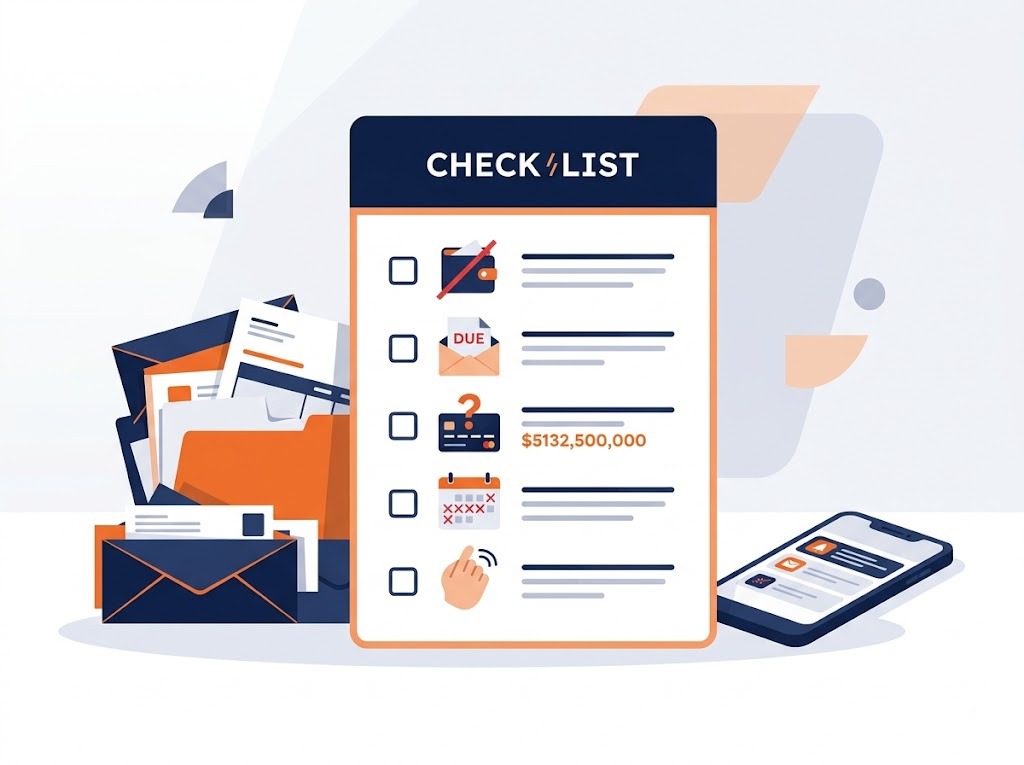
Signs It Is Time for Credit and Debt Counseling
Any of these signs can be a reason to consider a counseling session. You do not need to check every box before it is worth your time.
- Your EMIs have crossed roughly 50% of your take home income. Past this point, there is very little room left to absorb a surprise expense without missing a payment somewhere.
- You are paying only the minimum due on a credit card, and the balance keeps growing. The minimum payment feels manageable, but interest keeps compounding on what is left, so the total owed rises even as you keep paying something every month.
- You have started borrowing from family or friends to cover everyday expenses. This usually means your regular income and your regular obligations no longer line up, and may indicate that your regular income and obligations are no longer lining up.
- You feel a spike of anxiety whenever an unknown number calls. That reaction, even before it turns into an actual recovery conversation, may be a sign that debt is creating stress beyond the numbers themselves.
- You do not know your total debt figure without sitting down and adding it up. If that number would genuinely surprise you, closing that gap is exactly what a session is for.
- You are juggling three or more due dates across different lenders every month. Even if you are managing to pay all of them, keeping track of that many dates is its own source of stress, and one missed date can cascade into late fees on the rest.
How Does Credit and Debt Counseling Work, Step by Step
Step 1. Book the session. You can go through your bank's Financial Literacy Centre, a non profit, or a private platform like FREED. Depending on the provider, you may be able to book by phone, online or in person. Most options let you walk in, call, or book through an app, and none of them need a referral to get started.
Step 2. Go through your full financial picture. The counsellor works through your income, your monthly expenses, and every loan or card balance you have, not just the one causing the most stress. Accuracy matters here. Leaving out even one small loan skews the budget the counsellor builds for you.
Step 3. Build a realistic budget. Using your real numbers, not estimates, the counsellor puts together a budget that reflects what you actually earn and actually spend. This becomes the reference point for every decision that follows.
Step 4. Review the options genuinely available to you. This could include asking the lender whether a revised EMI or longer repayment tenure is available , or in more serious cases, consolidation or settlement. The counsellor lays these out honestly based on your numbers, not a one size fits all script.
Step 5. Walk away with a written plan. You should have the opportunity to understand the recommendation and applicable terms before committing to a program. You should leave with a clearer understanding of your options and next steps.
This is a conversation, not a transaction. Nobody is trying to sell you something in the room, and a follow up session is completely normal if you need more time to work through what was discussed. A session at FREED follows this same structure. RBI's framework provides for Financial Literacy Centres operated by banks, which conduct financial-literacy activities and can provide counselling to distressed borrowers.

What the Law Says
RBI's framework provides for Financial Literacy Centres operated by banks.
Check your optionsWhat Should You Bring to a Credit and Debt Counseling Session
Coming prepared changes how useful the session actually is.
- Your last 3 to 6 months of bank statements. These show what you actually spend, not what you think you spend.
- All your credit card statements. Every card, including ones you use rarely, since even a small balance affects the total picture.
- Loan sanction letters or EMI schedules. These give the counsellor exact figures on interest rates and repayment tenure, rather than approximations.
- A rough list of your monthly expenses. Rent, groceries, utility bills, school fees, anything that leaves your account on a regular basis.
- Your recent credit report, if you have one handy. It gives the counsellor a fuller view of your credit history alongside what you tell them directly.
None of this needs to be perfectly organised before you walk in. Sorting through it together is part of what the session is for. If you want a sense of what to ask once you are in the room, what to ask your debt expert is worth reading beforehand.

Freed Expert Tip
Bring your last 3 to 6 months of statements to your first session. It turns guesswork into an accurate plan.
Check My CreditWhat Credit and Debt Counseling Can and Cannot Do
It helps to know the honest boundaries of what a session gives you, so you are not disappointed walking out.
Counseling can give you real clarity on the exact number you owe, across every loan and card, instead of a vague sense that things feel tight. It can build a budget you can actually follow, based on what you earn rather than what you wish you earned. It can point you toward the right next step for your specific situation. And it gives you a non-judgmental space to talk through a problem that most people carry quietly and alone.
What it cannot do is erase or reduce the debt itself. The counsellor is not negotiating with your bank in this conversation, and nothing about the amount you owe changes because you attended a session. It cannot guarantee a specific improvement to your CIBIL score either. Score movement depends entirely on what you do after the session, not the session itself. And it cannot force a bank to agree to anything, whether that is a longer tenure, a revised EMI, or a settlement. Every one of those still needs the bank's sign-off.
Knowing this upfront sets the right expectation. A session is the map, not the fix. What typically comes next depends on how far your situation has already gone.
Curious What Your Score Actually Looks Like?
A clear picture of your credit health, no guessing.
Check My Credit
What Are Your Options If Counseling Alone Is Not Enough
Credit and Debt Counseling | Debt Consolidation | Loan Settlement | |
Who it's for | Anyone unsure where they stand | Still paying, but over leveraged | Genuinely unable to repay |
What it does | Builds a budget and a plan | Merges eligible loans into one lower EMI | Bank accepts a reduced lump sum as full and final |
Reduces what you owe | No | No, lowers the monthly payment only | Yes, up to 50%* |
CIBIL impact | None | Score improves | Reported as 'Settled', not 'Closed' |
Cost | Free or low cost | Success based fee | Success based fee |
Rates and outcomes shown are indicative. FREED is not a Loan Provider. No outcome is guaranteed.
See What Fits Your Debt Situation
A free, honest counselling call, no pressure, no judgment.
Book My Free CallHow FREED Helps With Credit and Debt Counseling
A call with FREED follows the same structure as the process above. It is free, and it walks through your income, your expenses, and every loan or card you carry before anything else happens.
Where FREED differs from a neutral counselling session is what happens once your picture is clear. FREED does not stop at handing you advice and leaving. If your situation fits the FREED's Loan Consolidation Plan , FREED matches you to a lending partner and manages the process end to end, so you go from several EMIs to one structured EMI, subject to the new loan's terms. If your situation fits the FREED's Loan Settlement Plan , FREED manages your Special Purpose Account savings and handles the back and forth negotiation with your banks, working toward the most favourable settlement your circumstances allow.
Both programs run on a success based fee. You pay only once the consolidation or settlement is actually completed, never upfront. FREED has counselled over 20,00,000 customers, settled more than 20,000 accounts, and managed over ₹3,200 Cr in debt across both programs.
What Helps During the Credit and Debt Counseling Process
A handful of habits separate a session that actually helps from one that just fills an hour.
Bring accurate numbers instead of estimates. A counsellor working off guesses can only hand you guesswork back, so pulling real statements before you go makes the whole conversation sharper. Mention every debt you are carrying, including small buy now pay later purchases or app based loans that feel too minor to bring up. Those add up more than people expect. Ask questions the moment something is unclear. There is no such thing as a bad question in that room, and a counsellor would rather explain a term twice than have you leave confused.
Take the plan home before deciding anything. You are never expected to commit to a path in the room itself, and sitting with the numbers for a few days often changes how a decision feels. If your situation changes later, a missed EMI, a new loan, a job change, book a follow up rather than assuming the old plan still applies. Most people leave their first session with more clarity than they walked in with, and that clarity is worth protecting by staying in touch as things shift.
Sources
Claim in Blog | Source |
|---|---|
RBI requires banks to run Financial Literacy Centres in most districts, offering free counselling to distressed borrowers | RBI/2015-16/286, FIDD.FLC.BC.No.18/12.01.018/2015-16, "Financial Literacy Centres (FLCs) – Revised Guidelines," Jan 14, 2016 rbi.org.in link |

Mohit Juneja
Mohit Juneja writes educational content at FREED on debt management, credit scores, loan repayment, and borrowing best practices. His content is shaped by expert insights and industry knowledge, helping readers better understand their financial options and make informed decisions.
mohit.juneja@freed.care

FREED is India's trusted loan management platform. Founded in 2020 and headquartered in Gurugram, FREED has counselled 20 lakh+ people on personal loans, credit cards, and app loans. FREED charges fees only on successful settlement, not upfront. FREED does not handle secured loans (home loans, car loans, gold loans).
Media Mentions