Challenges & Opportunities in the Indian Debt Relief Market
India has a ₹3+ lakh crore stressed unsecured debt problem and almost no consumer-friendly way to resolve it. Here's why that gap exists, what it costs borrowers, and how platforms like FREED are changing that.
Mohit Juneja
Reviewed by FREED India, Debt Resolution Specialists

 4.7/5
4.7/5 ₹3,200Cr+
 20,000+
 20,00,000+4.7/5₹3,200Cr+20,000+20,00,000+
Key Takeaways

India's stressed unsecured debt, credit cards, personal loans, BNPL is estimated at over $44 billion (₹3.6+ lakh crore) and growing.
The existing debt collection system is designed for recovery efficiency, not borrower rehabilitation.
Low financial literacy and deep social stigma around debt stop most distressed borrowers from seeking help early, making the problem worse.
The debt relief market in India is largely unorganised, leaving borrowers vulnerable to predatory or ineffective "solutions."
-FREED is building India's first structured, technology-enabled, consumer-first debt relief platform — addressing the challenge and the opportunity simultaneously.
The Scale of India's Unsecured Debt Problem
India's credit boom over the last decade has been remarkable.
Personal loans, credit cards, and BNPL (Buy Now, Pay Later) products have reached tens of millions of Indians who had never had access to formal credit before. Fintech platforms made applying for credit as easy as downloading an app. Banks and NBFCs aggressively expanded their unsecured lending books.
The results have been extraordinary in both directions.
On one side: financial inclusion at a scale India had never seen. People in tier 2 and tier 3 cities could access credit for education, medical emergencies, and business needs.
On the other: a growing wave of defaults. Missed EMIs. Credit card balances that compounded silently. Borrowers who took on more than they could handle, sometimes out of desperation, sometimes out of poor financial literacy, sometimes because the lending was irresponsible from the start.
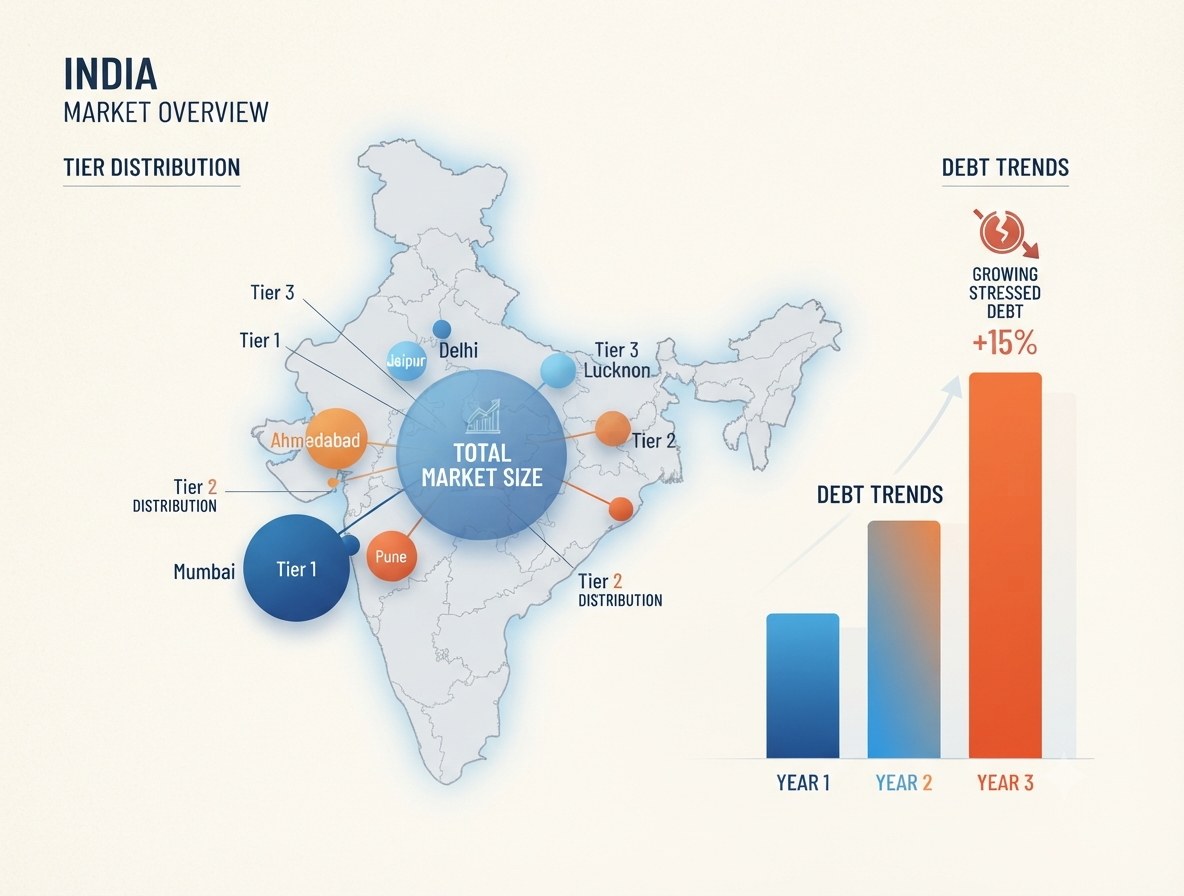
The latest estimates put India's stressed unsecured retail debt, loans and credit cards where borrowers are struggling to repay at over $44 billion. This is not a fringe problem. It affects millions of ordinary Indians across income brackets and geographies.
And for almost all of them, there is no structured, affordable, consumer-friendly path to resolution.
Challenge 1: A Collection System Built for Banks, Not Borrowers
When a borrower defaults, the system that activates is designed for one purpose: recovering money for the lender.
Collection agents. Calls at all hours. Letters threatening legal action. Recovery agencies. These mechanisms exist to maximise recovery for the bank and they are largely indifferent to the borrower's actual situation.
There is no standard process that asks: What is this person's genuine repayment capacity today? What combination of restructuring, settlement, or time would actually help them become solvent again rather than just pressured into a bad arrangement?
This matters for a practical reason: when collection practices are punitive rather than problem-solving, borrowers disengage. They stop answering calls. They avoid the issue. The debt grows through penalties and compounding interest. What could have been resolved for ₹3 lakh becomes a ₹6 lakh problem within 18 months.
The current system does not serve borrowers well. And increasingly, evidence suggests it doesn't even serve banks well because aggressive collection from someone who genuinely cannot pay produces very little actual recovery.
A consumer-first approach one that assesses affordability, intent, and capacity before arriving at a resolution, would recover more for banks while giving borrowers a real way out. That gap is exactly where structured debt relief platforms operate.

FREED Expert Tip
Most borrowers who come to FREED are not unwilling to repay. They're unable to repay the current structure. Restructuring the debt amount, timeline, or both to match their actual capacity almost always produces better outcomes than continued collection pressure.
Talk to FREEDChallenge 2: Low Financial Literacy and Awareness
The second major challenge is information or the lack of it.
Most Indians who take on credit do not fully understand how interest compounds. They do not know that a minimum payment on a credit card barely dents the principal. They do not know their rights as borrowers under RBI guidelines. And they do not know that debt relief, structured, legal, negotiated resolution is an option.
This creates two costly patterns:
Taking on too much credit: Without understanding the true cost of borrowing, the total interest outgo, the impact on monthly cash flow, the compounding risk many borrowers commit to obligations that their income cannot sustainably support.
Not seeking help early enough: When repayment becomes difficult, most borrowers do not know where to turn. They suffer through months or years of stress, harassment, and worsening financial damage before discovering that a structured resolution was possible from the beginning.
Financial literacy is not a luxury. In a credit-expanded economy, it is a basic survival skill and the gap between what most Indians know and what they need to know is enormous.
Challenge 3: Stigma Around Debt and Debt Relief
In India, debt carries deep social stigma.
Borrowing money, especially if one defaults, is seen as a personal failure, not a structural or circumstantial problem. This shame stops people from talking openly about their debt, from seeking professional help, and from taking action early.
Families hide debt from each other. Individuals try to manage alone, making arrangements that worsen their situation. The social weight of the problem compounds the financial weight and both go unaddressed for longer than necessary.
This stigma also affects perceptions of debt relief. "Settlement" sounds like failure. "Resolution program" sounds like a last resort for irresponsible people. In reality, debt settlement is a legal, widely-used financial tool, one that banks and creditors use routinely as part of portfolio management. For the borrower, it is often the fastest, most rational path to financial recovery.
Destigmatising debt and debt relief is both a social and business challenge. People who seek help early have far better outcomes than those who wait. Building that awareness, and the trust that comes with it, is foundational to making the market work.

What the Law Says:
Under RBI guidelines, every borrower has the right to be treated with dignity during loan recovery. Collection agents are prohibited from using abusive language, contacting borrowers at unreasonable hours (before 8 AM or after 7 PM), or threatening borrowers or their family members. If you experience recovery harassment, you can file a complaint with the RBI Banking Ombudsman. FREED's Shield service also provides direct support for harassment cases.
Know your rights as a borrowerChallenge 4: Fragmented, Unorganised "Solutions"
India's debt relief space, such as it is, is largely unorganised.
On one end: unregistered "consultants" who take upfront fees, promise to settle debts, and disappear. These actors harm borrowers financially and damage trust in legitimate debt relief as a category.
On the other end: banks and NBFCs offer their own hardship programs but these are designed from the lender's perspective, not the borrower's. Restructuring terms often trap borrowers in arrangements they cannot sustain. Partial settlements are offered without transparency on the credit reporting implications.
In between: almost nothing. No consumer-friendly, technology-enabled, transparent platform that a distressed borrower can approach with confidence, receive an honest assessment, and get a structured path to resolution.
This gap between the scale of the problem and the quality of available solutions, is the central market challenge. And it represents, simultaneously, the central market opportunity.
Opportunity 1: A $44 Billion Unserved Market
The stressed unsecured retail debt market in India is estimated at over $44 billion.
These are not bad people with bad intentions. They are borrowers, often first-time credit users, often from tier 2 and tier 3 cities, who ended up in situations they couldn't manage, with no structured way to get out.
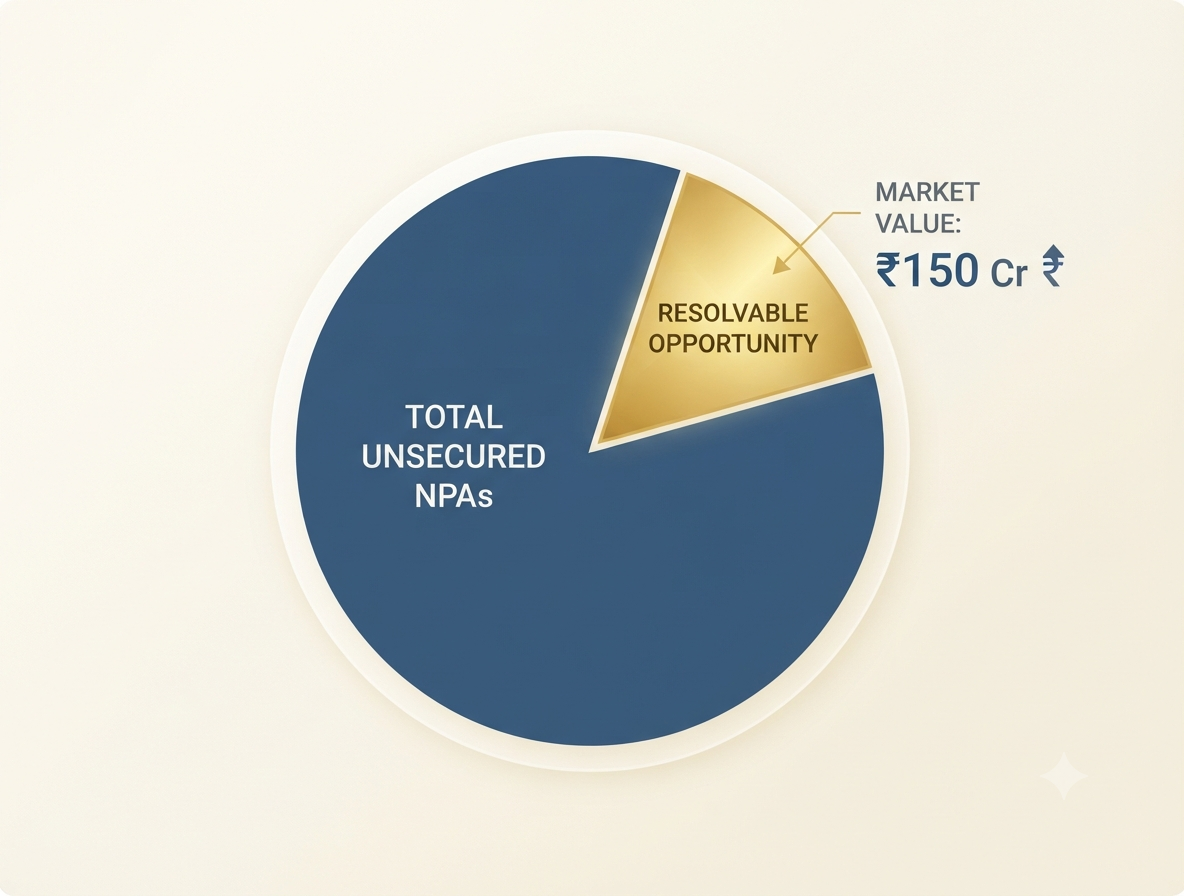
Banks want to recover from these accounts. Most have written them off as NPAs (Non-Performing Assets) and receive very little from traditional collection. A structured resolution, one where the borrower can actually pay - is better for everyone.
The borrower gets relief. The bank recovers something from an account that was recovering nothing. And a third-party platform earns a fee for facilitating a better outcome than the current system produces.
This is not a niche. It is one of the largest underserved financial markets in India.
Opportunity 2: Consumer-First Debt Relief
The structural opportunity in Indian debt relief goes beyond the numbers.
It lies in a different philosophy: designing the product around the borrower's situation, not the lender's recovery preference.
A consumer-first approach means:
Assessing actual affordability, not what the loan terms say, but what the borrower can genuinely commit to today given their income, fixed obligations, and life circumstances.
Creating a customised program - one that matches repayment capacity to a structured timeline, with clear milestones and without hidden escalations.
Maintaining dignity throughout - no harassment, no shame, clear communication at every step.
Building financial literacy alongside resolution - so borrowers understand what happened, make better decisions going forward, and don't need debt relief again in three years.
This model serves borrowers better. It also recovers more for banks because a borrower who genuinely commits to a program they can sustain produces far more recovery than one who agrees to an unrealistic arrangement and defaults again within months.
Consumer-first debt relief is not just the ethical choice. It's the more effective one.
Opportunity 3: Technology Enabling Scale
India's debt relief gap cannot be closed through traditional, high-touch financial advisory models alone. The market is too large, too geographically dispersed, and too diverse in income level and language.
Technology changes this calculus.
A digital platform can:
- Assess a borrower's situation through structured data collection income, obligations, assets, credit report and generate a clear picture within minutes rather than hours
- Match the situation to the most appropriate resolution pathway consolidation, settlement, hardship restructuring without requiring the borrower to understand all the options themselves
- Manage communication with multiple creditors simultaneously and at scale
- Track program progress and alert both borrower and platform team to issues before they become crises
- Build financial literacy through content and tools that meet borrowers where they are in their language, at their level of understanding
This is not about replacing human judgment. It's about extending the reach of good judgment to millions of Indians who currently have no access to it.
How FREED Is Addressing Both Sides
FREED was built specifically around this market gap.
On the challenge side: FREED addresses stigma by treating every borrower with dignity and without judgment. It addresses financial literacy by ensuring borrowers understand their situation fully before any program begins. And it addresses the absence of structured solutions by providing a transparent, legally sound resolution process.
On the opportunity side: FREED's consumer-first approach, assessing affordability, designing customised programs, negotiating with creditors on the borrower's behalf produces better outcomes for everyone involved. Borrowers get real relief. Banks recover from accounts that were otherwise producing nothing.
Since founding, FREED has managed over ₹3,200 crore in debt across more than 20,000 settled accounts, counselling over 20 lakh Indians. The platform serves borrowers across tier 1, 2, and 3 cities with the deepest penetration in the geographies where debt relief has historically been completely unavailable.
The Indian debt relief market is large, underserved, and structurally ready for a better solution. FREED is building it.
Are You in a Loan Trap? Quick Check
Move the slider to your total EMIs as a % of monthly salary. See your debt stress level instantly.
EMIs as % of Monthly Salary

Mohit Juneja
Mohit Juneja writes educational content at FREED on debt management, credit scores, loan repayment, and borrowing best practices. His content is shaped by expert insights and industry knowledge, helping readers better understand their financial options and make informed decisions.
mohit.juneja@freed.care

FREED is India's trusted loan management platform. Founded in 2020 and headquartered in Gurugram, FREED has counselled 20 lakh+ people on personal loans, credit cards, and app loans. FREED charges fees only on successful settlement, not upfront. FREED does not handle secured loans (home loans, car loans, gold loans).
Media Mentions