600 CIBIL Score Loan App: What Works, What It Costs, and How to Borrow Smarter
A 600 CIBIL score sits in the below-average band on the 300 to 900 scale. It is not a hard rejection by every lender, but it narrows your options. Many banks generally prefer applicants with stronger credit profiles, although eligibility varies by lender. Some NBFCs (non-banking financial companies) and lending apps still consider you at 600, based on your income and bank statements. Rates are higher, loan amounts are smaller, and the biggest risk is applying to several apps at once, which pulls the score down further.
Mohit Juneja
Reviewed by FREED India, Debt Resolution Specialists
 4.7/5
4.7/5 ₹3,200Cr+
 20,000+
 20,00,000+4.7/5₹3,200Cr+20,000+20,00,000+
KEY TAKEAWAYS

A 600 CIBIL score is "below average". Most banks want 700 and above.
Some NBFCs and RBI-registered lending apps approve at 600, based on income, job stability, and bank statement patterns.
Typical rates at 600: 18% to 36% per annum from legitimate lenders.
Every formal loan application creates a hard enquiry that lenders may consider during future credit assessments.
Improving from 600 to 650 comes down to consistent repayment behaviour sustained over time there's no fixed calendar for it, since it depends on your full credit picture. But the payoff is real: crossing into that band typically opens access to cheaper loans.
The RBI's public Digital Lending Apps directory, live since July 2025, lets you verify any app before you apply.
What Does a 600 CIBIL Score Mean for a Loan Application?
Your CIBIL score sits somewhere on a 300 to 900 scale, and where it lands changes how a lender reads your file. Lenders broadly sort scores into rough bands, sub-550 as high-risk, the 550s-600s as below-average, 650-699 as a borderline "fair" zone, 700-749 as generally workable, and 750+ as the range most lenders compete for. None of this is a CIBIL-issued classification. It's how the market has come to talk about score ranges, and different lenders draw their own lines within it.
A 600 score is not the same as having no credit history at all. It tells a lender three things. You have used credit before, unlike someone with an NH or NA status (no credit history). Somewhere in that history, there have been a few rough patches, maybe a late EMI, maybe a stretch of high credit card usage. And your recent financial behaviour is not yet proven one way or the other.
This matters because at 600, most lenders stop relying on the score alone. They start weighing your current situation, your salary credits, your job, and how your bank account looks over the last few months. This is actually useful to know. It means a borrower at 600 with a clean recent bank statement and steady income has a real shot, even while the score itself is still catching up.
It also helps to know that a 600 score is not a sign of default. Genuine default and NPA (a loan marked as bad by the bank, usually after 90 days of missed EMI) sit well below this band. A 600 score is where manageable past mistakes show up, not a written-off loan.
One number is worth remembering here. Many mainstream banks generally prefer applicants with stronger credit profiles. A smaller pool of NBFCs, built specifically around alternative assessment, is where the real options sit. Each formal application creates a hard enquiry that may influence future lending assessments.

Not sure what's holding your score at 600?
FREED's Credit Insights pulls your Experian report and shows exactly what to fix.
Check Your ScoreWhat Do Lenders Look At Beyond the Score at 600?
Once your score is in the 600 band, it stops being the only thing a lender looks at. It becomes one input among several, and understanding the others is where you can actually improve your odds.
Income stability comes first. Lenders want to see steady salary credits landing in your account for at least 3 to 6 months. Gaps, bounced credits, or irregular freelance income make approval far less likely, even at a stronger score.
Then there is FOIR (how much of your salary goes to EMIs). Many lenders assess whether a significant share of your income is already committed to EMIs. This single number often matters more than the CIBIL score itself.
Employment type plays a role, too. A salaried employee at an established company is viewed more favourably than someone salaried at a small, unregistered firm, who may face the same scrutiny as a self-employed applicant. Your bank statement health matters just as much. Lenders check the last 3 to 6 months for bounced payments, overdrafts, or a negative balance. A clean statement, even with a 600 score, tells a very different story than one with red flags.
Lenders also read the shape of your credit report, not just the number. A 600 score that has been climbing for a few months, tracked through DPD (Days Past Due, how many days a payment is overdue), reads as recovering. A 600 that is sliding down reads as a risk. If DPD has stayed at 000 for the last 6 months, even while the score sits at 600, that is a genuinely stronger profile than a fresh 600 with a recent missed payment. And if your report shows a Wilful Default or a suit-filed tag, that is a serious barrier no lender at this bank will look past.
Finally, existing open accounts matter. A 600 score with three or four other active loans running looks riskier to a lender than a 600 score with just one.

FREED Expert Tip
Before you apply anywhere, pull your Experian report through FREED's Credit Insights. Reviewing your credit report may help identify issues that can be corrected before applying
View Your Free Credit InsightsWhat Are the Actual Loan Options for a 600 CIBIL Score?
FREED does not recommend or endorse specific loan apps or financial products. What follows is a plain look at the categories of options available at this score band, in order of how reliable they tend to be.
NBFCs using alternative assessment models are usually the steadiest option at 600. They weigh your income and bank statement data alongside the score itself. Loan amounts here typically run ₹20,000 to ₹2 lakh, at rates of 18% to 30% per annum, with disbursal in 24 to 48 hours. Expect to submit 3 to 6 months of bank statements, salary slips, your Aadhaar, and your PAN.
RBI-registered lending apps are the second category. Disbursal is often faster, sometimes within hours, but rates run higher, typically 20% to 36% per annum, and loan amounts are smaller, often ₹5,000 to ₹1 lakh. Before applying to any app in this category, check it against the RBI's Digital Lending Apps directory on rbi.org.in.
If you already hold a salary account with a bank for 6 months or more, that relationship can sometimes get you a pre-approved offer without a fresh, strict CIBIL check. It is worth asking your own bank before going anywhere else.
If you have gold or an idle FD, secured borrowing is worth considering, no CIBIL check involved. Bank gold loans typically start around 8-9% per annum; NBFC gold loans and FD-backed loans can run considerably higher, sometimes into the mid-20s, depending on the lender and terms. FREED doesn't handle secured loans, but it's a path worth knowing about.
Just as important is what to walk away from. Avoid any app not listed on the RBI's directory, any app asking for access to your contact list or photo gallery, and any lender who will not show you a Key Fact Statement (a one-page disclosure of the real cost of the loan) before you accept it.
Know what's pulling your 600 score down before you apply anywhere.
FREED's Credit Insights gives you your Experian report with a step-by-step improvement plan.
Check Your ScoreWhat Is the Real Cost of Borrowing at a 600 CIBIL Score?
A loan at 600 is not just harder to get; it is meaningfully more expensive, and the difference is easiest to see in rupees rather than percentages.
Take a ₹2 lakh loan over 24 months at three different rates. Borrowers with stronger credit profiles may qualify for lower interest rates, depending on the lender. At 22% per annum, closer to what an NBFC might offer a 600-band borrower, the total climbs to around ₹2.50 lakh. At 36% per annum, the higher end of what some lending apps charge, the same loan costs about ₹2.84 lakh by the time it is repaid. That is a difference of over ₹57,000 between the cheapest and most expensive version of the exact same loan.
On top of the interest, most lenders deduct a processing fee upfront, usually 2% to 3% of the loan amount. On a ₹2 lakh loan at 2.5%, you would receive about ₹1,95,000 in hand while still owing the full ₹2,00,000 on paper. That gap catches a lot of borrowers off guard.
There is a second cost that is harder to see upfront: the risk of missing an EMI at a high rate. If a payment slips, it creates a DPD entry, and a 600 score can slide to 550 or lower from there, taking you further from the cheaper loans you actually want access to.
Are You in a Loan Trap? Quick Check
Move the slider to your total EMIs as a % of monthly salary. See your debt stress level instantly.
EMIs as % of Monthly Salary
What Is the Biggest Mistake Borrowers With a 600 Score Make?
The most damaging habit at this score band is applying to several loan apps at once. It usually starts innocently: one app declines, and instead of stopping to ask why, the next app gets tried within minutes.
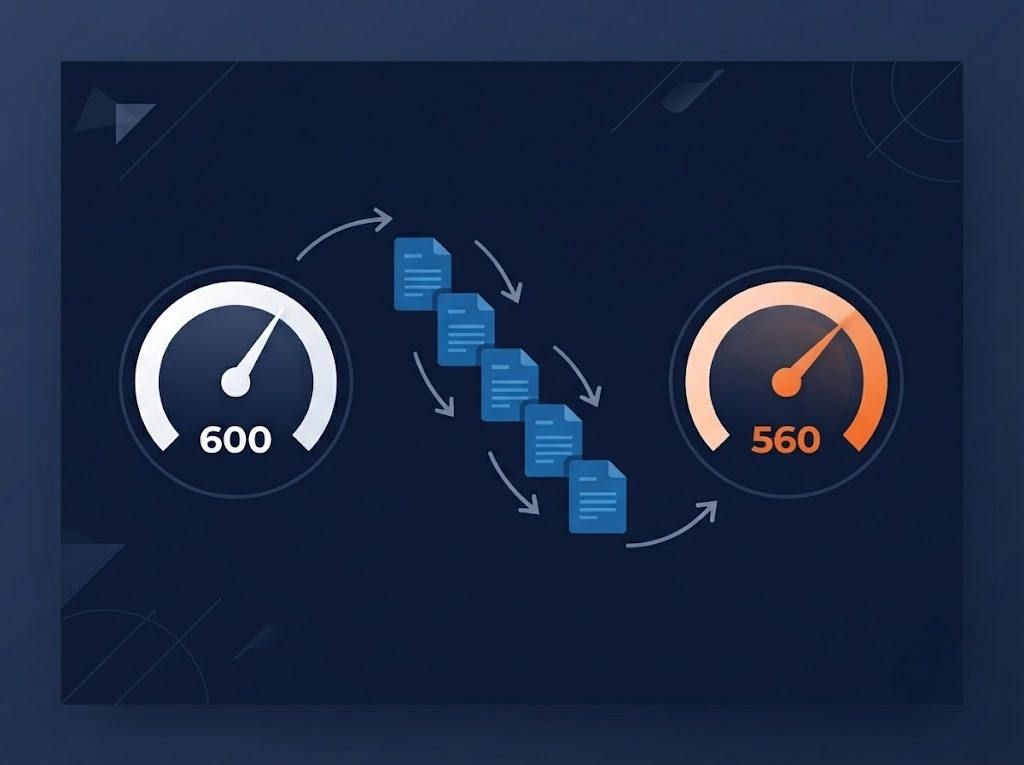
Every credit application triggers a hard enquiry, and each one can chip away at your score. The real damage shows up when several land close together. A burst of applications in one week compounds the effect fast, and can push you below cutoffs that NBFCs were happy to work with a week earlier. The fix isn't avoiding applications altogether, it's spacing them out and checking eligibility (or using a soft-enquiry pre-check where available) before applying.
The pattern tends to feed itself. A lower score means fewer lenders willing to look at your file, which pushes some borrowers into applying even more widely out of frustration, which drops the score further still. Someone who started at 600 and applied to five apps in a panic can end up at 550 with almost nowhere left to turn.
The better approach is slower but far safer. Research which lenders specifically work in the 600-plus band before applying anywhere. Apply to one at a time, and wait for a decision before trying the next. Some platforms also offer a soft enquiry, a pre-qualification check that shows your likely eligibility without touching your score at all. Using that first, wherever it is available, is the smartest possible first step.
Should You Borrow Now or Improve Your Score First?
There is no single right answer here, but there are honest ways to think it through.
Waiting usually makes more sense in three situations. First, if the need is not truly urgent, a few months of consistent payments and bringing credit card usage below 30% of your limit can move a 600 score to 640 or 660, opening up NBFC rates of 14% to 20% instead of 22% to 36%. On a ₹2 lakh loan, that difference can save ₹10,000 to ₹20,000 in interest over 24 months. Second, if you already have several EMIs running and your FOIR is already close to 50%, adding a high-rate loan now makes the monthly load harder to sustain, and one missed payment could send your score to 540 or below. Third, if your 600 score is being caused by something fixable, an error on your report, correcting it can help ensure lenders assess accurate credit information. Pulling your report and checking for mistakes is always worth doing before applying anywhere.
Borrowing now makes more sense in the opposite situations: a genuine emergency with no other option, stable income with FOIR comfortably below 50%, or a specific lender you have already verified as working with 600-band applicants.
Existing EMIs making everything tighter?
Talk to FREED's team. One call, no pressure, honest answers.
Book My Free Call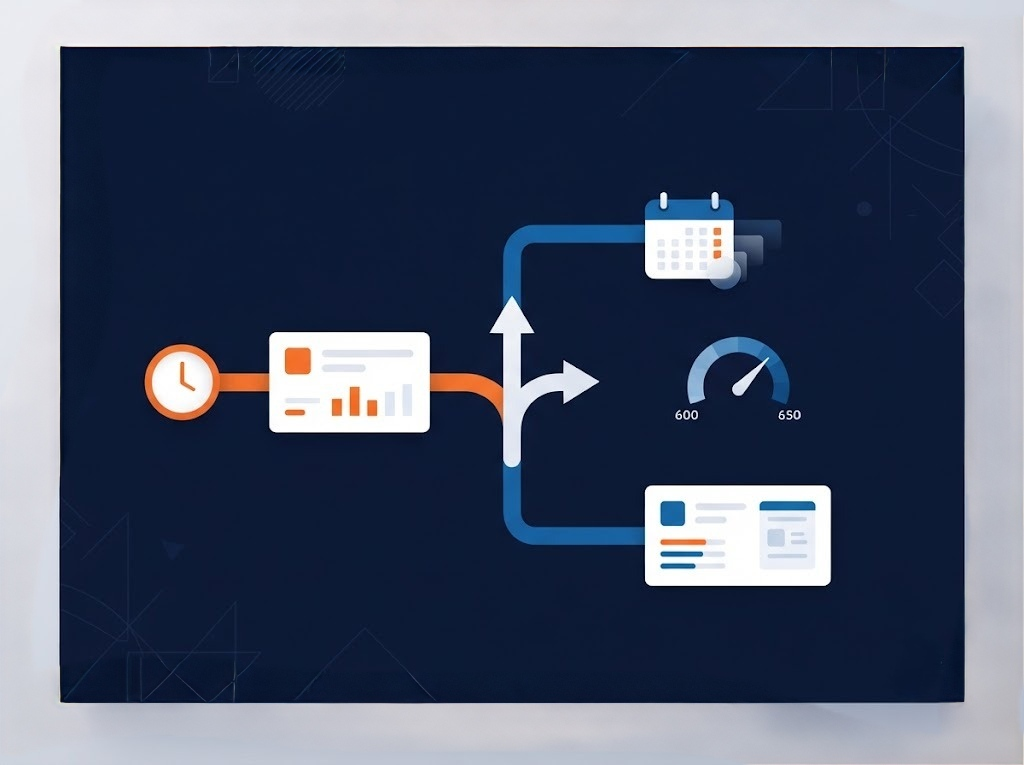
How to Use a Loan App With a 600 CIBIL Score Safely
Pull your credit report and check for errors first
Go to cibil.com or use FREED's Credit Insights for your Experian report. A genuine error, corrected, could move your score up by 50 to 100 points before you apply anywhere, at no cost.
Calculate your FOIR before approaching any lender
Add up all your existing monthly EMIs and divide by your take-home salary. If the result is above 50%, a new loan at a high rate is likely to become the next missed payment rather than a solution.
Check if your salary bank has a pre-approved offer.
Salary account holders sometimes qualify for a pre-approved amount without a fresh CIBIL check. This route is usually cheaper and faster than starting a new application elsewhere.
Research which lenders specifically work at 600-plus
Not every NBFC or app works in this band. Confirm a lender's minimum score requirement before applying so you are only spending an enquiry where approval is realistic.
Verify the lender on the RBI Digital Lending Apps directory.
Go to rbi.org.in and confirm the app is listed. Download it only from the Google Play Store or Apple App Store, never through an APK link sent on WhatsApp.
Apply to one lender at a time and read the Key Fact Statement before accepting
This document must show the real APR, fees, and penalties before you agree to anything. If it is not offered to you, do not go ahead.
Set up auto-pay from the first EMI and repay on time every month
Consistent, on-time repayment helps build a stronger credit profile over time. Each clean month closes the gap to better rates.
Loan Options for a 600 CIBIL Score: Cost and Risk Overview
Option | Typical Rate | Loan Amount Range | CIBIL Check | Disbursal Time | Best For |
Salary bank pre-approved offer | 14% to 18% per annum | The bank decides based on salary | Not required; the bank uses its own data | Same day to 24 hours | Salaried borrowers with 6+ months of salary account history |
NBFC personal loan at 600 | 18% to 30% per annum | ₹20,000 to ₹2 lakh | Required; some lenders accept 600+. | 24 to 48 hours | Stable income with a clean recent 6-month history |
RBI-registered lending app | 20% to 36% per annum | ₹5,000 to ₹1 lakh | Varies; some approve at 600 | Hours to 24 hours | Smaller urgent needs, only after checking the RBI directory |
Gold loan or FD-backed loan | 7% to 12% per annum | Based on asset value | Not required | 1 to 2 days | Borrowers with gold or an FD to pledge |
Unregistered loan app | 50% to 200%+ effective cost | Appears cheap; fees hidden | Not required | Minutes | Never. These are predatory and unregulated |
This table is for general awareness. Gold loans and FD-backed loans are secured products and outside FREED's scope. Read it as a starting map, not a recommendation, and always run the RBI directory check before applying to anything in the app-based rows.
How Can FREED Help You?
If you are reading this because your score is sitting at 600 and you are not sure what to do next, here is where FREED actually fits into your situation.
Start with knowing exactly where you stand. Credit Insights pulls your real Experian report. Get flat 50% off on subscription or you avail the subscription at a flat 50% off, not just the number itself. If a card balance or a small error is the reason you are stuck at 600, this is the fastest way to find out before you apply anywhere.
If your EMIs are already stretching you thin. Taking a new loan on top of existing debt can make things worse, not better. FREED's Loan Consolidation Plan looks at whether your current loans can be merged into one lower EMI instead, so you are not adding another repayment date to an already full plate. This is only for borrowers still current on their payments, so if you are unsure whether you qualify, FREED's team can assess your situation on a free call.
If repaying in full has genuinely stopped being possible. That is a different situation from simply having a low score, and it calls for a different plan. FREED's Loan Settlement Plan exists for borrowers in real financial difficulty, guiding you through a structured savings plan and negotiating with your bank once funds are built up.
If a recovery call ever crosses a line. FREED Shield is available to you if you’re enrolled in any FREED program. If a call turns abusive or threatening, or an agent shows up at your home or office without following the correct process, FREED Shield helps you document it and file a complaint through the right channel.
You do not need to pick one of these right now. The first useful step is almost always the same one: know your actual number, know what's behind it, then decide what you need from there.
Sources
Claim in blog | Source |
Every digital lending app must give a Key Fact Statement with the real APR, fees, and penalty terms before a loan is accepted | RBI (Digital Lending) Directions, 2025 — https://rbi.org.in/Scripts/NotificationUser.aspx?Id=12848&Mode=0 |
A public Digital Lending Apps directory has been live on rbi.org.in since July 1, 2025, listing apps reported by regulated banks and NBFCs | RBI Press Release, May 8, 2025 — https://rbi.org.in/Scripts/BS_PressReleaseDisplay.aspx?prid=60403 |

Mohit Juneja
Mohit Juneja writes educational content at FREED on debt management, credit scores, loan repayment, and borrowing best practices. His content is shaped by expert insights and industry knowledge, helping readers better understand their financial options and make informed decisions.
mohit.juneja@freed.care

FREED is India's trusted loan management platform. Founded in 2020 and headquartered in Gurugram, FREED has counselled 20 lakh+ people on personal loans, credit cards, and app loans. FREED charges fees only on successful settlement, not upfront. FREED does not handle secured loans (home loans, car loans, gold loans).
Media Mentions